Weekly Physics Digest – January 25 – January 31, 2026
This Week’s Video Digest: Discoveries Await! Get ready to dive into a world of captivating science and insightful discussions, as this week’s video selection features everything from groundbreaking astrophysics to the whimsical Hairy Ball Theorem. One standout is Anton Petrov’s exploration of newly discovered “platypus galaxies,” which upend our understanding of cosmic structures, raising eyebrows and a few questions about our universe’s quirks. On the lighter side, we have the delightful concept of “undoing rainbows” courtesy of Steve Mould, who ingeniously demonstrates the magic of optics in a way that will have you seeing colors anew. Learn fast, stay curious!
Galactic Cluster in the Early Universe Is an Anomaly and Breaks Models

** In this video, Anton Petrov explores the discovery of the galactic cluster SPT2349-59, which challenges existing cosmological models due to its unexpected maturity and extreme energy levels. Observations reveal that this cluster, existing 12.3 billion years ago, contains a remarkable number of active galaxies, with star formation rates significantly higher than those of the Milky Way. Notably, the gas temperature in this cluster is far hotter than predictions suggest, indicating a chaotic formation process influenced by active supermassive black holes. This discovery prompts a reevaluation of how rapidly galaxies can form and the role of black holes in shaping cosmic environments. **
📚 Research Links (provided by the author in the video description):
DNA Debunks Evolution
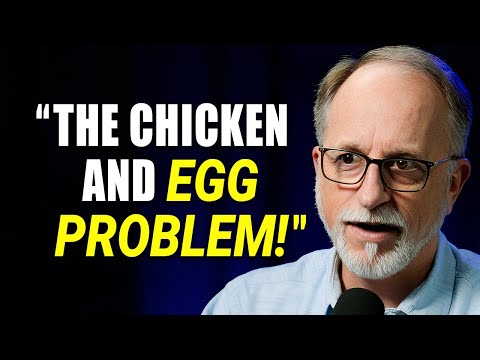
** In the video “DNA Debunks Evolution,” biologist Dr. Robert Carter explores the intricate complexities of DNA replication and its implications for the theory of evolution. He highlights the “chicken and egg” problem in which DNA is necessary for life, yet the information required to create the machinery that copies DNA is also encoded within it. This interdependence raises fundamental questions about the origin of life, as all essential components must be present from the start for any living organism to exist. Additionally, Dr. Carter discusses the importance of DNA repair systems, which are critical for maintaining genetic stability and preventing mutations, further emphasizing the need for an intelligent creator behind life. **
Can You Undo A Rainbow?

** In the video “Can You Undo A Rainbow?” Steve Mould explores the fascinating concept of recombining a rainbow back into white light, akin to Isaac Newton’s groundbreaking experiment with prisms. He demonstrates that merely using a second prism won’t suffice due to the way light refracts, bending differently based on wavelength. To successfully achieve white light, he incorporates a convex lens alongside optical elements that allow the separated colors to converge, ultimately proving that white light indeed consists of all the colors of the rainbow. This experiment not only illustrates fundamental principles of optics but also showcases the creative process behind scientific experimentation. **
The Hairy Ball Theorem

** In the video “The Hairy Ball Theorem,” the host from 3Blue1Brown explains a fascinating mathematical concept stating that it is impossible to comb the hairs on a sphere without leaving at least one tuft sticking up. This theorem, while whimsically named, has serious implications in various fields such as computer graphics and meteorology, revealing that continuous vector fields on a sphere must have a point where the vector is zero. Through engaging examples and a beautiful proof involving fluid dynamics and orientation, the video demonstrates the theorem’s significance and its surprising applications in real-world scenarios. It concludes that the theorem holds true for all odd-dimensional spheres, making it a profound insight in topology. **
Smarter AI Gradients: How Agents Learn to Think

** In the video “Smarter AI Gradients: How Agents Learn to Think,” the presenter delves into the complexities of reinforcement learning (RL) and the importance of exploration in developing efficient AI agents. The discussion highlights a novel intrinsic reward policy optimization framework, which utilizes multiple intrinsic rewards to navigate sparse reward environments effectively. By introducing the concept of scouts—AI copies that explore different areas of a mathematical space—the video explains how these scouts gather information that informs the base policy, ultimately enhancing the agent’s ability to learn and optimize its performance. The key takeaway is that future advancements in AI hinge on smarter gradient methods rather than merely scaling up model parameters. **
📚 Research Links (provided by the author in the video description):
Do We Ever Really “Touch” Anything?

** In the video “Do We Ever Really ‘Touch’ Anything?” Arvin Ash explores the complex interactions that occur at the atomic level when we touch objects, like a phone screen. He explains that while it seems our finger touches the glass, what actually happens is an electromagnetic repulsion between overlapping electron clouds. This interaction is governed by the Pauli exclusion principle, which prevents electrons from occupying the same quantum state, contributing to the solidity of matter. Ash concludes that touch is not just a simple contact but a nuanced force interaction that underpins the structure of our universe. **
The End of the Steam Age? China’s Breakthrough CO2 Generator

** In the video “The End of the Steam Age? China’s Breakthrough CO2 Generator,” Anton Petrov discusses China’s revolutionary achievement in energy production with the launch of the world’s first commercial supercritical carbon dioxide (CO2) power generator, Chaotan 1. This technology, which operates more efficiently than traditional steam systems, utilizes supercritical CO2, a state that enhances energy transfer by combining the properties of liquids and gases. With the ability to generate 30 megawatts of power and integrate waste heat recovery from steel production, this advancement signifies a potential shift in global energy practices, heralding an end to reliance on steam-based systems. **
📚 Research Links (provided by the author in the video description):
This is why light exists

** In this video, Sabine Hossenfelder explains the existence of light through the concept of “gauge symmetry,” a fundamental insight in physics. She discusses the relationship between electric charges and photons, highlighting how the behavior of electrons is governed by the phases of their wave-like nature. By emphasizing that these phases are relative and can be adjusted through a gauge field, Hossenfelder illustrates how this symmetry leads to the emergence of electromagnetic waves, or light itself. While gauge symmetry explains light’s existence, the video concludes by acknowledging that the reason for electric charges remains an open question in physics. **
“There Is Something Very Big We Are Yet to Find”

** In the episode titled “There Is Something Very Big We Are Yet to Find,” physicist Subir Sarkar discusses the ongoing challenge of the cosmological constant problem, which remains unresolved by existing theories like string theory and loop quantum gravity. Sarkar emphasizes that despite numerous attempts to address this issue, all have failed, indicating that a significant piece of our understanding of the universe is still missing. He raises concerns about current methodologies used in cosmological data analysis, particularly regarding the assumptions of isotropy and homogeneity in the universe, which may lead to misleading conclusions, especially in light of recent data suggesting discrepancies in the expected dipoles in cosmic radiation and matter. This underscores the need for a reevaluation of our cosmological models and the metrics we use in research. **
POPE RL Curriculum Learning (CMU)

** In the video “POPE RL Curriculum Learning,” the presenter discusses a novel approach to reinforcement learning (RL) introduced by Carnegie Mellon University. This method, known as POPE RL, aims to guide AI models by directing their attention to the correct latent subspaces necessary for complex reasoning tasks, thus addressing the “Cold Start” problem. The video highlights the limitations of traditional supervised fine-tuning and curriculum learning, which often lead to poor exploration due to gradient interference. Instead, POPE RL employs a technique called “helicopter drops,” providing initial guidance while allowing the AI to navigate the rest of the problem independently, ultimately enhancing its learning and performance on difficult tasks. **
📚 Research Links (provided by the author in the video description):
When a math trick turns out to be real

** In “When a math trick turns out to be real,” Veritasium explores the profound implications of the Aharonov-Bohm effect, which demonstrates that potentials can influence particles even in the absence of electric and magnetic fields. The video delves into the historical context, beginning with Lagrange’s work on gravitational potentials and leading to Bohm and Aharonov’s groundbreaking experiments that challenged the conventional view of physics. Despite initial skepticism from the scientific community, subsequent experiments validated their claims, suggesting that potentials are not just mathematical conveniences but could play a fundamental role in our understanding of physics. The video highlights ongoing debates regarding the nature of these potentials and their significance in modern physics. **
Bacteria Communicate Using Techniques Similar to Radio

** In this video, Anton Petrov explores groundbreaking discoveries about bacterial communication, highlighting that bacteria are far more social and intelligent than previously thought. He explains the concept of quorum sensing, where bacteria use chemical signals to coordinate behaviors based on population density, akin to a voting system. The video also delves into new research revealing that cyanobacteria communicate using mechanisms similar to AM radio, regulating their internal clocks and cell division cycles through pulse amplitude modulation. This intricate communication not only demonstrates bacterial intelligence but also has significant implications for medicine and agriculture, potentially guiding the development of new treatments and resilient crops. **
📚 Research Links (provided by the author in the video description):
Biofuels are Delusion, New Data Reveal

** In her video, Sabine Hossenfelder critiques the effectiveness of biofuels, revealing that recent analyses indicate these fuels may actually harm the climate rather than help it. While biofuels are designed to be carbon-neutral by utilizing plant oils that absorb CO2 during growth, the reality is that their production often leads to deforestation, particularly in regions like Malaysia and Indonesia, which releases more carbon than initially estimated. As a result, biofuels derived from certain crops, like palm oil, may emit more greenhouse gases than fossil fuels. Hossenfelder emphasizes the importance of understanding the nuances of biofuel production and its environmental impact, suggesting that while some crops can be beneficial, the overall climate benefit of biofuels remains questionable. **
The Universe Isn’t Accelerating—It’s an Illusion

** In the video titled “The Universe Isn’t Accelerating—It’s an Illusion,” Curt Jaimungal interviews physicist Subir Sarkar, who challenges the prevailing notion of dark energy and cosmic acceleration. Sarkar argues that the perceived acceleration of the universe is a misleading result primarily due to statistical misinterpretations of supernova data. He emphasizes a dipolar pattern in cosmic acceleration that suggests local effects rather than a universal phenomenon, raising concerns about the assumptions made in cosmological models. By revisiting older and newer datasets, Sarkar concludes that there is no compelling evidence for dark energy, positing instead that the universe may be decelerating overall. **
LOGIC Test on Qwen3 Max Thinking and Kimi K2.5

** In the video “LOGIC Test on Qwen3 Max Thinking and Kimi K2.5,” the host conducts a live performance evaluation of two advanced AI models: Qwen 3 Max Thinking and Kimi K2.5, which includes new visual intelligence features. The host emphasizes the importance of personal testing over relying solely on benchmarks, showcasing the models’ abilities in causal reasoning and adaptive tool use. While Kimi K2.5 shows improvements in visual reasoning and the ability to manage multiple agents, it underperformed compared to its non-syncing predecessor in logical reasoning tasks. Ultimately, the video encourages viewers to engage with AI models directly to better understand their capabilities and limitations. **
This Broke My Brain – These Humans Aren’t Real

** In the video “This Broke My Brain – These Humans Aren’t Real,” Dr. Károly Zsolnai-Fehér explores a groundbreaking technique for creating hyper-realistic virtual humans using Gaussian splatting and Zonal Harmonics. The method allows for lifelike skin and hair rendering by simulating how light interacts with human features, resulting in avatars that appear almost indistinguishable from real people. Although the technology requires a sophisticated setup with numerous cameras and lighting, the potential for future accessibility is promising, suggesting that advancements may eventually enable high-quality virtual representations using just a smartphone camera. **
Never Before Seen Platypus Objects Break Galactic Models

** In the video “Never Before Seen Platypus Objects Break Galactic Models,” Anton Petrov discusses a groundbreaking discovery by the James Webb Space Telescope, which identified a new class of astronomical objects dubbed “platypus galaxies.” These objects exhibit unusual properties that challenge existing classifications in astronomy, as they are compact, bright point sources with narrow emission lines indicative of active star formation, yet they do not fit the conventional definitions of galaxies or quasars. This finding raises intriguing questions about the early universe’s structure and suggests alternative pathways for galaxy formation, potentially reshaping our understanding of cosmic evolution. The video emphasizes the significance of ongoing research to further study these mysterious objects. **
📚 Research Links (provided by the author in the video description):
5 Reasons Noah’s Flood Actually Happened

** In the video “5 Reasons Noah’s Flood Actually Happened,” Creation Ministries International presents compelling evidence supporting the view that Noah’s flood was a global event rather than a local occurrence. Key arguments include the rapid deposition of sedimentary rocks, the existence of large-scale geological features like the Grand Canyon, and the fossil record that shows rapid burial and recent remains of marine organisms. Additionally, the video discusses population data that aligns with biblical timelines, suggesting that all current human populations can trace their origins back to Noah’s family. The discussion emphasizes that the evidence found in geology and paleontology is consistent with the biblical account of a worldwide flood. **
The Truth About Maduro’s Arrest (They Won’t Tell You This)

** In the video “The Truth About Maduro’s Arrest,” Bryan Osborne and Patricia Engler discuss the implications of Nicolás Maduro’s capture and the dangers of socialism within a Christian context. The discussion highlights Maduro’s oppressive regime, including censorship, imprisonment of dissenters, and the use of technology to surveil and control citizens. The speakers argue that Marxism, particularly in its modern forms, distorts biblical truths, framing individuals as victims and promoting ideologies that undermine the gospel. They conclude that true justice and identity are found through Christ, emphasizing the need for Christians to discern and resist these harmful ideologies. **
Inflation Relies on Physics We Know Doesn’t Work

** In this episode, physicist Subir Sarkar discusses the underlying assumptions of the inflationary model of the universe, questioning the validity of the widely accepted Friedmann-Lemaître-Robertson-Walker (FLRW) metric and the Big Bang theory. Sarkar argues that the FLRW model cannot accurately describe the universe at quantum gravity scales, suggesting that space-time may behave in more complex, non-smooth ways. He emphasizes that current inflationary theories lack a solid physical basis and remain unsolved issues, particularly concerning how vacuum energy couples to gravity. The conversation highlights the need for a new framework to understand cosmological observations, advocating for a data-driven approach to develop a more accurate metric of the universe. **
Neanderthal Crayons? | Revenge Is a Drug? | Fazale “Fuz” Rana and Jeff Zweerink

** In this episode of “Star Cells and God,” biochemist Fazale “Fuz” Rana and astrophysicist Jeff Zweerink delve into the implications of a recent study suggesting Neanderthals used ochre as crayons for coloring, potentially signaling artistic and symbolic capabilities akin to humans. While the researchers claim this challenges human exceptionalism, Rana critiques the interpretation of the findings, arguing that the evidence is insufficient and may be misconstrued. The discussion highlights the theological significance of human identity as made in God’s image, juxtaposed against the scientific perspective of human evolution and Neanderthals’ unique characteristics. Ultimately, they advocate for a careful examination of both scientific evidence and biblical teachings regarding humanity’s distinctiveness. **
📚 Research Links (provided by the author in the video description):
World’s First Tool-Using Cow Shocked Cognitive Scientists

** In this intriguing video, Anton Petrov discusses a groundbreaking study revealing that cows, specifically a Swiss brown cow named Veronica, are capable of using tools—marking the first evidence of multi-purpose tool use outside primates. The findings challenge long-held beliefs about bovine intelligence, showcasing cows’ ability to adapt tool usage based on their needs, solve problems, and even experience joy from intellectual challenges. Additionally, the video highlights cows’ complex social structures, memory capabilities, and emotional awareness, suggesting that these animals require enriched environments to thrive. This research prompts a reevaluation of our understanding of livestock cognition and welfare. **
📚 Research Links (provided by the author in the video description):
Kauffman’s New Quantum Gravity Theory (First Public Reveal)

** In this enlightening episode, Stuart Kauffman reveals his groundbreaking theory of quantum gravity and cosmology, suggesting that non-locality may be fundamental to understanding the universe. He argues that if non-locality is true, it challenges traditional theories like general relativity and string theory, which rely on locality. Kauffman delves into the implications of this theory on the nature of reality, including the relationship between quantum mechanics and consciousness, and explores how life and spacetime may self-organize through possibilities in Hilbert space. His work raises important questions about the deterministic nature of spacetime and the potential for new insights into dark matter, dark energy, and the Hubble tension. **
Can AI Be Happy? | Anil Ananthaswamy

** In this thought-provoking discussion, Brian Keating interviews science writer Anil Ananthaswamy about the philosophical question of whether machines can experience emotions like happiness or pain. Ananthaswamy explores the complexities of human consciousness and intelligence, emphasizing that our understanding of these concepts is still incomplete. He posits that if consciousness can be explained in computational terms, then machines might someday replicate human-like experiences. However, the debate remains open, hinging on how we define consciousness and the potential for machines to possess it. **
Giant Sequoias: Too Complex to Be Accidental

** In the video “Giant Sequoias: Too Complex to Be Accidental,” the Institute for Creation Research explores the extraordinary engineering behind giant sequoias, highlighting their remarkable adaptations that allow them to thrive in harsh environments, including their dependence on fire for reproduction. The discussion, featuring ICR scientist Dr. Brian Thomas, emphasizes the coordinated traits of these trees—such as thick, spongy bark that protects them from fire, specialized cones that release seeds only after exposure to heat, and a complex hydraulic system that enables efficient water transport. The video concludes that the intricate design of sequoias points to an intentional creator rather than random natural processes, reinforcing the belief that science supports a biblical worldview. **
How a 14B Model BEATS GPT-5.2 | FUZZY Graph Reward

** In the video “How a 14B Model BEATS GPT-5.2 | FUZZY Graph Reward,” the presenter explores a new AI model developed by Princeton University that significantly improves compositional reasoning through a novel reinforcement learning approach. The model, trained using knowledge graphs, demonstrates enhanced accuracy in solving complex reasoning tasks compared to the larger GPT-5.2 model. By shifting the focus from simply reaching a destination to verifying the logical steps taken, this new model effectively learns intricate connections and performs better on multi-hop reasoning tasks. This breakthrough suggests that smaller, well-designed models can outperform more extensive systems in specific domains by leveraging structured knowledge. **
Complex Life Around Most Milky Way Stars May Be Impossible

** In this video, Anton Petrov discusses recent studies suggesting that complex life around red dwarf stars, which make up about 80% of the Milky Way, may be nearly impossible. The research highlights that the light emitted by these stars is predominantly in the infrared spectrum, insufficient for photosynthesis as we know it. This significantly limits the potential for oxygen-producing organisms, pushing the timeline for developing an oxygen-rich atmosphere to billions of years, far exceeding the age of many red dwarf systems. Consequently, while microbial life may persist, the likelihood of advanced life forms evolving in these environments is bleak, prompting scientists to shift focus towards more favorable K-type stars. **
📚 Research Links (provided by the author in the video description):
Subir Sarkar: Why Dark Energy is a Local Illusion

** In this episode of “Theories of Everything,” Professor Subir Sarkar challenges the existence of dark energy, arguing that the perceived cosmic acceleration is a local illusion rather than a universal phenomenon. He discusses the historical context of supernova observations and critiques the isotropy assumption underpinning dark energy theories. Sarkar presents data suggesting that cosmic expansion may not be accelerating as previously thought, but rather shows directional fluctuations that align with local bulk flows. He emphasizes the need for a theoretical revolution in cosmology, advocating for a reevaluation of the established models that have led to the acceptance of dark energy. **
📚 Research Links (provided by the author in the video description):
Stanford: Do Not use 2 AI Agents: They will Fail (CooperBench)
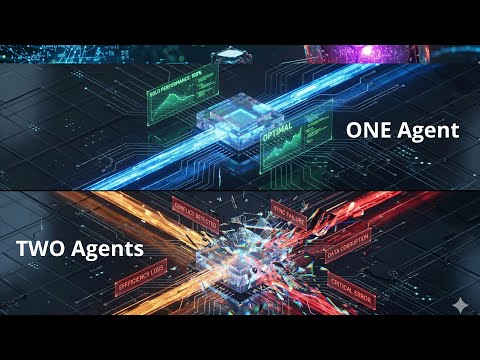
** In the video “Stanford: Do Not use 2 AI Agents: They will Fail,” the presenter discusses research from Stanford University revealing that utilizing two AI coding agents instead of one can lead to a significant decline in performance. The study, conducted using the Koopa benchmark, found that agents working in tandem achieved, on average, a 30% lower success rate compared to individual efforts. Key issues identified include communication breakdowns, unrealistic expectations of coordination, and failures to maintain commitments, leading to a suboptimal working environment for AI agents. The conclusion emphasizes the need for further research on multi-agent reinforcement learning to improve collaboration capabilities among AI systems. **
Rachell Powell on Evolutionary Convergence, Morality, and Mind | Mindscape 342
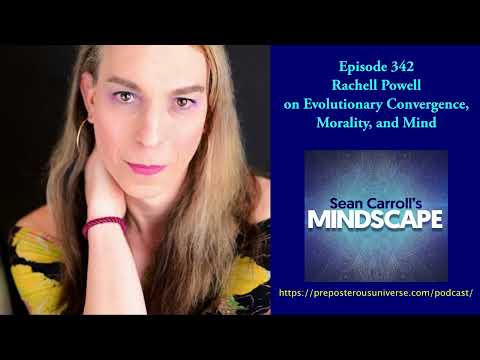
** In this episode of the Mindscape podcast, Rachell Powell discusses the interplay between evolutionary convergence, morality, and the human mind with host Sean Carroll. They explore the tension between contingency and necessity in evolution, emphasizing how different species can arrive at similar traits through distinct biological pathways. Powell argues that while convergence suggests some level of predictability in evolution, the uniqueness of human culture and intelligence emerges from a complex historical trajectory rather than being an inevitable outcome. This conversation challenges anthropocentric views and highlights the importance of interdisciplinary dialogue between biology and philosophy. **
Mind-Blowing Theoretical Physics with DeepSeek

** In “Mind-Blowing Theoretical Physics with DeepSeek,” Alexander Unzicker explores the intersection of Mach’s principle and the variable speed of light, emphasizing the innovative calculations performed by the AI model, Deep Seek. The video discusses the significance of these theoretical concepts in understanding gravity and the gravitational constant, showcasing the AI’s ability to engage in complex scientific reasoning. Unzicker highlights the potential shift in how physics is conducted due to AI advancements, claiming that such tools can complement human creativity in scientific problem-solving. The discussion also touches on the evolving nature of theoretical physics and the importance of examining foundational ideas from 100 years ago in contrast to modern interpretations. **
They Said It Was Impossible… This Simulation Solved It

** In this captivating video from Two Minute Papers, the host delves into a groundbreaking research paper that presents a new simulation method for modeling granular materials like sand. Traditional simulations struggle with the complexities of billions of grains, but the innovative approach discussed utilizes numerical homogenization to simplify calculations. By compressing a small box of grains to derive their mathematical behavior, the researchers are able to simulate the interactions of large numbers of grains efficiently. This exciting breakthrough not only challenges previous limitations but also opens new avenues for realistic simulations in physics and computer graphics. **