Weekly Physics Digest – January 18 – January 24, 2026
**This Week’s Digest: A Cosmic Conundrum and a Dragon’s Tale!** Buckle up, science enthusiasts! This week takes us on a wild ride through the universe of possibilities—from the mind-bending realms of quantum physics to the ancient tales of dragons (yes, you read that right). In the spirit of curiosity, we explore a particularly bizarre find with “Mind-BLOWING Physical Evidence of Dragons Being Real” from Answers in Genesis, presenting a unique look at how legends might have roots in reality. Additionally, Anton Petrov introduces us to a rogue planet discovery that hints we may be surrounded by billions of such wanderers in the Milky Way, revealing just how much we still have to learn about our cosmic neighborhood. Learn fast, stay curious!
Could Aliens Communicate Like Fireflies? Firefly Model for Alien Communication

** In the video, Anton Petrov explores a unique approach to the Fermi Paradox by examining how fireflies communicate and how this could inform our search for extraterrestrial intelligence. He discusses the limitations of the anthropocentric bias in traditional methods, which focus primarily on human-like signals, and presents a study from Arizona State University that advocates for a broader perspective. Fireflies utilize a binary signaling system, akin to Morse code, which could serve as a model for identifying alien communication. The research proposes that extraterrestrial signals might resemble pulsars but be distinct enough to indicate intelligence, emphasizing the importance of understanding communication as a universal trait in life. **
📚 Research Links (provided by the author in the video description):
Quantum Physics Can Change the Past, Physicists Show

** In her video, Sabine Hossenfelder explores a groundbreaking paper suggesting that quantum physics may allow for the alteration of past events, challenging our understanding of causality. She explains the concept of wave functions and measurements in quantum mechanics, illustrating how two observers can influence each other’s results, leading to the idea that past measurements could be erased. While she acknowledges the paper’s intriguing implications, Hossenfelder ultimately argues that it highlights our ongoing struggle to comprehend the true nature of measurement in quantum physics rather than proving that the past is not definite. **
📚 Research Links (provided by the author in the video description):
Randomness In Nature – Why I now Side with Einstein

** In the video “Randomness In Nature – Why I now Side with Einstein,” Alexander Unzicker explores the concept of randomness in physics, reflecting on Einstein’s skepticism towards the idea that nature operates on pure chance. He discusses how early in his career, he viewed randomness as a settled topic due to phenomena like quantum mechanics and radioactive decay. However, he now understands Einstein’s desire for a deeper explanation of randomness, suggesting that true physics should be able to make predictions without relying on inherent unpredictability. Unzicker emphasizes the importance of physical constants, particularly Planck’s constant, in understanding the nature of randomness and its implications for fundamental physics. **
What the Most Famous Library in the Ancient World Reveals About the Words of Jesus

** In this video, Jonathan Clerke discusses the significance of ancient libraries, particularly the Library of Alexandria, in relation to the teachings of Jesus. He highlights that libraries in biblical times were accessible to people from various social strata, allowing for a broader engagement with texts. Clerke argues that this context supports the authenticity of Jesus’s teachings, suggesting that he spoke profound truths understood by a diverse audience. Ultimately, he encourages viewers to seek a personal relationship with Jesus and to explore the Bible as a means of understanding his words. **
Pageau Found The Ultimate Hierarchy Secret In One Gospel Story

** In this episode, Curt Jaimungal converses with Jonathan Pageau about the profound implications of Jesus washing the feet of his disciples, framing it as a revolutionary example of hierarchy. Pageau emphasizes that true hierarchy involves those at the top serving those below, illustrating a kenotic or self-emptying identity that fosters mutual care and purpose. This act not only challenges conventional views of power but also presents a model for understanding human identity within a broader cosmic hierarchy, where each identity must participate in higher purposes while also serving the lower. Ultimately, the discussion unveils deep insights into the nature of love, identity, and the responsibilities that come with higher positions in any hierarchy. **
Giant Virus From Japan is Rewriting the Origin of Life
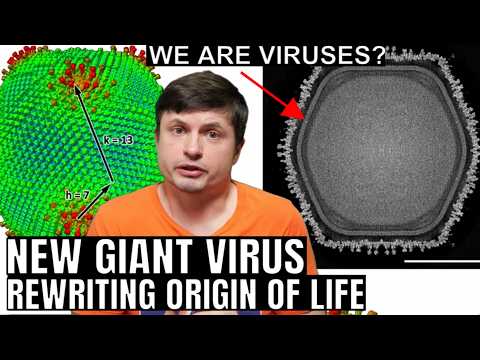
** In the video “Giant Virus From Japan is Rewriting the Origin of Life,” Anton Petrov explores the intriguing hypothesis of viral eukaryogenesis, which posits that the cell nucleus may have evolved from ancient giant viruses. Highlighting a recent discovery of the Ushiku virus from Japan, Petrov explains how this virus interacts with amoeba, potentially offering insight into the evolutionary origins of the complex structures within eukaryotic cells. He discusses the implications of this research for understanding the evolutionary history of life on Earth, suggesting that viruses played a pivotal role in the development of more complex cellular life forms. Petrov concludes that the history of life is a complex interplay of various organisms, including viruses, and encourages viewers to explore further studies on this topic. **
📚 Research Links (provided by the author in the video description):
Mind-BLOWING Physical Evidence of Dragons Being Real

** In the video “Mind-BLOWING Physical Evidence of Dragons Being Real,” Joel Leineweber discusses the historical and physical evidence supporting the existence of dragons, asserting that dinosaurs and humans coexisted. He explores various dragon legends from around the world and presents eyewitness accounts that resemble descriptions of real creatures. Leineweber argues that many ancient dragon depictions may have originated from encounters with large reptiles, including dinosaurs, and emphasizes that the perception of dragons as mythical is a modern development. He concludes by encouraging viewers to consider the biblical perspective on creation, asserting that legends may indeed be rooted in reality. **
The Mysterious Math Behind LLMs

** In “The Mysterious Math Behind LLMs,” Dr. Brian Keating engages with Anil Ananthaswamy to explore the profound yet enigmatic mathematical foundations of large language models (LLMs). They discuss the success of these AI systems despite issues like overparameterization and insufficient training data, questioning whether they reveal genuine structures or simply create convincing illusions. Ananthaswamy emphasizes the beauty of machine learning mathematics, particularly the perceptron convergence proof, and reflects on the historical context that led to the rise of deep learning. The conversation also addresses potential future challenges in AI, including concerns about data saturation and the implications of a prevailing “lock-in” effect on technological development. **
Why This Rogue Planet Discovery Changes Everything

** In “Why This Rogue Planet Discovery Changes Everything,” Anton Petrov discusses a groundbreaking discovery of a rogue planet, designated KMG 2024 BLG0792, whose mass and distance were accurately measured for the first time using a new technique involving gravitational microlensing. This significant finding suggests that there are likely billions of rogue planets in the Milky Way, vastly outnumbering traditional stars. The discovery also sheds light on the violent histories of planetary systems, indicating that many rogue planets may have been ejected from their original star systems. With upcoming advancements in telescope technology, astronomers anticipate uncovering even more of these mysterious worlds, enhancing our understanding of planetary formation and the dynamics of the galaxy. **
📚 Research Links (provided by the author in the video description):
Salesforce: New AI Agents That Doubt Themselves (AUQ)?

** In this video, the host discusses Salesforce Research’s innovative approach to addressing the “spiral of hallucination” in AI agents using Agentic Uncertainty Quantification (AUQ). By operationalizing Kahneman’s “System 1 vs. System 2” framework within large language models (LLMs), Salesforce introduces a dynamic control signal that allows AI to gauge its own confidence and pause for reflection when uncertain. This dual-processing method enhances the reliability of AI outputs by enabling the model to evaluate and improve its reasoning processes. The video concludes with a critical examination of the assumptions underlying this approach, particularly concerning the calibration of confidence scores in AI systems. **
📚 Research Links (provided by the author in the video description):
This Particle Solved Everything. We Just Found Out It Isn’t Real

** In the PBS Space Time video “This Particle Solved Everything. We Just Found Out It Isn’t Real,” the concept of the sterile neutrino is explored as a hypothetical particle that could fill gaps in the standard model of particle physics. Initially thought to exist based on experimental anomalies, recent findings from the Microboon experiment at Fermilab indicate that there is no evidence to support the existence of sterile neutrinos, challenging previous assumptions about their role in explaining neutrino masses and dark matter. The video delves into the complexities of neutrino interactions and oscillations, ultimately revealing that while the sterile neutrino remains an intriguing possibility, it is currently relegated to speculation without empirical support. **
Why There Cannot Be A Theory of Everything

** In the video “Why There Cannot Be A Theory of Everything,” Stuart Kauffman discusses the limitations of creating a comprehensive theory that unifies all scientific disciplines, particularly in relation to biological evolution. He argues that biological evolution is fundamentally open-ended and cannot be fully understood through established laws of physics or reductionist approaches. Kauffman emphasizes that new biological possibilities arise that are not deducible from existing structures, which challenges the notion that all potential forms already exist in a fixed state. This leads to the conclusion that a true “theory of everything” would need to account for the dynamic and evolving nature of life, which extends beyond traditional scientific frameworks. **
The Laws of Nature Are Ugly. Do We Have to Accept This?

** In this video, Sabine Hossenfelder challenges the prevailing notion that the laws of nature are inherently beautiful and symmetrical, suggesting instead that they may be fundamentally “ugly.” She reflects on her own journey of understanding in physics, citing examples like Maxwell’s equations and the Standard Model of particle physics, which reveal inconsistencies such as chirality and the absence of magnetic monopoles. Hossenfelder questions whether our aesthetic standards for beauty in science are too rigid, proposing that physicists may need to shift their focus from pursuing beauty to accurately describing reality. Ultimately, she raises the possibility that the laws of nature might remain “ugly” and argues for a new approach in the quest for understanding the universe. **
Riemann Liquid Spatio-Temporal Graph

** In the video “Riemann Liquid Spatio-Temporal Graph,” the host discusses the limitations of current deep learning architectures, emphasizing that they are too “flat” to effectively model the complexities of reality. Highlighting two recent research papers, the video explains how the Riemann Liquid Spatial Temporal Graph Network (RLTG) overcomes issues related to time representation in AI models, proposing a more dynamic approach using Riemannian manifolds. The second paper critiques the performance of large language models (LLMs) in understanding temporal logic, demonstrating that they often collapse future actions into present contexts, leading to flawed predictions. The host concludes by stressing the need for advancements in AI that incorporate a better understanding of time and causality. **
📚 Research Links (provided by the author in the video description):
Did God Create Over Billions of Years?

** In the video “Did God Create Over Billions of Years?”, Gary Bates from Creation Ministries International discusses the implications of integrating billions of years into biblical creation narratives. He critiques popular theories such as the Gap Theory, Progressive Creation, and Theistic Evolution, arguing that they compromise the authority of Scripture and distort the core tenets of the Gospel. Bates emphasizes that the concept of deep time contradicts a literal interpretation of the Bible, particularly concerning the timeline of creation and the nature of death, which he claims did not exist before Adam and Eve’s sin. He concludes that accepting these hybrid views not only undermines biblical teachings but also poses significant theological challenges. **
Why We Might Never Reach Mars: The Microgravity Problem

** In the video “Why We Might Never Reach Mars: The Microgravity Problem,” Anton Petrov explores the significant health challenges faced by astronauts during space travel, particularly in microgravity conditions. He discusses various issues such as loss of bone density, muscle atrophy, and the increased risk of anemia and vision problems caused by fluid shifts. The video highlights the complexities of human biology in space and considers the potential long-term effects on astronauts’ health upon their return to Earth. Petrov emphasizes that while some systems, like the cardiovascular system, show resilience, many others deteriorate, raising concerns about the viability of future missions to Mars without addressing these critical health issues. **
📚 Research Links (provided by the author in the video description):
Solipsism Is Just a Cheap Conspiracy Theory | Timothy Williamson

** In this video, philosopher Timothy Williamson critiques solipsism, the belief that only one’s mind is sure to exist, arguing that it is fundamentally flawed. He explains that solipsism is not a skeptical position but a definitive claim that one is the only reality. Williamson highlights the danger of such beliefs, likening them to conspiracy theories that are impervious to counter-evidence. He concludes that while solipsism may seem robust in argumentation, it lacks substantial evidence and ultimately reflects a misguided pursuit of enlightenment. **
Wellness for the Whole Person: Spirit, Soul, and Body

** In this insightful lecture, Dr. Jim Painter discusses the interconnectedness of spirit, soul, and body, emphasizing that each aspect influences the others. He explains how our gut health can significantly affect our mental well-being, introducing the concept of “psychobiotics,” which are probiotics that benefit mental health. By understanding the importance of nutrition and the microbiome, Dr. Painter encourages viewers to adopt healthier eating habits, particularly focusing on whole foods and fiber, to enhance overall wellness and alleviate issues like anxiety and depression. Ultimately, he concludes that true wellness involves nurturing all parts of our being—spirit, soul, and body—for a harmonious life. **
New DEEP GraphRAG & DW-GRPO: Hierarchical AI Reasoning

** In the video “New DEEP GraphRAG & DW-GRPO: Hierarchical AI Reasoning,” the presenter discusses the advancements in AI frameworks, particularly focusing on Deep GraphRAG and the Dynamic Weighting RL algorithm, DW-GRPO. Deep GraphRAG enhances traditional retrieval systems by implementing a hierarchical topological search, addressing the limitations of keyword-based searches and improving the exploration-exploitation tradeoff. The DW-GRPO algorithm tackles the “Seesaw Effect” in multi-objective training by dynamically adjusting reward weights, ensuring a balance between relevance, faithfulness, and conciseness in AI responses. The results demonstrate that a smaller model (1.5 billion parameters) can perform comparably to much larger models (72 billion parameters), showcasing the effectiveness of these new methodologies. **
📚 Research Links (provided by the author in the video description):
SETI@Home Has Finally Been Completed After 27 Years, Here’s What Was Found

** In this video, Anton Petrov discusses the completion of the SETI@Home project after 27 years of data collection and analysis, highlighting its significance as one of the most successful citizen science initiatives. With contributions from over 2 million volunteers, the project analyzed approximately 12 billion signals and narrowed them down to 100 intriguing candidates. While these signals do not confirm the existence of extraterrestrial life, they enhance our understanding of natural sources in the cosmos and establish a baseline for future searches. The video also outlines the project’s legacy and ongoing efforts in the quest for extraterrestrial intelligence. **
📚 Research Links (provided by the author in the video description):
From QWERTY to AI: Technological Lock In | Anil Ananthaswamy

** In this engaging discussion, Anil Ananthaswamy and Dr. Brian Keating delve into the concept of technological “lock in,” examining how early technologies can dominate and shape future innovations. Using examples like the QWERTY keyboard and the limitations faced by the Hubble Space Telescope, they illustrate how past decisions can constrain advancements. Ananthaswamy raises concerns about the current AI landscape, particularly the dominance of large language models (LLMs) and GPUs, suggesting that the overwhelming focus and funding in this area might stifle alternative approaches and essential research in AI development. **
The Geothermal Advantage Nobody Talks About

** In “The Geothermal Advantage Nobody Talks About,” Sabine Hossenfelder explores the significant advancements in geothermal energy technology, which has the potential to increase its contribution to global electricity production from less than 1% to up to 8% by 2050. New techniques, such as enhanced geothermal systems and closed-loop systems, are making drilling faster, cheaper, and more efficient, allowing geothermal energy to be harnessed in a wider range of locations. This bipartisan energy source is gaining traction in various countries, with substantial investments and support from governments, especially in the U.S. and Germany. Despite some environmental concerns, geothermal energy is positioned as a clean and increasingly viable alternative to traditional energy sources. **
Why The Founder of Complexity Theory Abandoned Reductionism

** In this engaging interview, Stuart Kauffman, a pioneer in complexity theory, asserts that the quest for a unifying “theory of everything” is fundamentally flawed, suggesting that biological evolution creates new possibilities that cannot be deduced from prior states. He draws parallels with ancient Chinese philosophy, emphasizing that the evolving biosphere cannot be fully described or predicted, contrasting with the deterministic views of classical physics. Kauffman introduces concepts like “Kantian wholes” and “Darwinian exaptations,” arguing that life’s complexity arises from non-reductive interactions among parts that cannot be understood through traditional mathematical frameworks. Ultimately, he challenges listeners to rethink the relationship between physics and biology, advocating for a view that recognizes the open-ended nature of evolution. **
📚 Research Links (provided by the author in the video description):
New AI Post-Training: Add RL as orthogonal vector to SFT

** In the video “New AI Post-Training: Add RL as orthogonal vector to SFT,” the host explores the challenges faced by AI systems in integrating new knowledge effectively. Highlighting a recent paper, he explains the importance of distinguishing between knowledge acquisition and skill learning, which occur in nearly orthogonal subspaces within AI models. The proposed solution involves a new methodology that allows for the decoupling of supervised fine-tuning (SFT) from reinforcement learning (RL), making the process more efficient and scalable. This approach could potentially enhance the AI’s reasoning capabilities without the extensive costs associated with traditional methods. **
📚 Research Links (provided by the author in the video description):
Why Physicalism Is Probably False | Timothy Williamson

** In this episode, Timothy Williamson challenges the notion of physicalism, arguing that the concept of “everything being physical” is fundamentally ill-defined. He presents the idea that physics relies heavily on mathematics, which introduces non-physical entities like sets, thus contradicting strict reductionist views. Furthermore, Williamson suggests that the belief in only physical objects is a metaphysical stance rather than a scientific one, and he emphasizes that many abstract concepts, such as novels or mathematical entities, cannot be classified as purely physical. Ultimately, he questions the validity of reductionism and physicalism, highlighting the philosophical complexities surrounding these topics. **
Weird Looking Supernova Explained Solving a 850 Year Mystery

** In this video, Anton Petrov explores the peculiar supernova remnant known as PA30, which has puzzled astronomers for over 850 years. Initially linked to a guest star observed in 1181, PA30 exhibits a bizarre dandelion-like shape and is associated with a rare type 1AX supernova, resulting from the merger of two white dwarfs. Recent studies reveal that the unique filamentous structure is due to a phenomenon called Rayleigh-Taylor instability, allowing long tendrils to form instead of the usual smooth clouds seen in other supernovae. The remnant, located 7,000 light-years away, is significant for understanding stellar evolution, and scientists predict it may explode again within the next 10,000 years. **
📚 Research Links (provided by the author in the video description):
What If You Keep Slowing Down?

** In the Veritasium video “What If You Keep Slowing Down?” viewers explore the fascinating world of time manipulation through advanced photography techniques. The video traces the evolution of strobe photography initiated by Harold Edgerton, who developed a strobe capable of capturing incredibly fast moments, such as a tennis ball striking a racket or a bullet piercing a card. Advancements in technology now allow for ultra-high-speed cameras that operate at trillion frames per second, enabling the visualization of light traveling and even capturing the movement of electrons around molecules. By combining these techniques, scientists can create attosecond snapshots that provide unprecedented insights into atomic dynamics, pushing the boundaries of what we can observe in the microscopic world. **
Hierarchical Reasoning HRM 2.0: NEW Attractor Dynamics in AI

** In the video “Hierarchical Reasoning HRM 2.0: NEW Attractor Dynamics in AI,” the host explores advancements in Hierarchical Reasoning Models (HRM), emphasizing their potential to outperform autoregressive models like ChatGPT. The discussion revolves around the concept of recursion, which allows these models to tackle complex reasoning tasks efficiently without requiring extensive memory. However, the video highlights a critical challenge known as the “fixed point trap,” where the model can become stuck in incorrect solutions due to poor latent space training. The phenomenon of “grocking,” previously observed in language models, is also examined, suggesting that HRMs may not reason in a traditional sense but rather guess solutions based on initial conditions. **
📚 Research Links (provided by the author in the video description):
Stewart Brand on Maintenance as an Organizing Principle | Mindscape 341

In this episode of the Mindscape podcast, Sean Carroll interviews Stuart Brand about the crucial yet often overlooked theme of maintenance as an organizing principle in society. Brand discusses his new book, “Maintenance,” which explores the importance of upkeep in various systems, from sailing ships to modern technology, emphasizing that all complex systems require maintenance to prevent breakdown due to the Second Law of Thermodynamics. The conversation delves into the cultural attitudes towards maintenance, the right to repair movement, and the evolution of maintenance practices in both technology and everyday life, showcasing how a proactive approach can lead to more resilient systems.
Bizarre Object Detected Gravitationally Makes No Sense

** In this video, Anton Petrov explores the intriguing discovery of a mysterious gravitational object found within the Einstein ring of the gravitational lens JVAS B1938+666. Initially believed to be a satellite galaxy, a reanalysis revealed that this object is actually a significant perturber, located behind the main lens and potentially ten times more massive than first thought. Its unusual density profile challenges existing models of dark matter, suggesting the possibility of self-interacting dark matter rather than cold dark matter. As scientists prepare for observations with the James Webb Space Telescope, this enigma could reshape our understanding of the universe’s structure and the fundamental laws of physics. **
📚 Research Links (provided by the author in the video description):
This Fluid Simulation Should Not Be Possible

** In the video “This Fluid Simulation Should Not Be Possible,” the host explores groundbreaking advancements in fluid simulation technology, particularly through the use of Octrees. Traditional grid methods struggle with complex simulations due to inefficiencies in neighbor searches, but the new Octree structure allows for adaptable grid sizes, enhancing performance and reducing computation time. The video highlights how this innovative approach enables stunning visual detail in simulations, even with millions of particles, while also challenging long-held assumptions about grid cell sizes and their impact on simulation speed. Ultimately, this work represents a significant leap in computer graphics, proving that previously “impossible” simulations are now achievable. **
AI for HealthCare? Are you sure, OpenAI?

** In the video “AI for HealthCare? Are you sure, OpenAI?” from Discover AI, the host discusses the significant risks associated with using AI for medical advice, particularly highlighting a study from Duke and Stanford. The research reveals that AI models often fail to redirect false patient assumptions, leading to potentially dangerous medical advice. This issue arises from AI’s design focus on helpfulness, which can conflict with safety, especially in high-stakes scenarios. The video emphasizes the need for improved AI systems that can safely navigate patient misconceptions while addressing the legal and ethical implications of AI-generated medical guidance. **
📚 Research Links (provided by the author in the video description):