
Weekly Physics Digest – May 10 – May 16, 2026
This Week in Science and Education: Cosmic Discoveries and AI Dilemmas! Welcome back, fellow knowledge seekers! This week, we’ve got a treasure trove of content that spans the cosmos to the digital realm. Among the stars, Anton Petrov reveals an astonishing discovery: a tiny rock in our solar system that has developed an atmosphere, waving the “We’re not just big rocks” flag high. Meanwhile, Sabine Hossenfelder dives deep into the quagmire of AI, predicting it’s about to hit a wall of energy shortages by 2026. Spoiler alert: it’s not because of a lack of smart ideas! Learn fast, stay curious!
Do Imaginary Numbers Reveal a Hidden Layer of Reality?

** In the video “Do Imaginary Numbers Reveal a Hidden Layer of Reality?” Arvin Ash explores the significance of imaginary numbers in physics, arguing that they are not just mathematical tricks but essential components that simplify complex equations concerning waves, oscillations, and quantum mechanics. He explains how imaginary numbers extend the number system, allowing for a richer mathematical framework that could hint at hidden dimensions or structures beyond observable reality. The discussion raises philosophical questions about the nature of reality, suggesting that what we measure may only represent a slice of a deeper, more complex existence. Ultimately, Ash posits that the role of imaginary numbers in our scientific theories may indicate a richer understanding of the universe’s fabric. **
Time Is Real. The Block Universe Is Wrong.

** In the video “Time Is Real. The Block Universe Is Wrong,” Professor George Ellis argues against the standard block universe theory, asserting that it misinterprets the principles of general relativity by ignoring the evolving nature of space-time. He introduces the concept of an “evolving block universe,” where space-time grows over time, thus establishing a global direction of time that is not captured by the traditional model. Ellis highlights that while physical equations are time-symmetric, the context of an expanding universe provides a clear direction for time’s arrow, which can be observed across various physical phenomena. Additionally, he critiques the multiverse theory for lacking empirical testability, emphasizing the need for scientific claims to be grounded in observable data. **
The Information Revolution in Science

** In “The Information Revolution in Science,” Alexander Unzicker discusses how artificial intelligence (AI) is poised to transform the landscape of scientific research and publication. He draws parallels between historical advancements in information technology, such as the printing press and the internet, and the potential for AI to revolutionize how research is conducted and shared. Unzicker critiques the current peer-review system, citing issues like quality control and publication inflation, and argues that AI could lead to a new era of information organization in science. He remains optimistic that this shift will facilitate a more effective and accessible scientific discourse. **
NEW Self-Improving Memory For AI (Forget Memory.md)

** In the video “NEW Self-Improving Memory For AI (Forget Memory.md),” the host introduces a groundbreaking approach to AI memory systems through a self-evolving graph memory engine called Sage. Unlike traditional methods that rely on static memory indexing, Sage utilizes a dynamic, optimizable graph structure that continuously evolves based on reinforcement learning feedback. This innovative design enhances multi-hop reasoning capability in AI agents by allowing them to adaptively refine their memory representations, leading to significant improvements in retrieval accuracy and efficiency. The video concludes by emphasizing the scientific underpinnings of AI development, showcasing the mathematical complexity behind this advancement. **
📚 Research Links (provided by the author in the video description):
Could Viruses Be Good? | New Evidence Our Sun Is Rare | Fazale “Fuz” Rana and Hugh Ross

** In this episode of “Star Cells and God,” biochemist Fazale “Fuz” Rana and astrophysicist Hugh Ross explore the theological implications of recent scientific discoveries, particularly focusing on the role of viruses and the uniqueness of our solar system. Rana discusses research from Imperial College London suggesting that certain viruses can actually prevent the metastasis of breast cancer, raising the question of why a benevolent God would create a world with pathogenic viruses. Ross elaborates on the rarity of our solar system’s conditions, particularly regarding the Sun’s lithium deficiency, which challenges the notion of life elsewhere in the universe. Together, they argue that these findings may point to a designed purpose within creation, suggesting that suffering may lead to greater goods. **
📚 Research Links (provided by the author in the video description):
The Uncomfortable Truth About AI “Reasoning” | World Science Festival
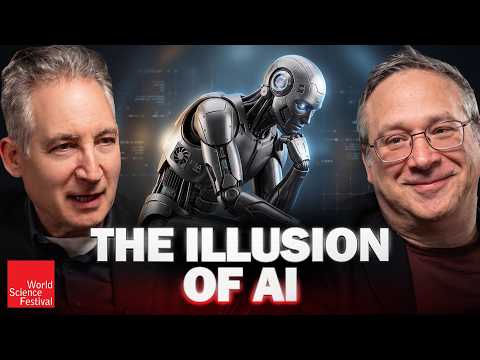
** In this engaging discussion, cognitive scientist Gary Marcus and physicist Brian Greene delve into the complexities of artificial intelligence (AI) and its limitations in reasoning compared to human cognition. Marcus critiques the prevailing belief in the “just scale it” hypothesis, emphasizing that mere increases in data and computational power are insufficient for achieving artificial general intelligence (AGI). He argues that true reasoning requires a combination of symbolic AI and neural networks, as current models often fall short in abstraction and generalization, leading to misconceptions about their intelligence. The conversation ultimately challenges viewers to rethink the nature of AI, its capabilities, and the potential future of human and machine interaction. **
3 Reasons Why Dinosaurs are Not as Old as You Think

** In the video “3 Reasons Why Dinosaurs are Not as Old as You Think,” Dr. Mark Harwood presents evidence suggesting that dinosaurs may have lived much more recently than the widely accepted timeline of 66 million years. He cites findings of soft tissue, intact DNA, and carbon-14 in dinosaur bones, which he argues cannot survive for millions of years, supporting a biblical timeline that aligns with a global flood occurring around 4,500 years ago. Additionally, historical accounts and depictions, such as medieval dragon legends and artwork, are presented as potential evidence of human encounters with dinosaurs, further challenging conventional evolutionary narratives. **
Source of Strange G-Objects Near the Central Black Hole Identified

** In this video, Anton Petrov explores the enigmatic G-Objects orbiting the supermassive black hole Sagittarius A*. These peculiar formations, first identified in 2012, exhibit characteristics of both gas clouds and stars, confounding scientists for years. Recent studies suggest that these G-Objects, including G1, G2, and the newly discovered G2T, may originate from a massive binary star system known as IRS 16 SW, which emits stellar winds that create these unusual structures. The upcoming close approach of G2T in 2031 promises to offer crucial insights into their formation and the complex relationship between stellar evolution and black hole activity. **
📚 Research Links (provided by the author in the video description):
Can This Device Tell Us How Time Actually Works?

** In this video, Sabine Hossenfelder explores a groundbreaking paper that proposes using a special type of atomic clock to investigate the nature of time, challenging traditional notions from both general relativity and quantum physics. While Einstein’s theory posits that time varies based on acceleration, quantum physics treats time as a universal constant. The researchers aim to measure time’s variability by utilizing aluminum ion clocks, which offer greater precision than traditional cesium clocks. This experiment could potentially reveal whether multiple dimensions of time coexist, offering new insights into the fundamental workings of the universe. **
📚 Research Links (provided by the author in the video description):
Joscha Bach: The Self Is a Story Your Brain Tells Itself

** In a thought-provoking discussion with Dr. Brian Keating, AI researcher Joscha Bach proposes that consciousness is akin to a software agent operating within our minds, suggesting that our perception of reality is a simulation produced by the brain. Bach challenges conventional views by explaining that the self is not a fixed entity, but rather a narrative constructed by our cognitive processes. He posits that intelligence should be defined by the ability to create models rather than merely by outputs, and emphasizes the importance of understanding the underlying mechanics of consciousness. This exploration leads to broader implications about the nature of reality, the potential for artificial general intelligence (AGI), and our interconnectedness with concepts traditionally associated with spirituality and existentialism. **
There May Be NO Theory of Everything… Oops

** In this thought-provoking video, Curt Jaimungal and Professor Janna Levin explore the intriguing possibility that a “theory of everything” may not exist, drawing parallels to Gödel’s incompleteness theorems. They discuss how the universe’s initial conditions may be self-referential and unprovable, suggesting that certain truths about the cosmos could remain inherently unknowable despite the consistency of physical laws. The conversation delves into the implications of these ideas for physics and metaphysics, emphasizing the complexities surrounding the universe’s creation and the limits of human understanding. **
Next Stage of AI Scientist: NanoResearch (Skills, Mem, RL)

** In the video “Next Stage of AI Scientist: NanoResearch,” the presenter explores the evolution of AI scientists from generic research generators to dynamic, personalized collaborators that adapt to individual researcher workflows. The concept of NanoResearch focuses on integrating skills, memory, and reinforcement learning to create an AI that evolves alongside human researchers, learning from their unique methodologies and preferences. This approach allows the AI to produce tailored research outputs while decreasing computational costs and improving efficiency. The presenter emphasizes the importance of human feedback in this co-evolutionary process, enabling the AI to refine its performance and better align with researchers’ scientific styles. **
📚 Research Links (provided by the author in the video description):
Discovery of an X-Ray Dot Provides Clues on Little Red Dot Mystery

** In this video, Anton Petrov explores the intriguing mystery of “little red dots,” tiny, bright objects detected by the James Webb Space Telescope that date back to the early universe. These objects, which appear shortly after the Big Bang and then vanish after 1.5 billion years, have sparked debates regarding their nature, with theories ranging from compact galaxies to exotic stars or massive black holes. Recent discoveries, including the identification of an “X-ray dot,” have provided crucial insights, suggesting that many of these little red dots may indeed be related to supermassive black holes surrounded by dense gas. This evolving understanding challenges previous notions about galaxy formation, indicating that black holes may have played a pivotal role in shaping galaxies rather than being mere byproducts of their development. **
📚 Research Links (provided by the author in the video description):
These Reactors Solve The Nuclear Safety Problem

In her video, Sabine Hossenfelder discusses the emergence of subcritical nuclear reactors, a promising innovation aimed at enhancing nuclear safety. Unlike traditional fission reactors that can lead to runaway chain reactions, subcritical reactors operate below the critical mass threshold, making them incapable of explosive failures. Companies like Empira and Subcritical Systems are developing these technologies, with applications ranging from powering data centers to potentially burning radioactive waste. While subcritical reactors could make nuclear energy safer, Hossenfelder expresses skepticism about their affordability and size.
Webb Finds an Old Galaxy That Appears to Not Spin At All
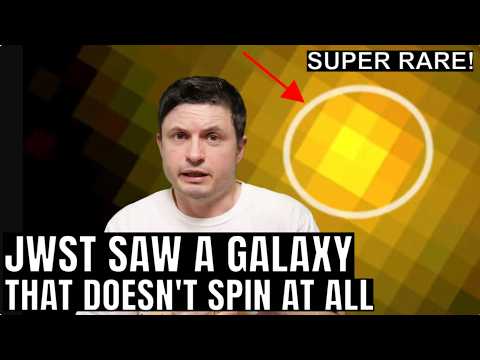
** In this video, Anton Petrov discusses a groundbreaking discovery made by the James Webb Space Telescope: a massive galaxy, designated XMM vid 1271, that appears to be non-rotating, which challenges long-held assumptions about galaxy formation and evolution. Typically, galaxies are expected to spin due to gravitational influences during their formation, but this galaxy, located 11.9 billion light-years away, exhibits a chaotic motion of stars instead. The research team proposes three potential explanations for this anomaly, including a rare formation event from a single massive merger, chaotic gas inflow, or the existence of a previously theorized type of non-rotating galaxy. This finding raises significant questions about galactic evolution and suggests that our understanding of dark matter and galaxy formation may need to be revised. **
📚 Research Links (provided by the author in the video description):
Avi Loeb: The Evidence for Aliens Is Being Ignored

** In this thought-provoking conversation, Harvard astrophysicist Avi Loeb discusses the suppression of radical scientific ideas, drawing parallels to Galileo’s historical challenges. Loeb, who heads the Galileo Project focused on detecting extraterrestrial technology, expresses concern over the censorship in the academic community, particularly regarding unconventional theories like the existence of unidentified aerial phenomena (UAP). He highlights the importance of open inquiry and data collection, emphasizing that the current scientific system risks stifling innovation and discovery by dismissing ideas without proper examination. Loeb calls for a more inclusive approach that allows diverse theories to be explored and evaluated by the scientific community and the public. **
AI Will Hit a Wall in 2026, if nothing changes.
** In her video, Sabine Hossenfelder discusses an impending challenge for AI progress predicted to hit a wall around 2026, primarily due to energy supply limitations rather than technological stagnation. She highlights that the energy demand for data centers is expected to double from 2024 to 2030, outpacing the growth of electricity generation capabilities. Hossenfelder emphasizes that logistical issues, poor planning, and slow grid expansion could hinder the advancement of AI, leading to potential delays in data center projects and overall development. The video concludes with a cautionary note regarding the future of AI, stating that without adequate energy infrastructure, the industry’s growth may face significant setbacks. **
A Black Hole Is Not a Dead Star

** In this episode of Curt Jaimungal’s podcast, Professor Janna Levin discusses the fascinating nature of black holes, emphasizing that they are not merely the remnants of dead stars but rather fundamental components of the universe. She explores the characteristics of black holes, likening them to elementary particles due to their indistinguishable nature defined by mass, charge, and spin. Levin also delves into the complex relationship between black holes and quantum mechanics, proposing that black holes may hold clues to understanding the information loss paradox, entropy, and the fundamental nature of gravity. Overall, the conversation highlights the intricate interplay between black holes and our understanding of the cosmos. **
The Unreasonable Effectiveness of the Klein Bottle | Janna Levin

** In this engaging discussion, physicist Janna Levin explores the profound implications of the Klein bottle, a unique mathematical object, in understanding the universe’s structure and the origins of matter. Levin and co-author Brian Greene propose that the universe could be compactified on a Klein bottle, allowing for novel insights into asymmetries that could explain the dominance of matter over antimatter. They delve into complex concepts such as self-referentiality, Godel’s incompleteness theorem, and the geometry of the universe, suggesting that the laws of physics may be more geometrical than previously thought. This conversation not only highlights the intersection of mathematics and physics but also prompts deeper questions about the nature of reality itself. **
📚 Research Links (provided by the author in the video description):
Sam Harris: The One Thing That’s Real

** In this thought-provoking video, Sam Harris discusses the nature of consciousness and free will, asserting that consciousness is the one undeniable reality in the universe, more certain than the laws of physics. He argues that while we can be confused about our existence, the experience of consciousness is irrefutable. In contrast, Harris contends that free will is a complete illusion, inherently incoherent regardless of determinism or quantum indeterminism. He suggests that it is possible to design experiments demonstrating this illusion, ultimately highlighting the disconnect between our subjective experience of choice and the objective understanding of causality. **
Tiny Rock In the Solar System Contains Atmosphere and Nobody Knows Why

** In the video, Anton Petrov discusses the unexpected discovery of a global atmosphere surrounding the small trans-Neptunian object 2002 XV93, challenging existing notions of planetary atmospheres. Despite being only 470-500 km in diameter—much smaller than Pluto—this icy world exhibits a thin atmospheric layer, detected through a stellar occultation technique. Petrov explores possible explanations for this phenomenon, suggesting it could be due to a recent impact event or cryovolcanism, although the latter is less likely given current observations. This discovery not only reshapes our understanding of small celestial bodies but also highlights the contributions of citizen scientists in astronomical research. **
📚 Research Links (provided by the author in the video description):
Einstein’s Theory Has a Problem — This Idea Solves It

** In her video, Sabine Hossenfelder discusses a recent paper proposing a novel approach to reconciling Einstein’s theory of spacetime with quantum mechanics by suggesting that space may be one-dimensional at very short distances. This idea, while not entirely new, could potentially resolve long-standing issues with infinities in quantum gravity calculations. However, the authors admit that their predictions are currently untestable, raising philosophical questions about the nature of scientific inquiry in the context of quantum gravity. Hossenfelder emphasizes that while other foundational problems in physics may still be addressed experimentally, quantum gravity poses severe challenges that may remain unresolved for a long time. **
A Better, Cheaper RAG (Neuro-Sym Multi-hop Reasoning)
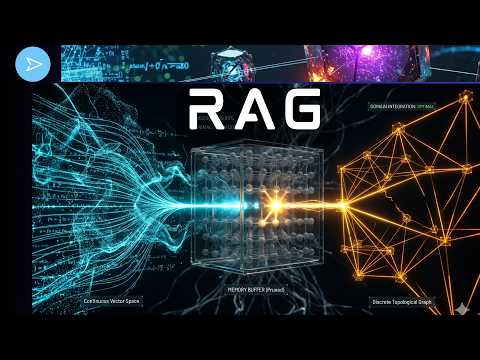
** In the video “A Better, Cheaper RAG (Neuro-Sym Multi-hop Reasoning),” the presenter introduces TGS-RAG, a novel approach that combines continuous vector spaces with discrete graph topologies to enhance retrieval augmented generation (RAG) systems. This innovative method addresses the inefficiencies of traditional global graph computation by utilizing a bidirectional coupling that significantly reduces computational costs by about 80%. TGS-RAG effectively merges text-based and graph-based reasoning, allowing for improved accuracy in multi-hop reasoning tasks while minimizing reliance on brute-force indexing. The presenter highlights its performance superiority and cost-effectiveness, marking a potential breakthrough in AI reasoning systems. **
📚 Research Links (provided by the author in the video description):