
Weekly Physics Digest – July 05 – July 11, 2026
This Week’s Scientific Digest: Cosmic Revelations and Quantum Quandaries.
Welcome back, curious minds! This week, we’re diving headfirst into gravitational mysteries, cosmic whodunits, and the physics of black holes—all without the need for a spaceship (though we wouldn’t mind one). One standout video is Anton Petrov’s exploration of a mysterious substance found on both Pluto and Titan, which promises to rewrite our understanding of prebiotic chemistry. But that’s just scratching the surface! Steve Mould takes a more down-to-earth approach by explaining how the seemingly chaotic arm flailing during a fall is a clever dance of physics and biology, showing us that even our most instinctive actions are governed by the laws of the universe. Learn fast, stay curious!
Welcome back, curious minds! This week, we’re diving headfirst into gravitational mysteries, cosmic whodunits, and the physics of black holes—all without the need for a spaceship (though we wouldn’t mind one). One standout video is Anton Petrov’s exploration of a mysterious substance found on both Pluto and Titan, which promises to rewrite our understanding of prebiotic chemistry. But that’s just scratching the surface! Steve Mould takes a more down-to-earth approach by explaining how the seemingly chaotic arm flailing during a fall is a clever dance of physics and biology, showing us that even our most instinctive actions are governed by the laws of the universe. Learn fast, stay curious!
Does Einstein Need an Upgrade? | World Science Festival

** In this engaging discussion at the World Science Festival, physicist Brian Greene and Claudia de Rham delve into the implications of massive gravity and its potential to modify Einstein’s general theory of relativity. They explore the historical evolution of the concept, tracing it from early theories by Fierz and Pauli to modern attempts to reconcile gravity with quantum mechanics. De Rham explains the complexities of massive gravity and how introducing mass to the graviton opens up fascinating yet challenging questions about the nature of gravitational interactions and the resulting theoretical implications. Ultimately, the conversation highlights the ongoing quest to understand gravity and the universe, questioning whether Einstein’s framework requires an upgrade or if it remains fundamentally sound. **
This New Laser Is Based On Black Hole Physics

** In this video, Sabine Hossenfelder discusses a groundbreaking new type of laser inspired by the physics of black holes. Contrary to common belief that black holes only absorb light, they actually concentrate it in a region known as the photon sphere. Researchers have developed a two-dimensional analog of this phenomenon using a 3D-printed structure that traps and amplifies light, creating a new method for laser generation. Although the experiment serves as a proof of principle rather than a commercial product, it opens intriguing avenues in the field of analog gravity, highlighting the connections between light behavior in various mediums and gravitational effects. **
📚 Research Links (provided by the author in the video description):
Fable 5: Fabulous Debate on the Gravitational Constant G

** In the video “Fable 5: Fabulous Debate on the Gravitational Constant G,” Alexander Unzicker engages in a deep conversation about gravitational physics with a knowledgeable counterpart, addressing foundational issues surrounding Newtonian gravity and Einstein’s general relativity. They explore the unsatisfactory nature of the gravitational constant G, discussing its empirical origins and the challenges of deriving it theoretically. The discussion highlights various unsolved problems, including the implications of Mach’s principle, the rigidity of G, and the need for a better understanding of mass distribution in the universe. Ultimately, both participants emphasize the importance of skepticism in physics and the potential for AI to advance scientific inquiry. **
📚 Research Links (provided by the author in the video description):
The Simulation That Explains Consciousness

** In “The Simulation That Explains Consciousness,” Curt Jaimungal explores the concept of multiple universes and observer-dependent reality through a dialogue with Nir Lahav. He argues that every universe, or “bubble of reality,” is valid as long as there are observers within it, leading to the conclusion that the vacuum of space is not empty but filled with these bubbles. The discussion delves into the nuances of consciousness, suggesting that cognitive systems emerge from the causal relations between neurons and their environment, ultimately bridging the gap between external and internal frames of reference in simulations. Jaimungal posits that understanding these relational dynamics is crucial for a deeper comprehension of consciousness. **
Water Turns Into a Super Acid Under Certain Conditions

** In the video, Anton Petrov explores the intriguing transformation of water into a superacid under extreme conditions, such as high pressures and temperatures found on gas giants like Uranus and Neptune. Recent research from Sorbonne University suggests that water can exhibit acidity levels beyond that of sulfuric acid, leading to unique chemical reactions that may explain phenomena like diamond rain on these planets. The video delves into the process by which superacidic water interacts with methane, resulting in reactive carbon formations and potential implications for planetary magnetic fields. Additionally, Petrov discusses other unusual states of water, including supercritical fluids and superionic ice, highlighting the complexity and mystery surrounding this common yet remarkable substance. **
📚 Research Links (provided by the author in the video description):
Were Dragons Actually Dinosaurs?

** In the video “Were Dragons Actually Dinosaurs?” creation speaker Dr. Mark Harwood presents intriguing evidence that suggests the dragons of medieval legend may have been based on real dinosaurs. He discusses historical depictions, such as those found in the tomb of Bishop Bell from 1496, which resemble sauropod dinosaurs, indicating that people may have seen these creatures long before they were scientifically recognized. Harwood further supports this claim with references to ancient texts, including Marco Polo’s accounts of enormous serpents, arguing that the descriptions align closely with known dinosaur characteristics. The video concludes by inviting viewers to explore additional resources that provide further insights into the relationship between dinosaurs and historical dragon legends. **
China Released First Ever Picture of Earth’s Quasi-Moon Kamo’oalewa
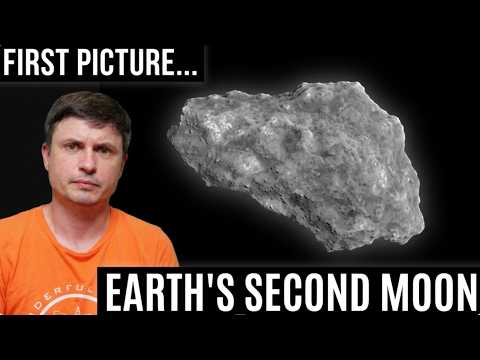
** In this video, Anton Petrov discusses the groundbreaking mission by China’s Tianwen-2 spacecraft, which recently captured the first-ever image of Earth’s quasi-moon, Kamoʻoalewa. This small celestial body, believed to potentially be an ancient piece of the Moon, has been orbiting the Earth for over a century. The mission aims to collect samples to determine the object’s origin—whether it is a fragment of the Moon or a typical asteroid with a similar appearance. With innovative sampling techniques planned, the findings could significantly enhance our understanding of the Earth-Moon system and the history of material exchange in the solar neighborhood. **
📚 Research Links (provided by the author in the video description):
Qwen: AI Memory “NapMem” as a Dynamic Action Space

** The video discusses a groundbreaking memory technology known as NapMem, which enables AI agents to navigate memory as a dynamic action space. This new framework, developed by Qwen in collaboration with several universities, shifts from passive retrieval systems to active memory navigation, allowing AI to make decisions based on hierarchical memory structures. The authors argue that their 9 billion parameter model, enhanced with reinforcement learning for navigation, can outperform larger models like Qwen 3.5 with 397 billion parameters, showcasing the significance of optimizing the navigation policy over sheer model size. The video emphasizes the importance of this innovative approach to memory management in AI, proposing a future where memory acts as an active participant in decision-making processes. **
📚 Research Links (provided by the author in the video description):
Beatriz Villarroel: The Strongest Evidence for Alien Technosignatures

** In this episode, Dr. Beatriz Villarroel discusses her three strongest claims regarding potential alien technosignatures, highlighting the unexpected 22-sigma Earth shadow deficit as the most striking result. She details how this finding, alongside a correlation with nuclear tests and other transient phenomena, may indicate artificial or extraterrestrial activity. Villarroel’s work challenges existing hypotheses, suggesting that numerous unexplained point-like flashes in historical sky photographs could represent significant, previously unnoticed objects near Earth. This conversation not only explores her groundbreaking discoveries but also addresses the criticisms and implications of her findings in the search for extraterrestrial intelligence. **
Physicists Just Broke One Of Quantum Physics’ Biggest Restraints

** In her latest video, Sabine Hossenfelder discusses a groundbreaking discovery by physicists who have found a method to circumvent the “no cloning” theorem of quantum physics, which has long limited the copying of quantum states. Traditionally, this theorem posits that copying a quantum state without destroying the original is impossible, posing challenges for quantum computing. However, the researchers demonstrated that it is possible to create perfect copies of quantum states as long as only one copy can be read at a time, marking a significant advancement in quantum information theory. This breakthrough could lead to improved quantum computing algorithms and possibly contribute to the development of a future quantum internet. **
📚 Research Links (provided by the author in the video description):
The Arm Spin That Stops a Fall

** In “The Arm Spin That Stops a Fall,” Steve Mould explores how humans use the conservation of angular momentum to regain balance when falling. He explains that by flailing their arms, individuals create counteracting forces that help prevent a fall, emphasizing that it’s not merely about arm movement but effective rotation and torque. The video also compares human balance mechanisms to a robot’s balancing code, revealing that both systems use similar principles, but humans rely on a complex neural network to simulate outcomes and adjust movements dynamically. The fascinating interplay between physics and biology showcases how even simple actions like arm flailing can involve intricate physical laws and advanced cognitive processing. **
Self-Learning AI Swarm Intelligence (New Code, RSI)

** In the video “Self-Learning AI Swarm Intelligence,” the host discusses a novel approach to overcoming the limitations of long-running autonomous coding agents that tend to converge on suboptimal solutions. By implementing a two-tiered system of explorer and optimizer agents managed by a shepherd agent, the swarm can explore multiple coding strategies simultaneously without becoming trapped in local optima. The use of Git as a persistent memory structure allows for greater flexibility and creativity, enabling agents to make significant code changes rather than mere micro-optimizations. This innovative architecture shows promise in enhancing algorithmic discovery while managing resource allocation efficiently. **
📚 Research Links (provided by the author in the video description):
Why Advanced Aliens Probably Don’t Build Dyson Spheres

** In the video “Why Advanced Aliens Probably Don’t Build Dyson Spheres,” Anton Petrov discusses recent studies that challenge the traditional Kardashov scale of civilization advancement, particularly regarding energy consumption and efficiency. He highlights the concept of Kardashov’s conundrum, revealing that the linear growth model used to predict humanity’s energy production may be fundamentally flawed, with actual growth being significantly more unpredictable. The video introduces a new measurement model that incorporates information processing efficiency, suggesting that a truly advanced civilization would not only harness vast energy but do so with minimal waste heat, possibly making them less visible to us. Additionally, Petrov warns that the rapid growth of AI could accelerate energy demands to unsustainable levels, potentially leading humanity to confront critical limits much sooner than anticipated. **
📚 Research Links (provided by the author in the video description):
Why the Earth Can’t be Billions of Years Old

** In the video “Why the Earth Can’t be Billions of Years Old,” Dr. Mark Harwood argues against the scientific consensus on the age of the Earth, positing that evidence from geology, astronomy, and biology supports a young Earth in line with biblical timelines. He discusses how radiometric dating and geological assumptions often rely on biases, suggesting that observable evidence like erosion rates and the structure of geological formations align more closely with a recent creation and a global Flood. Harwood emphasizes that biological mutations lead to genetic entropy, limiting the age of human existence and supporting the idea of a divinely created Earth approximately 6,000 years ago. **
Our Solar System Lost Two Planets!

** In the video “Our Solar System Lost Two Planets!” by Sabine Hossenfelder, new research suggests that our solar system originally had five or six gas giants instead of the four we observe today. This theory posits that two of these planets were lost billions of years ago due to chaotic orbital interactions, which likely caused Uranus to tilt on its axis and influenced the configuration of its moons. By examining computer simulations and the characteristics of Uranus’s moons, the study provides insights into the early instability of the solar system, offering a compelling narrative on how these lost planets may still exist, wandering the cosmos far from our solar system. **
📚 Research Links (provided by the author in the video description):
The Missing Mass Was Hiding in Plain Sight

** In the video “The Missing Mass Was Hiding in Plain Sight,” Curt Jaimungal and Professor Philip Mannheim explore groundbreaking insights into the mysteries of dark matter and cosmic dynamics. They present a new theoretical framework that suggests the missing mass—often attributed to dark matter—may actually be accounted for by linear gravitational potentials affecting galactic rotation curves. By analyzing both local and global gravitational influences, they demonstrate that the universe’s visible matter, when considered correctly, can explain the observed flat rotation curves of galaxies. This paradigm shift challenges traditional views and posits that the answers to longstanding astronomical questions have been overlooked, hiding in plain sight. **
Mannheim: No Graviton. No Big Bang.
** In this episode of the podcast, Professor Philip Mannheim discusses groundbreaking theories about gravity, including the controversial assertion that neither the graviton nor the Big Bang exists in a traditional sense. He explores conformal gravity, positing a universe without singularities and inflation, providing alternative solutions to longstanding cosmological problems. Mannheim connects his ideas with those of other theorists like Roger Penrose and addresses challenges in explaining the matter density of the universe. His insights suggest a paradigm shift in understanding the universe’s structure and origins, challenging established notions in physics. **
Physicists Say They Know the Origin of Gravity

In this video, Sabine Hossenfelder discusses a groundbreaking paper by researchers who propose that gravity is an emergent property arising from the entropy of quantum fields. This idea builds on the work of physicists like Bekenstein and Hawking, who previously linked black holes to thermodynamics. The paper presents a novel approach, suggesting that the relationship between energy and entropy can explain why gravity behaves differently from other fundamental forces. While this connection is mathematically compelling, questions remain about the specific quantum fields from which gravity emerges.
📚 Research Links (provided by the author in the video description):
Little Red Dots – Sixty Symbols

** In the Sixty Symbols video titled “Little Red Dots,” Emma Chapman explores the intriguing findings of the James Webb Space Telescope regarding mysterious “little red dots” in space, which may represent early black holes. These dots are bright but puzzling, as they lack expected x-ray emissions, indicating they could be black holes shrouded in dust or possibly exotic types of galaxies. Chapman’s discussion centers around a groundbreaking paper that presents direct observational evidence of a black hole’s mass from just 700 million years after the Big Bang, suggesting a new understanding of galaxy formation where black holes may have formed first or concurrently with their host galaxies. Ultimately, this research opens up numerous questions about early cosmic structures and the nature of these enigmatic red dots. **
📚 Research Links (provided by the author in the video description):
Top Astronomer: UFOs Are STILL Here

** In this episode of Dr. Brian Keating’s channel, renowned astrophysicist Beatriz Villarroel discusses her groundbreaking work with the VASCO project, which investigates mysterious flashes in historical sky photographs that predate the launch of any satellites. Villarroel reveals that they discovered simultaneous point-like flashes from the 1950s that cannot be attributed to satellite activity, suggesting the presence of previously unrecognized objects near Earth. She addresses various counterarguments and critiques from the scientific community, emphasizing the importance of statistical analysis and the uniqueness of their findings, particularly the correlation between these phenomena and historical nuclear tests. **
Studies on Neptune Challenge Assumptions About Its Composition and Moons
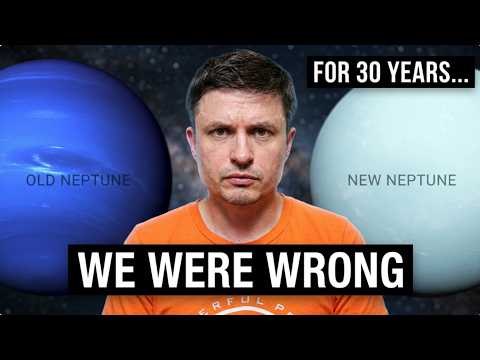
** In this video, Anton Petrov discusses groundbreaking discoveries about Neptune, challenging long-held assumptions about its color, composition, and moons. Recent data from the James Webb Space Telescope suggests that Neptune is not as blue as previously depicted and may share a similar color with Uranus. Additionally, studies reveal that Neptune’s moon system is more chaotic than expected, with Triton likely causing a “Moonpocalypse” that destroyed many original moons, leaving Nereid as a potential survivor. Moreover, new insights indicate that Neptune’s interior may be rock-rich rather than primarily icy, prompting a reclassification of these ice giants and leading to a call for new exploration missions to further understand this distant planet. **
📚 Research Links (provided by the author in the video description):
The Story of Conformal Gravity

** In “The Story of Conformal Gravity,” Professor Philip Mannheim presents a groundbreaking theory suggesting that dark matter is not missing but rather “hiding in plain sight” within the visible universe. The discussion delves into the inadequacies of current gravitational theories and critiques Einstein’s approach to gravity, proposing that the traditional view of gravity needs reevaluation. Mannheim argues for a conformal gravity framework that not only addresses dark matter but also provides a new perspective on quantum gravity. This comprehensive exploration emphasizes the need for a paradigm shift in our understanding of fundamental physics. **
📚 Research Links (provided by the author in the video description):
Marc Berman on the Science of Touching Grass | Mindscape 360

** In the Mindscape podcast episode featuring psychologist Marc Berman, the discussion centers on the concept of “touching grass” and its cognitive benefits, emphasizing how modern urban environments can detract from our mental well-being. Berman explores the field of environmental neuroscience, revealing that natural settings can enhance cognitive performance and improve attention, as evidenced by studies where participants demonstrated better working memory after walks in nature compared to urban areas. The conversation delves into the mechanisms behind these effects, including attention restoration theory, which posits that nature facilitates a shift from directed to involuntary attention, allowing our cognitive resources to replenish. Overall, the episode highlights the importance of integrating nature into our daily lives for improved mental functioning and well-being. **
Mystery Substance Found on Pluto and Tiran Is Like Nothing We’ve Seen Before

** In the video, Anton Petrov discusses a groundbreaking discovery of a mysterious substance found on both Pluto and Titan, revealed through data from the James Webb Space Telescope. Researchers detected an unusual spectral feature, indicating the presence of an unidentified solid on the surfaces of these celestial bodies, despite their vast distance and differing environments. The potential implications of this discovery extend beyond mere curiosity; understanding this substance could unveil insights into prebiotic chemistry and inform future missions, such as NASA’s upcoming Dragonfly helicopter expedition to Titan. The video emphasizes the significant advancements in astronomical research and the ongoing quest to comprehend the complex chemical diversity in our solar system. **
📚 Research Links (provided by the author in the video description):
Could The Universe Come from Absolute Nothing?

** In the video “Could The Universe Come from Absolute Nothing?” Dr. Brian Keating delves into the profound question of what existed before the Big Bang and explores the implications of dark energy on the universe’s fate. He discusses various cosmological theories, including the multiverse concept, and emphasizes the importance of empirical evidence over speculative theories. Keating shares his own journey with the BICEP telescope and the challenges of confirming groundbreaking discoveries in cosmology. Ultimately, he conveys a sense of excitement regarding ongoing research that may help unveil the universe’s origins and its potential future. **