
Weekly Physics Digest – July 12 – July 18, 2026
This Week’s Digest: Cosmic Revelations and Gravity Shenanigans! Hold onto your telescopes and calculators because this week is packed with scientific spectacles that will stretch your brain to infinity and beyond! Dive into the depths of the cosmos with Anton Petrov as he unravels the mysteries of plutonium found deep in the ocean—yes, you read that right, plutonium! Meanwhile, Sabine Hossenfelder takes us on a mind-bending journey exploring the tantalizing idea that antigravity might just be a quantum loophole away. If that wasn’t enough to tickle your scientific fancy, join us as mathematicians challenge the very fabric of our understanding of dark energy, suggesting it might be a mere mirage! So, buckle up, because this week will take your intellect on a whirlwind tour of the universe! Learn fast, stay curious!
NASA Scientist Explains Why Science Keeps Pointing Her to God
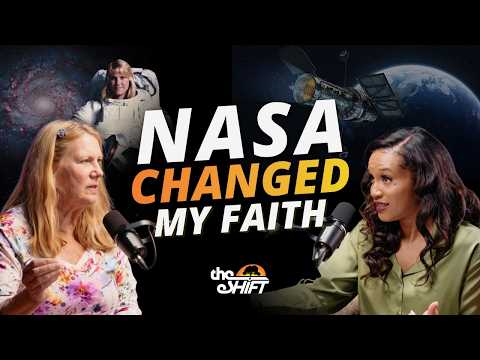
** In the video, Dr. Leslie Wickman, a NASA scientist and aerospace engineer, shares her journey of reconciling her faith with her scientific career. Having worked on significant projects like the Hubble Space Telescope and trained astronauts, she emphasizes that many scientists identify as Christians, challenging the stereotype that science and faith are at odds. Wickman discusses how her deep exploration of creation led her to see a greater compatibility between scientific discoveries and the biblical understanding of God as the Creator. Throughout the conversation, she illustrates how understanding the universe’s complexities enhances rather than contradicts her faith, ultimately encouraging viewers to embrace both science and spirituality. **
New Analysis of 3IATLAS Reveals Exciting Origin of the Comet

** In the video, Anton Petrov discusses the latest scientific findings on the interstellar comet 3I/Atlas, revealing its extraordinary origins and unique chemical composition. Recent studies indicate that this comet, possibly up to 12 billion years old, formed in a cold, isolated region of the Milky Way before traveling through space and encountering our solar system. The isotopic analysis shows that it contains pristine materials from the early galaxy, including prebiotic molecules like methane and methanol, suggesting that our solar system may be an anomaly in the broader diversity of star systems. This comet presents a unique opportunity to understand the chemical evolution of the Milky Way and challenges existing models of star formation. **
📚 Research Links (provided by the author in the video description):
They’ll Never Say This About the Grand Canyon, but It’s True

** In the video “They’ll Never Say This About the Grand Canyon, but It’s True,” the Institute for Creation Research explores the geological formation of the Grand Canyon, challenging the conventional evolutionary timeline. While mainstream geology attributes its creation to the gradual erosion by the Colorado River over millions of years, the video presents the flood geologist perspective, suggesting that a significant amount of water acted rapidly to form the canyon. The narrator highlights inconsistencies in geological estimates and argues that the layering of sedimentary rocks indicates a swift formation process, aligning with the idea of a worldwide flood as described in Genesis. Ultimately, the video posits that the Grand Canyon’s features could be expected if such a flood event occurred. **
The Physicist Who (Unexpectedly) Derived Gravity From Entropy

** In this episode, Kurt Jaimungal interviews Ginestra Bianconi, a physicist who proposes a groundbreaking theory that derives gravity from entropy, challenging traditional reductionist views. Bianconi explains her “Gravity from Entropy” action, which treats the interplay between matter and geometry symmetrically, suggesting that gravity is fundamentally linked to geometric structures rather than isolated particle interactions. The discussion delves into the implications of this theory for dark energy, the nature of black holes, and the potential for new insights into quantum gravity. Bianconi also shares her journey from network topology to gravity theory, emphasizing the importance of a comprehensive understanding of structure and dynamics in physics. **
📚 Research Links (provided by the author in the video description):
A Network Scientist Takes On Quantum Gravity

** In this episode of “Theories of Everything,” Curt Jaimungal interviews physicist Ginestra Bianconi, who discusses her innovative approach to quantum gravity through the lens of network science. Bianconi explains her transition from complexity theory to formulating a theory of gravity that integrates entropy and geometry, highlighting the interplay between matter fields and spacetime. She addresses the challenges in second quantization of gravity, the implications for cosmology, and potential experimental validations of her work. The conversation emphasizes the need for interdisciplinary collaboration and the excitement of exploring fundamental questions in physics. **
Scientists Have Figured Out How to Make Antigravity

** In the video, Sabine Hossenfelder explores a groundbreaking paper suggesting that quantum mechanics may allow for the creation of antigravity by exploiting a loophole in Einstein’s theory of general relativity. While gravity is typically attractive due to the nature of mass and energy, this new theory posits that under specific conditions, two gravitational pulls can effectively combine to produce a repulsive force. The concept hinges on the quantum properties of gravity, which have traditionally been challenging to test. Hossenfelder emphasizes that while experimental verification is complex and current technology limits progress, this research could provide crucial insights into the quantum nature of gravity and its implications for physics. **
📚 Research Links (provided by the author in the video description):
Is Enrico Fermi The Most Influential Scientist of The 20th Century?
** In the video “Is Enrico Fermi The Most Influential Scientist of The 20th Century?” Dr. Brian Keating explores the legacy of Enrico Fermi, a pivotal figure in nuclear physics who led the first self-sustaining nuclear chain reaction. The discussion highlights Fermi’s unique approach to problem-solving, encapsulated in “Fermi problems,” which emphasize approximation over perfection. Through anecdotes and insights from biographies about Fermi, Keating illustrates how Fermi’s clarity and pragmatism in physics not only revolutionized scientific thought but also laid the groundwork for the atomic age, culminating in significant discoveries like nuclear fission. The video also reflects on Fermi’s moral dilemmas regarding the use of nuclear power and his legacy in science and humanity. **
The Groundbreaking “Primordial Black Hole” Discovery Just Got Debunked

** In this video, Anton Petrov discusses the recent debunking of the primordial black hole hypothesis concerning a mysterious light flicker detected in the Large Magellanic Cloud. Originally interpreted as a possible gravitational lensing effect caused by a primordial black hole, a reanalysis by Polish astronomers revealed that the flickering is likely due to an ordinary variable star instead. This finding emphasizes the importance of long-term astronomical observations and the challenges of distinguishing between rare cosmic events and more common stellar behaviors. The video concludes by highlighting the evolving nature of scientific understanding and the potential for future discoveries with advanced telescopes. **
📚 Research Links (provided by the author in the video description):
The Universe Has Been Expanding Since the Big Bang. Just Not How We Thought.

** In the video from PBS Space Time, the discussion centers around groundbreaking findings from the Dark Energy Spectroscopic Instrument (DESI) and the Dark Energy Survey (DES), which explore the mysterious dark energy driving the Universe’s accelerated expansion. While DESI suggests that dark energy may not be constant, DES employs a broader approach, providing complementary insights that help eliminate competing cosmological models. The combination of these studies reinforces the necessity of using multiple observational methods to refine our understanding of dark energy and the evolution of the Universe, ultimately hinting at a fascinating possibility of changing dark energy rather than a constant force. **
We Just Found Actual Sugar in a Massive Space Cloud

** In this video, Anton Petrov discusses the groundbreaking discovery of the sugar erythrulose in a massive molecular cloud located near the center of the Milky Way, marking the first true sugar identified in interstellar space. This finding, which has significant implications for astrobiology, suggests that essential building blocks for life, such as sugars, might be widespread throughout the universe. Researchers used radio telescopes to analyze the cloud’s chemical composition, revealing that complex organic molecules can form in space, potentially seeding planets like Earth with the ingredients necessary for life. The video delves into the implications of this discovery for our understanding of life’s origins and the conditions for habitability beyond Earth. **
📚 Research Links (provided by the author in the video description):
Mannheim: There Was No Ghost

** In the video “Mannheim: There Was No Ghost,” Curt Jaimungal discusses groundbreaking insights from Professor Philip Mannheim regarding the concept of ghosts in quantum field theory. Rather than eliminating the notion of ghosts, Mannheim asserts that previous reasoning was flawed, and he presents a framework involving PT (parity-time) symmetry and its connection to CPT (charge-parity-time) symmetry. He emphasizes that probability conservation, rather than Hermiticity, is the cornerstone of quantum mechanics, allowing for a deeper understanding of fermions and their interaction with gravity. The discussion culminates in the conclusion that a ghost never existed in the first place, challenging traditional views in theoretical physics. **
Aliens Can Talk To Us Through Psychedelics, Scientists Claim

** In this video, Sabine Hossenfelder explores a provocative claim made by cognitive scientist Donald Hoffman regarding the psychedelic drug DMT and its connection to perceived alien encounters. For over fifty years, users of DMT have reported meeting conscious entities, and Hoffman suggests these beings might actually exist, proposing that psychedelics enhance our perception of these realities. He introduces a mathematical framework to support his theory, arguing that consciousness, rather than matter, is fundamental to understanding reality. While Hossenfelder highlights the intriguing nature of these claims, she cautions against conflating mathematical models with actual consciousness, ultimately concluding that while the phenomena are worthy of study, there is currently no evidence supporting alien communication through psychedelics. **
📚 Research Links (provided by the author in the video description):
But what is cross-entropy? | Compression is Intelligence Part 2

** In the video “But what is cross-entropy? | Compression is Intelligence Part 2,” Grant Sanderson explores the concept of cross-entropy and its significance in training large language models (LLMs). He begins by illustrating how principles of file compression can uncover linguistic relationships among languages, using gzip as a tool to measure similarity. The discussion then transitions to how cross-entropy serves as a loss function in machine learning, quantifying the difference between a model’s predictions and the actual outcomes. By the end, viewers gain a deeper understanding of how cross-entropy connects compression and intelligence, framing LLM training as a compression task rather than simple next-token prediction. **
Ask Brian Greene LIVE Q&A | World Science Festival

** In this live Q&A session hosted by Brian Greene during the World Science Festival, viewers engaged with a variety of thought-provoking questions on topics ranging from free will and the nature of reality to the implications of quantum mechanics and gravitational waves. Greene emphasized the complexity of reconciling concepts like free will with the block universe theory, where past, present, and future coexist in a fixed state. He also addressed the potential of quantum computing and the delicate nature of quantum entanglement, while contemplating the limits of human understanding and the role of consciousness in physics. Overall, the discussion illuminated the intricate relationship between theoretical physics and philosophical questions, highlighting the ongoing quest for knowledge in these fields. **
Pluto Is Not Billions of Years Old

** In the video “Pluto Is Not Billions of Years Old,” Richard Fangrad discusses the surprising findings from NASA’s New Horizons mission to Pluto, which revealed an active atmosphere, towering ice mountains, and rapidly spinning moons, contradicting the long-held assumption that Pluto is 4.5 billion years old. Researchers estimated Pluto’s age at approximately 100 million years, highlighting inconsistencies in the evolutionary worldview that relies on billions of years for the solar system’s formation. Fangrad argues that the observations from New Horizons align more closely with a biblical creation perspective, which posits a recent creation. He emphasizes that as scientific discoveries continue to unfold, they increasingly support a young Earth narrative rather than an evolutionary timeline. **
Michael Shermer: The White House Put Me on Its UFO Task Force

** In the video, Michael Shermer discusses his recent appointment to the White House’s UAP task force, emphasizing his role as the skeptic among a panel of scientists, including Avi Loeb. He shares his $1,000 bet with Loeb that aliens will not be found by 2030, expressing hope that he is proven wrong, while stressing the importance of evidence over anecdotal claims in the study of unidentified aerial phenomena. Shermer critiques sensational claims about extraterrestrials, advocating for a scientific approach that prioritizes data and skepticism. He highlights the distinction between genuine sightings and misinterpretations of ordinary objects, ultimately calling for rigorous evidence before accepting extraordinary claims. **
JWST Reveals the Sombrero Galaxy’s Massive Hidden Secret

** In the video titled “JWST Reveals the Sombrero Galaxy’s Massive Hidden Secret,” Anton Petrov explores the intriguing characteristics of the Sombrero Galaxy (Messier 104). Recent observations from the James Webb Space Telescope and the Dark Energy Camera reveal that this galaxy is a hybrid of a spiral and elliptical galaxy, featuring a massive galactic halo and a surprisingly large supermassive black hole, estimated to be up to 9 billion solar masses. Despite containing ingredients for star formation, it produces stars at a rate lower than the Milky Way, raising questions about its unique dynamics. Petrov emphasizes the Sombrero Galaxy as a crucial subject for understanding cosmic evolution, galaxy mergers, and the growth of black holes, highlighting its ongoing mysteries and significance in astronomy. **
The Scariest Chart In Electrical Engineering

** In the Veritasium video “The Scariest Chart In Electrical Engineering,” the host explores the intimidating yet essential Smith Chart, invented by Philip H. Smith in 1937 to solve impedance matching issues in electrical engineering. Through engaging experiments and explanations, viewers learn how the chart simplifies complex calculations involving transmission lines and reflections, allowing engineers to visualize and address problems effectively. The video emphasizes the chart’s historical significance, particularly during World War II, and its enduring utility in modern engineering, showcasing its ability to represent infinite values in a finite space through innovative mathematical transformations. **
Mannheim: The Loophole in Einstein Gravity

** In the video “Mannheim: The Loophole in Einstein Gravity,” Professor Philip Mannheim discusses the foundational principles of Einstein’s theory of gravity, critiquing how it is commonly understood. He explains that while Einstein’s equations generalize Newton’s law of gravity, they stem from a specific Poisson equation that may not be unique. This raises questions about the validity of using Einstein’s equations universally, particularly in explaining phenomena like dark matter. Mannheim argues for the need to identify a fundamental principle that justifies the reliance on the second-order Poisson equation, suggesting that without it, the assumptions underlying modern cosmology may be flawed. **
Mathematicians Explain The Universe’s Expansion Without Dark Matter
** In this video, Sabine Hossenfelder discusses a controversial paper by mathematicians who argue that dark energy, a concept introduced to explain the universe’s accelerating expansion, may be unnecessary. They suggest that the acceleration could simply be a result of Einstein’s equations without needing the postulation of dark energy, which physicists have claimed constitutes over 75% of the universe. The mathematicians challenge the cosmological principle, asserting that a universe filled with matter would not expand evenly and could lead to regions of varying expansion rates. While the paper presents intriguing mathematical insights, Hossenfelder notes that it must still reconcile with existing observational data to gain traction in the scientific community. **
📚 Research Links (provided by the author in the video description):
The Next Evolution of AI (Qwen, MIT, Tencent)

** In the video “The Next Evolution of AI,” the presenter discusses three significant AI research papers that propose a new direction for the development of intelligent systems. The central argument is that the limitations of current AI models are no longer due to inference quality or reasoning abilities, but rather the need for advanced cognitive organization, including the formation of evidence graphs and coherent long-term behaviors. The papers highlight the importance of selecting and connecting relevant evidence, maintaining coherence over time, and evolving mathematical representations to achieve a more sophisticated understanding of intelligence. Collectively, they suggest a shift from merely predictive capabilities to a more nuanced cognitive organization that could mark the next leap in AI evolution. **
📚 Research Links (provided by the author in the video description):
Christian Biologist: My Colleagues Will NOT Be Happy I’m Sharing This

** In this insightful discussion, Dr. Michael Boyle shares his journey from mainstream science to the Institute for Creation Research, emphasizing how his Christian faith influenced his scientific perspective. He recounts his experiences working at prestigious institutions like the Smithsonian, where he grappled with the tension between evolutionary theory and his belief in creationism. Dr. Boyle also delves into his current research on blind cavefish, revealing how these organisms adapt to their unique environments through intentional biological engineering, rather than random evolution. His work aims to highlight the intersection of faith and science, ultimately aiming to change the Christian view of biology. **
China’s New Plan to Deflect Asteroid and Recent Test by Japan

** In this video, Anton Petrov explores recent advancements in planetary defense from Japan and China, highlighting their efforts to redirect potentially hazardous asteroids. He discusses Japan’s successful navigation test using the Hayabusa 2 probe near the asteroid Torifune, revealing its unique “snowman” structure, which poses different challenges for impact missions. Meanwhile, China is preparing a kinetic impact test against the asteroid 2015 XF261, aiming to alter its trajectory to ensure safety from Earth. Petrov emphasizes the importance of international collaboration in tracking asteroids, noting that many remain undiscovered, and stresses that while we have made significant progress, more research is needed to fully prepare for potential threats. **
Christian Geologist: I Came All the Way Here to SHOW the Bible Is True

** In this video, Christian geologist Tim Clarey visits Horseshoe Bend in Arizona to present evidence supporting a biblical timeline and the Genesis flood account. He argues that the unique geological features, such as missing rock layers and vast sediment deposits, align more closely with a catastrophic flood model rather than the conventional long-term erosion and deposition proposed by evolutionists. Clarey suggests that the massive sandstone layers and the entrenched meander of the river can be explained by rapid sediment deposition and erosion during the flood’s receding phase, challenging traditional geological interpretations. **
Plutonium Found in the Deep Ocean Suggests a Super Rare Event Near Earth

** In Anton Petrov’s video, he discusses the remarkable discovery of plutonium-244 deep in the ocean, which suggests it originated from a rare cosmic event. Unlike other isotopes, plutonium-244 has a long half-life and is believed to have arrived on Earth from a neutron star collision that occurred approximately 95 million years ago, during the age of dinosaurs. This finding highlights the connection between Earth and cosmic events, indicating that heavy elements, such as gold and plutonium, are remnants of ancient explosions in space. The research further distinguishes these isotopes from those produced by supernovae, underscoring the rarity of such neutron star collisions. **
📚 Research Links (provided by the author in the video description):
Mannheim: The Higgs Might Not Be Fundamental

** In the video “Mannheim: The Higgs Might Not Be Fundamental,” Professor Philip Mannheim explores the implications of the Higgs boson potentially being a composite particle rather than an elementary one. He discusses the concept of scale invariance and how a dynamical scalar field could resolve the hierarchy problem associated with the Higgs mass. Mannheim argues that if the Higgs is composite, then it is the vacuum that imparts mass, which could lead to better understanding of cosmological constants and the challenges faced by supersymmetry in particle physics. The conversation delves into the significance of conformal symmetry and its potential role in mass generation, highlighting the need for new approaches in theoretical physics. **