Weekly Physics Digest – January 11 – January 17, 2026
**This Week’s Digest: Cosmic Curiosities and Groundbreaking Theories** Buckle up, science enthusiasts! This week, we delve into the cosmic realm with videos that challenge our understanding of everything from dark matter’s true identity to the peculiarities of time. Sabine Hossenfelder shines a light on the mind-bending theory that dark matter might just be a form of good old normal matter, and Anton Petrov dives into the shocking discovery of a ghost galaxy that reinforces the dark matter hypothesis. And for those intrigued by life’s origins, we even explore the idea that prions—yes, the pesky proteins that cause diseases—might have kick-started life on Earth. It’s a week of profound questions, groundbreaking discoveries, and a sprinkle of existential musings. Learn fast, stay curious!
Discovery of a Massive Shockwave That Breaks Physical Models

** In this video, Anton Petrov discusses the groundbreaking discovery of a massive shockwave surrounding a white dwarf star, RXJ0528+2838, which challenges existing physical models. This unique phenomenon, observed using advanced telescopes, showcases a vibrant nebula formed by interactions between stellar winds and interstellar gas, despite the star’s incredibly strong magnetic field that should prevent such an accretion disc from forming. The shockwave’s energy output appears to exceed what the star can produce, leading to the hypothesis of a “mystery engine” that may involve magnetic interactions or binary star dynamics. This discovery is significant as it suggests that astronomers may need to revise their understanding of white dwarfs and their behavior in binary systems. **
5 Reasons Earth is Not Billions of Years Old

** In the video “5 Reasons Earth is Not Billions of Years Old,” Dr. Rob Carter presents five scientific arguments supporting a young Earth perspective. He discusses the presence of carbon-14 in ancient fossils, the discovery of soft tissues in dinosaur bones, and the failures of radiometric dating methods. Additionally, he explains how rock layers appear bent rather than broken, indicating rapid formation, and addresses human population growth as evidence of a young timeline since Adam and Eve. Overall, the video challenges conventional geological timelines with these insights, suggesting that Earth’s history may be significantly shorter than widely accepted. **
Scientists Ignored This DNA Pattern for DECADES!

** In the video “Scientists Ignored This DNA Pattern for DECADES!” from the Institute for Creation Research, host Trey and geneticist Dr. Jeff Tompkins delve into the significance of tandem repeats in DNA, which were long dismissed as ‘junk DNA.’ They explain that these repeating sequences, which make up about 3% of the human genome, play crucial roles in gene regulation, adaptation, and even human development. The discussion highlights how tandem repeats are involved in various biological functions across multiple organisms, emphasizing their importance in genetic diversity and potential implications for understanding diseases. Ultimately, the video calls attention to the complexity and intentionality of DNA structure, suggesting a design behind these genetic features. **
They Found HUMAN DNA on a Distant Space Rock?

** In the video “They Found HUMAN DNA on a Distant Space Rock?” from Answers in Genesis, Bryan Osborne, Avery Foley, and Dr. Georgia Purdom discuss a sensational claim that human DNA was detected on a 2-billion-year-old meteorite. They clarify that while 14 out of 20 amino acids essential for life were found on the asteroid Bennu, no actual DNA was present. The presenters argue that such findings, often interpreted through an evolutionary lens, do not support the idea of life originating elsewhere but rather emphasize the complexity of life as evidence of an intelligent designer. They conclude that the claims surrounding this research highlight the importance of critically evaluating headlines and understanding the foundational beliefs behind scientific interpretations. **
Exposed: The Embarrassing Babble of String Theorists (Brian Green + Ed Witten Discussion)

** In this video, Alexander Unzicker critiques a discussion between renowned string theorists Brian Greene and Edward Witten, arguing that their claims lack substantial scientific grounding. Unzicker points out the absence of experimental evidence supporting string theory, contrasting it with the established principles of physics that have yielded measurable results. He emphasizes the disconnect between theoretical predictions and empirical verification in string theory, suggesting that the field has devolved into unfounded speculation that has not advanced understanding of fundamental physics. Ultimately, he calls for a reevaluation of string theory in light of its lack of tangible outcomes and expresses hope that artificial intelligence might bring a fresh perspective to the field. **
Death of the Token in AI: Multi-Parallel AI Reality, NVIDIA’s Silent Robots & Pre-GPT-6

** In the video titled “Death of the Token in AI,” the presenter explores groundbreaking research papers that propose new architectures for AI, moving away from traditional token-based reasoning. Highlighting concepts like latent configurations and multiplex thinking, the discussion emphasizes how these innovations can enable AI models, such as future iterations of GPT, to perform complex reasoning without the need for verbose, step-by-step text generation. The video particularly focuses on NVIDIA’s advancements, which aim to enhance the efficiency of robotic actions by utilizing high-dimensional vector representations that allow for simultaneous decision-making processes. Ultimately, the presenter suggests that these developments mark a significant shift towards more sophisticated AI architectures capable of handling complex tasks with greater speed and accuracy. **
📚 Research Links (provided by the author in the video description):
Asteroid Mining May Not Be Possible According to a New Study

** In the video “Asteroid Mining May Not Be Possible According to a New Study,” Anton Petrov discusses the feasibility of asteroid mining, emphasizing recent studies that suggest it may not be achievable for decades. He highlights the technological challenges, such as difficulties in extracting resources from mostly undifferentiated asteroids and the high costs associated with current space missions. Petrov explains that while some asteroids may contain valuable materials, extracting them is complicated, and recent research indicates that water extraction could be more viable than mining metals. Ultimately, the video presents asteroid mining as an exciting yet complex pursuit that remains largely theoretical at this stage. **
📚 Research Links (provided by the author in the video description):
Deadly Proteins Called Prions May Have Started Life on Earth

** In this video, Anton Petrov explores the fascinating connection between prions—rogue proteins known for causing diseases like kuru and mad cow disease—and the origin of life on Earth. He discusses how these proteins, which can misfold and become infectious, might reveal insights into early biological processes, potentially supporting the “protein world hypothesis.” Petrov highlights recent studies suggesting that prion-like behavior could have played a crucial role in the emergence of life by allowing proteins to replicate and evolve in a stable manner. Ultimately, he proposes the idea that life may have originated from an interplay of both proteins and RNA, leading to the formation of the last universal common ancestor approximately 4 billion years ago. **
📚 Research Links (provided by the author in the video description):
Why Does Space Have Three Dimensions?

** In the video “Why Does Space Have Three Dimensions?” Sabine Hossenfelder explores the fundamental reasons for the universe’s three-dimensional nature. She explains that physics requires three dimensions for stability in solar systems and atoms, as forces such as gravity and the Coulomb force rely on a specific relationship with distance. Hossenfelder also discusses the implications for quantum field theory and the standard model of particle physics, which only function properly in three dimensions due to issues with infinities in other dimensions. Additionally, she touches on how complexity and chaos in dynamics are reliant on having three dimensions, concluding that the universe’s preference for three dimensions is essential for the laws of physics to hold. **
The Vertical Causality That Shapes Everything We Can’t Measure

** In this thought-provoking episode featuring Jonathan Pageau, Curt Jaimungal explores the concept of vertical causality, which emphasizes the importance of meaning and purpose in understanding reality. Pageau argues that our perception is shaped by a hierarchy of care, suggesting that our attention to the world is not arbitrary but deeply connected to our identities and purposes. He contrasts vertical causality, which relates to identity and meaning, with horizontal causality, focusing on mechanical interactions, and discusses how this framework can help us better grasp the complexities of existence, including the role of storytelling and ritual in human experience. The conversation ultimately challenges reductionist views and invites a more integrated understanding of our world. **
Direct Observations of Einstein’s Frame Dragging Effect

** In this video, Anton Petrov delves into the groundbreaking observation of Einstein’s frame dragging effect, which has been confirmed through the study of a tidal disruption event involving a distant supermassive black hole. This event, known as AT2020 AFHD, showcased a unique rhythmic wobble in emissions, providing compelling evidence for how the rotating black hole drags spacetime around it, affecting both the accretion disc and jets emitted from it. By analyzing these phenomena, scientists can test Einstein’s general relativity under extreme conditions and gather insights into black hole spins and jet dynamics. This fascinating discovery not only validates a century-old theory but also opens new avenues for understanding the universe’s mechanics. **
📚 Research Links (provided by the author in the video description):
Why Did No One Think of This? Dark Matter Might Just be Normal Matter
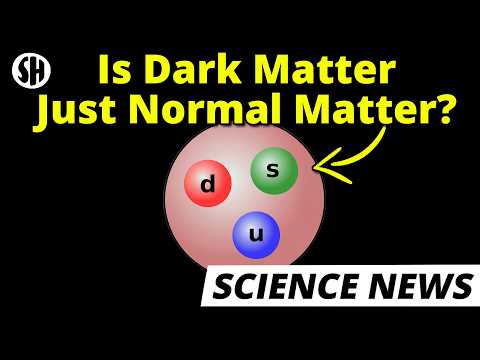
** In her video, Sabine Hossenfelder explores a revolutionary theory regarding dark matter, suggesting it may actually be a form of normal matter rather than a mysterious new particle. The discussion centers around Ed Witten’s 1984 concept of “quark nuggets,” particularly “stranglets,” which could be stable clumps of quarks that don’t interact with light, thus remaining undetectable. Recent reevaluations of early universe conditions and novel findings in quark superconductivity have revived interest in this theory, indicating that strange matter could indeed be a significant component of dark matter. Hossenfelder emphasizes the need for a shift in perspective, asserting that the challenge in cosmology might not be a lack of matter, but rather a lack of attention to this longstanding idea. **
Incredible Discoveries About Supermassive Black Holes in the Early Universe

** In this video, Anton Petrov explores groundbreaking discoveries regarding supermassive black holes in the early universe, challenging long-held astrophysical theories. Recent observations from the James Webb Space Telescope reveal that these massive black holes may have formed much earlier than previously thought, even just hundreds of millions of years after the Big Bang. The findings suggest that some black holes defy the Edington limit, growing at unprecedented rates, and raise questions about the accuracy of current mass measurements. Additionally, an extraordinary flare observed from a black hole hints at extreme cosmic events, indicating that the study of these entities is only beginning to unveil their mysteries. **
📚 Research Links (provided by the author in the video description):
The Universe Itself Might Be Hiding the Gravity Particle From Us

** In the PBS Space Time video, “The Universe Itself Might Be Hiding the Gravity Particle From Us,” the host explores the elusive nature of gravitons, the hypothetical particles that mediate gravity in quantum mechanics. Drawing on the insights of physicist Freeman Dyson, the video discusses the fundamental barriers to detecting gravitons, including the constraints imposed by black holes and the quantum vacuum. Various methods for detection, such as using advanced interferometers like LIGO or massive particle colliders, are examined, revealing that the universe’s laws may conspire to keep these particles out of our reach. Despite these challenges, the video concludes that while direct detection seems nearly impossible, advancements in quantum technology may yet pave the way for innovative approaches to uncover the building blocks of spacetime. **
Finally a Use for String Theory!

** In her video “Finally a Use for String Theory!”, Sabine Hossenfelder discusses a recent breakthrough where string theory’s mathematical framework is applied to biological networks, such as blood vessels and neurons. Traditionally viewed as largely theoretical, string theory has now been successfully utilized to model the growth patterns of these networks by optimizing for surface area rather than volume. This innovative approach not only aligns well with observed biological structures but also opens up new avenues for practical applications in fields like microfluidics and materials science. Ultimately, the research exemplifies the value of interdisciplinary collaboration and highlights string theory’s unexpected relevance. **
📚 Research Links (provided by the author in the video description):
Invisible Ghost Galaxy Proves Dark Matter Built the Universe, Cloud 9 Explained
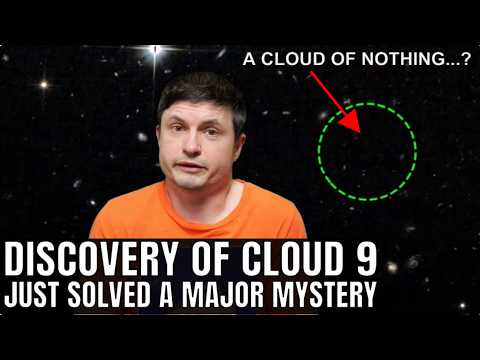
** In this video, Anton Petrov discusses the groundbreaking discovery of “Cloud9,” a region in space that contains no stars and serves as the first confirmed example of a hypothetical object known as a “relic.” Discovered near the beautiful Messier 94 galaxy, Cloud9 represents a primordial building block of the universe that has existed for 13 billion years without forming stars, predominantly composed of dark matter. This finding provides crucial evidence for the Lambda CDM model, suggesting that many supposed missing galaxies may not have formed stars at all, thus enhancing our understanding of dark matter’s role in galaxy formation. The video also highlights the ongoing research efforts to explore this unique cloud further using advanced telescopes. **
📚 Research Links (provided by the author in the video description):
Is the Universe Random, Deterministic, or Both? (ft. Andrew Jaffe)

** In this insightful discussion, Dr. Brian Keating and Professor Andrew Jaffe delve into the nature of the universe, exploring concepts of randomness and determinism. Jaffe emphasizes that our understanding of the universe is shaped by the models we create, which are inherently influenced by our biases and knowledge. The conversation touches on crucial cosmological issues such as inflation, the Hubble tension, and the limitations of scientific models, ultimately arguing that while models can break, they also evolve, reflecting our quest for understanding the cosmos. Jaffe’s new book, “The Random Universe,” serves as a framework for these discussions, highlighting the dynamic interplay between observation and theory in scientific inquiry. **
Unexplained Blue Object Near Andromeda May Be a Ghost Nebula

** In this video, Anton Petrov discusses the enigmatic blue object near the Andromeda galaxy, dubbed SDSO-1, which was discovered by amateur astronomers in 2023. Initially overlooked by larger telescopes due to its vast size, this object is thought to be a remnant of a dying star or a “ghost planetary nebula.” New research suggests it could be a 400,000-year-old gas cloud created by a star moving at hypersonic speeds, interacting with the interstellar medium to produce a luminous arc. As astronomers continue to investigate, the nature and origin of SDSO-1 remain a captivating mystery in the field of astronomy. **
📚 Research Links (provided by the author in the video description):
Did AI Just Solve an Erdős Problem? (This Changes Everything)
** In this video, Dr. Brian Keating discusses the recent breakthroughs in solving Erdős problems using GPT-5.2 Pro, with notable acceptance from renowned mathematician Terence Tao. Erdős problems, pivotal in fields like additive combinatorics and extremal graph theory, have challenged experts for decades due to their complex nature. Keating highlights the significance of these advancements, emphasizing that acceptance by Tao signifies a rigorous validation of logic and innovation in mathematics, marking a transformative moment in the field. **
This is why I believe that the future already exists

In her video, Sabine Hossenfelder explores the concept of the “block universe,” a notion derived from Einstein’s theory of general relativity, which posits that past, present, and future exist simultaneously as part of a four-dimensional spacetime. She argues that our perception of time as linear is misleading, emphasizing that different observers may perceive simultaneity differently due to their relative motion. This leads to the conclusion that what we consider “now” is subjective, as every moment exists simultaneously for someone, challenging our understanding of free will and determinism. Hossenfelder invites viewers to reflect on the implications of this theory while promoting engagement with nature through the Planet Wild initiative.
Understanding Gyroscopic Precession – Smarter Every Day 312

** In the Smarter Every Day video “Understanding Gyroscopic Precession,” host Destin delves into the complexities of gyroscopic precession, aiming to clarify not just what happens but why it occurs. Using an engaging hands-on approach, he demonstrates through experiments with a spinning disk and air pressure how applied forces produce effects 90 degrees out of phase. By comparing the concept to linear momentum and using relatable analogies, Destin simplifies a typically challenging topic, making it accessible to a wider audience. The video emphasizes the importance of understanding these principles, especially in practical applications like disk golf and the dynamics of flight. **