Weekly Physics Digest – February 01 – February 07, 2026
Weekly Digest: Discovery Awaits! Welcome to this week’s compelling lineup of educational and science videos, where knowledge is served colder than the drinks of yesteryear! Among our 28 offerings, don’t miss Veritasium’s intriguing exploration of how cold drinks were once lethal—imagine raising a glass and questioning your life choices! This week is also packed with excitement as Anton Petrov reveals the first-ever confirmed escaped supermassive black hole, a cosmic drama worthy of a sci-fi blockbuster! Whether you’re a science buff or just looking to impress your friends at dinner parties, this week’s digest has you covered with new insights and mind-bending discoveries. Learn fast, stay curious!
Exciting Earth 2.0 Planet Discovered in the Old Data

** In the latest video by Anton Petrov, a newly discovered Earth-like planet, HD137010b, is discussed, showcasing its potential to mirror Earth’s characteristics. Found in archival data from the Kepler telescope, this candidate planet is approximately 146 light-years away and orbits a K dwarf star, which offers a more stable environment for potential life compared to red dwarfs. With a radius just slightly larger than Earth’s and an orbital period of 355 days, HD137010b could support liquid water if it possesses a suitable atmosphere. Although only one transit has been observed, the excitement surrounding this discovery lies in the opportunities for future observations and the potential for confirming its properties. **
📚 Research Links (provided by the author in the video description):
Distill 5 AI Agents into ONE (w/ CODE)
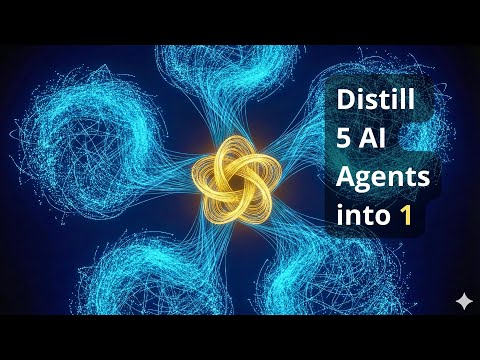
** In the video “Distill 5 AI Agents into ONE,” the Discover AI channel explores innovative techniques for optimizing AI performance by distilling complex multi-agent systems into a single, efficient agent. The presenters discuss three distinct distillation methodologies, including reasoning-enhanced supervised fine-tuning and process-aware distillation, which allow a smaller local model to emulate the reasoning capabilities of a larger multi-agent setup. The video emphasizes the cost-effectiveness of this approach, as it reduces computational expenses while maintaining high-quality reasoning outcomes. The findings suggest that this new distillation process not only simplifies operational complexities but also enhances the reasoning abilities of smaller AI models, making advanced AI more accessible. **
📚 Research Links (provided by the author in the video description):
What is time in Wolfram Physics?

** In the video “What is time in Wolfram Physics?” from The Last Theory, the host challenges conventional views of time, proposing that it is not an absolute or relative measurement, but rather an emergent property of the universe’s hypergraph structure. By applying rules to nodes and edges in this hypergraph, time evolves as a result of these processes. The explanation underscores that time is not a separate axis along which events are measured, but rather a fundamental aspect of the universe itself. This rethinking of time could reshape our understanding of physics, moving away from traditional assumptions. **
What If the Wave Function Describes Knowledge, Not Reality?

** In this extensive discussion, Curt Jaimungal interviews Robert Spekkens from the Perimeter Institute, who challenges traditional interpretations of quantum mechanics. Spekkens introduces his classical toy theory, which suggests that the wave function may represent knowledge rather than reality, allowing for a deeper understanding of phenomena like teleportation and the no-cloning theorem. He argues against the common view of quantum features as uniquely non-classical, suggesting that many behaviors attributed to quantum mechanics can be explained through classical frameworks if one accepts the principle of incomplete knowledge. The conversation delves into the philosophical implications of realism versus empiricism in science, emphasizing the need for causal explanations in understanding quantum correlations. **
📚 Research Links (provided by the author in the video description):
When Relativity Meets Quantum Mechanics: 2 Ways Physics Might Solve It #coreconcepts #quantum
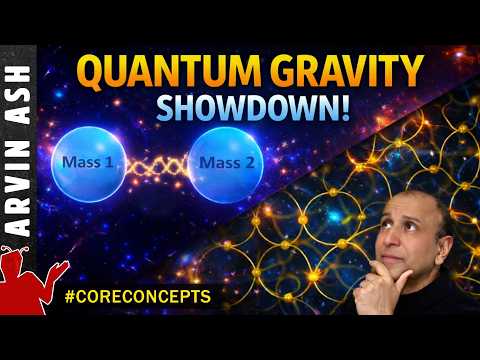
** In “When Relativity Meets Quantum Mechanics,” Arvin Ash explores the challenges of unifying general relativity and quantum mechanics, particularly the concept of quantum gravity. He outlines the conceptual clash between gravity, which is a feature of spacetime, and quantum mechanics, which relies on a fixed stage for its operations. The video presents two prominent approaches to resolving this issue: string theory, which posits that gravity emerges from vibrating strings and includes the graviton as a mediating particle, and loop quantum gravity, which quantizes spacetime itself into discrete units. Ultimately, Ash emphasizes that experimental observation will determine which theory, if any, accurately describes the nature of gravity at quantum scales. **
Why These “Missing Link” Fossils May be Humans with a Thyroid Disorder

** In this video, Dr. Peter Line discusses the controversial interpretation of certain “missing link” fossils, suggesting that some may actually represent humans affected by thyroid disorders like cretinism. He explains how these conditions could mimic the primitive features often cited as evidence for human evolution, particularly in fossils like Homo erectus and Homo naledi. Line emphasizes that the care these individuals received indicates a level of humanity, challenging the narrative of these fossils as transitional forms. Ultimately, he posits that the interpretation of fossils is influenced by one’s worldview and calls for a deeper investigation into the complexities of these ancient remains. **
New Discoveries Challenge Everything We Knew About Brain Evolution

** In this video, Anton Petrov explores recent research that challenges traditional views on brain evolution, revealing surprising findings about the development of intelligence across various species. He discusses studies on ancient animals like plazoans and comb jellies, indicating that complex nervous systems may have evolved multiple times rather than following a linear path. Additionally, the video examines the evolution of large brains in octopuses and other cephalopods, proposing that ecological complexity, rather than social interaction, is a key driver of intelligence. Petrov concludes by highlighting the role of genetic mutations and microbial influences in human brain development, suggesting that intelligence may arise from a combination of environmental challenges and biological factors. **
📚 Research Links (provided by the author in the video description):
Human Waste Is Now Turning Into New Types of Minerals

** In the video “Human Waste Is Now Turning Into New Types of Minerals,” Anton Petrov discusses groundbreaking research revealing that human activities have led to the rapid formation of new minerals, challenging traditional geological timelines. Specifically, the anthropoclastic rock cycle, identified in coastal areas of England, shows how industrial waste, like steel slag, can transform into solid rock within just 35 years. Additionally, the emergence of plastic lomerates, formed by melted plastic waste, highlights the significant impact of human pollution on geological processes. These findings not only propose a new epoch, the anthroposine, characterized by human influence but also raise questions about the environmental effects of these newly formed minerals. **
📚 Research Links (provided by the author in the video description):
The Universe Tried to Hide the Gravity Particle. Physicists Found a Loophole.

** In this episode of PBS Space Time, physicists tackle the longstanding challenge of detecting the graviton, the elusive particle of gravity. While previous beliefs suggested that detecting gravitons was fundamentally impossible, the video explores innovative experimental approaches, such as using resonant mass detectors and quantum sensing techniques. By cooling metal cylinders to near absolute zero, researchers aim to enhance the interaction probability between gravitons and macroscopic quantum particles called phonons. Though significant hurdles remain, including noise reduction and the need for advanced quantum technology, the proposed methods offer a promising pathway to potentially glimpse the quantum nature of gravity. **
The Taboo Topic Sam Harris Won’t Touch

** In this episode, Dr. Brian Keating revisits his podcast conversation with Sam Harris, focusing on their contentious discussion about slavery in the Bible and Talmud. The dialogue ended abruptly when Harris expressed discomfort over Keating’s critique of his interpretation of biblical texts. Keating argues that Harris, while a brilliant thinker, demonstrates significant blind spots regarding religious texts and their historical contexts, particularly regarding the nature of slavery. Through this analysis, Keating highlights the importance of intellectual humility and the need for rigorous engagement with complex topics, warning against the dangers of ideological certainty. **
Physicist’s Advice to Students

** In this video, physicist Robert Spekkens shares valuable advice for students, emphasizing the importance of effective communication in conveying complex ideas, particularly in quantum foundations. He stresses that a strong narrative is crucial for presentations and writing, suggesting that students should focus on clarity and motivation when discussing their work. Spekkens highlights the common challenge of being misunderstood despite careful efforts to write clearly, advocating for the mindset of writing so that it is “impossible to be misunderstood.” He also discusses the nuances of research styles, noting that there isn’t a one-size-fits-all approach to making progress in physics. **
The Rings of Saturn – Sixty Symbols

** In this episode of Sixty Symbols, Professor Ed Copeland explores the intriguing story of James Clerk Maxwell’s groundbreaking work on Saturn’s rings, sparked by a quiz question. Maxwell’s 1850s essay demonstrated that Saturn’s rings could not be solid or fluid but were instead composed of numerous small particles, a concept later confirmed by the Cassini spacecraft. The video delves into Maxwell’s innovative approach using dynamical systems to analyze the stability of the rings, leading to his conclusion that the rings’ structure is self-correcting. This historical narrative highlights the importance of theoretical physics and its eventual validation through observation. **
Did People Really Live 900 Years? A Creationist’s Answer

** In this thought-provoking video, Bible researcher Jonathan Clerke examines the astonishing lifespans recorded in Genesis, specifically the claims of humans living for up to 900 years. He argues that these accounts, rather than being myths or symbolism, reflect genuine historical data supported by biology, ancient historians, and modern genetics. The discussion reveals how telomeres and genetic mutations contribute to aging and how lifespans may have decreased significantly after the Flood due to genetic degradation over generations. By mapping the ages mentioned in the Bible on a graph, Clerke highlights a consistent exponential decay curve, suggesting a biological explanation that aligns with the biblical narrative. **
Experiments Hint on Time Being an Illusion

** In this video, Anton Petrov delves into the intriguing concept that time may be an illusion, supported by recent experimental evidence. He examines how both general relativity and quantum mechanics offer radically different interpretations of time, leading to what physicists call the “problem of time.” Highlighting the Paige-Waters mechanism, Petrov discusses how time could be an emergent phenomenon arising from quantum entanglement rather than a fundamental aspect of reality. Recent experiments suggest that the act of measuring time is more energy-intensive than the ticking of time itself, indicating that timekeeping involves complex interactions among particles, with black holes potentially serving as nature’s ultimate timekeepers. **
📚 Research Links (provided by the author in the video description):
Neanderthal Extinction | Anxiety Study Shows Design | Jeff Zweerink and Fazale “Fuz” Rana
** In the video, biochemist Fazale “Fuz” Rana and astrophysicist Jeff Zweerink explore the implications of recent research on Neanderthal extinction and human-animal interbreeding. They discuss how differences in the PIEZO1 gene create a maternal-fetal barrier in hybrids, contributing to the Neanderthals’ decline. The conversation bridges scientific findings with theological perspectives, emphasizing the distinctiveness of humans as beings created in God’s image. Additionally, they touch on the complex relationship between anxiety and immune cells in the brain, highlighting the intricate design of biological systems. **
📚 Research Links (provided by the author in the video description):
Microplastics: What the Evidence Really Says

** In the video “Microplastics: What the Evidence Really Says,” Sabine Hossenfelder examines the alarming claims surrounding microplastics, asserting that the scientific evidence does not support the extreme narratives often propagated by the media. While acknowledging that microplastics are pervasive and potentially harmful, she highlights significant gaps in research and the lack of standardized methods for assessing their health impacts. Governmental reports from the UK, Germany, and the US indicate that current evidence does not establish a direct causal relationship between microplastics and health effects. Hossenfelder emphasizes that while concerns about microplastics warrant attention, the headlines often exaggerate the risks due to the limitations of available studies. **
Quantum Mechanics and the Egyptian Hieroglyph Mistake

** In this thought-provoking episode, Curt Jaimungal and Robert Spekkens explore the enigmatic nature of quantum mechanics, particularly the interpretation of quantum states as representations of knowledge rather than direct reflections of reality. They draw a compelling analogy to the historical decipherment of Egyptian hieroglyphs, illustrating how a category mistake in understanding can hinder progress in both fields. The discussion highlights the need for a new formalism to better articulate the relationship between quantum states and reality, much like how the phonetic nature of hieroglyphs was ultimately revealed. Jaimungal emphasizes that, despite the challenges in understanding quantum theory, insights from sub-theories may pave the way for future breakthroughs. **
The New Geometry of Intelligence #ai

** In the video “The New Geometry of Intelligence,” the presenter discusses a groundbreaking theory of feature geometry in artificial intelligence, based on the concept of spectral superposition. This theory suggests that neural networks can represent more features than their dimensions allow by sharing representational space, which can lead to limitations in smaller models compared to more complex systems. The authors propose using advanced mathematical tools like frame operators to capture the global geometry of neural networks, aiming to optimize knowledge encoding and reasoning capabilities. The video sets the stage for exploring whether improved geometric structures can enhance the intelligence of smaller language models in future discussions. **
📚 Research Links (provided by the author in the video description):
New DeepSeek Research – The Future Is Here!
** In the video “New DeepSeek Research – The Future Is Here!” from Two Minute Papers, the host discusses groundbreaking developments from DeepSeek, which may hold the key to creating ChatGPT-like AI models that are completely open-source. The video highlights five major innovations introduced by DeepSeek, including the Group Relative Policy Optimization method that eliminates the need for costly teacher models, and the AI’s ability to autonomously pause and think, enhancing its problem-solving capabilities. Additionally, the DeepSeek model demonstrates remarkable self-improvement through reinforcement learning, achieving performance levels that significantly surpass previous models, all while being accessible and free to users. This research represents a major leap towards democratizing AI technology for the benefit of all. **
📚 Research Links (provided by the author in the video description):
AI Discovers Anomalies in Hubble Images We Never Knew Existed

** In this video, Anton Petrov explores a groundbreaking achievement from the European Space Agency, where an AI tool analyzed Hubble Space Telescope data to identify approximately 1,400 anomalous objects, over 800 of which had never been seen before. This innovative approach utilized semi-supervised active learning, allowing the AI to classify images and collaborate with human experts to refine its findings. The discoveries include various types of galactic mergers, gravitational lensing, and even mysterious unknown objects, underscoring the significance of studying anomalies in deepening our understanding of the universe and potentially uncovering new physics. **
📚 Research Links (provided by the author in the video description):
A New Link Between Quantum Physics and Gravity

** In her video, Sabine Hossenfelder discusses a groundbreaking paper that attempts to bridge the gap between Einstein’s general relativity and quantum physics. The paper proposes a new approach to averaging the quantum contributions to gravity, highlighting that the nonlinear nature of general relativity may allow for observable effects at cosmological scales. While the quantum corrections remain negligible in the solar system, they could become significant in galaxy-scale phenomena, potentially providing insights into unresolved issues in cosmology. Hossenfelder emphasizes that this research is a promising first step towards connecting quantum gravity with observable astrophysical phenomena. **
📚 Research Links (provided by the author in the video description):
Why Cold Drinks Were Lethal before 1914

** In “Why Cold Drinks Were Lethal before 1914,” Veritasium explores the fascinating history of the ice trade and its significant impact on public health and society. The video traces the journey from the early 19th-century struggles of Dr. John Gorrie, who pioneered artificial ice-making to treat yellow fever, to Frederic Tudor’s ambitious venture in transporting ice to the Caribbean. It highlights the evolution of ice from a luxury item to a crucial commodity that transformed industries like food preservation and transportation. However, as the natural ice industry faced challenges due to hygiene concerns, the advent of refrigeration technology in the 20th century reshaped how ice and cold storage became integral to modern life. **
Fast & Furious: First Ever Escaped Supermassive Black Hole Confirmed

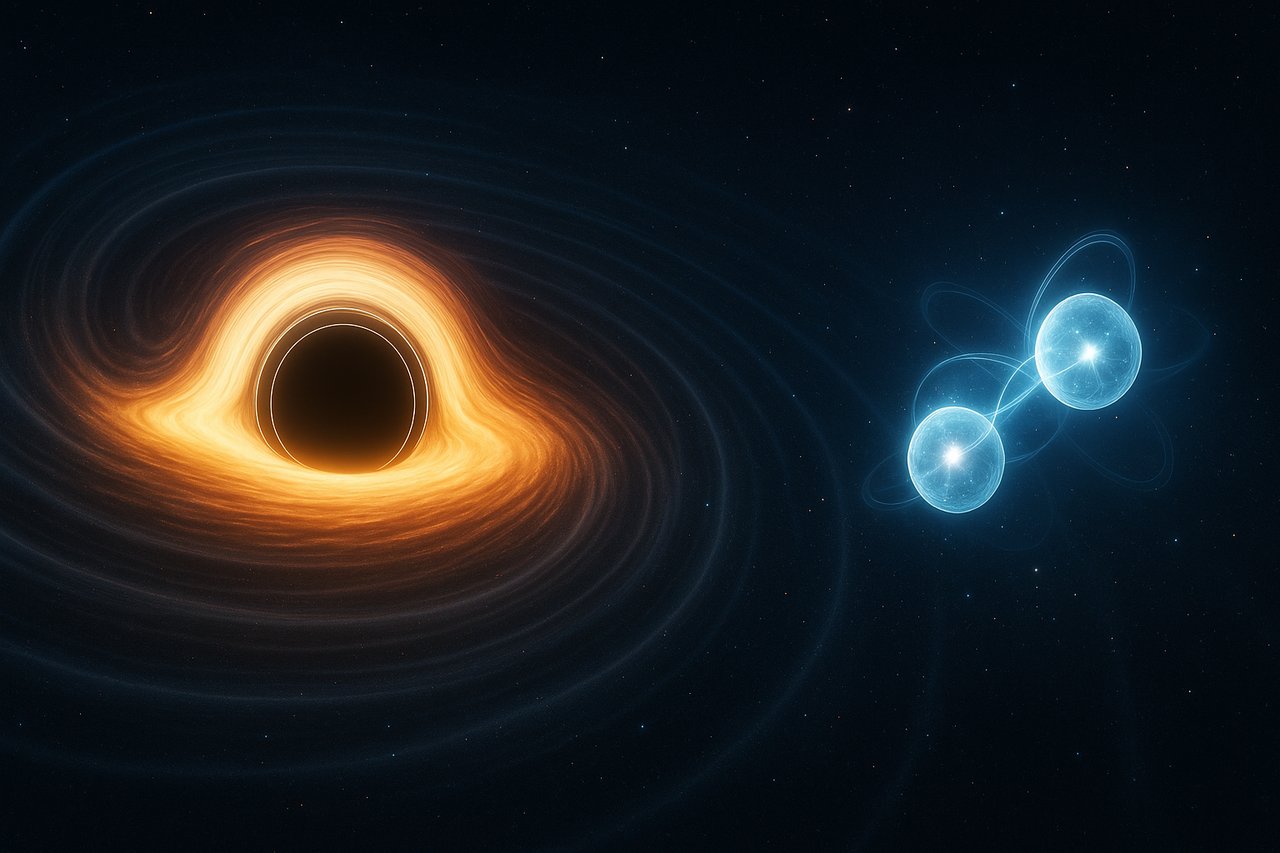
** In the video “Fast & Furious: First Ever Escaped Supermassive Black Hole Confirmed,” Anton Petrov discusses the groundbreaking discovery of RBH-1, the first confirmed runaway supermassive black hole moving at nearly 1,000 km/s. This finding, a culmination of decades of theoretical predictions, was validated through observations from the James Webb Space Telescope, which revealed a shock wave indicating the black hole’s high velocity. Petrov explains how this black hole, which escaped its galaxy, creates a contrail of newly formed stars and explores the mechanisms behind its ejection, including gravitational interactions and mergers with other black holes. This discovery not only proves the existence of wandering black holes but also sheds light on the dynamics of galaxy formation and star development in their wake. **
📚 Research Links (provided by the author in the video description):
We are Much Closer to Kessler Syndrome Than We Thought

** In her video, Sabine Hossenfelder discusses the looming threat of Kessler Syndrome, which refers to the risk of catastrophic satellite collisions that could create an unmanageable layer of space debris around Earth. Recent studies indicate that we are closer to this scenario than previously thought, with the number of intact objects in orbit surpassing critical thresholds. Hossenfelder highlights alarming statistics, including the increasing frequency of near-collisions and the potential for debris to impact commercial flights by 2030. She concludes by emphasizing the urgent need for active debris removal efforts, such as the upcoming Clear Space One mission, to mitigate this escalating problem. **
Mindscape Ask Me Anything, Sean Carroll | February 2026

** In the February 2026 episode of the Mindscape podcast, Sean Carroll addresses a variety of questions posed by Patreon supporters, covering both pressing societal issues and complex scientific concepts. He reflects on the current political climate in the U.S. under the second Trump administration, expressing concern over authoritarian trends while maintaining a hopeful perspective on the resilience of democracy. Additionally, Carroll discusses topics in cosmology, such as the debate surrounding dark energy and the implications of potential changes in the universe’s expansion. The episode emphasizes the importance of activism and critical thinking in both societal and scientific realms. **
Sam Arbesman: “The World is Made of Code”

** In this engaging discussion on Dr. Brian Keating’s podcast, complexity scientist Sam Arbesman explores the concept of code as a form of magic that shapes our reality, driving everything from financial transactions to medical diagnoses. He emphasizes that while code can create wonders, its true risk lies in its scale and potential misuse, especially concerning artificial intelligence. Arbesman highlights the historical evolution of computation and the importance of understanding its foundational concepts rather than solely focusing on current programming languages. The conversation culminates in a reflection on the inherent impermanence of software, drawing parallels between code and the human experience. **
How Life Changed on Earth After an Extinction Event 450 Million Years Ago

** In this video, Anton Petrov explores the significant extinction event that occurred approximately 445 million years ago, known as the Late Ordovician mass extinction, which paved the way for the evolution of jawed vertebrates, our ancient ancestors. The event, triggered by glaciation and subsequent climate shifts, led to a dramatic ecological reset, eliminating about 85% of marine species and allowing jawfish to thrive in isolated niches. This study reveals the importance of mass extinctions in driving evolutionary diversity, suggesting that such events restructure ecosystems and provide opportunities for smaller or previously dominated species to emerge and flourish. Ultimately, this extinction laid the foundation for the Age of Fishes and the complex life forms that followed. **
📚 Research Links (provided by the author in the video description):
Moltbook: The First AI Civilization (Clawdbot to OpenClaw)?

** In the video “Moltbook: The First AI Civilization,” the host introduces OpenClaw, a revolutionary AI platform designed for personal assistants to operate autonomously on users’ devices. OpenClaw offers capabilities such as managing emails, calendars, and personal data while learning user behavior over time. The platform emphasizes a separation between reasoning and action, allowing AI to execute tasks independently without constant human input. However, the host warns of significant security risks associated with granting such extensive access to personal information and discusses the implications of AI agents forming social hierarchies in a platform called Moldbook. **