Weekly Physics Digest – December 21 – December 27, 2025
**This Week in Science and Education: Wormholes, Cats, and Cosmic Mysteries!** Prepare to have your mind twisted like a pretzel in a physics class, as this week’s digest dives into the curious realms of science! We’re unraveling the latest excitement in theoretical physics with Sabine Hossenfelder, who explains why wormholes are the talk of the town—a conversation sparked by fresh studies linking them to gravitational waves and dark energy. And if wormholes aren’t quirky enough for you, how about a lemon-shaped planet that shouldn’t even exist? Anton Petrov takes us on an interstellar journey to explore this cosmic oddity, leaving us questioning everything we thought we knew about planetary formation. Buckle up; this week is filled with mind-bending revelations! Learn fast, stay curious!
Intriguing Dark Matter Experiment Finds 15 Signals Of Something

** In this video, Anton Petrov discusses a groundbreaking dark matter experiment known as Qrocodile, which has potentially detected 15 unusual signals, although their origins remain uncertain. The experiment aims to discover low-mass dark matter particles using advanced superconducting nanowire single-photon detectors that operate in extremely cold conditions. While the results are intriguing, the signals could also be attributed to cosmic radiation or other background noise. The team plans to conduct further experiments, including moving underground to minimize interference, as they seek to clarify the nature of these mysterious signals and advance our understanding of dark matter. **
📚 Research Links (provided by the author in the video description):
Do Black Holes Exist? Some Physicists Don’t Think So

** In this video, Sabine Hossenfelder explores the controversial debate surrounding the existence of black holes, addressing recent arguments that question their reality. She explains the fundamental properties of black holes, including the event horizon and singularity, while discussing the implications of Hawking radiation and the concept of time in relation to black hole formation. Hossenfelder emphasizes that while the inside of a black hole may be philosophically debatable, the mathematics and indirect evidence strongly support their existence, despite some alternative theories suggesting otherwise. Ultimately, she concludes that scientific discourse on this topic continues to evolve, blending physics with philosophical inquiry. **
(Experimental) He Could Have Been a Trillionaire – Instead, He GAVE THIS AWAY and Changed the World

** In this experimental video, Arvin Ash explores the life and legacy of Tim Berners-Lee, the inventor of the World Wide Web. Berners-Lee, who grew up surrounded by computers and technology, created the web not for profit but to facilitate global communication and knowledge sharing. In a groundbreaking decision, he made the web freely accessible to everyone, ensuring it remained a public good rather than a controlled commodity. Today, he continues to advocate for an open and ethical internet through initiatives like the Web Foundation and the Solid project, emphasizing the importance of data ownership and digital rights. **
New Graph Diffusion Transformer #ai

** In the video “New Graph Diffusion Transformer,” the host discusses the limitations of traditional generative AI models in handling graph theory, particularly when they treat complex networks as simplistic structures. The introduction of CoPHo, a new methodology, aims to overcome these challenges by utilizing Persistent Homology, which allows AI to “sculpt” rather than “paint” edges, maintaining the integrity of graph structures. This approach emphasizes the importance of topological features, enabling AI to generate more accurate and meaningful network representations for various applications, including molecular design and sensor networks. **
📚 Research Links (provided by the author in the video description):
The biggest misconception in Einstein’s relativity

** In “The Biggest Misconception in Einstein’s Relativity,” the host dispels the common belief that moving clocks run slower or that gravity slows down time, arguing instead that time never actually slows down. Using intuitive analogies, such as comparing clocks to cars moving at the same speed, the video explains that what we perceive as time dilation is actually a result of different perspectives on simultaneity in four-dimensional spacetime. The host emphasizes that it is the geometry of spacetime that affects how we measure time, not the ticking of clocks themselves. By reframing our understanding of relativity, the video effectively clarifies misconceptions surrounding time dilation and provides a deeper insight into the nature of time and motion. **
AI Found Particle Tracks Physicists Didn’t Expect (ft. Daniel Whiteson)

** In this enlightening lecture, UC Irvine Professor Daniel Whiteson discusses the revolutionary impact of machine learning on particle physics, particularly in discovering unexpected particle tracks that traditional algorithms overlook. He emphasizes the limitations of conventional tracking methods, which assume particles follow helical paths, and introduces innovative machine learning techniques that allow for the identification of non-helical tracks. By leveraging advanced algorithms, his team aims to push the boundaries of particle detection, potentially uncovering elusive particles and phenomena that could reshape our understanding of the universe. The talk concludes with a hopeful outlook on using these methods to explore the unknown realms of particle physics. **
Impossible Lemon Shaped Carbon Planet Shouldn’t Exist

** In this video, Anton Petrov explores the intriguing discovery of a lemon-shaped planet, PSR2322-2650b, orbiting a pulsar, which presents significant challenges to current models of planetary formation. This unusual planet exhibits an extremely dense atmosphere primarily composed of molecular carbon, a composition not seen in any other known planets, raising questions about its origins. The planet’s tight orbit, lasting only 7.8 hours, subjects it to harsh radiation and strong tidal forces, further complicating its formation story. This case highlights the need for new astrophysical models to explain such exotic celestial phenomena and underscores the rarity of pulsar planets. **
📚 Research Links (provided by the author in the video description):
New Experiment Sees Order Emerge from Chaos

** In the video “New Experiment Sees Order Emerge from Chaos,” Sabine Hossenfelder explores a groundbreaking experiment that illustrates how order can arise from chaos, challenging the traditional view that chaos solely disrupts order. The experiment involved a polarized laser beam interacting with randomly moving nanoparticles, revealing that the scattered light maintains correlations with the polarization, suggesting that certain quantum effects can be amplified through chaotic dynamics. Hossenfelder posits that this phenomenon may provide insights into the fundamental symmetries of nature and the laws governing our universe, possibly indicating that such symmetries emerge from chaotic processes rather than being preordained. **
📚 Research Links (provided by the author in the video description):
3I/ATLAS Updates: X Ray Observations Uncover New Details

** In this video, Anton Petrov discusses the latest findings regarding the interstellar comet 3I/ATLAS, which recently completed its closest approach to Earth. New X-ray observations from the XMM Newton telescope revealed the presence of hydrogen and nitrogen gases, offering insights into the comet’s unique chemical composition, which differs from typical solar system comets. The video also highlights the potential for cryovolcanism on the comet, suggesting that it releases significant amounts of methanol and hydrogen cyanide—key ingredients for prebiotic chemistry—indicating that such building blocks for life may be widespread across the galaxy. Additionally, the comet’s rotation and mass have been re-evaluated based on these observations, leading to new understandings of its nature and behavior. **
📚 Research Links (provided by the author in the video description):
Why The Moon Baffles Scientists

** In the video “Why The Moon Baffles Scientists,” Dr. Mark Harwood discusses the ongoing challenges faced by scientists in forming a coherent origin model for the Moon. He explores several naturalistic theories, including fission, capture, co-accretion, and the giant impact hypothesis, all of which fall short of providing satisfactory explanations. Harwood argues that the Moon’s unique geological features and its tidal locking with Earth point to a young Moon, consistent with the Biblical account of creation. By examining these aspects, he asserts that the best explanation for the Moon’s existence is a supernatural creation rather than a purely secular, evolutionary process. **
We Were Wrong About Cat Domestication and How Cats Spread Around the World

** In the video, Anton Petrov explores the complex history of cat domestication and their spread across the globe, revealing that previous assumptions about their origins were largely incorrect. Recent genetic studies indicate that domestic cats likely originated from African wildcats and were primarily domesticated in ancient Egypt, fueled by religious practices associated with the goddess Bastet. Contrary to earlier beliefs, cats did not spread to Europe with Neolithic farmers but rather during the Roman Empire, with two significant waves of migration from North Africa. The video underscores the intricate relationship between human culture and feline domestication, while leaving some questions about the historical significance of cats unanswered. **
📚 Research Links (provided by the author in the video description):
Are We Using the Wrong Kind Of Electricity?

** In the video “Are We Using the Wrong Kind Of Electricity?” Sabine Hossenfelder explores the historical “war of currents” between Thomas Edison and Nikola Tesla, revealing that while alternating current (AC) became the standard due to its economic advantages, direct current (DC) is more efficient for modern devices and renewable energy sources. With a resurgence of interest in DC, particularly for microgrids that power homes and businesses directly from solar panels, the video discusses how this shift could enhance energy efficiency. Despite mixed savings potential for retrofitting existing homes, the trend toward DC technology is likely to continue, particularly in new construction and data centers, indicating a gradual but significant transformation in how we utilize electricity. **
Was Star of Bethlehem a Real Astronomical Event or Was It Just a Myth?

** In this video, Anton Petrov explores the intriguing question of whether the Star of Bethlehem was a real astronomical event or merely a myth. Analyzing the Gospel of Matthew as the primary source, he discusses various astronomical explanations, including planetary conjunctions, novas, and comets, while highlighting the challenges in aligning these phenomena with the star’s described behavior. He focuses on a recent study proposing a close comet pass in 5 BC as a possible explanation, yet notes significant historical gaps and interpretation issues that cast doubt on its authenticity. Ultimately, Petrov concludes that the Star of Bethlehem is likely a religious fiction rather than a historical event. **
This Is Why Wormholes Are Making Headlines Right Now

** In the video “This Is Why Wormholes Are Making Headlines Right Now,” physicist Sabine Hossenfelder explores the recent surge in discussions about wormholes, which are theoretical passages in spacetime. She examines several recent papers that suggest potential connections between gravitational waves and wormholes, the interior structure of wormholes involving quantum effects, and the existence of microscopic wormholes linked to dark energy. While Hossenfelder acknowledges the intriguing nature of these studies, she emphasizes the lack of concrete evidence for wormholes and the speculative nature of the claims, ultimately underscoring the importance of critical thinking in interpreting such scientific headlines. **
📚 Research Links (provided by the author in the video description):
Avi Loeb: “3I/ATLAS Is Unlike Anything We’ve Ever Seen!”

** In this episode, Avi Loeb discusses the intriguing characteristics of the interstellar object 3I/ATLAS, the third confirmed object from outside our Solar System. He explains its unusual brightness, potential composition, and the mysterious jets observed, which defy the behavior typical of comets. Loeb raises questions about whether these anomalies suggest a technological origin, urging scientists to remain open to new possibilities as they gather more data. Ultimately, he emphasizes the importance of curiosity and rigorous inquiry in our understanding of cosmic phenomena. **
Science Isn’t Trying to Be True (Sellars vs van Fraassen)
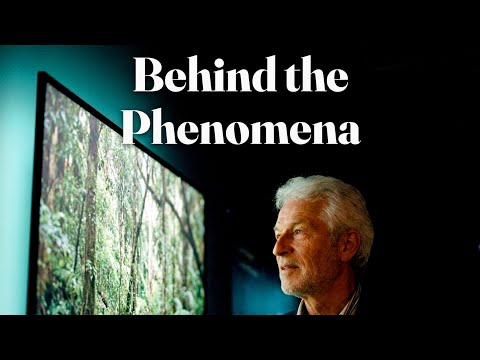
** In this episode of “Science Isn’t Trying to Be True,” philosopher Bas van Fraassen discusses the fundamental differences between scientific realism and anti-realism. He argues that while scientific realists seek to establish true theories about the nature of reality, he posits that the aim of science is to develop empirically adequate theories that can be tested and validated through observation. Van Fraassen emphasizes the distinction between empirical success and truth, suggesting that successful theories may not necessarily reflect the underlying reality. He also touches on the historical context of these philosophical positions and critiques the notion that the success of scientific theories inherently implies their truth. **
NeuroSymbolic T5 AI w/ World Model

** In the video “NeuroSymbolic T5 AI w/ World Model,” the host explores an innovative AI architecture that integrates a physics engine into the T5Gemma2 model, creating a neuro-symbolic system capable of simulating and understanding real-world dynamics. This system contrasts with traditional AI, which often relies on probabilistic predictions, by employing deterministic calculations based on physical laws to foresee outcomes, such as the trajectory of a thrown object. The discussion emphasizes the need for a world model that not only processes visual inputs but also incorporates a deep understanding of causal relationships in the environment. By leveraging this approach, the video suggests a significant advancement in AI’s ability to reason and interact with the physical world. **
Milky Way’s Center Reveals Previously Unknown Features

** In this video, Anton Petrov explores recent discoveries at the center of the Milky Way, particularly around the supermassive black hole Sagittarius A*. He discusses the surprising stability of objects previously thought to be at risk of destruction, like the G2 object, which has withstood the gravitational forces expected from such a massive black hole. New findings reveal complex structures, including cosmic tornadoes and unique gas filaments, which contribute to a complex environment that influences star formation differently than predicted. Ultimately, the research suggests a dynamic and unexpected interplay of forces shaping the galactic center, highlighting the region’s role in star and planet formation. **
📚 Research Links (provided by the author in the video description):
Nanobots: The Truth Behind the Headlines

In “Nanobots: The Truth Behind the Headlines,” Sabine Hossenfelder critically examines the hype surrounding nanobots in medicine, highlighting the significant gap between media portrayals and scientific reality. While the concept of nanobots has been around for decades, many examples touted in headlines are not true bots but rather larger, remotely controlled devices or hybrids, often requiring external power sources and guidance. The video underscores that, despite the potential for targeted drug delivery in specific medical contexts, the technology is far from the autonomous, miniaturized robots that headlines suggest, and most studies are still in early stages, often involving animal trials rather than human applications.
Physicist Defies Mathematical Evidence and Wins

** In this episode of “The Other End,” physicist Cumrun Vafa discusses the interplay between physics and mathematics, detailing how conjectures in string theory, such as mirror symmetry, often defy established mathematical evidence yet lead to profound insights. Vafa shares examples, including the Gromov-Witten invariants and their surprising connection to counting geometric objects, illustrating how physical reasoning can uncover new mathematical truths. He emphasizes the need for a deeper understanding of string theory, likening its current state to early wave mechanics, indicating that while we have consistent solutions, a unifying framework remains elusive. **
NVIDIA’s AI Finally Solved Walking In Games

** In the video “NVIDIA’s AI Finally Solved Walking In Games,” Two Minute Papers explores a groundbreaking approach to character movement in video games, leveraging AI to simulate realistic walking. Unlike traditional NPCs, which rely on pre-made animations, this new system employs a technique called Trace to predict movement paths and Pacer to control the physical simulation of characters with numerous joints. This allows for a more organic and fluid response to environmental challenges, such as navigating stairs and uneven terrain. The implications of this technology extend beyond gaming, potentially enhancing simulations for autonomous vehicles by creating realistic pedestrian behaviors. **
📚 Research Links (provided by the author in the video description):