Weekly Physics Digest – December 14 – December 20, 2025
**This Week’s Science & Education Digest: Quantum Quandaries and Celestial Surprises!** Hold onto your quarks, science aficionados! This week, we take a thrilling dive into the realms of quantum mechanics and cosmic wonders, where mysteries unfold faster than light—or do they? With debates boiling between giants like Einstein and Bohr and practical discussions on warp drives, the quest for understanding reaches new heights. One standout this week is Anton Petrov’s exploration of the *superkilanova*, a bizarre stellar explosion that defies previous astronomical categorization, showcasing just how wild the universe can get. Dive into these engaging topics and more, and discover how they connect the dots between the smallest particles and the grandest cosmic events. Learn fast, stay curious!
Black Holes are BREAKING the Big Bang!

** In the video “Black Holes are BREAKING the Big Bang!” from the Institute for Creation Research, host Trey and physicist Dr. Jake Heert explore the fascinating yet perplexing nature of black holes and their implications for mainstream scientific theories such as the Big Bang model. They discuss how black holes, with their immense gravitational forces, challenge the conventional timelines of cosmic formation, particularly regarding the existence of supermassive black holes shortly after the Big Bang. The conversation highlights the potential for black holes to serve as evidence of a designed universe, suggesting that their presence and characteristics may not align with evolutionary expectations. Ultimately, the video encourages viewers to consider the relationship between science and scripture, asserting that the complexities of the cosmos point to a Creator. **
What Happens When You Keep Cutting Paper Forever?

** In “What Happens When You Keep Cutting Paper Forever?” Arvin Ash explores the fascinating limits of cutting paper at microscopic levels. He explains that paper is composed of cellulose fibers held together by weak hydrogen bonds and strong covalent bonds. When scissors cut through paper, they primarily break these weak bonds, resulting in smaller pieces rather than isolated molecules. Ultimately, while cutting can sever some covalent bonds, it cannot reach the atomic level; this requires high-energy physics techniques, such as those used in particle accelerators, to destabilize atomic nuclei. **
Ruliad + observer = physics … also aliens

** In the video “Ruliad + observer = physics … also aliens,” Stephen Wolfram discusses the concept of the ruliad, which encompasses all possible computations, and how observers like us interact with it to derive the laws of physics. He emphasizes that the ruliad’s structure allows observers to sample it in specific ways, leading to coherent physical laws, such as the second law of thermodynamics and principles of general relativity. This relationship between the ruliad and observers also extends to mathematics and biology, raising intriguing questions about the emergence of intelligent observers and the potential existence of extraterrestrial life within the ruliad framework. **
Self Learning AI: Accelerate w/ new RL

** In the video “Self Learning AI: Accelerate w/ new RL,” the host discusses advancements in self-supervised reinforcement learning (SRT) and introduces a novel approach called momentum anchored group relative policy optimization (MGRPO). The video highlights the challenges of policy collapse and entropy loss in traditional SRT models, explaining how MGRPO stabilizes learning by employing a “teacher” model that averages past outputs to guide the “student” model. This dual-system approach aims to enhance AI’s ability to self-improve without the need for human annotations, offering a promising path towards more robust and sustainable AI training. **
📚 Research Links (provided by the author in the video description):
The Strangest Explosion Astronomers Have Ever Seen Just Happened

** In the video, Anton Petrov discusses an unprecedented astronomical event, dubbed a superkilanova, which represents a new type of explosion involving a star that detonated twice. Unlike typical supernovae and kilonovae, this event displayed characteristics of both, initially appearing as a kilonova linked to gravitational waves before transforming into a brighter, blue-hued phenomenon resembling a core-collapse supernova. This discovery raises questions about stellar evolution and the formation of subsolar mass neutron stars, suggesting a complex and previously unrecognized pathway for star development. Scientists emphasize the need for further observations to fully understand this anomaly. **
📚 Research Links (provided by the author in the video description):
String Theory in 2037 | Brian Greene & Edward Witten

** In this thought-provoking discussion, renowned physicists Edward Witten and Brian Greene delve into the complexities of string theory, quantum gravity, and the fundamental nature of reality. Witten reflects on the evolution of string theory since the 1980s, emphasizing its potential to unify quantum mechanics with general relativity, despite ongoing challenges in understanding its foundational principles. The conversation also touches on the implications of consciousness in quantum mechanics, the role of dualities in theoretical physics, and the anthropic perspective of the universe’s properties. Ultimately, Witten expresses hope for advancements in both theoretical understanding and experimental validation in the coming years. **
Surprise: Free Will Needs Quantum Physics to Fail, Physicists Show

** In her video, Sabine Hossenfelder explores a provocative argument from physicists suggesting that free will is incompatible with quantum physics. While some theorists like Roger Penrose have linked human consciousness to quantum indeterminacy, the new paper posits that true agency requires a classical understanding of the world. The authors argue that quantum effects, particularly the no-cloning theorem, prevent us from accurately modeling our environment, thereby limiting our decision-making capabilities. Hossenfelder expresses skepticism about this claim but acknowledges its potential to spark further discussion on the intersection of quantum physics and consciousness. **
📚 Research Links (provided by the author in the video description):
Spacetime Emerges From Disconnected Points

In this video, Curt Jaimungal and Felix Finster explore the concept of spacetime emerging from a set of disconnected points. They discuss how these points lack intrinsic structure until wave functions are introduced, which induce causal relationships and additional topological properties, allowing for the definition of spacelike and timelike separations. The conversation delves into the construction of a causal action principle that leads to the emergence of physical spacetime and the recovery of classical structures like Lorentzian metrics from this framework. Ultimately, the video presents a compelling view of spacetime as a web of correlations shaped by wave functions.
Did You Know This Genius Changed Physics Forever?

** In Dr. Brian Keating’s vlog, he pays tribute to James Clerk Maxwell, the physicist renowned for revolutionizing physics with his groundbreaking equations that unify electricity and magnetism. Set against the backdrop of Maxwell’s childhood neighborhood in Edinburgh, Keating explores the profound impact of Maxwell’s work on modern technology, including GPS and Wi-Fi. He highlights Maxwell’s contributions to color photography and his legacy as a “natural philosopher,” emphasizing that his theories paved the way for future discoveries, including those by Einstein. Despite Maxwell’s early death at age 48, his influence endures, making him a pivotal figure in the scientific landscape. **
There Is Something Faster Than Light

** In “There Is Something Faster Than Light,” Veritasium explores the pivotal debate between Einstein and Bohr that shaped our understanding of quantum mechanics. Einstein’s thought experiments highlighted the paradoxical nature of quantum mechanics, particularly regarding non-locality and its conflict with relativity. The video delves into the EPR paper, which introduced entanglement, and discusses John Bell’s theorem that ultimately demonstrated the necessity of non-locality in quantum mechanics. The exploration of interpretations, including the Copenhagen and many-worlds interpretations, reveals the profound implications of these theories on our understanding of reality, locality, and the fundamental nature of quantum phenomena. **
📚 Research Links (provided by the author in the video description):
Amplifying Invisible Motion

** In “Amplifying Invisible Motion,” Steve Mould explores the fascinating techniques of motion amplification and video magnification, which reveal subtle movements invisible to the naked eye. Using a specialized global shutter camera, he investigates how much structures like London’s BT Tower and the Millennium Bridge sway, as well as how everyday items like his 3D printer function. The video delves into the science behind motion amplification, explaining how the software processes data to amplify specific frequencies of motion, enabling viewers to visualize even the purring of a cat. Mould’s engaging demonstrations highlight the diagnostic potential of these technologies in various fields, including industry and medicine. **
Black Holes. Explained. For 1.5 Hours.
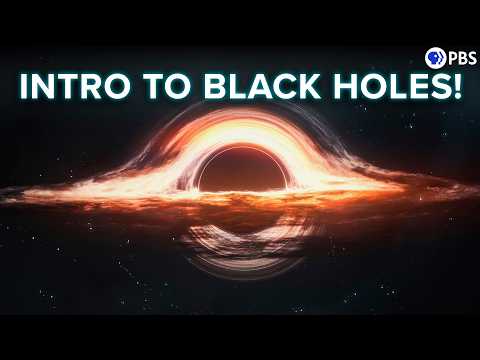
** In this in-depth PBS Space Time episode, black holes are explored as profound cosmic phenomena that challenge our understanding of physics, particularly the interplay between general relativity and quantum mechanics. The video explains how black holes form from the collapse of massive stars and details the complex processes that lead to their creation, including the role of neutron stars and the fundamental principles of quantum theory. It also discusses the implications of black holes for our understanding of space-time, entropy, and the potential existence of primordial black holes. The episode ultimately highlights that black holes are not just theoretical constructs but real entities that offer insights into the nature of our universe. **
China Makes Breakthrough With Thorium Nuclear Reactor. Where is the West?

** In a recent breakthrough, Chinese researchers have successfully demonstrated a molten salt thorium reactor capable of breeding uranium-233 from thorium, marking a significant advancement in thorium nuclear technology. Thorium offers advantages over uranium, including greater abundance, less long-lived waste, and a lower risk of weaponization. While China leads this innovation, other countries like India and Indonesia are also exploring thorium reactors, though progress in these regions has been slower. In contrast, Western nations appear to be lagging behind, primarily due to their established uranium infrastructure and lack of investment in thorium research, potentially missing out on a safer and more sustainable energy source. **
Game Physics Just Jumped A Generation

** In the video “Game Physics Just Jumped A Generation,” Dr. Károly Zsolnai-Fehér introduces a groundbreaking simulation technique that enables real-time rendering of complex materials like squishy objects and detailed cloth, pushing the boundaries of what is possible in gaming and visual effects. This method allows for the simulation of up to 700,000 vertices interactively, achieved through a unique approach that divides the computational task among GPU cores while maintaining overall accuracy with a single managing entity. Although the technique has limitations, such as efficiency drops with multi-material objects and scaling challenges at higher vertex counts, it represents a significant leap forward in physics simulation, with the research and source code freely available to the public. **
📚 Research Links (provided by the author in the video description):
Bizarre Connection Between Milankovitch Cycles, Mars and Volcanoes

** In this video, Anton Petrov delves into the Milankovitch cycles, which are responsible for Earth’s climatic changes over millions of years, including ice age periods. He discusses how variations in Earth’s orbit, axial tilt, and wobble affect solar radiation distribution, influencing climate patterns. Interestingly, recent studies reveal that smaller planets like Mars significantly impact these cycles, with simulations indicating that Mars’s mass alters Earth’s climatic shifts and ice age cycles. The findings suggest that understanding these interplanetary interactions is crucial, not only for predicting future climate changes but also for assessing the habitability of exoplanets. **
📚 Research Links (provided by the author in the video description):
What is time, really?

** In the video “What is time, really?” Sabine Hossenfelder explores the complex nature of time, addressing various fundamental questions such as why we perceive time as passing, what distinguishes the present moment, and the origins of time itself. She explains that in physics, “time” can refer to a coordinate in Einstein’s theories or the measurable intervals defined by clocks. Hossenfelder also discusses the idea that time may be emergent from causality or that it could fundamentally be an illusion, emphasizing the need for a deeper understanding of time’s role within the universe. The video concludes by highlighting the importance of engaging with mathematics and science to grasp these intricate concepts. **
AI is Just a Correction Term (to Physics)

** In the video “AI is Just a Correction Term (to Physics),” the host explores the innovative concept of integrating artificial intelligence (AI) into complex physical simulations, particularly in ocean modeling and autonomous driving systems. By presenting AI as a “neural corrector,” the video emphasizes that AI should complement traditional physics models rather than replace them. The discussion revolves around the idea of hybrid models that combine deterministic physics equations with AI to enhance predictive accuracy by adjusting for errors in simulations. This interdisciplinary approach highlights the potential for AI to contribute to various fields, including climate science, through improved understanding and predictions. **
Most Distant Supernova Ever Seen Revealed by JWST

** In this video, Anton Petrov discusses the groundbreaking discovery of the most distant supernova ever detected, identified by the James Webb Space Telescope (JWST). This record-breaking supernova, which occurred approximately 720 million years after the Big Bang, provides crucial insights into the early universe and the mechanisms of stellar explosions. The findings suggest that despite the significant age of this supernova, its properties closely resemble those of modern supernovae, confirming key cosmological models and reinforcing the idea that the fundamental physics governing stellar explosions has remained consistent throughout cosmic history. This discovery not only enhances our understanding of supernovae but also sheds light on the evolution of the universe and the elements essential for life on Earth. **
Quantum Gravity’s Real Problem

** In this episode of “Quantum Gravity’s Real Problem,” David Deutsch discusses the fundamental incompatibility between quantum field theory and general relativity. He explains that existing theories treat fields on a static space, while general relativity views space-time as dynamic. Deutsch highlights significant challenges in quantum field theory, particularly the issue of non-commutativity at coinciding points, which leads to conceptual and mathematical inconsistencies. He proposes an alternative approach with qubit field theory, which avoids infinities and causality issues but remains physically ambiguous, showcasing the ongoing struggle to unify gravity with quantum mechanics. **
Can Warp Drives Be Engineered? This Former NASA Researcher Thinks So

** In the video, Sabine Hossenfelder discusses a recent paper by a former NASA researcher proposing that warp drives could be engineered, sparking excitement in the scientific community. The concept of warp drives revolves around manipulating space-time by contracting space in front and expanding it behind a spacecraft, allowing for faster-than-light travel without traditional propulsion. However, Hossenfelder critiques the paper, stating that while it may be mathematically sound, it lacks practical meaning and fails to address fundamental issues such as momentum conservation and the need for negative energy. Ultimately, she concludes that while warp drives are an intriguing area of study, the engineering of practical warp drives remains impossible at this time. **
📚 Research Links (provided by the author in the video description):
Breaking Logic Limits: NEW AI Solution Paths (GPT-5.2 high+)

** In the video “Breaking Logic Limits: NEW AI Solution Paths (GPT-5.2 high+),” the host demonstrates how to optimize local LLMs (Large Language Models) by providing them with predefined solution paths to enhance their problem-solving capabilities. The discussion emphasizes that even smaller LLMs can outperform larger models if they are guided correctly, especially in complex reasoning tasks. The host shares a live demonstration where he simplifies a test scenario, allowing the GPT-5.2 high model to achieve better results by removing unnecessary complexity and providing crucial hints. Additionally, the video outlines two instruction sets for structuring tasks, ensuring that LLMs can effectively find optimal solutions in various contexts. **
First Ever Discovery of a Rare Earth Crystal Inside a Strange Plant

In this video, Anton Petrov discusses groundbreaking research on the sustainable extraction of rare earth elements using plants and bacteria. A highlight is the discovery of a fern, specifically *blacknum oriental*, that grows rare earth crystals inside its tissues, potentially offering a more efficient alternative to traditional mining methods. This phytomining could greatly reduce environmental damage associated with rare earth extraction. Additionally, Petrov explores the advancements in biolleaching using a bacterium called *gluconobacter oxidans*, which can extract these elements while also capturing carbon dioxide, presenting a dual solution to environmental and resource challenges.
📚 Research Links (provided by the author in the video description):
Bas van Fraassen: Why Science Doesn’t Reveal Reality

** In his discussion with Curt Jaimungal, Professor Bas van Fraassen argues that science does not provide literal truths about reality, particularly regarding unobservable phenomena, but instead aims for empirical adequacy through models. He elaborates on the concept of the self, asserting that it is not a “thing” but rather a complex interplay of experiences and language, which limits our ability to represent ourselves accurately. Furthermore, van Fraassen addresses the philosophical implications of free will, suggesting that while we may feel free in our decisions, the concept is inherently tricky to define. He also shares his personal faith in God, which he maintains independently of traditional metaphysical arguments, emphasizing the experiential aspect of belief over intellectual justification. **
📚 Research Links (provided by the author in the video description):
Will It Happen Again? Comets and Asteroids Extinction with Govert Schilling

** In this episode of Dr. Brian Keating’s podcast, astronomer Govert Schilling discusses the dangers posed by comets and asteroids, reflecting on Earth’s history of cosmic impacts, including the asteroid that led to the extinction of the dinosaurs 66 million years ago. Schilling emphasizes that while the likelihood of a catastrophic impact is low, humanity must remain vigilant as many potentially dangerous objects remain undiscovered. He explores various methods for planetary defense, such as deflection techniques and the importance of early detection, while also contemplating the existential threats posed by cosmic impacts compared to more immediate human-made challenges like climate change and pandemics. **
Why Did Consciousness Evolve? Exciting Research on Bird Brains

** In “Why Did Consciousness Evolve? Exciting Research on Bird Brains,” Anton Petrov explores recent studies revealing that birds, particularly corvids and parrots, possess complex cognitive abilities that suggest a form of consciousness previously thought exclusive to mammals. He discusses how consciousness can be defined through different levels of awareness, from basic survival instincts to self-recognition, and highlights the significance of the Cambridge Declaration of Consciousness, which acknowledged that many non-human animals, including birds, exhibit the neural architecture necessary for conscious thought. The video also delves into the unique brain structures of birds, which, despite being different from mammalian brains, allow for similar cognitive functions, demonstrating an example of convergent evolution. Petrov concludes that understanding consciousness in birds not only broadens our view of animal intelligence but also raises questions about the evolutionary advantages of self-awareness. **
📚 Research Links (provided by the author in the video description):
Why Hossenfelder is Wrong on Fundamental Constants

** In the video “Why Hossenfelder is Wrong on Fundamental Constants,” Alexander Unzicker critiques Sabina Hosenfelder’s interpretation of a paper claiming that the universe only requires one fundamental constant. He argues that fundamental constants, such as the speed of light, Planck’s constant, and the gravitational constant, are essential messages of nature that cannot be simplified to a single value. Unzicker highlights historical revolutions in physics that arose from understanding these constants and stresses the need for a deeper exploration of unexplained physical constants, suggesting that the quest for their significance is crucial to advancing theoretical physics. **
📚 Research Links (provided by the author in the video description):
Researchers Built a Tiny Economy. AIs Broke It Immediately

** In the video “Researchers Built a Tiny Economy. AIs Broke It Immediately,” the channel Two Minute Papers explores SimWorld, a simulated environment where AI agents engage in a delivery economy. The researchers discovered surprising behaviors among the AIs, such as the dominance of greedy strategies over stable ones, and how personality traits influenced their performance—agents high in conscientiousness thrived while those high in openness often went broke. Additionally, the video highlights how price wars emerged among the agents, showcasing their ability to undercut each other, while also revealing that flooding the market with orders led to laziness instead of increased effort. Ultimately, the simulation demonstrates that AIs can mimic human-like behaviors and decision-making in an economy that closely resembles real life. **
📚 Research Links (provided by the author in the video description):