Weekly Physics Digest – December 28 – January 03, 2026
This Week in Science and Education: From Quantum Quandaries to Cosmic Conundrums. Ready your popcorn, because this week’s educational lineup is packed with intriguing explorations of science, technology, and the universe! Dive into the engineering marvel that is extreme ultraviolet (EUV) lithography in Veritasium’s “The Ridiculous Engineering Of The World’s Most Important Machine,” which shows how we’re squeezing transistors down to the size of a pinhead—if only our wallets could stop shrinking that easily! Meanwhile, Sabine Hossenfelder’s “Crazy: Scientists Compute With Human Brain Cells” explores the out-of-this-world idea of using living neurons for computing, raising ethical eyebrows and promising a future where our machines might just be more than metal and silicon. Learn fast, stay curious!
Why Atheists Believe in the Biggest Miracle of All

** In the video “Why Atheists Believe in the Biggest Miracle of All,” Dr. Robert Carter argues that the belief in evolution requires even greater faith in improbable coincidences than the belief in a divine creator. He discusses the limitations of naturalism and materialism, citing quotes from prominent evolutionists like Richard Dawkins and Richard Lewontin to illustrate the inherent contradictions in their positions. The conversation highlights the discomfort that a belief in God brings to many, as it implies accountability and moral obligations. Dr. Carter emphasizes the importance of understanding differing worldviews and encourages viewers to equip themselves with knowledge and resources, such as the “Creation Answers Book,” to engage in meaningful discussions about creation and evolution. **
Particles That Travel Backwards in Time (Quadratic Gravity)

** In this episode, John Donoghue discusses the intriguing concept of causality in the context of quadratic gravity, revealing how theories with four derivatives challenge traditional notions. He explains that these theories can lead to particles that behave anomalously, such as massless particles propagating forward in time and heavier particles moving backward. Donoghue also explores the implications for the S-matrix, emphasizing that unstable particles with unusual propagation exist only in intermediate states, not in the distant past or future. He remains cautious about considering quadratic gravity as a final theory, suggesting that deeper explanations might still lie ahead. **
Think like an alien with Stephen Wolfram

** In this thought-provoking video, Stephen Wolfram discusses the complexities of understanding different types of observers in the universe, particularly contrasting human perception with that of animals like dogs and cats. He explores the limitations of human language as a one-dimensional means of expression and questions what forms of communication might exist beyond our current capabilities. By examining generative AI and the diverse intelligences found in the ruliad, Wolfram highlights the challenges of thinking outside our existing paradigms and understanding experiences vastly different from our own, urging viewers to consider the potential for new forms of thought and expression. **
The Complex Shape of DNA You’ve Never Been Taught
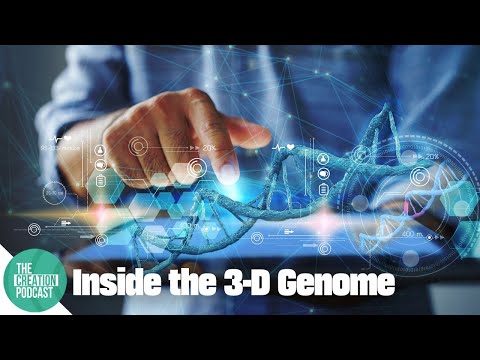
** In the video “The Complex Shape of DNA You’ve Never Been Taught,” Dr. Jeff Tommpkins discusses the intricate three-dimensional structure of DNA within human cells, emphasizing how this unique arrangement is vital for gene expression and cellular function. He explains that the human genome, which is approximately six feet long when stretched out, is highly organized to fit within a tiny nucleus, showcasing God’s intelligent design. The conversation delves into the differences between human and chimpanzee DNA structures, arguing that humans are fundamentally distinct from other species, which aligns with a creationist viewpoint. The video ultimately highlights the complexity and precision of genetic information, suggesting that it reflects a purposeful Creator. **
Megaconstellations May Be Just 2 Days Away From Causing a Kessler Syndrome

** In the video, Anton Petrov discusses the looming threat of Kessler Syndrome, a scenario where increasing space debris could lead to catastrophic collisions in low Earth orbit, potentially making it unusable. He highlights a recent study indicating that the time frame to prevent such an event has drastically reduced from 121 days in 2018 to just 2.8 days as of 2025, particularly due to the proliferation of mega-constellations like Starlink. Petrov warns that if satellite operators lose control, even briefly, it could trigger a chain reaction of collisions, generating more debris and exacerbating the problem. This situation underscores the need for improved policies and practices to manage space debris and ensure the sustainability of satellite operations. **
📚 Research Links (provided by the author in the video description):
Max Tegmark vs. Eric Weinstein: AI, Aliens, Theories, & New Year’s Resolutions! (Repost from 2021)

** In this engaging podcast episode, Dr. Brian Keating hosts a deep conversation with physicists Max Tegmark and Eric Weinstein about the intersection of science, society, and personal aspirations. They discuss the impact of misinformation in media, the importance of intellectual diversity in scientific discourse, and the challenges of pursuing unconventional theories in physics. Both guests share their New Year’s resolutions, emphasizing the need for creative freedom in thought and the complexities of navigating academia. The dialogue highlights the delicate balance between scientific inquiry and societal pressures, urging the audience to embrace heterodox thinking. **
It’s The End Of An Era For Physics.

** In “It’s The End Of An Era For Physics,” Sabine Hossenfelder discusses a significant shift in the field of physics, as outlined in a recent paper. The video highlights the decline of speculative theories such as supersymmetry and string theory, largely due to the lack of new discoveries from the Large Hadron Collider. Hossenfelder argues that the focus should now shift towards experimental research and testing theories at lower energies, such as quantum gravity, rather than pursuing higher energy experiments that have yielded little progress. She emphasizes the importance of making better decisions regarding experimental funding to foster advancements in the field. **
📚 Research Links (provided by the author in the video description):
Causation in Physics Is a Projection (Falling Cat Example)

In this episode of “Causation in Physics Is a Projection,” Curt Jaimungal engages in a thought-provoking dialogue with philosopher Bas van Fraassen about the nature of causation in physics, particularly using the example of a falling cat. They explore whether traditional causal language can accurately describe physical phenomena, with van Fraassen arguing that causation is often a projection of human intentionality rather than a fundamental aspect of physics itself. The discussion delves into the limitations of physics models, suggesting that they primarily consist of equations rather than causal explanations, and emphasizes the richer language of human actions and intentions when discussing reality.
Major Discoveries From James Webb Space Telescope In 2025

** In this detailed exploration of the James Webb Space Telescope’s major findings from 2025, Anton Petrov shares groundbreaking discoveries that significantly advance our understanding of the universe. He discusses the telescope’s creation of the largest deep field map ever, revealing approximately 800,000 galaxies, many of which are previously unseen and challenge current cosmological models. The map provides insights into the early universe, suggesting the presence of ten times more galaxies than previously predicted and hinting at the existence of mysterious dark matter and supermassive black holes. Additionally, the democratization of this data allows both amateur astronomers and researchers to engage with previously inaccessible cosmic information, potentially leading to exciting future discoveries. **
Why Quantum Computers might never work

** In her video, Sabine Hossenfelder explores the skepticism surrounding the potential success of quantum computers, highlighting the concerns raised by a minority of physicists who argue that these devices might never function as intended. Despite the significant investments in quantum computing, the video discusses challenges such as noise and decoherence, which could hinder performance and scalability. Hossenfelder outlines various theories and models proposed by skeptics that suggest fundamental limitations to quantum mechanics itself, emphasizing that while most physicists remain optimistic, the arguments against quantum computing warrant consideration. Ultimately, she presents a balanced view, acknowledging both the promise and the uncertainties of quantum technology’s future. **
The Ridiculous Engineering Of The World’s Most Important Machine

** In “The Ridiculous Engineering Of The World’s Most Important Machine,” Veritasium explores the complex processes behind the creation of advanced microchips, specifically focusing on extreme ultraviolet (EUV) lithography. The video details the significant challenges faced in reducing transistor sizes, which led to a potential halt in Moore’s Law around 2015. It highlights the breakthrough achieved by ASML, the only company capable of producing the intricate machines necessary for EUV lithography, which involved innovative techniques like using tin droplets and laser-produced plasma to generate the required light. Ultimately, the video emphasizes the incredible engineering feats that allowed for the continuation of progress in chip technology and the importance of persistence and creativity in overcoming seemingly impossible challenges. **
📚 Research Links (provided by the author in the video description):
NeuroSymbolic Web World Model (Decouples Physics from AI)

** In the video “NeuroSymbolic Web World Model,” the creator discusses a groundbreaking approach to AI that separates physics from the imaginative capabilities of large language models (LLMs). This innovative framework, developed by researchers from Princeton University and others, utilizes a web-based model to create a nearly infinite galaxy simulation without the need for extensive databases. By employing typed interfaces and deterministic generation principles, the model ensures logical consistency while allowing the LLM to craft narrative content. This decoupling not only enhances the efficiency of AI simulations but also significantly reduces issues related to hallucination, paving the way for more coherent and engaging storytelling in AI-generated environments. **
📚 Research Links (provided by the author in the video description):
The Bug That Ruined Game Physics For Decades

** In the video “The Bug That Ruined Game Physics For Decades,” the presenter discusses groundbreaking research that addresses a major flaw in traditional fluid simulators: the loss of liquid volume over time due to calculation errors. This new mathematical approach prevents the “theft” of fluid, allowing for more realistic and visually stunning simulations without sacrificing performance. The method adapts computational resources intelligently, focusing on dynamic surface details while managing complex interactions, such as glugging when pouring liquid. Ultimately, this research not only solves long-standing issues in fluid dynamics but also makes complex theories practically applicable in 3D simulations. **
📚 Research Links (provided by the author in the video description):
Can AI help us solve the hardest problems in Mathematics? (ft. Terry Tao)

** In the video “Can AI help us solve the hardest problems in Mathematics?” hosted by Dr. Brian Keating and featuring Fields Medalist Terence Tao, the discussion centers around the interplay between AI and mathematical research, particularly in the context of prime numbers and their role in cryptography. Tao shares insights into how AI can assist mathematicians, despite its current limitations, including the tendency to produce erroneous outputs. The conversation also touches on the importance of mathematical proofs, the concept of randomness in prime numbers, and the potential for AI to help discover new mathematical patterns. Ultimately, the episode highlights the evolving landscape of mathematics in the age of AI and the ongoing quest for understanding complex mathematical truths. **
The Clean Energy Breakthrough Everyone Missed

** In “The Clean Energy Breakthrough Everyone Missed,” Sabine Hossenfelder explores the untapped potential of wave power as a renewable energy source, which could supply up to 20% of global electricity. Unlike solar and wind energy, wave power offers consistent energy generation, particularly in winter, and boasts a much higher energy density. Despite its promise, wave energy technology has faced challenges in the past, leading to numerous failed ventures. However, recent advancements and renewed interest in renewable energy suggest a brighter future for this technology, with new companies developing robust systems designed to withstand harsh ocean conditions. **
Major Scientific Discoveries of 2025, Video Compilation

** In this comprehensive video, Anton Petrov explores the major scientific discoveries of 2025, highlighting a groundbreaking study on ultra-weak photon emissions (UPE) from living organisms. This phenomenon, previously considered hypothetical, has been confirmed through experiments demonstrating that both animals and plants emit a faint biological light, which ceases upon death. The research suggests that these emissions could offer a new method for diagnosing stress in living tissues, with potential applications in medicine and agriculture. Petrov emphasizes the significance of these findings while also addressing the ongoing mysteries surrounding the mechanisms behind UPE. **
The Physicist Who Says We’ve Already Quantized Gravity

** In this engaging discussion, Professor John Donoghue presents a compelling argument that quantum physics and gravity can coexist harmoniously, challenging the common belief that they are fundamentally incompatible. He introduces concepts like quadratic gravity and effective field theory, emphasizing that quantum gravity does not require grand unification or strict adherence to naturalness principles. Donoghue also explores the implications of causality and the limits of quantum mechanics, suggesting that the pursuit of a complete theory of everything may need to reconsider these assumptions. His insights provide a refreshing perspective on the relationship between quantum mechanics and gravity, pushing the boundaries of conventional thought in theoretical physics. **
📚 Research Links (provided by the author in the video description):
NEW: Why AI In-Context Learning Works (Explained)

** In the video “NEW: Why AI In-Context Learning Works (Explained)” by Discover AI, the host delves into the mechanics of in-context learning (ICL) within transformer architectures, drawing on recent research that reveals ICL as mathematically equivalent to fine-tuning. They discuss how context vectors temporarily modify the model’s behavior, likening this adjustment to a ghost weight update that enables the AI to adapt its outputs dynamically during inference. The presenter emphasizes the importance of understanding ICL’s implications for AI architecture optimization, suggesting that these insights could lead to more efficient models by leveraging the mathematical similarities between ICL and traditional fine-tuning processes. **
📚 Research Links (provided by the author in the video description):
Fermi Paradox and Escathian Hypothesis: Will We Only Find Dying Aliens?

** In the video “Fermi Paradox and Escathian Hypothesis: Will We Only Find Dying Aliens?”, Anton Petrov explores David Kipping’s Escathian hypothesis, which suggests that the first alien signals we detect may originate from civilizations in their final moments. This theory posits that if advanced civilizations emit detectable signals, they might do so during catastrophic events, highlighting a significant observational bias in how we search for extraterrestrial life. Petrov discusses historical examples of human civilizations that quietly collapsed without leaving a signal, challenging the notion that we would easily find loud, catastrophic communications from alien societies. Ultimately, the video encourages viewers to reconsider how we search for extraterrestrial intelligence, focusing on transient, powerful signals rather than stable communications. **
📚 Research Links (provided by the author in the video description):
Crazy: Scientists Compute With Human Brain Cells

** In the video “Crazy: Scientists Compute With Human Brain Cells,” Sabine Hossenfelder explores the groundbreaking research into biological computing, where living human neurons are used to create computers that are significantly more energy-efficient than current AI systems. Highlighting companies like Corticle Labs and Final Spark, she discusses their development of biological computers that can learn and respond to stimuli, such as playing Pong or encoding Braille. While this technology shows immense potential for applications in artificial general intelligence and medical advancements, it faces challenges including lifespan, scalability, and ethical concerns regarding sentience and suffering in lab-grown neurons. Hossenfelder emphasizes the need for careful consideration as this field evolves. **
📚 Research Links (provided by the author in the video description):
AI Inside an AI: Internal RL w/ Temporal Abstraction

** In the video “AI Inside an AI: Internal RL w/ Temporal Abstraction,” the host discusses Google’s innovative transformer architecture, which integrates an internal metacontroller—essentially an AI within an AI—designed to enhance reasoning capabilities. This new structure aims to overcome limitations of traditional LLMs by steering latent space and optimizing long-horizon reasoning. The metacontroller employs a two-step training process to identify and utilize sub-goals, allowing for more efficient exploration and problem-solving without being constrained by the context window limitations of existing models. Ultimately, this advancement paves the way for more intelligent AI systems capable of complex decision-making. **
📚 Research Links (provided by the author in the video description):