Weekly Physics Digest – November 09 – November 15, 2025
Randell Shelton
Weekly Physics Digest – November 09 – November 15, 2025
This week in the realm of enlightening videos, our cosmic curiosity is piqued by Anton Petrov’s captivating exploration of “The Strangest Comet in the Solar System Is Growing Rings in Real Time (Chiron).” This video takes us to the fringes of the solar system, where Chiron, a celestial oddball, defies expectations by sporting a ring system usually reserved for planets of more considerable stature. As the video delves into the dynamic transformations of Chiron, it’s a reminder of how our universe continually surprises us with its complexity. Meanwhile, the weekly lineup is brimming with intriguing scientific revelations, from the elusive quest for gravitons to questioning the universe’s expansion and whether we’re heading for a new mass extinction. Whether your interests lean toward the theoretical frontiers of physics or the tangible beauties of space phenomena, this week’s collection of videos promises a stimulating journey through the wonders of science. Learn fast, stay curious!
Randell Shelton’s Physics Weekly Digest, www.randellshelton.com, Curt Jaimungal, Penrose’s Elegant Proof: Why Quantum Mechanics and General Relativity Cannot Both Be True
** In the video “Penrose’s Elegant Proof: Why Quantum Mechanics and General Relativity Cannot Both Be True” on Curt Jaimungal’s channel, Jonathan Gorard discusses Roger Penrose’s argument that quantum mechanics and general relativity are fundamentally incompatible. This stems from the contradiction between the linearity required in quantum mechanics and the non-linearity inherent in general relativity. Gorard illustrates this with the example of superposing gravitational fields, which violates the fundamental principles of both theories. The discussion also touches on the potential of higher category theory and infinity-categories to provide a new framework for understanding quantum gravity and reconciling these theories. **
Randell Shelton’s Physics Weekly Digest, www.randellshelton.com, World Science Festival, Have We Been Brainwashed? Quantum Mechanics and Nonlocality
** In the video “Have We Been Brainwashed? Quantum Mechanics and Nonlocality,” Nobel laureate Alain Aspect discusses with Brian Greene the revolutionary concepts of quantum entanglement, nonlocality, and Bell’s theorem. Aspect explains how his experiments disproved Einstein’s views on local realism, leading to the acceptance of quantum nonlocality, where particles can instantaneously affect each other over distance. The conversation delves into the historical context, the evolution of quantum mechanics, and the philosophical implications of these findings, highlighting Aspect’s personal journey and ongoing debates about the interpretation of quantum mechanics, including the roles of probability and measurement. **
Channel: World Science Festival · Published: 2025-11-14T21:00:06Z · Duration: 55:43
Randell Shelton’s Physics Weekly Digest, www.randellshelton.com, PBS Space Time, The Gravity Particle Should Exist. So Where Is It?
** The PBS Space Time video “The Gravity Particle Should Exist. So Where Is It?” explores the concept of the graviton, a hypothetical quantum particle that could unify quantum mechanics and general relativity into a master theory. Despite the success of quantizing other forces through particles like photons, the graviton remains elusive due to the fundamental contradictions and complexities of combining relativity and quantum theories. The video discusses various attempts to identify the graviton, such as string theory and loop quantum gravity, while acknowledging the enormous challenges in proving its existence. The quest for the graviton is crucial for confirming the quantum nature of gravity and potentially revolutionizing our understanding of the universe. **
Channel: PBS Space Time · Published: 2025-11-13T20:45:01Z · Duration: 23:25
Randell Shelton’s Physics Weekly Digest, www.randellshelton.com, Reasons to Believe, Genetics and Human Uniqueness | Solar System Disturbances Led to Life-Friendly Conditions on Earth
** In the “Genetics and Human Uniqueness” episode from the Reasons to Believe channel, biochemist Fuz Rana and astrophysicist Hugh Ross explore two significant scientific discoveries. They discuss how disturbances in the solar system, specifically cometary impacts, have historically contributed to Earth’s life-friendly conditions, potentially guided by divine orchestration. Additionally, they highlight the discovery of a unique region in the human genome, dubbed HAR123, which plays a critical role in neural development and cognitive flexibility—traits that underscore human exceptionalism. These findings are presented as evidence supporting the theological perspective of humans being uniquely made in God’s image. **
📚 Research Links (provided by the author in the video description):
Randell Shelton’s Physics Weekly Digest, www.randellshelton.com, Discover AI, AI Learns in Low-Curvature Subspaces (RLVR)
** The video from Discover AI delves into groundbreaking research on reinforcement learning (RL) and its efficiency in fine-tuning large language models (LLMs) by utilizing low-curvature subspaces. Despite the perceived sparsity of parameter updates, the study reveals that this is a surface illusion, with a deep optimization bias driving significant reasoning improvements. Through a detailed analysis using the “Three-Gate Theory,” the research highlights how RL updates are highly targeted, operating within a small fraction of the parameter space, specifically in low-curvature subspaces, thus preserving the model’s spectral geometry. This understanding could lead to more efficient learning algorithms and improved AI systems. **
Channel: Discover AI · Published: 2025-11-15T13:15:15Z · Duration: 34:24
Randell Shelton’s Physics Weekly Digest, www.randellshelton.com, Anton Petrov, Super Detailed Radio Map of the Milky Way Released! Here’s What It Shows
** In Anton Petrov’s video, he discusses the release of a highly detailed radio map of the Milky Way, created through the Gleam X project using the Murchison Widefield Array in Western Australia. This map, operating at low-frequency radio spectra, provides unprecedented resolution and sensitivity, revealing new celestial objects and phenomena previously obscured by interstellar dust and gas. The map aids in examining the galaxy’s structure, star formation, and supernova remnants by highlighting distinct radio colors that correlate with different physical processes. This advancement is pivotal for future astronomical studies and upcoming projects like the Square Kilometre Array. **
📚 Research Links (provided by the author in the video description):
Randell Shelton’s Physics Weekly Digest, www.randellshelton.com, Dr Brian Keating, Avi Loeb Fights Back: Response to Brian Cox & the 3I/ATLAS Critics
** In a compelling discussion hosted by Dr. Brian Keating, Harvard astrophysicist Avi Loeb addresses criticisms from Brian Cox and others regarding his controversial analysis of the interstellar object 3I/ATLAS. Loeb defends his scientific approach, emphasizing the potential for anomalies to illuminate new scientific insights, and argues for the consideration of extraterrestrial technological possibilities. He highlights that some anomalies of 3I/ATLAS remain unexplained and underscores the significance of continued investigation. The conversation touches on broader themes of scientific inquiry, openness to unconventional ideas, and the value of engaging the public in scientific discourse. **
Channel: Dr Brian Keating · Published: 2025-11-14T21:01:31Z · Duration: 01:43:38
Randell Shelton’s Physics Weekly Digest, www.randellshelton.com, History of the Universe, What Happens When You Remove Everything?
** The video “What Happens When You Remove Everything?” from the History of the Universe channel explores the complex concept of “nothingness” in both philosophical and scientific contexts. It delves into historical and modern scientific theories, examining how humanity’s understanding of a vacuum has evolved from ancient Greek philosophy through Newtonian mechanics and into quantum field theory. The video reveals that even what we perceive as empty space is teeming with quantum fields and energy, challenging the notion of absolute nothingness. Ultimately, it questions whether true nothingness can exist, as even the absence of matter and energy leaves behind the fundamental laws of physics. **
Channel: History of the Universe · Published: 2025-11-14T20:03:53Z · Duration: 57:48
Randell Shelton’s Physics Weekly Digest, www.randellshelton.com, Curt Jaimungal, If You Found Cogs and Gears Inside You, You’d Be Wrong to Despair
** In the video “If You Found Cogs and Gears Inside You, You’d Be Wrong to Despair,” Curt Jaimungal and guest Michael Levin delve into the philosophical implications of viewing humans as biological machines composed of cells and complex systems. Levin argues that discovering mechanical components within us should not diminish our sense of self or potential. Instead, it highlights the incredible capabilities of seemingly simple materials. The discussion challenges common perceptions of materialism and suggests that even basic components can possess cognitive qualities. The video also touches on the role of bioelectricity as a form of cognitive glue in living systems, emphasizing the potential for emergent intelligence from minimal configurations. **
Randell Shelton’s Physics Weekly Digest, www.randellshelton.com, Two Minute Papers, You’ll Never Look At Chocolate TV Ads The Same Way Again
** In the video “You’ll Never Look At Chocolate TV Ads The Same Way Again” by Two Minute Papers, Dr. Károly Zsolnai-Fehér explains how digital simulations make the seemingly perfect chocolate and caramel scenes in advertisements possible. Traditional liquid simulations are computationally intensive and often fail to capture realistic movements, but an innovative approach using adaptive grids called octrees can solve this. Developed by Ryoichi Ando and Chris Batty, this method dynamically adjusts the grid resolution, providing detailed simulations only where needed, without excessive computation. Despite its slower processing speed, this technique represents a significant advancement in creating realistic fluid dynamics in computer graphics. **
📚 Research Links (provided by the author in the video description):
Randell Shelton’s Physics Weekly Digest, www.randellshelton.com, Discover AI, Reasoning TEST GPT-5.1: A Surprise
** In the video “Reasoning TEST GPT-5.1: A Surprise” by Discover AI, the newly released GPT-5.1 is put to the test using a standardized causal reasoning assessment. The test reveals that GPT-5.1 struggles with tasks that its predecessors, such as GPT-5, handled successfully, specifically failing to find legal solutions within defined constraints. Despite multiple attempts and re-runs, GPT-5.1 consistently fails to deliver optimal results, suggesting limitations in its reasoning capabilities compared to earlier models. This unexpected underperformance highlights the challenges in advancing AI reasoning capabilities. **
Channel: Discover AI · Published: 2025-11-14T08:20:16Z · Duration: 10:26
Randell Shelton’s Physics Weekly Digest, www.randellshelton.com, Anton Petrov, Did JWST Finally Find First Stars in the Universe?
** In the video “Did JWST Finally Find First Stars in the Universe?”, Anton Petrov discusses the potential discovery of Population III stars, the universe’s first stars, by the James Webb Space Telescope (JWST). These stars, formed from primordial hydrogen and helium, are crucial to understanding the universe’s early structure and chemical enrichment. The discovery centers on a distant galaxy, LAP 1-B, which displays characteristics such as extreme chemical primitiveness and high-energy radiation, indicative of Population III stars. This landmark finding aligns with theoretical predictions and could reshape our understanding of early cosmic evolution. **
📚 Research Links (provided by the author in the video description):
Randell Shelton’s Physics Weekly Digest, www.randellshelton.com, Curt Jaimungal, This Physicist Was Right And Everyone Else Was Wrong About Quantum Vacuum
** In the video, Curt Jaimungal discusses physicist Ivette Fuentes’ groundbreaking work on the quantum vacuum and Berry’s phase. Fuentes, during her PhD at Imperial College, explored the concept of geometric phases in quantum systems, specifically how vacuum energy in quantum fields can induce such phases—a theory later confirmed by experimental research. She also delved into relativistic quantum information, demonstrating how quantum gates can be implemented through relativistic motion, and how the dynamical Casimir effect can be illustrated using superconducting circuits. Her theories, initially met with skepticism, were later validated, contributing significantly to quantum computing and field theory. **
Randell Shelton’s Physics Weekly Digest, www.randellshelton.com, Sabine Hossenfelder, New Experiment Explains Why We Don’t See Quantum Weirdness Everywhere
** In the video “New Experiment Explains Why We Don’t See Quantum Weirdness Everywhere,” Sabine Hossenfelder explores why quantum effects are not visible on a macroscopic scale. She introduces the concept of quantum Darwinism, which suggests that quantum systems stop behaving quantumly when their information spreads into the environment, resulting in classical properties. This theory was tested in a recent experiment using superconducting qubits, confirming the idea that quantum information disseminates into the environment. However, Hossenfelder argues that while the experiment aligns with quantum Darwinism, it doesn’t fully solve the quantum measurement problem, indicating that advancements beyond conventional quantum mechanics are necessary. **
📚 Research Links (provided by the author in the video description):
Randell Shelton’s Physics Weekly Digest, www.randellshelton.com, Discover AI, World Model RAG: Generative Semantic Workspaces
** The video from Discover AI introduces the Generative Semantic Workspace (GSW) paper, which proposes a revolutionary approach to AI reasoning. It focuses on creating a structured, episodic memory within Retrieval-Augmented Generation (RAG) systems, inspired by the human brain’s functionality. Unlike traditional RAG systems that struggle with context fragmentation, this model uses operators to transform text into structured semantic graphs and a reconciler to integrate these into a coherent memory. The GSW shows significant improvements in AI efficiency and performance, particularly in complex fields, by reducing token usage and enhancing narrative coherence. **
📚 Research Links (provided by the author in the video description):
Randell Shelton’s Physics Weekly Digest, www.randellshelton.com, Veritasium, The Most Dangerous Cognitive Bias
** The Veritasium video “The Most Dangerous Cognitive Bias” explores the perils of overconfidence, highlighting its role in historical disasters such as the collapse of Beerings Bank and the Challenger shuttle tragedy. Through various examples and studies, the video illustrates how overconfidence can lead individuals to overestimate their abilities and make risky decisions, often with costly consequences. The video urges viewers to improve their calibration of confidence, suggesting methods like gathering feedback, embracing intellectual humility, and listening to dissenting opinions. To promote better understanding, Veritasium introduces a new science trivia board game aimed at helping players assess their confidence levels more accurately. **
Randell Shelton’s Physics Weekly Digest, www.randellshelton.com, Sabine Hossenfelder, The Slow Agony of Living in Europe
** In her video, Sabine Hossenfelder critiques the European Union’s sluggishness in technological advancement and innovation, highlighting how Europe has significantly lagged behind in areas like artificial intelligence compared to the US and China. She illustrates this with various examples, such as the difficulty of obtaining certain medications and overly restrictive regulations on everyday products. Hossenfelder argues that European complacency and cumbersome bureaucratic processes are stifling progress, and warns that without swift changes to streamline innovation and decision-making, Europe risks further economic decline. She also notes that this stagnation could lead to a rise in authoritarian regimes as a means for quicker decision-making. **
Randell Shelton’s Physics Weekly Digest, www.randellshelton.com, Anton Petrov, Strangest Comet in the Solar System Is Growing Rings in Real Time (Chiron)
** In the video titled “Strangest Comet in the Solar System Is Growing Rings in Real Time (Chiron),” Anton Petrov explores the fascinating features of 2060 Chiron, a unique celestial body classified as a centaur, which exhibits characteristics of both asteroids and comets. Recent studies reveal that Chiron is forming a complex ring system, an unprecedented phenomenon for a comet, suggesting a dynamic transformation in real time. Chiron’s composition, including various volatile ices and organic compounds, offers insights into the early solar system. The video highlights how ongoing observations, particularly with the James Webb Space Telescope, are crucial for understanding these developments and possibly the formation of moons around Chiron. **
📚 Research Links (provided by the author in the video description):
Randell Shelton’s Physics Weekly Digest, www.randellshelton.com, Creation Ministries International, Busting Common Myths about The Pyramids
** In this video, Gary Bates from Creation Ministries International examines the mysteries surrounding the Egyptian pyramids, debunking myths and aligning their history with biblical events. Bates argues against the idea that Hebrew slaves built the pyramids, citing archaeological evidence and historical context. He also discusses theories about the construction techniques of the pyramids, highlighting the internal ramp theory as a plausible method. Additionally, Bates dispels claims of an underground city beneath the pyramids, suggesting these are fueled by conspiracy theories without scientific backing. The discussion underscores the pyramids’ historical and archaeological significance while connecting their existence to biblical narratives. **
Channel: Creation Ministries International · Published: 2025-11-12T22:00:01Z · Duration: 01:14:26
Randell Shelton’s Physics Weekly Digest, www.randellshelton.com, Curt Jaimungal, Quantum Mechanics vs General Relativity: Which Should We Modify?
** In the video “Quantum Mechanics vs General Relativity: Which Should We Modify?” Curt Jaimungal discusses with Ivette Fuentes the challenges of unifying these two foundational theories of physics. Fuentes suggests that quantum mechanics might need modification to align with the principles of general relativity, citing issues like the measurement problem. She shares insights into her ongoing research, which aims to develop a new model that bridges these theories, an endeavor she describes as both challenging and enlightening. The discussion highlights the importance of experimentation and the evolving nature of theoretical physics, emphasizing the need to connect mathematical models with physical reality. **
Randell Shelton’s Physics Weekly Digest, www.randellshelton.com, Sabine Hossenfelder, How Close Are We to a New Mass Extinction?
** In the video “How Close Are We to a New Mass Extinction?” Sabine Hossenfelder explores the controversial topic of whether human activities have initiated a new geological epoch, the Anthropocene. Despite significant environmental changes—deforestation, pollution, and species extinction—scientists are divided, with some arguing that the evidence does not yet warrant a new epoch classification. The current extinction rate is alarming, with estimates suggesting a potential mass extinction in 300-400 years if trends continue. However, positive action, such as the efforts by Planet Wild to restore ecosystems, can help mitigate these effects. **
📚 Research Links (provided by the author in the video description):
Randell Shelton’s Physics Weekly Digest, www.randellshelton.com, Discover AI, Can AI Self-Learn Better Reasoning? YES – to a Limit.
** In the video “Can AI Self-Learn Better Reasoning? YES – to a Limit,” Discover AI explores a new mathematical theory proving that Transformer AI can self-improve its reasoning capabilities, but only to a certain extent. The video delves into the complexities of AI learning, showing that while Transformers can generalize reasoning skills to solve longer problems, they are constrained by their architectural limits. The breakthrough is the concept of recursive self-training, which allows AI to enhance its reasoning up to its predefined architectural capacity. However, the video emphasizes that AI cannot transcend its inherent complexity class, meaning it can extend reasoning but not fundamentally solve more complex problems without architectural changes. **
Channel: Discover AI · Published: 2025-11-12T13:45:03Z · Duration: 34:41
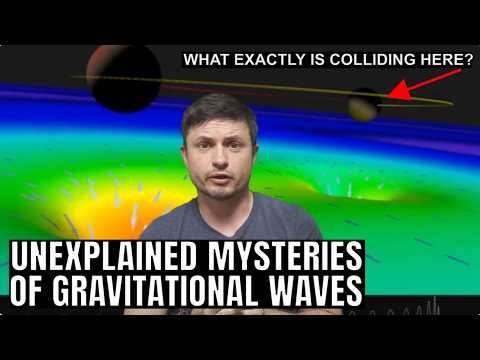
Randell Shelton’s Physics Weekly Digest, www.randellshelton.com, Anton Petrov, Gravitational Wave Discoveries Uncover Mysteries We Can’t Explain
** In the video “Gravitational Wave Discoveries Uncover Mysteries We Can’t Explain,” Anton Petrov explores recent findings in the realm of gravitational waves, specifically focusing on the unexpected collision of black holes with unusual masses. These discoveries challenge existing theories about black hole formation, particularly the “mass gap” where black holes are not expected to exist. The study suggests that these anomalies may originate from regions with numerous black hole collisions near supermassive black holes, like the “star grinder” in the galactic center. Current models and observations, however, are still unable to fully explain these phenomena, pointing to a need for more advanced detection technologies and further research. **
📚 Research Links (provided by the author in the video description):
Randell Shelton’s Physics Weekly Digest, www.randellshelton.com, Discover AI, Lean AI Reasoning: NEW Energy-Based Chain-of-Thought
** The video on Discover AI discusses an innovative approach to optimizing large language models (LLMs) using energy-based calibration, which aims to enhance reasoning efficiency. By integrating energy-based models with classical physics concepts, like the Boltzmann distribution, the approach seeks to refine the logical consistency and efficiency of LLMs. The method employs a multi-stage architecture involving assistant and base models, projection layers, and energy-based models to optimize reasoning processes for better performance. Although this complex system only achieves a modest 2% accuracy improvement over simpler models, it demonstrates a promising direction for future AI development. **
Channel: Discover AI · Published: 2025-11-11T16:34:14Z · Duration: 39:08
Randell Shelton’s Physics Weekly Digest, www.randellshelton.com, Curt Jaimungal, We Built a GPU That Simulates Your Brain on DMT
** In the video “We Built a GPU That Simulates Your Brain on DMT,” Curt Jaimungal explores a groundbreaking tool developed to simulate the phenomenology of psychedelic experiences, specifically focusing on DMT. Through the use of coupled oscillators and GPUs, the system visualizes the oscillating patterns and synesthetic effects often reported by users of psychedelics. The discussion delves into how these visualizations can help understand the complex interactions between different sensory dimensions, offering insights into consciousness and reality’s underlying structures. The video also touches upon the philosophical implications of these findings in understanding the universe’s fundamental nature. **
Randell Shelton’s Physics Weekly Digest, www.randellshelton.com, Sabine Hossenfelder, Physicists Prove That Universe is not a Simulation
** In the video “Physicists Prove That Universe is not a Simulation,” Sabine Hossenfelder discusses a recent paper that challenges the simulation hypothesis, which suggests our universe is a computer-generated reality. The paper argues using Gödel’s theorem that certain truths about the universe cannot be computed, implying that the universe cannot be a simulation since humans can measure these uncomputable truths. This idea parallels Roger Penrose’s argument that human cognition transcends computational processes. However, Hossenfelder critiques the paper’s logic, noting a lack of real-world examples of uncomputable quantities, leaving the simulation hypothesis still open to debate. **
Randell Shelton’s Physics Weekly Digest, www.randellshelton.com, Dr Brian Keating, Krauss: “DESI Is Wrong: Dark Energy Isn’t Changing”
** In the video “Krauss: ‘DESI Is Wrong: Dark Energy Isn’t Changing,’” physicist Lawrence Krauss discusses the nature of dark energy, arguing against recent claims suggesting it is not constant. He critiques the hype in science, particularly around quantum gravity and AI, and emphasizes the importance of relying on empirical data over speculative theories. Krauss reflects on his own journey of changing beliefs, such as his initial skepticism about the existence of dark energy and the Higgs boson, and highlights the significance of asking the right scientific questions. He also delves into the limitations of AI in discovering new physical laws, advocating for a focus on rigorous scientific inquiry. **
Channel: Dr Brian Keating · Published: 2025-11-11T15:00:48Z · Duration: 21:02
Randell Shelton’s Physics Weekly Digest, www.randellshelton.com, Anton Petrov, Magnetic Anomaly 600 Million Years Ago Helped Complex Life Evolve
** In Anton Petrov’s video “Magnetic Anomaly 600 Million Years Ago Helped Complex Life Evolve,” he explores how a significant weakening of Earth’s magnetic field around 591 million years ago may have spurred the evolution of complex life. During this period, known as the Ediacaran, the Earth’s magnetic field was up to 30 times weaker than today, which potentially allowed for increased oxygenation of the atmosphere as hydrogen was lost to space. This change in atmospheric composition may have been pivotal for the development of complex life forms, eventually leading to the Cambrian explosion. The formation of Earth’s solid inner core during this time stabilized the magnetic field, creating conditions favorable for life as we know it. **
📚 Research Links (provided by the author in the video description):
Randell Shelton’s Physics Weekly Digest, www.randellshelton.com, Sabine Hossenfelder, Stunning Study finds Error in Nobel Prize Discovery
** In the video “Stunning Study finds Error in Nobel Prize Discovery,” Sabine Hossenfelder discusses a groundbreaking new study that challenges the 2011 Nobel Prize-winning conclusion about the universe’s accelerating expansion. The study re-analyzed a larger dataset of over 3,000 supernovae and found that the supposed acceleration might be a misinterpretation caused by the differing properties of younger galaxies. This revelation questions the existence of dark energy, suggesting that the universe’s expansion may not be accelerating as previously thought. The findings could prompt a reevaluation of the standard cosmological model and hint that the universe might eventually collapse. **
Randell Shelton’s Physics Weekly Digest, www.randellshelton.com, Curt Jaimungal, The Breakthrough We Can Test Right Now | Ivette Fuentes
** In the video “The Breakthrough We Can Test Right Now,” Professor Ivette Fuentes discusses her innovative approach to quantum gravity, proposing a “third way” that integrates quantum mechanics and general relativity without prioritizing one over the other. Fuentes highlights her work in relativistic quantum information and her successful predictions, such as utilizing the Casimir effect to implement quantum gates and the potential of superconducting circuits to explore quantum and relativity intersections. She also emphasizes the importance of experiments in theoretical physics and her journey in creating a model that is both simple and revolutionary. The discussion includes the complexities of entanglement in relativistic settings and Fuentes’ encouragement for students to pursue creative, rigorous scientific inquiry. **
📚 Research Links (provided by the author in the video description):
Randell Shelton’s Physics Weekly Digest, www.randellshelton.com, Sean Carroll, Mindscape 335 | Andrew Jaffe on Models, Probability, and the Universe
** In episode 335 of the Mindscape podcast, Sean Carroll hosts theoretical cosmologist Andrew Jaffe to discuss the role of models and probability in understanding the universe. They explore the provisional nature of scientific knowledge, emphasizing that it is built on models and probabilities rather than absolute certainty. Jaffe explains how models function as stories or frameworks through which we interpret data, and he highlights their application in cosmology, particularly in analyzing the cosmic microwave background. The episode also delves into philosophical debates about the probabilistic nature of quantum mechanics and the implications of multiverse theories, ultimately portraying science as an ever-evolving process of refining our understanding of the universe. **
Channel: Sean Carroll · Published: 2025-11-10T13:47:05Z · Duration: 01:17:38
Randell Shelton’s Physics Weekly Digest, www.randellshelton.com, Anton Petrov, Study Confirms Universe Was Twice as Hot 7 Billion Years Ago
** In this video, Anton Petrov discusses a recent study confirming that the universe was twice as hot 7 billion years ago. Using data from distant quasars and gas clouds, scientists measured the Cosmic Microwave Background (CMB) to demonstrate that the universe has been cooling predictably over billions of years, supporting the Big Bang theory. This study, utilizing the Atacama Large Millimeter/submillimeter Array (ALMA) and focusing on hydrogen cyanide absorption, provides the most precise measurements to date, reinforcing the expanding universe model and offering insights into the role of dark energy. **
📚 Research Links (provided by the author in the video description):
Randell Shelton’s Physics Weekly Digest, www.randellshelton.com, Curt Jaimungal, Physicist Bets £1000 Against Dark Energy Discovery
** In a discussion on the controversial topic of dark energy, physicist Neil Turok challenges recent findings by the DESI collaboration that suggest a deviation from the standard cosmological model. While the standard model uses a single cosmological constant to explain the universe’s expansion, DESI’s data proposes a two-parameter model indicating varying acceleration rates. Turok bets against these findings due to their reliance on less than four standard deviations of significance across multiple experiments, arguing a lack of theoretical basis. He advocates for simplicity in models, suggesting that straightforward observations could lead to a deeper understanding of the universe. **
** In Sabine Hossenfelder’s video, she explores the intricate relationship between mathematics and physics, highlighting a fascinating mathematical method to solve complex boundary problems in physics. The video discusses how differential equations, which are foundational in physics, require boundary conditions to make accurate predictions. Hossenfelder presents a recent paper that extends the mirror image method—typically used with simple boundaries like planes—to more complex surfaces by utilizing circle inversions. This innovative approach simplifies solving boundary problems by approximating everything with circles and performing reflections within an inverted coordinate system, offering a potentially practical yet aesthetically pleasing solution. **
📚 Research Links (provided by the author in the video description):
Randell Shelton’s Physics Weekly Digest, www.randellshelton.com, Discover AI, Free RAG (File Search) w/ App dev by Google: TEST
** The video introduces Google’s new File Search tool integrated into the Gemini API, offering a free, managed Retrieval-Augmented Generation (RAG) system for developers. This tool simplifies data retrieval by integrating storage and embedding generation capabilities at no cost, with minimal fees for token indexing. Demonstrations within the video showcase how the system can accurately integrate and cross-reference data from uploaded PDFs, enhancing the relevance and factual grounding of responses. The discussion emphasizes the importance of RAG systems for scientific research, highlighting their superiority over traditional language models in providing accurate, evidence-based insights. **
📚 Research Links (provided by the author in the video description):