Weekly Physics Digest – October 05 – October 11, 2025
**This Week in Science and Education: A Cosmic Conundrum and Down-to-Earth Discoveries**This week’s educational escapades span from the farthest reaches of the universe to the mysterious depths of our oceans, not forgetting a celestial experiment or two. Of note during our cosmic journey, Steve Mould takes his “weird chain theory” to space in “NASA let me test my weird chain theory in space,” showcasing the kind of ingenuity that makes you wonder if he’s ever stopped to ask *why* a chain in zero gravity acts like it’s trying out for a gymnastics team. Meanwhile, the folks over at Answers in Genesis are dismantling evolutionary theories with a biblical twist, adding a theological dimension to the discussion of life, the universe, and everything. Learn fast, stay curious!
DISMANTLING Evolutionists’ New “Proof” of the Big Bang

** In the video “DISMANTLING Evolutionists’ New ‘Proof’ of the Big Bang” by Answers in Genesis, hosts Bryan Osborne, Avery Foley, and Dr. Danny Faulkner discuss recent claims about the Big Bang theory in light of new astronomical findings. They critique the interpretation of data from the James Webb Space Telescope, which supposedly identified a pristine galaxy devoid of heavy elements, challenging traditional Big Bang expectations. The hosts argue that these findings, which suggest rapid and unexpected galaxy formation, raise questions about the validity of the Big Bang model. Instead, they propose that these observations align more closely with a biblical creation perspective, emphasizing the discrepancies between scientific assumptions and scriptural accounts of the universe’s origins. **
Did We Just Discover The Universe’s Greatest Weakness?

** The video explores the groundbreaking work of physicist Sydney Coleman and the conceptualization of the universe’s potential instability due to the Higgs field. It delves into how the Higgs field, crucial for giving mass to fundamental particles, could be metastable, posing a threat to the universe’s existence through quantum tunneling. Key historical milestones in physics, such as the unification of electromagnetism and the weak force, are discussed alongside the discovery of the Higgs boson at CERN’s Large Hadron Collider, which confirmed the Higgs field’s properties and raised questions about the universe’s long-term stability. **
Nuclear Fusion in 5 Years? What is Happening?

** The video by Sabine Hossenfelder critically examines the current state of nuclear fusion technology and the optimistic claims surrounding its future. Despite promises from government officials and significant investments by companies, Sabine remains skeptical about the feasibility of fusion reactors powering the grid in the near term. She highlights several fusion projects, including Commonwealth Fusion Systems and Helion, noting that despite ambitious timelines, there is little evidence of imminent breakthroughs. Sabine suggests that while nuclear fusion could eventually become a viable energy source, many companies might fail in the next few years due to financial challenges and lack of progress. **
Intelligence Exists in Platonic Space – We Just Download It

** In Curt Jaimungal’s video “Intelligence Exists in Platonic Space – We Just Download It,” Michael Levin discusses the concept of intelligence as a pre-existing entity residing in a Platonic space, akin to mathematical truths. This perspective suggests that intelligence is not invented but discovered and harnessed through various forms, including biological and synthetic architectures. Levin explores the notion of self as a dynamic, continuous storytelling process, where memories from past selves are interpreted by future selves. He also delves into the ethical implications of expanding one’s cognitive light cone to foster a broader sense of understanding and compassion. **
Wolfram Was Right About Everything

** In “Wolfram Was Right About Everything,” Curt Jaimungal explores Stephen Wolfram’s theory of computational equivalence, suggesting that the universe naturally forms systems capable of universal computation. These systems, like cellular automata, show that complex computation can arise spontaneously in nature. The discussion delves into the implications of this for understanding consciousness and the potential of AI, emphasizing the philosophical shift in viewing natural phenomena as computational. The video also touches on the limits of human understanding and conceptualization, suggesting that our current cognitive and linguistic tools might be insufficient to grasp certain abstract concepts. **
ACE Agentic Context Engineering: Self-Learning AI (Stanford)
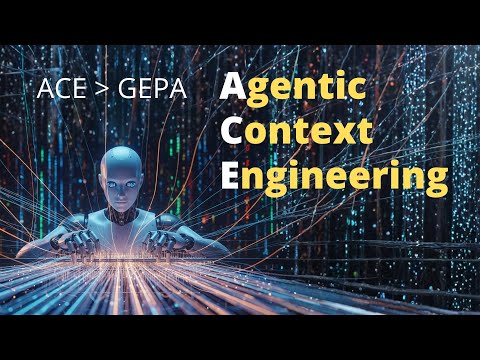
** The video “ACE Agentic Context Engineering: Self-Learning AI (Stanford)” from Discover AI explores the revolutionary approach of Agentic Context Engineering (ACE) in AI self-improvement. It discusses how Stanford University and UC Berkeley have developed a framework that combines Agentic Context Engineering with Early Experience (EE), creating a two-loop system that allows AI to learn from real-world interactions without predefined reward functions. This system enhances AI’s ability to adapt and generalize by leveraging strategic knowledge and avoiding context collapse through incremental updates rather than full rewrites. This innovative approach is poised to transform AI learning processes by reducing dependency on supervised fine-tuning and reinforcement learning, offering a more flexible and efficient alternative. **
Do we live in a giant dark void?

** In the video “Do we live in a giant dark void?” Dr. Brian Keating explores the intriguing concept that our universe’s expansion rate discrepancy, known as the Hubble tension, might be due to our location in a vast underdense region called the KBC void. This void may cause the local universe to expand faster than expected, contrasting cosmic microwave background observations. The video discusses how this hypothesis could resolve the Hubble tension without altering current gravitational theories, relying instead on traditional galactic physics. Other potential solutions, such as early dark energy models and modified gravity theories, are also considered, highlighting the complex nature of cosmic expansion. **
Strangest Exoplanets Found by the James Webb In the Last 2 Years

** In the video “Strangest Exoplanets Found by the James Webb In the Last 2 Years,” Anton Petrov explores a series of bizarre and unexplained exoplanets identified by the James Webb Space Telescope. The presentation highlights atmospheric oddities like steam worlds, lopsided planets, and ultra-low density “cotton candy” planets, which challenge existing theories of planet formation and evolution. Anton discusses the role of these discoveries in expanding our understanding of the universe, particularly regarding planetary habitability and the potential for life beyond Earth. The video underscores the uniqueness of our solar system amidst a universe filled with extraordinary and diverse exoplanets. **
📚 Research Links (provided by the author in the video description):
Stephen Wolfram: “For 40 Years, I Was Wrong About Evolution”

** In this video, Stephen Wolfram discusses his shift in understanding evolution, paralleling it with insights from machine learning. He explains that both biological and machine learning systems achieve complex behaviors through a similar mechanism: computational irreducibility and coarse fitness functions. Wolfram illustrates how simple rules can lead to intricate behaviors when systems are pushed to their limits, revealing an underlying computational complexity. He connects this to a broader theory of adaptive evolution, emphasizing the orchestrated nature of biological processes and the potential for a general theory applicable to diverse systems beyond living organisms. **
NASA let me test my weird chain theory in space
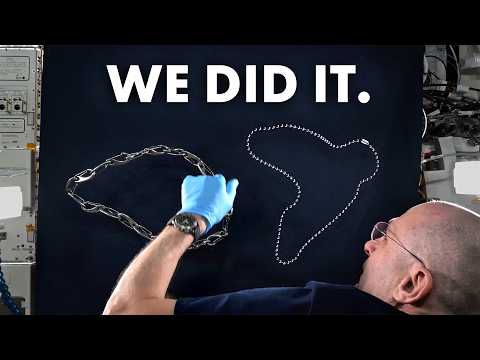
** In the video titled “NASA let me test my weird chain theory in space,” Steve Mould collaborates with astronaut Don Pettit to explore the chain fountain phenomenon, also known as the Mould effect, in a zero-gravity environment aboard the International Space Station. Mould’s theory, which posits that a chain can maintain its shape when pulled at one end in zero gravity, is put to the test. Despite challenges such as the chain’s chaotic movement and difficulty in maintaining a constant pull, the experiment reveals that friction between chain links causes it to gradually form a circular shape. This finding aligns with Mould’s theoretical predictions and provides new insights into the behavior of chains in space. **
7B Agent Outsmarts a 200B LLM: AgentFlow by Stanford

** The video from Discover AI delves into Stanford’s AgentFlow, a pioneering framework designed to optimize agentic systems for effective planning and tool use, overcoming the limitations of large language models (LLMs). By breaking down complex tasks into simpler, sequential steps handled by specialized agents, AgentFlow improves scalability and adaptability. Central to this approach is the use of a dynamic learning team leader and a flow-specific reinforcement learning model, which enhances the system’s flexibility without compromising stability. Despite its innovations, the method faces challenges such as binary reward limitations and reliance on LLMs for evaluation, highlighting areas for future improvement in complex reasoning tasks. **
Will AI lead to Groundbreaking Nuclear Technology? (Fundamental Speculations)

** In the video “Will AI lead to Groundbreaking Nuclear Technology? (Fundamental Speculations)” on Unzicker’s Real Physics, the presenter explores the potential impact of artificial intelligence on developing revolutionary nuclear technologies. He speculates about innovations such as nuclear clocks, which could surpass current atomic clocks in precision, and the possibility of using nuclear lasers to neutralize nuclear waste. Furthermore, the idea of a nuclear battery is considered, highlighting that no fundamental laws prevent its creation. The discussion emphasizes the need for a deeper understanding of nuclear physics, which could be facilitated by AI, drawing parallels to the quantum mechanics revolution and underscoring the potential for transformative advancements in the field. **
Mathematicians In Denial About AI Replacing Them

** In Sabine Hossenfelder’s video “Mathematicians In Denial About AI Replacing Them,” she explores the potential of AI to transform the field of mathematics, much like calculators did for arithmetic. Recent developments from Google Deep Mind and OpenAI have shown AI’s capability in tackling complex math problems using general-purpose reasoning models, sparking debate among mathematicians. While some dismiss these advancements as non-threatening, others acknowledge the shift towards AI-assisted theorem proving, supported by grants and interest from institutions like the NSF. Despite AI’s growing role, Hossenfelder argues that mathematics, akin to art or sport, will persist as a human endeavor, enriched but not replaced by AI. **
Milky Way Galaxy Is Unusual After All and Contains a Massive Wave

** In the video “Milky Way Galaxy Is Unusual After All and Contains a Massive Wave,” Anton Petrov explores the unexpected complexities of our galaxy. Recent findings, primarily from the Gaia Observatory, reveal the Milky Way’s chaotic structure, contrary to its previously assumed stable spiral form. Notably, the Milky Way has fewer satellite galaxies than similar galaxies and exhibits a unique pattern of star formation cessation among its smaller satellites. Furthermore, the discovery of a massive, dynamic wave propagating through the galaxy suggests past violent collisions and active perturbations, challenging our understanding of galactic evolution. **
📚 Research Links (provided by the author in the video description):
The Importance of 6-Day Creation
** The video from Creation Ministries International discusses the theological significance of a six-day creation as described in Genesis, particularly regarding its impact on Christian doctrine. Dr. Robert Carter argues that treating Genesis as literal history is crucial for maintaining foundational Christian beliefs, as it underpins concepts of sin, death, and salvation, which are integral to the gospel. The conversation highlights how various biblical texts, including those spoken by Jesus and the apostles, repeatedly reference Genesis, indicating its historical and theological importance. The video also addresses the philosophical debates between theism and naturalism, emphasizing that a creationist perspective aligns with a biblical understanding of the universe’s origins and end. **
Gut Health and the Microbiome | Fazale “Fuz” Rana and Jim Painter

** In the video “Gut Health and the Microbiome,” biochemist Fazale “Fuz” Rana and nutrition professor Dr. Jim Painter delve into the profound impact of diet on gut microbiome health and overall well-being. They explore how fiber-rich foods like fruits and vegetables promote beneficial bacteria, enhancing digestion, reducing inflammation, and improving mood. The discussion emphasizes the importance of probiotics and prebiotics in maintaining a balanced microbiome, which plays a critical role in both physical and mental health. The conversation also touches on the theological perspective of treating the body as a temple, advocating for a diet comprising whole foods as a form of worship and devotion. **
📚 Research Links (provided by the author in the video description):
Brian Greene Explains: Matter vs Antimatter

** In the video “Brian Greene Explains: Matter vs Antimatter,” physicist Brian Greene explores the perplexing question of why matter exists despite the theoretical annihilation with antimatter, as suggested by physics equations. The journey begins with Paul Dirac’s 1928 prediction of antimatter, which Carl Anderson confirmed experimentally in 1932 with the discovery of the positron. Despite equal creation of matter and antimatter in the early universe, a minimal imbalance allowed matter to persist. However, current models, like the standard model of particle physics, cannot fully account for this disparity, indicating potential undiscovered physics or particles. **
Is Gravity Just an Illusion Caused by Entropy? New Theory Explains How.
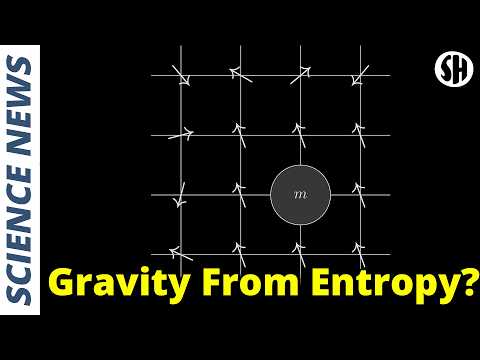
** In the video “Is Gravity Just an Illusion Caused by Entropy? New Theory Explains How” on Sabine Hossenfelder’s channel, Sabine explores a fascinating theory that suggests gravity might not be a fundamental force but an emergent phenomenon arising from entropy. The video discusses a new paper proposing that space is filled with qubits, and the alignment of these qubits around masses leads to lower entropy, explaining gravitational attraction. While the math in this new model seems correct and offers experimental predictions, it lacks the symmetries of Einstein’s theory, indicating it’s still a preliminary idea. Sabine remains undecided on whether gravity is fundamental or emergent, highlighting the ongoing debate in the physics community. **
📚 Research Links (provided by the author in the video description):
First Level Complexity of an AI AGENT Explained

** The video “First Level Complexity of an AI AGENT Explained” from Discover AI dissects the foundational complexity of current AI systems, emphasizing the critical role of reasoning. It explores how AI agents integrate various components like vision and language models, memory modules, and reasoning protocols to operate effectively. The presenter explains how AI systems manage complexity through modularity, outsourcing complex tasks to deterministic systems, and using specialized memory modules for different domains like physics or medicine. The video sets the stage for the exploration of nine new AI research papers that will be discussed in an upcoming video. **
Weird Worm Survives Extreme Poison By Turning It Into Yellow Paint

** In a fascinating exploration of marine biology, YouTuber Anton Petrov discusses a unique worm, Paralinella heseri, that thrives in the extreme conditions of hydrothermal vents over 1,000 meters deep in the Pacific Ocean. This worm survives by converting toxic substances like arsenic and hydrogen sulfide into orpiment, a bright yellow, non-toxic mineral historically used by Renaissance painters. Through a process called intracellular biomineralization, the worm creates this mineral to neutralize toxins, showcasing a remarkable evolutionary adaptation. This discovery not only challenges our understanding of life in hostile environments but also has potential applications in biotechnology for environmental detoxification. **
📚 Research Links (provided by the author in the video description):
Susskind: “Looking for a Needle in an Infinite Haystack”

** In the video titled “Looking for a Needle in an Infinite Haystack,” Leonard Susskind, a prominent theoretical physicist, discusses the complexities of string theory and its vast landscape of solutions. He explains that string theory does not offer a single model of the universe but rather presents a myriad of possibilities, each with different constants and particle spectra. This makes identifying the correct model akin to finding a needle in a haystack. Susskind emphasizes the challenges posed by the expansive nature of the universe and the limitations of current experimental physics, suggesting a focus on reconciling quantum mechanics with gravity to advance understanding in this domain. **
The 2025 Physics Nobel Prize: Quite A Surprise
** The 2025 Physics Nobel Prize was awarded for macroscopic quantum tunneling, a breakthrough study first demonstrated in a 1985 paper by John Clark, Michael Devory, and John Martinez. This concept involves large collections of particles, like currents in superconducting wires, collectively tunneling through barriers, expanding the scope of quantum physics beyond single particles. This discovery laid the groundwork for modern quantum computing and various applications in quantum technology by demonstrating that quantum effects could be harnessed at a larger scale, significantly influencing the development of technologies from superconducting circuits to potential dark matter research. **
Agent Builder w/ ChatKit: West Coast Disaster
** In the video “Agent Builder w/ ChatKit: West Coast Disaster” from Discover AI, the host explores the new OPENAI Agent Builder and ChatKit tools for creating multi-agent systems using GPT-5 PRO. The video provides a basic walkthrough of the Agent Builder, which uses a visual canvas for designing workflows with logic and tool nodes, such as file searches and human approvals. The host discusses creating agents for evaluating environmental conditions in the U.S. West Coast, highlighting potential ecological disasters if current trends continue. The video emphasizes the importance of systemic action to prevent irreversible damage to ecosystems. **
Dr. Jeff Tomkins | A Scientist’s Journey to Creationism

** In the video “Dr. Jeff Tomkins | A Scientist’s Journey to Creationism” from the Institute for Creation Research, Dr. Jeff Tomkins shares his personal journey from a non-Christian upbringing to becoming a creation scientist. Initially skeptical and immersed in secular science, Dr. Tomkins recounts his conversion to Christianity and subsequent embrace of a creationist worldview. He describes his extensive research into genetics, particularly his studies on human and chimpanzee DNA similarities, which he argues refutes common evolutionary claims. Throughout the video, Dr. Tomkins emphasizes the importance of a literal interpretation of Genesis in understanding creation and its implications for the gospel. **
Does Avi Loeb Have PROOF of Alien Technology?

** In this episode of Dr. Brian Keating’s podcast, renowned astrophysicist Avi Loeb discusses the controversial topic of potential alien technology, focusing on the interstellar object ‘Oumuamua. Loeb argues against conventional explanations for ‘Oumuamua’s unusual acceleration, suggesting instead that it might be a light sail from an extraterrestrial civilization. The conversation covers the challenges and criticisms faced by Loeb’s theories, emphasizing the importance of scientific curiosity and evidence-based exploration. Loeb also highlights the need for further investigation, including upcoming projects like the Vera Rubin Observatory and potential missions to recover interstellar meteor fragments for analysis. **
Record Breaking Radio Signals (FRBs) and a Hyper Repeating Source

** In the video “Record Breaking Radio Signals (FRBs) and a Hyper Repeating Source,” Anton Petrov explores the mystifying nature of Fast Radio Bursts (FRBs), which are intense radio wave emissions originating from distant galaxies. Recent advancements have allowed scientists to trace some FRBs back to their host galaxies, aiding in the discovery of the universe’s missing baryonic matter, previously undetected due to its diffuse nature. Researchers have also identified some of the most distant and powerful FRBs, offering insights into the universe’s early conditions and reinforcing the theory that magnetars, highly magnetic neutron stars, might be responsible for these bursts. Notably, a hyperactive repeating FRB challenges existing theories, leaving room for further exploration and discovery. **
📚 Research Links (provided by the author in the video description):
The Painted Desert | Creation on Location

** In “The Painted Desert | Creation on Location,” Dr. Tim Clarey explores the Petrified Forest National Park in Arizona, highlighting its geological features and their connection to the global Flood. The video discusses the presence of Triassic rocks, characterized by striking red hues due to hematite, which are consistent across regions from Arizona to Wyoming. Dr. Clarey argues that this widespread deposition is strong evidence of a significant flood event. Additionally, the park’s colorful petrified trees are explained as a result of volcanic ash and minerals, which were distributed during the Flood, contributing to their unique appearance. **
Einstein Would Fail Modern Grant Applications | David Deutsch

** In the video “Einstein Would Fail Modern Grant Applications,” physicist David Deutsch discusses the challenges faced by fundamental research within the current academic and grant systems. Deutsch argues that the structure of grant applications is biased against groundbreaking research, like Einstein’s theories, which would struggle to receive funding today. He emphasizes the importance of passion and curiosity in driving scientific progress and criticizes the procedural and bureaucratic barriers that stifle innovation. Deutsch also touches on the role of quantum mechanics in understanding the universe and the significance of philosophical approaches in scientific discovery. **
📚 Research Links (provided by the author in the video description):
After Diffusion & FLOW Models: Equilibrium Matching (MIT, Oxford, Harvard)

** The video “After Diffusion & FLOW Models: Equilibrium Matching” by Discover AI explores the cutting-edge concept of equilibrium matching in AI image generation. Building on previous diffusion and flow models, equilibrium matching combines energy-based and flow-based methodologies to create a time-invariant gradient field for more efficient and flexible image generation. This approach, developed by researchers from MIT, Harvard, and Oxford, simplifies the computational process by learning a static energy landscape, allowing for more adaptable and scalable generative models. The method promises improved image quality and could revolutionize the way AI handles generative tasks. **
Does Acceleration Create Particles from Nothing? These Physicists Say they can test it

** In the video, physicist Sabine Hossenfelder discusses the Unruh effect, a theoretical concept suggesting that a vacuum may seem to produce particles when observed under acceleration. Most physicists believe in this effect due to its potential to explain phenomena like black hole evaporation, although Hossenfelder remains skeptical. She reviews a new experimental proposal using superconducting materials to test the Unruh effect, highlighting that while it offers a creative approach, it might not directly test the vacuum as intended. The video concludes with an endorsement for NordVPN, emphasizing online safety. **
📚 Research Links (provided by the author in the video description):
AGI Asymmetry Discovered (Harvard, Stanford, MIT)

** The video “AGI Asymmetry Discovered” by Discover AI explores recent advancements in AI reasoning research from top institutions like Stanford, Harvard, and MIT. It delves into three research papers that discuss methodologies to enhance AI reasoning capabilities, focusing on training large language models (LLMs) to discover abstractions, optimizing reasoning processes, and improving multi-agent decision-making beyond majority voting. Despite innovative approaches such as hierarchical procedure learning and leveraging first and second-order information, the presenter expresses disappointment with the lack of groundbreaking breakthroughs, highlighting the persistent challenges and asymmetries in AI reasoning development. **
Why complex exponents matter | Laplace Transform Prelude

** In the video “Why complex exponents matter | Laplace Transform Prelude,” 3Blue1Brown explores the significance of complex exponents in understanding differential equations, particularly through Euler’s formula. The video serves as an introduction to the Laplace transform, highlighting how complex numbers in exponents can describe physical phenomena like oscillations and decay in systems such as harmonic oscillators. By visualizing complex exponents as rotations in the complex plane, viewers gain insight into their application in physics and engineering. The video sets the stage for deeper exploration into the Laplace transform, which extends these concepts to a broader range of functions. **