Weekly Physics Digest – October 12 – October 18, 2025
Randell Shelton
Weekly Physics Digest – October 12 – October 18, 2025
Welcome to another week of compelling scientific explorations and mind-bending discoveries, where even the most grounded laws of physics may find themselves on the proverbial chopping block! This week’s lineup is led by a captivating video from “Answers in Genesis,” where hosts Bryan Osborne and Avery Foley dive into elephant communication, arguing that these majestic creatures may be closer to us than we imagined. On a celestial note, Sabine Hossenfelder invites us on a peculiar interstellar journey with “Interstellar Object 3I/ATLAS Looks Increasingly Weird,” where this cosmic wanderer defies typical comet behavior, leaving scientists scratching their heads—and some speculating about extraterrestrial origins. From quantum quirks to the cutting-edge of AI, there’s something in this week’s selection to tantalize every curious mind. Learn fast, stay curious!
Randell Shelton’s Physics Weekly Digest, www.randellshelton.com, Sabine Hossenfelder, Quantum Healing Might Be Real – But Not Like We Thought
In her video, Sabine Hossenfelder explores the intriguing field of quantum biology, particularly how quantum mechanics might influence wound healing. A recent study from Harvard suggests that Earth’s magnetic field and specific light spectrums can enhance the speed of cell movement involved in wound healing, possibly by affecting electron spin alignment. This finding challenges previous assumptions about the fragility of quantum effects in biological systems and suggests potential new ways to accelerate cellular processes. However, Hossenfelder cautions that the study is not yet peer-reviewed and was conducted in a controlled petri dish setting.
📚 Research Links (provided by the author in the video description):
Randell Shelton’s Physics Weekly Digest, www.randellshelton.com, Creation Ministries International, Irreducible Complexity: Another Nail in Evolution’s Coffin
In the video “Irreducible Complexity: Another Nail in Evolution’s Coffin” by Creation Ministries International, Dr. Mark Harwood discusses the concept of irreducible complexity as a challenge to Darwinian evolution. He explains that certain biological systems, like the eye, require all components to function simultaneously, similar to a mousetrap, which cannot operate if any part is missing. This complexity suggests that these systems could not have evolved incrementally over time. Harwood argues that natural selection works with pre-existing genetic information, often leading to a loss of genetic diversity rather than creating new information. He concludes that the presence of complex, purposefully assembled biological structures indicates intelligent design.
Channel: Creation Ministries International · Published: 2025-10-18T11:01:22Z · Duration: 07:24
Randell Shelton’s Physics Weekly Digest, www.randellshelton.com, Unzicker’s Real Physics, Planck’s Quantum of Action: For Two Reasons A Profound Riddle
In the video “Planck’s Quantum of Action: For Two Reasons A Profound Riddle,” Alexander Unzicker explores why Planck’s constant remains a pivotal yet enigmatic element in physics. He delves into the mathematical intricacies of non-commutativity, particularly in the context of three-dimensional space rotations, and how this might relate to the emergence of Planck’s constant. Despite these mathematical insights, the video highlights two unresolved aspects: the origin of quantization and the necessity of Planck’s constant in physics. Unzicker emphasizes that the link between quantization and non-commutativity is not fully understood, underscoring the profound mystery surrounding Planck’s constant.
Channel: Unzicker’s Real Physics · Published: 2025-10-12T21:30:08Z · Duration: 03:38
Randell Shelton’s Physics Weekly Digest, www.randellshelton.com, Dr Brian Keating, Will this NEW Scientific Breakthrough Make Us Immune to Everything?
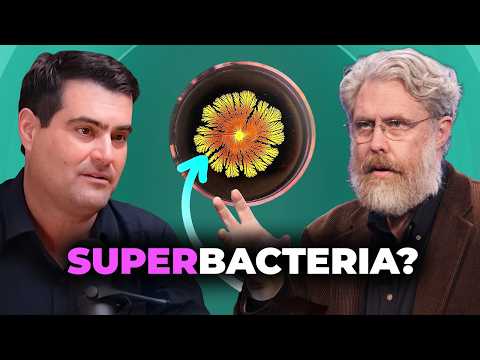
In this episode of “Into the Impossible,” Dr. Brian Keating hosts renowned geneticist George Church to discuss groundbreaking advancements in synthetic biology. Church’s team has engineered bacteria immune to all viruses by rewriting the genetic code, a technique he hopes to extend to human cells, potentially making humans virus-proof. The discussion also explores the ethical implications and future possibilities of genetic engineering, including its role in space missions and de-extincting species like the woolly mammoth. The video emphasizes the rapid pace of biotechnological innovation and its promise to revolutionize medicine and human longevity.
Channel: Dr Brian Keating · Published: 2025-10-17T12:00:02Z · Duration: 01:08:23
Randell Shelton’s Physics Weekly Digest, www.randellshelton.com, Answers in Genesis, Elephants Just STUNNED Scientists, but We’re Not Surprised
In the video “Elephants Just STUNNED Scientists, but We’re Not Surprised,” hosts Bryan Osborne and Avery Foley discuss recent findings on elephant communication, which show that elephants use intentional gestures to communicate with humans, challenging the belief that complex communication is unique to humans. The hosts argue that while elephants and many other animals exhibit sophisticated communication, humans remain unique due to their creation in God’s image, with moral agency and eternal souls. The discussion also touches on the myth of human exceptionalism and emphasizes the biblical view of humans as caretakers of the earth, highlighting the complexity and purpose inherent in all of creation.
Channel: Answers in Genesis · Published: 2025-10-17T19:00:38Z · Duration: 10:24
Randell Shelton’s Physics Weekly Digest, www.randellshelton.com, Anton Petrov, Detection of a Biosignature on a Brown Dwarf Creates Issues for Astrobiology
In the video “Detection of a Biosignature on a Brown Dwarf Creates Issues for Astrobiology,” Anton Petrov explores the discovery of phosphine on the brown dwarf Wolf 1130C by the James Webb Space Telescope. Phosphine, previously considered a biosignature due to its association with biological processes on Earth, challenges astrobiological assumptions as it is found on non-living astronomical bodies like gas giants. This discovery suggests that phosphine can form through chemical processes without life, prompting a reevaluation of its role as a biosignature and the need for updated planetary models to explain this anomaly.
📚 Research Links (provided by the author in the video description):
Randell Shelton’s Physics Weekly Digest, www.randellshelton.com, Discover AI, GPT is Evolving Beyond Raw Intelligence
The video “GPT is Evolving Beyond Raw Intelligence” from the Discover AI channel delves into the potential future applications of GPT systems beyond their current logical reasoning limitations in fields like medicine and finance. It highlights new research papers that propose innovative uses for GPT, such as emotional cognitive modeling and human empowerment in coding. The discussion includes how GPT can influence human behavior by inducing desires and how these systems can be fine-tuned to empower human decision-making in coding tasks. The video suggests that the future of GPT lies in expanding its applications beyond traditional intelligence, potentially impacting vast market segments.
📚 Research Links (provided by the author in the video description):
Randell Shelton’s Physics Weekly Digest, www.randellshelton.com, PBS Space Time, We Were WRONG About the Quantum Eraser! ft. @LookingGlassUniverse
In the PBS Space Time video featuring Looking Glass Universe, the hosts delve into the controversial delayed choice quantum eraser experiment, exploring whether the future can influence the past in quantum mechanics. The video revisits past interpretations, debunking the notion of retrocausality and instead proposing an alternative explanation through a homemade experiment. Using polarized light filters and a calcite crystal setup, the video demonstrates how perceived backward causality is an illusion created by entangled photons and post-processing of data. The discussion clarifies that rather than retrocausality, the experiment reflects standard quantum entanglement phenomena, challenging viewers to rethink causality in quantum systems.
Channel: PBS Space Time · Published: 2025-10-16T20:15:07Z · Duration: 25:27
Randell Shelton’s Physics Weekly Digest, www.randellshelton.com, Curt Jaimungal, Stephen Wolfram: “After 50 Years, I Finally Know Why Entropy Increases”
In the video, Stephen Wolfram discusses his breakthrough understanding of why entropy increases, a question he’s pondered for 50 years. He attributes this to the interplay between computational irreducibility and our role as observers. Wolfram explores the complex history of the second law of thermodynamics, challenging traditional textbook explanations that suggest entropy should decrease as easily as it increases. He also reflects on the broader implications of computational theories in fields like economics, emphasizing the importance of computational reducibility in determining value and efficiency in human activities.
Randell Shelton’s Physics Weekly Digest, www.randellshelton.com, Arvin Ash, History’s Most Famous Theories…That were Dead WRONG!
The video “History’s Most Famous Theories…That were Dead WRONG!” by Arvin Ash explores historical scientific theories that were once widely accepted but have since been refuted. It highlights five significant theories, including Aristotle’s concepts of motion, the caloric theory of heat, the luminiferous ether, Newton’s corpuscular theory of light, and Newtonian gravity. Each theory was eventually replaced by more comprehensive models, such as Galileo’s principle of inertia, kinetic theory, special relativity, quantum mechanics, and general relativity. The video emphasizes the iterative nature of scientific understanding and provides a checklist for evaluating the robustness of scientific theories.
Randell Shelton’s Physics Weekly Digest, www.randellshelton.com, Sabine Hossenfelder, NASA Is Considering Nuking An Asteroid To Spare the Moon
NASA is evaluating the possibility of using a nuclear detonation to avert the asteroid 2024 YR4 from hitting the Moon. Initially, the asteroid posed a 1% threat of impacting Earth by 2032, but this has since decreased to nearly zero, while the chance of it striking the Moon has risen to 4%. A Moon collision could create significant debris, potentially damaging satellites and endangering astronauts. Two proposed strategies include deflecting the asteroid early on or using a nuclear explosion to fragment it, with the latter being more feasible due to time constraints and the asteroid’s composition. This situation presents a valuable opportunity for NASA to test planetary defense strategies.
📚 Research Links (provided by the author in the video description):
Randell Shelton’s Physics Weekly Digest, www.randellshelton.com, Discover AI, Neurosymbolic 80M AI from Princeton beats GPT
The video “Neurosymbolic 80M AI from Princeton beats GPT” from the Discover AI channel discusses the innovative GraphMERT framework developed by Princeton University. This neurosymbolic AI model integrates neural learning with symbolic reasoning using only 80 million parameters. Unlike traditional GPT-based systems, GraphMERT efficiently distills reliable knowledge graphs from unstructured data, achieving a 69.8% factual accuracy and a 68.8% validity score. The video highlights how this model outperforms large language models (LLMs) in generating verifiable and valid knowledge, marking a significant advancement in AI technology.
📚 Research Links (provided by the author in the video description):
Randell Shelton’s Physics Weekly Digest, www.randellshelton.com, Anton Petrov, Incredible Study That Explained Why The Immune System Doesn’t Just Kill Us (2025 Nobel Prize)
In this video, Anton Petrov delves into the groundbreaking research that earned Mary Bronco, Frederick Ramsdo, and Shimon Sugaguchi the 2025 Nobel Prize in Physiology and Medicine. Their work reveals the crucial role of regulatory T-cells (T-regs) in maintaining peripheral immune tolerance, preventing autoimmune diseases by differentiating between harmful pathogens and body cells. The discovery of the FoxP3 gene, which controls these T-regs, has profound implications for treating autoimmune disorders and other conditions, potentially transforming therapeutic approaches and enhancing our understanding of immune system regulation.
📚 Research Links (provided by the author in the video description):
Randell Shelton’s Physics Weekly Digest, www.randellshelton.com, Anton Petrov, Why Our Immune System Doesn’t Just Kill Us – 2025 Nobel Prize in Physiology and Medicine
In this video, Anton Petrov discusses the 2025 Nobel Prize in Physiology and Medicine awarded to Mary Bronco, Frederick Ramsdo, and Shimon Sugaguchi for their groundbreaking work on peripheral immune tolerance. Their research unveiled the critical role of regulatory T cells (Tregs) in preventing autoimmune diseases by maintaining immune self-tolerance. This discovery, involving the identification of the FOX P3 gene as a key regulator, has significantly advanced our understanding of autoimmune conditions and has paved the way for potential new treatments for various diseases by either strengthening or depleting Treg function.
📚 Research Links (provided by the author in the video description):
Randell Shelton’s Physics Weekly Digest, www.randellshelton.com, Creation Ministries International, More Reasons the Bible Explains the Ice Age
In the video “More Reasons the Bible Explains the Ice Age,” Dr. Tas Walker from Creation Ministries International presents a biblical perspective on the Ice Age, arguing for a single Ice Age that occurred thousands of years ago following Noah’s Flood. He contrasts this view with mainstream scientific assumptions of multiple ice ages over millions of years, attributing the Ice Age to conditions created by the flood such as volcanic activity and warm oceans. Dr. Walker also discusses how geological evidence like moraines and woolly mammoths fit into this biblical framework, suggesting that these phenomena were results of post-flood climatic changes rather than multiple ancient ice ages.
Channel: Creation Ministries International · Published: 2025-10-15T21:00:45Z · Duration: 35:16
Randell Shelton’s Physics Weekly Digest, www.randellshelton.com, World Science Festival, What’s Special About a Black Hole’s Edge?
In the World Science Festival video titled “What’s Special About a Black Hole’s Edge?”, physicist Brian Greene delves into the fascinating nature of a black hole’s event horizon. He explains that space itself flows into a black hole at the speed of light, likening it to a cosmic waterfall. This means that anything crossing the event horizon is inevitably drawn in, as nothing can travel faster than light to escape. Greene uses Einstein’s theories to illustrate how space and time actively participate in cosmic events, making the journey past a black hole’s edge an irreversible one-way trip.
Channel: World Science Festival · Published: 2025-10-15T18:00:06Z · Duration: 04:30
Randell Shelton’s Physics Weekly Digest, www.randellshelton.com, Two Minute Papers, The Worst Bug In Games Is Now Gone Forever
The video from Two Minute Papers explores a groundbreaking solution to a persistent issue in gaming and digital simulations: object clipping. Traditionally, thin objects like cloth or ribbons would often pass through each other, creating problems in games and films. However, a new method using a “cubic barrier” approach effectively prevents these collisions by allowing objects to interact without overlapping, even at microscopic scales. This technique, created by Dr. Ryoichi Ando, could revolutionize not only gaming but also industries like fashion by enabling precise digital simulations of fabric interactions.
📚 Research Links (provided by the author in the video description):
Randell Shelton’s Physics Weekly Digest, www.randellshelton.com, Reasons to Believe, Benefits of Fasting | Jeff Zweerink and Jim Painter
In the “Benefits of Fasting” video from the Reasons to Believe channel, astrophysicist Jeff Zweerink and nutrition expert Dr. Jim Painter explore the multifaceted advantages of fasting. They discuss how fasting can enhance insulin sensitivity, support better blood sugar control, and facilitate the body’s natural process of autophagy, which helps in cellular repair. Spiritual aspects of fasting are also highlighted, emphasizing its role in strengthening discipline and spiritual focus. The conversation differentiates between intermittent fasting and extended fasting, noting the potential health benefits such as reduced inflammation and improved mental clarity, while cautioning about fasting for specific groups like pregnant women or those with type 1 diabetes.
Channel: Reasons to Believe · Published: 2025-10-15T14:01:41Z · Duration: 40:17
Randell Shelton’s Physics Weekly Digest, www.randellshelton.com, Discover AI, Neurosymbolic AI: the Path to Superintelligence?
The video “Neurosymbolic AI: the Path to Superintelligence?” by Discover AI explores the limitations of current AI systems like GPT models, which rely on statistical patterns rather than true symbolic reasoning. The presenter discusses the potential of neurosymbolic AI, which aims to combine the statistical flexibility of neural networks with the precision of symbolic systems such as knowledge graphs. This hybrid approach could address existing challenges in achieving reliable and scalable superintelligence. The video also speculates on future technological advancements that might surpass current models and reshape the AI landscape.
Channel: Discover AI · Published: 2025-10-15T12:00:29Z · Duration: 17:32
Randell Shelton’s Physics Weekly Digest, www.randellshelton.com, Curt Jaimungal, Why Disorder Has Nothing to Do With Entropy
In the video “Why Disorder Has Nothing to Do With Entropy,” Curt Jaimungal discusses the misconceptions surrounding entropy, emphasizing that entropy is not synonymous with disorder. Using examples like mixing coffee and cream, the video illustrates how states that appear more ordered can actually have higher entropy. The conversation extends to the topic of ergodicity, exploring its complex relationship with the laws of physics and statistical mechanics. The video also delves into the nuances of infinity as used in physics, explaining that it often represents a large, but finite, concept within mathematical approximations.
In the video “Entropy Isn’t One Thing!” from Curt Jaimungal’s channel, the concept of entropy is explored, highlighting how it is often misunderstood and used in various contexts within science. The discussion, featuring insights from Wayne Myrvold, addresses the confusion surrounding whether entropy is an intrinsic property of a system or reliant on the observer’s information. Myrvold explains the historical context of entropy, tracing it back to Clausius and its Greek origins, and argues for the need to differentiate between multiple types of entropy, such as thermodynamic entropy and other variants, each with unique definitions and implications. The conversation underscores the complexity and nuanced nature of scientific terms, emphasizing the importance of precise language in scientific discourse.
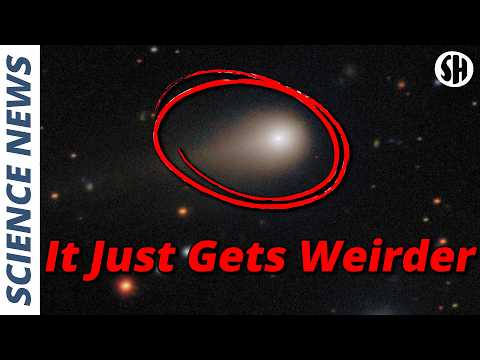
The video explores the peculiarities of 3I/ATLAS, the third interstellar object to visit our solar system. Discovered by the ATLAS survey telescope, this object displays unusual characteristics, such as shedding nickel and iron at exceptional rates and emitting an uncommon ratio of carbon dioxide and water. It also alters light polarization in unprecedented ways and has a tail pointing towards the sun, defying typical comet behavior. While some speculate it could be alien technology, the current scientific consensus leans towards it being a unique comet. The video emphasizes the importance of open-mindedness in scientific inquiry, especially regarding potential alien artifacts.
Randell Shelton’s Physics Weekly Digest, www.randellshelton.com, Anton Petrov, Things Going Thru Walls? Let’s Discuss the 2025 Nobel Prize in Physics
In this video, Anton Petrov discusses the 2025 Nobel Prize in Physics awarded to John Clark, Michael Deet, and John Martinez for their groundbreaking work on quantum tunneling and energy quantization in an electric circuit. Their research demonstrated that quantum mechanical principles, typically observed in subatomic particles, can also apply to larger systems, bridging the quantum and classical worlds. This discovery has significant implications for the development of quantum technologies, including quantum computing and specialized devices like MRI machines, showcasing the potential to revolutionize various fields through enhanced performance and capabilities.
Channel: Anton Petrov · Published: 2025-10-13T22:00:03Z · Duration: 12:32
Randell Shelton’s Physics Weekly Digest, www.randellshelton.com, Sixty Symbols, The 2025 Nobel Prize in Physics (quantum tunnelling) – Sixty Symbols
The 2025 Nobel Prize in Physics was awarded to John Clarke, Michel H. Devoret, and John M. Martinis for their pioneering work in macroscopic quantum mechanical tunneling and energy quantization within electrical circuits. The video by Sixty Symbols features a discussion with Andrew Armour and Phil Moriarty from the University of Nottingham, who delve into the implications of this research, highlighting its importance in advancing quantum computing. They explain how the prize-winning work utilizes Josephson junctions in superconductors to explore quantum states, which is crucial for the development of quantum bits or qubits. This research not only advances our understanding of quantum mechanics but also paves the way for breakthroughs in computing technology.
Randell Shelton’s Physics Weekly Digest, www.randellshelton.com, Two Minute Papers, DeepMind’s AI Just Solved Video Generation In A Way Nobody Expected
In the video “DeepMind’s AI Just Solved Video Generation In A Way Nobody Expected,” Two Minute Papers explores Google DeepMind’s latest innovation, Veo 3, a generative video model that transforms text inputs into realistic videos with remarkable accuracy. The AI demonstrates advanced understanding of complex concepts like color mixing, object transformation, and environmental interactions, all learned independently by analyzing vast internet video data. Despite its impressive capabilities, Veo 3 still has limitations, occasionally producing errors or confusing outputs. This emergent learning ability marks a significant leap in AI development, hinting at even greater potential in future iterations.
📚 Research Links (provided by the author in the video description):
Randell Shelton’s Physics Weekly Digest, www.randellshelton.com, Curt Jaimungal, The Future Propagates Backward in Quantum Theory
In the video “The Future Propagates Backward in Quantum Theory,” physicist Yakir Aharonov challenges traditional quantum mechanics by introducing the two-state vector formalism, which posits that reality is shaped by wavefunctions from both the past and the future. Aharonov explains that this view allows for phenomena such as weak measurements, where observations can be made without collapsing the wave function, and the quantum Cheshire Cat, where a particle’s properties can separate and travel independently. He argues that these concepts reveal a non-local and deterministic nature of quantum systems, providing a richer understanding of quantum mechanics beyond the standard interpretations.
📚 Research Links (provided by the author in the video description):
The video from Discover AI explores the crucial aspect of teaching autonomous agents not just how to think and act, but when to stop deliberating and make a decision. It introduces a novel approach using counterfactuals and reason-augmented data to train large language models (LLMs) to determine the optimal point to cease information gathering and make decisions. This method aims to strike a balance, ensuring that agents neither overthink nor act prematurely, which is particularly vital in applications like medical diagnostics. The video also highlights the effectiveness of contrastive reasoning in training AI systems to optimize decision-making processes while minimizing computational resources.
Channel: Discover AI · Published: 2025-10-13T14:01:33Z · Duration: 18:16
Randell Shelton’s Physics Weekly Digest, www.randellshelton.com, Anton Petrov, Exciting Discoveries About Rogue Planets and Their Origins
In the video “Exciting Discoveries About Rogue Planets and Their Origins,” Anton Petrov explores recent findings about rogue planets, mysterious objects that do not fit into traditional categories of stars or planets. These free-floating planets or planetary mass objects are abundant across the galaxy, with recent estimates suggesting they outnumber planets by a factor of ten. Research indicates they may form from interactions between circumstellar discs in molecular clouds, resulting in objects distinct from planets, stars, or brown dwarfs. Detailed observations, such as those from the James Webb Space Telescope, reveal complex and variable atmospheres, including iron and rock clouds, highlighting their unique nature.
📚 Research Links (provided by the author in the video description):
In the video titled “Curt Defends String Theory. Deutsch Destroys The Approach,” Curt Jaimungal discusses the conceptual challenges in physics with David Deutsch, particularly focusing on string theory’s role in unifying quantum mechanics and general relativity. Deutsch critiques the methodology of string theory, arguing that progress in fundamental physics often requires conceptual innovation rather than merely mathematical advancements. He suggests that string theory, while mathematically elegant, may not address the underlying physical problems it aims to solve. The discussion also touches on the importance of solving existing conceptual problems before arriving at viable theories, using historical examples from scientific discovery.
Randell Shelton’s Physics Weekly Digest, www.randellshelton.com, Dr Brian Keating, Avi Loeb DEBATES Michael Shermer: What is 3I/ATLAS? September 2025
In the video, Dr. Brian Keating hosts a discussion between Harvard astrophysicist Avi Loeb and skeptic Michael Shermer about 3I/ATLAS, a mysterious interstellar object. Loeb presents the object as potentially technological due to its peculiar properties, such as its size, trajectory, and composition, which includes high levels of nickel without iron. Shermer counters with a skeptic’s perspective, emphasizing the need for more evidence and cautioning against jumping to conclusions about extraterrestrial origins. The dialogue explores the balance between scientific curiosity and skepticism in the search for extraterrestrial intelligence, highlighting the importance of evidence-based inquiry.
Channel: Dr Brian Keating · Published: 2025-10-12T16:03:38Z · Duration: 01:32:32
Randell Shelton’s Physics Weekly Digest, www.randellshelton.com, Sabine Hossenfelder, The Webb Telescope Just Observed Faster Than Light Signals
In the video, Sabine Hossenfelder explains that the James Webb Space Telescope observed signals appearing to travel faster than light, but this does not violate the principles of relativity. These phenomena, known as light echoes, occur when light from events like supernovae interacts with dust clouds, creating reflections that seem to move faster than light. While this doesn’t imply faster-than-light travel, it raises intriguing questions about the potential for information to surpass light speed, with theoretical possibilities in quantum mechanics and general relativity. The discussion also touches on the idea of warp drives and wormholes, though practical implementation remains beyond our current capabilities.
📚 Research Links (provided by the author in the video description):
Randell Shelton’s Physics Weekly Digest, www.randellshelton.com, Discover AI, Base LLM can Reason: Activation Switch found
The video “Base LLM can Reason: Activation Switch found” from Discover AI explores groundbreaking research revealing that the core reasoning abilities of AI models exist latently within base models and are not primarily developed during post-training. This study suggests that reinforcement learning merely orchestrates the activation of these pre-existing capabilities rather than teaching new skills. By using a sparse autoencoder, researchers identified and activated reasoning patterns in base models, demonstrating that complex reasoning can be achieved without extensive post-training. The implications are significant, highlighting the importance of robust pre-training for effective AI development.
Channel: Discover AI · Published: 2025-10-12T14:00:39Z · Duration: 21:34
Randell Shelton’s Physics Weekly Digest, www.randellshelton.com, 3Blue1Brown, But what is a Laplace Transform?
The video “But what is a Laplace Transform?” by 3Blue1Brown provides a comprehensive exploration of the Laplace Transform, a powerful mathematical tool used in differential equations. The video delves into the mechanics and significance of the transform, illustrating how it breaks down functions into exponential components, revealing these as poles in the s-plane. Through visualizations and comparisons to driving a car and understanding its engine, the video clarifies the necessity and elegance of understanding the Laplace Transform beyond its application, making complex mathematical concepts accessible and memorable. The video also hints at a future discussion on how the Laplace Transform relates to Fourier transforms and its broader applications.