Weekly Physics Digest – September 28 – October 04, 2025
**The Cosmic Connection and Other Curiosities** Prepare to dive deep into the interconnected web of our universe and the oddities that make it so fascinating. This week, Veritasium takes us on a 33-minute journey into “Something Strange Happens When You Trace How Connected We Are,” exploring the concept of “six degrees of separation” and the profound impact of network science on everything from social dynamics to disease spread. This small-world phenomenon offers a fresh perspective on how closely knit we truly are, even in this vast universe. Meanwhile, Anton Petrov regales us with the enigma of treehoppers—that’s right, insects with the most bizarre headgear in the animal kingdom—unveiling their electroreceptive prowess in “Biologists Figured Out Why Treehoppers Look So Weird.” As we traverse these interconnected narratives, this week’s lineup promises a tapestry of insights into our universe, its mysteries, and the quirky life forms inhabiting it. Learn fast, stay curious!
NEW AI Phase Transition From Quantum AI

** The video “NEW AI Phase Transition From Quantum AI” from Discover AI explores recent findings in AI learning dynamics, particularly focusing on reinforcement learning’s peculiarities like two-stage learning, V-shaped response lengths, and catastrophic forgetting. These are explained as manifestations of a single process: the self-organization of a language model’s reasoning into a sparse concept web, stabilized by a critical average degree. This topological constraint leads to knowledge forming in isolated “skill islands,” later integrated into a larger network as the model learns. The video also discusses the implications of this structure for AI’s ability to generalize and the challenges in optimizing learning pathways without disrupting existing connections. **
The QFT Realization That Started a 30-Year Revolution
** In “The QFT Realization That Started a 30-Year Revolution,” Curt Jaimungal explores the journey of theoretical physicist Felix Finster, who transitioned from physics to mathematics due to dissatisfaction with existing theories’ inability to comprehensively describe nature. Finster reflects on the challenges young researchers face when proposing alternative theories, noting the resistance from established physicists. He discusses his development of causal fermion systems, a promising candidate for a unifying theory of physics that integrates classical and quantum field theories. The video emphasizes the importance of fostering diverse theoretical approaches to enhance the understanding of fundamental physics. **
Don’t Die: The Philosophy That Breaks Capitalism
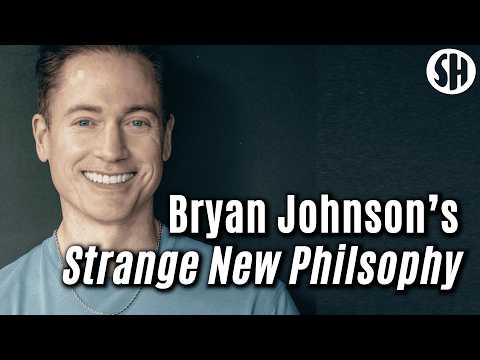
** In Sabine Hossenfelder’s video “Don’t Die: The Philosophy That Breaks Capitalism,” she explores Bryan Johnson’s radical approach to longevity, which combines an intense health regimen with a philosophical shift towards survivalism. Johnson, who advocates for living beyond the AI revolution, suggests that our societal focus should pivot from capitalism to survival, measuring success by health rather than wealth. While Hossenfelder finds some merit in Johnson’s vision, she expresses skepticism about the feasibility and accessibility of his methods, which include costly treatments and a strict lifestyle. The video also touches on the potential future of medicine with AI advances and introduces cryopreservation as a current option for longevity. **
Evidence of a Supernova Near Earth 10 Million Years Ago

** In the video “Evidence of a Supernova Near Earth 10 Million Years Ago,” Anton Petrov explores the aftermath of a supernova event occurring near Earth around 10 million years ago. The study reveals the presence of radioactive isotopes like iron-60 and beryllium-10 in geological records, indicating the supernova’s proximity. While the event likely increased cosmic rays and deposition of heavy elements, it was not close enough to cause mass extinctions. This supernova, linked to the Orion star-forming region, provides insight into the periodic influence of cosmic events on Earth’s evolution and biodiversity. **
📚 Research Links (provided by the author in the video description):
AI Learning to See before Seeing (LLM to VLM)

** The video “AI Learning to See before Seeing (LLM to VLM)” from Discover AI explores the integration of language and vision models, highlighting a significant study from Meta Super Intelligence. This research demonstrates that AI can learn visual representations from textual data alone, utilizing a process where text embeddings are mapped into a visual context through a shared latent space. The study emphasizes that a mix of 50% reasoning-centric text and 15% visual descriptive text in pre-training data significantly enhances the AI’s ability to understand and generate visual information, underscoring the importance of logical training data like code and mathematics in developing robust multimodal models. **
EXCLUSIVE: Avi Loeb Reveals: What HiRISE Just Saw on Mars!

** In this video, Harvard astrophysicist Avi Loeb joins Dr. Brian Keating to discuss recent observations made by the HiRISE camera on NASA’s Mars Reconnaissance Orbiter, which captured images of the interstellar object 3I/ATLAS. Loeb elaborates on the object’s unique characteristics, such as its massive size, unusual chemical composition, and potential technological origin. He explores the possibility that 3I/ATLAS could be an engineered object due to its trajectory and the anomalies observed, including a peculiar jet and nickel-rich gas emissions. The discussion also touches on the importance of international scientific collaboration and the potential implications of discovering extraterrestrial technology. **
Strange Gravity Anomaly Discovered Near Africa May Be The First of Its Kind
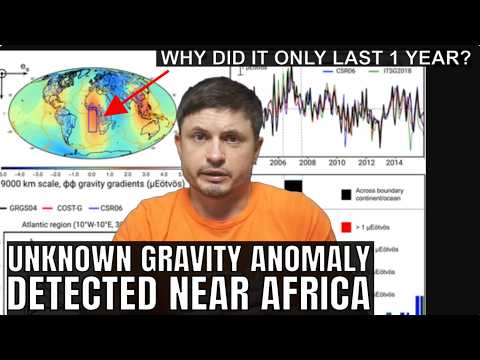
** The video by Anton Petrov explores a newly discovered gravity anomaly near Africa, which could be the first of its kind. This anomaly, detected by NASA’s Gravity Recovery and Climate Experiment (GRACE) satellites, indicates a rapid density change deep within Earth’s mantle, likely due to a mineral phase transition. This discovery, linked to a past geomagnetic event, highlights the dynamic nature of Earth’s interior and its potential impact on gravitational and magnetic fields. The video also compares these findings to similar anomalies on the Moon, emphasizing the differences between planetary bodies. **
Are We Rewiring Our Minds? | Brian Greene & Jonathan Haidt

** In the video “Are We Rewiring Our Minds?” Jonathan Haidt and Brian Greene explore the profound effects of digital technology and social media on human behavior, morality, and society. They discuss how these platforms, originally seen as tools for connectivity and democracy, have led to societal fragmentation and increased mental health issues, especially among youth. Haidt emphasizes the evolutionary roots of human sociality and moral foundations, highlighting how our shared intentionality and sacredness unite societies but are now disrupted by digital interactions. As a response, Haidt advocates for communal norms to mitigate the adverse effects of technology on children, suggesting policies like phone-free schools and delayed social media access to restore healthy development. **
MIT Physicist: “Most Scientists Are Wrong About Consciousness But Won’t Admit It”

** In the video, MIT physicist Max Tegmark challenges conventional scientific views on consciousness, emphasizing that many scientists dismiss it as either synonymous with intelligence or deem it impossible for machines to possess. Tegmark argues that consciousness and intelligence are distinct forms of information processing with overlapping yet separate characteristics. He references Giulio Tononi’s theory, which suggests that consciousness requires a high degree of information integration. Tegmark highlights that consciousness can exist without intelligence and vice versa, advocating for a more nuanced understanding of these concepts. **
How long will it take to solve the 5 big physics problems?

** In the video “How long will it take to solve the 5 big physics problems?” Sabine Hossenfelder explores the current status and potential timelines for resolving major unsolved issues in physics, including quantum gravity, dark matter, dark energy, the origin of the universe, and a theory of everything. She discusses how quantum gravity may become testable in the next decade thanks to advancements in technology, while dark matter and energy research are progressing through improved data collection, albeit with uncertain outcomes. Hossenfelder expresses skepticism about ever fully understanding the universe’s origin due to scientific limitations, and doubts the existence of a comprehensive theory of everything, emphasizing that progress in these areas could span decades. **
The Search for Intelligence in Agentic AI (MIT, Stanford)

** The video “The Search for Intelligence in Agentic AI” on Discover AI delves into the latest advancements in reinforcement learning (RL) to enhance the intelligence of AI models. It highlights two main research papers: one from Stanford that tackles RL training plateau issues using Monte Carlo Tree Search to explore wider solution spaces, and another from MIT that introduces a single-agent framework for knowledge graph retrieval, aiming to create more efficient and transferable AI systems. Both papers emphasize the importance of verifiable rewards and systematic reasoning in advancing AI capabilities. **
Biologists Figured Out Why Treehoppers Look So Weird

** In this video, Anton Petrov explores the peculiar appearance of treehoppers, insects known for their diverse and bizarre pronotums, often resembling helmets. Despite previous assumptions that these structures were for camouflage or mating, recent studies suggest they serve a sophisticated purpose: electroreception. This discovery reveals that treehoppers can detect electric fields, an ability previously thought exclusive to aquatic creatures like sharks. The pronotum’s shape enhances sensitivity to electric stimuli, acting as a specialized antenna. This finding not only explains the treehopper’s unique morphology but also opens up new avenues for understanding similar adaptations in other species. **
📚 Research Links (provided by the author in the video description):
Why Life on Mars Will DOOM Humanity
** The PBS Space Time video “Why Life on Mars Will DOOM Humanity” explores the implications of potential ancient life on Mars, highlighted by NASA’s recent findings from the Perseverance rover. The discovery of ring and spot patterns in the Jezero crater, resembling Earth-like microbial formations, suggests possible ancient life. The video discusses the broader significance of such a discovery, examining the likelihood of life’s abundance or rarity in the universe and its impact on humanity’s existential risks. The notion of a “great filter” is explored, posing the question of whether humanity’s greatest challenges lie in the past or future. **
Evaporating Black Hole Near Us May Explain 2023 Neutrino Event

** In the video “Evaporating Black Hole Near Us May Explain 2023 Neutrino Event,” Anton Petrov explores a mysterious neutrino event detected by the KM3Net underwater detector off the coast of Italy. This event, named KM3230213A, recorded an unusually powerful neutrino that baffled scientists. One compelling hypothesis is that the neutrino could have originated from an evaporating primordial black hole, a concept first proposed by Stephen Hawking. Such an event would provide evidence of Hawking radiation and suggest the existence of primordial black holes, potentially offering insights into dark matter and the early universe. **
📚 Research Links (provided by the author in the video description):
Unified Theory of Agentic Reasoning (Berkeley, NVIDIA)

** The video from Discover AI explores the “Unified Theory of Agentic Reasoning,” emphasizing recent research on AI reasoning frameworks from institutions like UC Berkeley and NVIDIA. It highlights the concept of the “reasoning manifold,” a geometric structure within large language models (LLMs) that aids in understanding complex reasoning processes and their failures. The video also introduces the idea of agentic reasoning graphs, which map reasoning paths using graph representations, adding a new dimension to AI reasoning analysis. Finally, it discusses how reinforcement learning, particularly Q-learning and policy gradients, impacts the planning capabilities of LLMs, revealing potential pitfalls like diversity collapse and proposing solutions for more robust AI models. **
Black Holes Keep Growing Forever Inside
** In the video “Black Holes Keep Growing Forever Inside” from Curt Jaimungal’s channel, the discussion centers on black holes and their unique properties regarding thermal equilibrium and complexity. It is explained that while the horizon area of a black hole reaches thermal equilibrium rapidly, the volume of its interior continues to grow for an exponentially long time due to increasing quantum computational complexity. This complexity, a concept from computer science related to the number of operations needed to reach a certain state, grows far beyond the point of thermal equilibrium. The video highlights how this idea has gained traction in the physics community, providing new insights into the enigmatic nature of black holes. **
Something Strange Happens When You Trace How Connected We Are
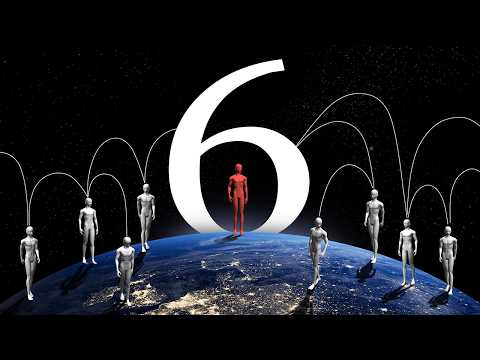
** The Veritasium video explores the intriguing concept of “six degrees of separation,” demonstrating how people across the globe are connected through surprisingly short chains of acquaintances. Highlighting the small-world phenomenon, the video delves into the mathematical underpinnings and real-world applications of network science, drawing on the groundbreaking work of mathematicians Duncan Watts and Steve Strogatz. Their research showed how small-world networks, characterized by tight clusters interconnected by a few random shortcuts, can influence everything from social dynamics to the spread of diseases and information. Additionally, the video discusses how the structure of networks can impact cooperation and behavior, emphasizing the power of network connections and individual agency in shaping outcomes. **
Comet 3I/ATLAS Turned Green But We Don’t Know Why + Other Updates
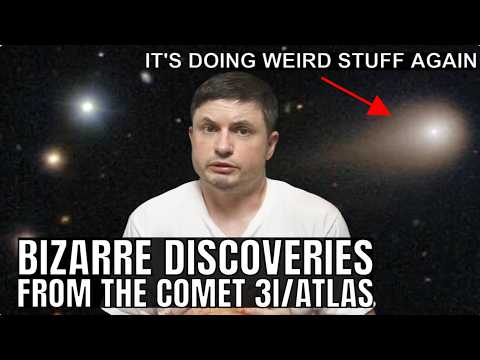
** In this video, Anton Petrov discusses the latest findings on the interstellar comet 3I/ATLAS, which has unexpectedly turned green, baffling scientists. Discovered in July 2025, the comet exhibits unusual physical and chemical features, such as a high carbon dioxide content and a lack of expected elements like iron and dicarbon, which typically contribute to the green hue. Observations from the James Webb Telescope and other facilities suggest that these anomalies indicate a unique formation history. Moreover, the comet’s rapid evolution and recent color shift are being closely monitored, with an upcoming solar event expected to provide further insights into its composition and behavior. **
📚 Research Links (provided by the author in the video description):
The Hydrostatic Paradox

** In the video “The Hydrostatic Paradox,” Steve Mould explores the counterintuitive concept that the force exerted by a liquid in a container is determined solely by the height of the liquid column directly above the point of measurement, regardless of the container’s shape. This phenomenon, known as the hydrostatic paradox, is explained using pistons, scales, and various container designs. Mould demonstrates that the pressure at any point in a liquid depends only on the vertical height of the liquid above it, not on the total volume of liquid surrounding it. The video delves into the nuances of Stevin’s Law and clarifies why additional water doesn’t increase pressure under the liquid due to equalized pressure across depths. **
Is AI Our Partner or Our ENEMY? Google CTO Blaise Agüera y Arcas

** In this episode of “Into the Impossible,” Dr. Brian Keating hosts a conversation with Google’s AI researcher Blaise Agüera y Arcas and philosopher Benjamin Bratton to explore the evolving relationship between artificial intelligence and human consciousness. They delve into whether AI can replicate human experiences like curiosity and happiness, discussing the computational nature of human brains and the porous boundary between AI and human consciousness. The conversation also touches on the role of AI in education, its implications for human creativity, and the potential societal impacts of AI, emphasizing the need for cooperative evolution between humans and technology. **
Is the recent global warming a “termination shock”?

** In the video, Sabine Hossenfelder explores the concept of “termination shock,” a term from science fiction used to describe the sudden warming that could occur if geoengineering efforts, like spraying aerosols to block sunlight, are abruptly stopped. She explains the recent increase in global warming might be linked to reduced air pollution, as efforts to clean the air have lessened the cooling effect of pollutants like sulfur dioxide. This has led to a debate among scientists about the role of aerosols in climate change, with some attributing recent temperature spikes to reduced aerosol masking. Hossenfelder also highlights the unpredictability of climate changes and suggests that geoengineering might become a localized solution in the future. **
📚 Research Links (provided by the author in the video description):
The Illusion of Intelligence in AI (Harvard, MIT)

** The video “The Illusion of Intelligence in AI” delves into the latest AI research highlighting the challenges AI faces in real-world applications, particularly in medical and safety contexts. It discusses studies from Harvard, MIT, and Google, revealing that chain of thought reasoning often degrades AI performance in clinical settings due to poor grounding in medical knowledge and susceptibility to errors like hallucinations. Additionally, AI struggles with physical safety perception, as demonstrated by its inability to accurately recognize risks in real-world scenarios compared to synthetic benchmarks. These findings emphasize the need for AI systems that are better trained in structured reasoning and real-world data to ensure safety and reliability. **
Why Gamers Will Never See Hair The Same Way Again

** The video by Two Minute Papers introduces a groundbreaking method for rendering hair in computer graphics, focusing on efficiency and storage. Traditional methods require heavy computational resources due to countless thin strands, but this new technique uses a “hair mesh” as a blueprint to generate hair strands in real-time on the GPU. Remarkably, this allows rendering of complex hairstyles at 500 frames per second with minimal memory use, equivalent to the storage space of one second of music. This innovative method, despite its efficiency and potential impact on gaming graphics, remains relatively unknown in the community. **
📚 Research Links (provided by the author in the video description):
A 2 Hour Deep Dive into Entropy

** In “A 2 Hour Deep Dive into Entropy,” Curt Jaimungal hosts philosopher of physics Wayne Myrvold to challenge conventional understandings of entropy and thermodynamics. Myrvold explores the complexities of entropy beyond the cliché that it always increases, revealing how it can be reinterpreted as a resource theory. The conversation delves into the misconceptions surrounding entropy’s relationship with disorder, the role of quantum mechanics, and the statistical nature of thermodynamic laws. Myrvold also discusses the historical evolution of entropy’s conceptualization and highlights the significance of information in manipulating physical systems. **
📚 Research Links (provided by the author in the video description):
MQTT for MCP and Federation of Agents (MAS)

** The YouTube video from the Discover AI channel explores a new AI research paper from CERN on the Federation of Agents (FoA), a framework that enhances multi-agent systems through dynamic, capability-driven collaboration. Built on MQTT’s publish-subscribe semantics, the FoA framework effectively coordinates large-scale AI agents by utilizing hierarchical capability matching and efficient index maintenance, akin to natural biological processes like protein assembly. This innovative approach allows for the creation of temporary, self-assembling agent teams that optimize task execution through the use of complex vector spaces and cooperative planning, ultimately aiming to transform static coordination into an adaptive, intelligent AI ecosystem. **
Mindscape 330 | Petter Törnberg on the Dynamics of (Mis)Information

** In this episode of Mindscape, host Sean Carroll discusses the dynamics of misinformation with Petter Törnberg, a computational social scientist. They explore how complex systems, like social media, can lead to emergent behaviors such as polarization and echo chambers without malicious intent. Törnberg, using agent-based models and large language models, finds that these outcomes are robust even without algorithmic manipulation. The conversation delves into the implications of these dynamics on democracy and public discourse, highlighting the difficulty in mitigating their negative effects and the need for more fundamental changes to social media structures. **
Mysterious Craters in Siberia May Be Finally Explained

** In the video “Mysterious Craters in Siberia May Be Finally Explained,” Anton Petrov delves into the mystery of giant gas emission craters (GECs) discovered in Siberia since 2012. These unusual, massive craters are caused by a combination of natural gas accumulation, geological heat, and permafrost melting, leading to explosive releases. The phenomenon is primarily localized in the Yamal and Gydan Peninsulas due to their unique geological features and significant natural gas deposits. The study suggests that these craters are a visible sign of climate change impacts, as they release methane, a potent greenhouse gas, potentially creating a feedback loop that accelerates permafrost thawing. **
📚 Research Links (provided by the author in the video description):
Dark Matter and Dark Energy Are the Same Thing

** In the video “Dark Matter and Dark Energy Are the Same Thing,” Curt Jaimungal discusses a groundbreaking theory with Cumrun Vafa that suggests dark matter and dark energy could be related through the concept of an extra spatial dimension. This theory, known as the Dark Dimension scenario, posits that our universe exists on a hypersurface with an additional dimension measuring around a micron, leading to the unification of dark matter as excitations of gravitons in this space. This perspective offers a new understanding of the universe’s structure and suggests that both dark matter and dark energy can be explained through string theory principles and the Swampland conjecture. **
Critical Weakness in AI: Attention Hijacking

** The video “Critical Weakness in AI: Attention Hijacking” by Discover AI explores vulnerabilities in Multi-Agent Systems (MAS) where Large Language Models (LLMs) and Large Reasoning Models (LRMs) interact. It highlights the issue of “attention hijacking,” where AI agents in MAS prioritize surface-level information over deep reasoning, making them susceptible to misinformation. The video discusses experiments showing how certain models can override others with misleading content and the significance of reasoning transparency. It also offers solutions like using “adversarial argument detection” to improve AI robustness and emphasizes that the stability of MAS depends more on the defensive capabilities of agents rather than their persuasive power. **