Weekly Physics Digest – September 21 – September 27, 2025
**This Week in Science: Quantum Quandaries and Cosmic Curiosities**Welcome, seekers of knowledge and lovers of all things quizzical and cosmic! This week, our digital docents have dished out a buffet of brainy delights that span from the intricacies of quantum quirks to the drama of deep space phenomena. So, strap in and prepare for a ride through the wild world of science and discovery. Learn fast, stay curious!
Bizarre Einstein Cross Can Only Be Explained With Dark Matter

** In the video “Bizarre Einstein Cross Can Only Be Explained With Dark Matter,” Anton Petrov explores a recent astronomical discovery that challenges conventional understanding of gravitational lensing. A peculiar Einstein Cross, observed with a central mirror image, suggests the presence of an invisible dark matter halo influencing the lensing effect. This finding, involving the distant galaxy Hurst-3, provides further evidence of dark matter’s role in the universe and offers insights into the mysterious gravitational phenomena. The video delves into the mechanics of gravitational lensing, the implications for understanding dark matter, and how such discoveries can influence cosmological studies, including measurements of the universe’s expansion. **
📚 Research Links (provided by the author in the video description):
The Consciousness Test That Would Change Everything

** In the video “The Consciousness Test That Would Change Everything,” Curt Jaimungal discusses a thought experiment proposed by Max Tegmark about testing theories of consciousness. Tegmark suggests using advanced neural scanning technology to predict a person’s conscious experiences in real time, based on a mathematical formula proposed by theorists like Giulio Tononi. If the predictions align consistently with the subject’s reported experiences, it could validate the theory; otherwise, it would be disproven. This approach parallels how scientific theories like general relativity are tested and accepted. Tegmark argues that proving consciousness theories can motivate the development of more accurate models and applications in understanding coma patients and assessing machine consciousness. **
In which I lose faith in quantum computing
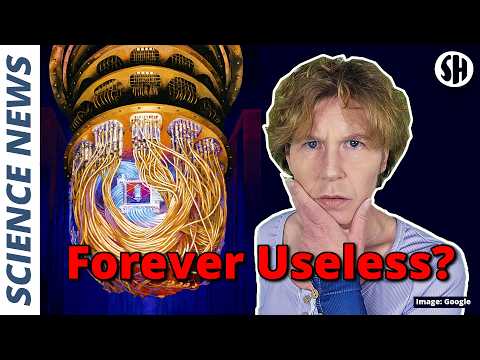
** In her video “In which I lose faith in quantum computing,” Sabine Hossenfelder articulates her skepticism about the commercial viability of quantum computing. Despite initial promise due to its foundation in quantum mechanics, she argues that the practical applications of quantum computers, such as in quantum chemistry or logistics, are either overshadowed by advancements in artificial intelligence or hindered by real-world business inefficiencies. Hossenfelder concludes that the primary interest in quantum computing may stem from government and intelligence agencies for code-breaking rather than a broad commercial impact. She predicts that as costs rise and practical benefits remain elusive, investment enthusiasm will dwindle, leaving quantum computing primarily as a research tool. **
The Hidden Rules That Control the Entire Universe

** The video “The Hidden Rules That Control the Entire Universe” by Arvin Ash explores the foundational principles governing our universe. It explains how simple rules and interactions within a 4D spacetime backdrop lead to the complex structures and phenomena we observe. Key concepts discussed include symmetries, conservation laws, and quantum field theory, which describe particles as field excitations. The standard model of particle physics outlines the forces and particles that shape matter, while quantum mechanics and thermodynamics explain microscopic behaviors and energy flows. The video concludes by highlighting the universe’s emergence of complexity and invites viewers to engage with the unsolved mysteries of dark matter and energy. **
NVIDIA Just Solved The Hardest Problem in Physics Simulation!

** In the video, Two Minute Papers discusses NVIDIA’s breakthrough in physics simulation with a technique called Offset Geometric Contact (OGC). This method dramatically improves simulations by ensuring digital objects behave like real-world entities, avoiding the unrealistic “penetration” issue where objects pass through each other. Unlike previous methods, which could halt entire simulations due to minor collisions, OGC uses a localized approach, allowing parts of the simulation to move independently unless an actual collision is imminent. This advancement makes simulations significantly faster—over 300 times more than previous techniques—while maintaining realistic interactions, revolutionizing how virtual environments simulate physical interactions. **
📚 Research Links (provided by the author in the video description):
After Eigenvalues: EIGEN-1Multi-Agent RAG

** The video from Discover AI introduces EIGEN-1, an innovative framework for multi-agent systems enhancing Retrieval-Augmented Generation (RAG) processes. EIGEN-1 replaces traditional tool calls with a streamlined Monitor-Querier-Injector pipeline and introduces Hierarchical Solution Refinement (HSR) to improve decision-making through iterative, peer-informed evaluations. This architecture, guided by Quality-Aware Iterative Reasoning (QAIR), enhances solution accuracy significantly, reportedly pushing performance from 22.8% to nearly 50%. The framework emphasizes efficient agent collaboration while minimizing token usage, promising more accurate and efficient outcomes in complex reasoning tasks. **
Hidden Underwater Impact Crater Found Near the UK Coast

** In the video, Anton Petrov discusses the recent discovery of the Silver Pit Crater, an underwater impact site located in the North Sea, approximately 130 km from the UK coast. This crater, which has been hypothesized for decades, has now been confirmed as an impact site dating back 43 to 46 million years. The discovery was made possible through advanced seismic imaging and rock analysis, revealing shock minerals and distinctive crater features. While the impact likely generated significant local destruction and potentially a tsunami, it did not appear to cause major climate changes, unlike other historic impacts. **
📚 Research Links (provided by the author in the video description):
Lord Kelvin’s Dangerous Idea!

** In “Lord Kelvin’s Dangerous Idea,” Dr. Brian Keating delves into the life and contributions of Lord Kelvin, a significant figure in thermodynamics and the scientific revolution. The video explores Kelvin’s development of the Kelvin temperature scale and his concept of absolute zero, which signifies the point where molecular motion ceases. Additionally, it highlights Kelvin’s clash with Charles Darwin over the age of Earth and evolutionary theory, showcasing how Kelvin’s calculations underestimated the Earth’s age due to his lack of knowledge about radioactivity. The video ultimately underscores Kelvin’s profound impact on science, illustrating both his groundbreaking inventions and the limitations he faced in his understanding of physics. **
You CANNOT Deny Biblical Creation Once You See This Animal
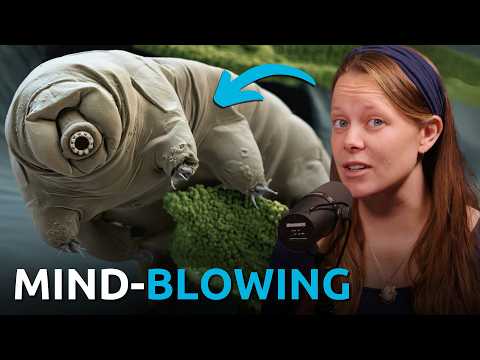
** In this episode of Answers News, the hosts dive into the remarkable world of tardigrades, often referred to as “water bears” or “moss piglets.” These microscopic creatures are celebrated for their extraordinary resilience, capable of surviving extreme conditions such as radiation, extreme temperatures, and even outer space. The discussion highlights their unique biology, including their ability to enter a cryptobiotic state, effectively suspending their metabolism. The hosts emphasize that the tardigrade’s design points to a Creator, framing their survival strategies as evidence of intelligent design rather than evolutionary stasis. **
The Geometric Pattern That Proves AI Understands

** In this episode, Curt Jaimungal and guest Max Tegmark explore the intriguing idea that AI can exhibit understanding through geometric representations during its training processes. Tegmark shares a compelling observation where AI, after a “eureka moment,” aligns data points into a circle, suggesting the AI has developed an understanding of the problem it is solving. The discussion extends to how this phenomenon is evident in various AI models, with examples such as arithmetic representations on a helix, ultimately supporting the Platonic representation hypothesis. This hypothesis posits that different intelligent systems may arrive at similar geometric representations when they achieve deep understanding. **
AI Nano Bio Agents (ETH)

** In the video “AI Nano Bio Agents (ETH)” from Discover AI, the speaker discusses a new framework for Nano Bio-Agents (NBA) developed at ETH Swiss, aimed at enhancing genomic task performance through small language models (SLMs). The NBA framework addresses the common pitfalls of large language models (LLMs) in genomics, such as hallucinations, by using task decomposition and tool orchestration with APIs from established databases like NCBI. The results indicate that even smaller models, with as few as 7 to 10 billion parameters, can achieve impressive accuracy rates above 90% on specific genomic tasks. The video emphasizes the importance of optimizing AI systems for specialized applications rather than relying on monolithic models, paving the way for more efficient and cost-effective solutions in bioinformatics. **
I never understood why spacetime needs a minus sign…until now!

** In the video “I never understood why spacetime needs a minus sign…until now!” by FloatHeadPhysics, the host explores the fundamental reason behind the minus sign in the spacetime interval, which distinguishes it from traditional distance calculations. Through a journey that begins with Einstein’s theories and progresses through Minkowski’s geometric interpretations, the video clarifies that space and time are not merely different dimensions, but are fundamentally interconnected in a four-dimensional spacetime framework. The minus sign in the spacetime interval is essential because it preserves the speed limit of light, ensuring that changes in the universe occur in a meaningful, non-instantaneous manner. Ultimately, the host reveals that this negative sign contributes to the very structure of our universe, making it coherent and allowing for an evolutionary process. **
Were We Wrong About the Solar Cycles? NASA Reports Extreme Activity Nobody Expected
** In this video, Anton Petrov discusses unexpected solar activity linked to the Sun’s 25th solar cycle, which has proven to be significantly more intense than predictions suggested. While scientists anticipated a mild cycle, they have instead observed a surge in sunspots, powerful solar flares, and coronal mass ejections that could affect Earth through increased auroras and potential disruptions in satellite communications. The video also highlights mysterious phenomena such as massive solar prominences and unprecedented magnetic activity, suggesting that our understanding of solar behavior is evolving. Petrov emphasizes the ongoing research needed to comprehend these changes and their implications for technology and human life. **
📚 Research Links (provided by the author in the video description):
Very cool: DNA Data Storage only 5 Years Away, New Report Says

** In her video, Sabine Hossenfelder discusses the groundbreaking potential of DNA as a data storage medium, with predictions that commercial applications could emerge within the next five years. DNA can theoretically hold an astonishing 200 petabytes of data per gram, far surpassing current storage technologies. While the process of encoding and reading data using synthetic DNA remains slow, advancements in the field suggest it could serve as an effective long-term archival solution. Additionally, Hossenfelder explores other innovative uses of DNA, such as in neural networks and the creation of custom materials, showcasing the remarkable intersection of biology and technology. **
Agentic Data Systems: Automated Knowledge Discovery

** In the video “Agentic Data Systems: Automated Knowledge Discovery,” the creator discusses a groundbreaking framework for Autonomous Data Agents that integrates Large Language Models (LLMs) with data execution environments. These agents aim to automate complex analytical workflows by enabling domain experts, such as biologists and economists, to access and analyze data independently, thus democratizing data science. The video explores how these agents utilize a closed-loop system for multi-modal data perception and reasoning, allowing them to perform various tasks like data cleaning and visualization without requiring extensive coding knowledge. The creator emphasizes the challenges of ensuring data trustworthiness and the need for future research to address the complexities inherent in autonomous data systems. **
📚 Research Links (provided by the author in the video description):
Another Astronomical Mystery: Strange Double Circle In Deep Space (ORC Updates)

** In this video, Anton Petrov explores the intriguing phenomenon of Odd Radio Circles (ORCs), focusing on a recent discovery of a double ring structure in deep space. Initially identified in 2019, ORCs are massive cosmic formations visible only in radio wavelengths, often associated with distant galaxies. Petrov discusses various hypotheses regarding their origins, including starburst activities and black hole jets, while highlighting the rarity of these objects, with only ten confirmed to date. The video emphasizes the ongoing mystery surrounding ORCs and the need for future observations to better understand their relationship with galaxy evolution and the cosmos. **
📚 Research Links (provided by the author in the video description):
Steven Pinker Explains Cancel Culture, Common Knowledge & AI

** In this episode of the “Into the Impossible” podcast, Steven Pinker discusses the concept of common knowledge and its profound impact on social dynamics, morality, and societal structures. He explores how shared knowledge can lead to collective actions, such as social media shaming and the phenomenon of cancel culture, which he argues are mathematically predictable outcomes of human behavior. Pinker also addresses the complexities introduced by artificial intelligence, suggesting that the misinformation and hallucinations generated by AI challenge our understanding of truth and reality. Overall, the discussion illuminates the intricate relationships between knowledge, power, and societal norms. **
This New Time Crystal Runs on Light
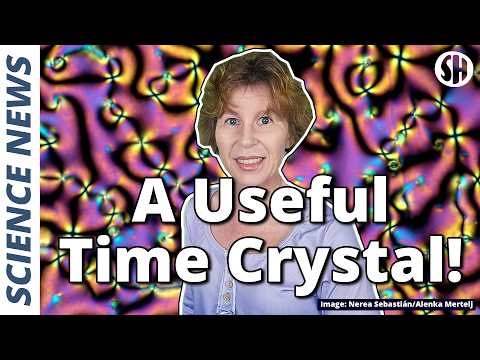
** In the video “This New Time Crystal Runs on Light,” Sabine Hossenfelder explains the groundbreaking development of liquid time crystals, materials that exhibit periodic structures in time, akin to how normal crystals have repeating structures in space. Recent research demonstrates that by using steady blue light, scientists can induce these crystals to organize into bands that can polarize light differently, leading to potential applications in security features for banknotes and advanced technologies in photonics and quantum computing. Hossenfelder emphasizes the implications of this phenomenon, despite the current engineering challenges that limit its practical use. **
📚 Research Links (provided by the author in the video description):
AI 4 Science FINALLY?! Latest Insights

** In the video “AI 4 Science FINALLY?! Latest Insights,” the host discusses a recent study on the limitations of large language models (LLMs) in performing scientific inductive reasoning beyond mere mathematical equations. The authors argue that while LLMs can recall vast amounts of information, they struggle with genuine scientific induction, particularly in complex, non-mathematical domains. The video emphasizes that current AI systems often rely on memorization rather than true reasoning, highlighting the need for new architectures and training methods that foster true inductive reasoning capabilities necessary for scientific discovery. **
Animals Are Evolving to Survive in the Human World But Often in a Weird Way

** In this video, Anton Petrov explores how human activities are inadvertently shaping the evolution of various animal species, a phenomenon termed the biological anthroposine hypothesis. He discusses intriguing examples, such as the hiy crab, which has developed a shell pattern resembling a human face due to accidental selection, and the adaptation of urban lizards in Puerto Rico that have evolved longer limbs to navigate concrete environments. The video highlights both intentional and unintentional evolutionary pressures from human actions, showing that these changes occur at an unprecedented pace, with significant implications for biodiversity and ecosystem health. Ultimately, Petrov warns that our unintended influence is rewriting the rules of evolution, leaving unpredictable long-term outcomes for the future of wildlife. **
📚 Research Links (provided by the author in the video description):
When Scientists Go Mad: The Unthinkable Thoughts We Can’t Think

** In “When Scientists Go Mad: The Unthinkable Thoughts We Can’t Think,” Curt Jaimungal and his guest William Hahn explore the complexities of self-identity and the psychological impact of engaging with diverse perspectives. They discuss the notion of multiple selves within us and how embracing various viewpoints can lead to mental distress or a feeling of losing one’s mind. The conversation delves into the idea of “lethal thoughts” and the responsibility that comes with sharing potentially harmful ideas, highlighting the need for a cultural shift towards accepting diverse, unconventional thoughts as essential for human evolution and creativity. **
Did Graphene Just Break A Fundamental Law?

** In her video, Sabine Hossenfelder discusses a recent study that claims a super-clean version of graphene has broken a fundamental physics law related to heat and electrical conductivity. The researchers observed that electrons in this graphene behave like a nearly perfect quantum fluid, defying the established Vman fronts law, which usually governs the relationship between thermal and electrical conductivity. While the study demonstrates significant findings, Hossenfelder emphasizes that the results do not fundamentally change physics as we know it, and the concept of using graphene for studying black holes remains speculative. She critiques the sensationalized portrayal of the research in press releases, noting that while the findings are intriguing, they do not warrant the dramatic claims made. **
AI Connectors For VISION & Language Spaces

** In the video “AI Connectors For VISION & Language Spaces,” the host delves into the challenges faced by Vision Language Models (VLMs), particularly focusing on the “Connector” module that bridges visual and textual representations. The discussion highlights significant information loss during the projection of visual embeddings into a textual framework, emphasizing that existing models often struggle with modality fusion and can distort spatial relationships. The authors of the referenced study propose methods to quantify this information loss, highlighting the need for improved connectors that preserve semantic integrity and visual detail. Ultimately, the video outlines critical insights for future developments in VLM architectures and their applications. **
📚 Research Links (provided by the author in the video description):
The Next Level of AI Video Games Is Here!
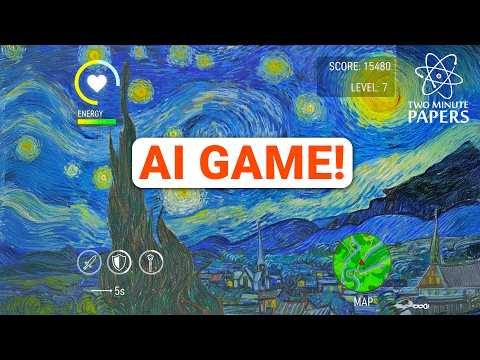
** In the video “The Next Level of AI Video Games Is Here!” from Two Minute Papers, Dr. Károly Zsolnai-Fehér introduces Magica 2, an innovative AI technique that transforms images into playable video games. Unlike its predecessor, Google DeepMind’s Genie 2, which struggled with continuity, Magica 2 can maintain visual consistency for up to 10 minutes, allowing for more immersive gameplay experiences. While the technology is still in its early stages and has limitations, such as character control issues, it marks a significant leap in AI gaming capabilities over the past year. Viewers are encouraged to try the demo and witness firsthand the advancements in AI-driven game design. **
📚 Research Links (provided by the author in the video description):
Little Red Dots May Be Strange Cocoon Objects After All

** In this video, Anton Petrov delves into the intriguing mystery of the “Little Red Dots” observed by the James Webb Space Telescope, which challenge our understanding of early galaxy formation and black hole evolution. These compact objects, existing shortly after the Big Bang, exhibit unusual light patterns and characteristics that have sparked various hypotheses, including the possibility that they are supermassive black holes surrounded by dense gas cocoons. A recent study proposes a novel model called “black hole stars,” suggesting that these entities are supermassive black holes enveloped in cold hydrogen gas, resulting in unique emissions. While this explanation offers insights into the growth and evolution of black holes, the mystery of these cosmic phenomena remains largely unresolved. **
📚 Research Links (provided by the author in the video description):
The Electron: No Size? (Fundamental Speculations)

** In the video “The Electron: No Size? (Fundamental Speculations),” Alexander Unzicker explores the perplexing nature of the electron, emphasizing its lack of measurable size in contrast to other particles like protons and neutrons. He discusses the concept of the classical electron radius, noting that it is an artificial construct that raises more questions than answers regarding the electron’s true nature. Unzicker posits that our inability to define the electron’s size might indicate a deeper misunderstanding of fundamental physics. He encourages viewers to reflect on this enigma and consider the implications of our current grasp of particle physics. **
Quantum Computers Could Test Free Will, Researchers Claim

** In her video, Sabine Hossenfelder discusses a new proposal by researchers to use quantum computers to explore the concept of free will in the context of quantum physics. The video explains the significance of “measurement independence” and how its violation, termed “superdeterminism,” might imply constraints on free will. Hossenfelder highlights that while this research could provide insights into fundamental physics and human agency, the paper lacks specific models for testing these ideas. Ultimately, she emphasizes that the laws of physics inherently limit free will, a concept that remains contentious in both physics and philosophy. **
Do LMMs Reason Visually or Textually?

In the video “Do LMMs Reason Visually or Textually?” from Discover AI, the discussion centers on the limitations of large multimodal models (LMMs) in performing inductive physical reasoning, particularly in unexpected scenarios. The presenters highlight a study from Michigan State University that reveals these models can memorize universal physical laws but struggle to apply them in real-world situations, especially when confronted with novel objects or irregular scenarios. They emphasize that while LMMs show some improvement with context learning, their reliance on textual understanding often undermines their visual reasoning capabilities, raising concerns about their trustworthiness in critical applications like autonomous vehicles.
Your Brain Isn’t a Computer and That Changes Everything

** In this thought-provoking episode of “Theories of Everything,” Curt Jaimungal hosts professors Anil Seth and Michael Levin to challenge the conventional brain-as-computer metaphor. They argue that this metaphor has obscured crucial aspects of consciousness, suggesting that consciousness is deeply intertwined with the biological substrate rather than purely computational. The discussion includes the exploration of xenobots—living robots made from skin cells—and raises questions about the nature of consciousness, particularly in the context of artificial intelligence and split-brain patients. The dialogue emphasizes the need for a nuanced understanding of cognition that transcends simplistic algorithmic interpretations. **
📚 Research Links (provided by the author in the video description):
Mindscape 329 | Steven Pinker on Rationality and Common Knowledge

** In this episode of the Mindscape podcast, Sean Carroll interviews renowned psychologist Steven Pinker about the concepts of rationality and common knowledge. Pinker explains that getting along in society relies on shared norms and the understanding that everyone is aware of these norms, a concept known as common knowledge. He delves into the implications of common knowledge for human behavior, social interactions, and the foundations of cooperation and coordination. The discussion also touches on the challenges of rationality in social contexts, highlighting how common knowledge can influence everything from everyday communication to larger societal movements. **
JWST Examines Planet With Never Before Seen Carbon Atmosphere

** In this video, Anton Petrov discusses a fascinating observation made by the James Webb Space Telescope (JWST) of a unique planetary object known as a Black Widow Pulsar Planet. This planet, originally part of a binary system, has undergone significant mass loss due to its pulsar companion’s intense gravitational pull and radiation. The JWST revealed an atmosphere rich in carbon compounds, particularly C3 and C2 molecules, with an astonishing carbon-to-oxygen ratio that is over 100 times higher than that of Earth. Such findings challenge existing theories about planetary formation and suggest the need for new models to explain this unusual atmospheric composition and its implications for exoplanetary science. **
📚 Research Links (provided by the author in the video description):
NEW RL Method: FlowRL (GFlowNets)

** In the video “NEW RL Method: FlowRL (GFlowNets),” the presenter introduces Flow Reinforcement Learning (FlowRL), a novel approach that shifts from traditional reward maximization to reward distribution matching, inspired by GFlowNets. This method minimizes the reverse Kullback-Leibler divergence between the policy distribution and a target reward-induced distribution, promoting diversity in output and preventing mode collapse. The speaker explains FlowRL using an analogy of water flow over a complex terrain, highlighting how it balances the distribution of probability mass to ensure a robust reasoning ecosystem. The implications of this new paradigm are significant for tackling complex tasks requiring creativity and diverse solutions in AI systems. **
📚 Research Links (provided by the author in the video description):