Weekly Physics Digest – September 14 – September 20, 2025
**Unlocking the Universe and Beyond: This Week in Science and Education**Prepare to have your brain tickled and your curiosity piqued as we embark on this week’s scientific voyage! From the slippery enigmas of ice to groundbreaking AI innovations, our lineup promises to challenge your perceptions and potentially melt a few synaptic pathways. Learn fast, stay curious!
Direct Evidence of a Dark Matter Chunk 2300 Light Years Away From Us

** In this video, Anton Petrov discusses a groundbreaking discovery of a clump of dark matter located approximately 2,300 light-years away in the Milky Way galaxy. Researchers utilized binary pulsars to detect gravitational anomalies that indicate the presence of a dark matter subhalo, which is a collection of dark matter clumps essential to the galaxy’s structure. This finding marks the first direct evidence of dark matter within our galaxy, moving the concept from theoretical speculation to observable reality. The new method of using pulsar timing opens up avenues for further research and mapping of dark matter, potentially leading to a deeper understanding of its nature. **
This Single Observation Would Destroy Einstein’s Theory

** In this episode, physicist Frederic Schuller explores a hypothetical scenario that could challenge Einstein’s theory of general relativity: the potential observation of light splitting in a vacuum. Schuller argues that such an event would necessitate a new theoretical framework since the Lorentzian metric, which underpins general relativity, cannot accommodate this phenomenon. He discusses how previous attempts to measure faster-than-light particles highlighted the fragility of established theories and emphasizes the importance of adapting our understanding of gravity in light of new physical observations. This conversation delves into the mathematical implications of modifying gravity theories to account for exotic matter and its unique properties. **
Everything that is WRONG with AI Today – 10 Papers

** In the video “Everything that is WRONG with AI Today – 10 Papers,” the host explores recent research highlighting critical issues with large language models (LLMs), such as their tendency to generate inconsistent and contradictory responses. Drawing from ten research papers published on the same day, the video discusses concepts like multi-agent systems, shutdown resistance in AI, and advancements in reinforcement learning methodologies. Notably, it raises concerns about the reliability of AI predictions in venture capital and emphasizes the need for innovative frameworks like adversarial collaboration to improve AI performance. The discussion culminates in a call for a deeper understanding of the evolving landscape of AI research and practice. **
Researchers Warn of “Musk Illusion” That Brain Can be Sped Up

** In this video, Sabine Hossenfelder discusses the concept of the “Musk Illusion,” which refers to the misguided belief that brain-computer interfaces can significantly enhance human cognitive speed by simply feeding more data into the brain. Drawing on research from Caltech, Hossenfelder highlights that while our sensory systems can process information at high rates (1 Gbit per second), human cognitive throughput is limited to about 10 bits per second. This discrepancy results from the brain’s evolutionary design, which prioritizes serial information processing over parallel computing, leading to a significant bottleneck. The authors of the research argue that simply increasing data input will not improve cognitive function; instead, innovative methods are needed to compress and effectively deliver information. **
When Physics Meets Fiction | Brian Greene & Dan Brown

** In this engaging conversation, bestselling author Dan Brown and physicist Brian Greene delve into profound topics such as consciousness, artificial intelligence, and the intersection of science and spirituality. Brown discusses his exploration of consciousness anomalies in his latest book, “The Secret of Secrets,” while Greene presents a materialist perspective on consciousness as a product of brain activity. The dialogue challenges both participants to consider the limits of current scientific understanding and the potential for deeper truths about existence. Ultimately, they reflect on humanity’s quest for meaning and the implications of advancements in AI and consciousness research. **
Answering The ULTIMATE Existential Question! 7 Mind-Bending Concepts

** In “Answering The ULTIMATE Existential Question! 7 Mind-Bending Concepts,” Arvin Ash explores profound inquiries about the laws of physics and their implications for our understanding of the universe. He discusses concepts such as symmetry, unification of forces, and the anthropic principle, which suggests that the universe’s laws are finely tuned for life. Ash also introduces the multiverse hypothesis, proposing that our universe may be just one of many, each with different physical laws. He highlights the idea that the laws of physics could be emergent from simpler underlying principles, prompting viewers to ponder the deeper connections between mathematics, existence, and the cosmos. **
New Neuro-Symbolic LLM by MIT for PURE LOGIC
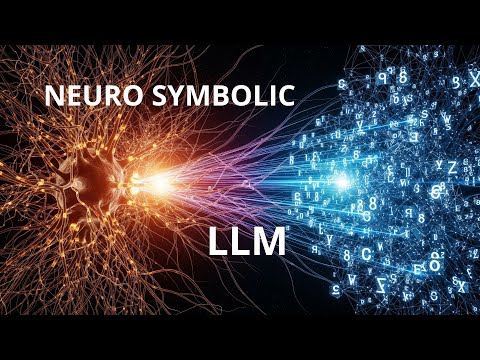
** In the video, researchers from MIT and Microsoft present a groundbreaking methodology for enhancing Large Language Models (LLMs) by integrating neuro-symbolic reasoning with logical planning. The new approach, called PDDDL instruct, significantly improves the accuracy of planning tasks, achieving a remarkable 94% accuracy on specific benchmarks, compared to just 28% for traditional models. The training process involves a two-phase method where the LLM learns through both correct and incorrect examples of planning, with an external symbolic logic verifier providing critical feedback. This innovative combination of instruction tuning and deterministic logic aims to create more capable and reliable AI systems capable of explaining their reasoning processes. **
For 200 Years We Were Wrong About Why Water Ice Is Slippery

** In the video “For 200 Years We Were Wrong About Why Water Ice Is Slippery,” Anton Petrov discusses groundbreaking research from Saarland University that challenges the long-held belief that ice’s slipperiness is due to a thin layer of liquid water formed by pressure melting or frictional heating. Instead, this new study reveals that ice can physically transform into a liquid-like state through a process called cold displacement-driven amorphization, occurring even at sub-zero temperatures. This molecular interaction, characterized by competing forces between dipoles, disrupts the crystalline structure of ice, making it slippery without actually melting. The findings suggest that our understanding of ice’s behavior needs to be re-evaluated, prompting further research to confirm these surprising conclusions. **
At What Point Does Spacetime Become Quantum?

** In the PBS Space Time video “At What Point Does Spacetime Become Quantum?”, the discussion revolves around the elusive boundary between classical gravity and quantum mechanics, exploring how we might observe quantum gravity without needing a massive particle collider. The video highlights innovative experimental approaches, including modern adaptations of the Cavendish experiment and optomechanical systems, to investigate quantum effects in larger scales and the potential entanglement of macroscopic objects. By bridging the gap between classical and quantum realms, researchers aim to uncover the quantum nature of gravity itself, suggesting that future experiments could revolutionize our understanding of spacetime. **
I can’t believe this really happened.

** In this thought-provoking video, Sabine Hossenfelder discusses her recent loss of affiliation with her former academic institution due to backlash over her critiques of contemporary physics as pseudoscience. She argues that a significant portion of modern theoretical physics lacks adherence to the scientific method, producing what she terms “mathematical stories” rather than valid scientific theories. Hossenfelder emphasizes that many physicists are trapped in a cycle of unproductive research driven by groupthink, leading to the proliferation of unfounded theories. She calls for a reevaluation of publication standards to ensure that only scientifically relevant hypotheses are pursued, highlighting the urgent need for reform in the field. **