
Weekly Physics Digest – September 13 – September 19, 2026
**This Week’s Digest: Unearthing Cosmic Secrets and Galactic Oddities!**This week, prepare for a rollercoaster ride through time and space as we dive into some truly mind-bending content! One standout video is Anton Petrov’s exploration of a starless galaxy named Cloud Nine, a cosmic conundrum that leaves us both baffled and intrigued. Who knew empty spaces could hold such fascinating mysteries? Meanwhile, Sabine Hossenfelder takes us back to the age of dinosaurs, revealing that their extinction was far more catastrophic than we’ve ever imagined—think fiery doom rather than a slow fade into history. From the microscopic wonders of superionic ice to the expansive implications of dark energy, this week’s videos are packed with insights that will leave you questioning everything you thought you knew about the universe. Buckle up, because it’s going to be a wild week in the realm of science! Learn fast, stay curious!
She Says Spacetime Points Are Just Where Fields Meet

** In the video “She Says Spacetime Points Are Just Where Fields Meet,” physicist Lucrezia Vera discusses her innovative research in quantum mechanics, focusing on the concept of relationalism and the dressing field method. She explains how traditional views of spacetime are challenged by the idea that physical reality is defined by the interrelations of fields rather than a fixed manifold. Vera emphasizes the importance of local symmetries in gauge field theories and how her methods can systematically extract invariant physical content from these theories. The discussion also delves into the philosophical implications of relationality in physics and how it can reshape our understanding of reality. **
📚 Research Links (provided by the author in the video description):
They Built the Quietest Place on Earth to Find Dark Matter

** In this engaging lecture, Dr. Brian Keating welcomes Professor Rick Gateskill to discuss the Lux Zeppelin experiment, a groundbreaking effort to detect dark matter at the Sanford Underground Research Facility. They delve into the significance of a recent event linked to dark matter detection, the challenges of scientific research where 95% of efforts yield negative results, and the ongoing quest to unlock the mysteries of the universe’s composition, where dark matter constitutes about 25%. Gateskill humorously explains the term “WIMP” (Weakly Interacting Massive Particle) and emphasizes the importance of continuing to refine detection methods, highlighting the collaboration among a diverse team of scientists over decades to advance our understanding of dark matter. **
Planck’s Quantum of Action: The Marriage of Math and Physics (Fundamental Speculations)

In “Planck’s Quantum of Action: The Marriage of Math and Physics,” Alexander Unzicker explores the origins and implications of Planck’s constant, highlighting its significance in both mathematics and physics. He discusses the historical context of 3 + 1-dimensional space-time and introduces Hamilton’s quaternions, emphasizing their non-commutative nature as a possible foundation for understanding fundamental constants. Unzicker argues that despite efforts to simplify physical laws, Planck’s constant remains a mysterious element that defies numerical explanation, thus calling for a deeper inquiry into its existence and the fundamental nature of reality.
Christian Geologist Answers Common ‘Gotcha’ Old Earth Arguments

** In the video, Dr. Tas Walker, a geologist with over 30 years of experience, addresses common “gotcha” arguments against a young Earth perspective, such as the fossil record, radiometric dating, and distant starlight. He argues that evidence, including the preservation of dinosaur blood cells and the formation of sediment layers, is more consistent with a young Earth model than with the widely accepted old Earth narrative. Dr. Walker emphasizes that interpretations of geological data are influenced by underlying worldviews, and he provides alternative explanations that align with biblical accounts of Earth history. Ultimately, he asserts that both young Earth and old Earth proponents operate on assumptions, with each viewpoint providing different interpretations of the same data. **
Christian Geologist: There’s a SECRET Hiding in the Grand Canyon Floor

** In this video, a Christian geologist explores the ancient rocks at the Grand Canyon’s floor, revealing insights about their formation and composition that challenge conventional geological narratives. He discusses various types of rocks, including the pink Quartermaster granite and the Vishnu Schist, suggesting that many of these were formed rapidly during a catastrophic flood event, rather than over millions of years. The geologist highlights the discovery of pegmatites that cooled much faster than previously thought, questioning the long-held beliefs in uniformitarian geology. Ultimately, he argues that the evidence supports a young Earth perspective, aligned with a biblical narrative of creation. **
We Finally Know How the Dinosaurs Died. It Was Worse Than We Thought

** In the video “We Finally Know How the Dinosaurs Died. It Was Worse Than We Thought,” Sabine Hossenfelder discusses new research suggesting that the extinction of the dinosaurs was far more catastrophic than previously believed. While the traditional narrative attributes their demise to a gradual climate change following an asteroid impact, recent calculations indicate that many dinosaurs likely perished within hours due to intense heat generated by vaporized rock falling back to Earth. This sudden surge in temperature ignited widespread fires, which may have killed them in darkness, drastically altering our understanding of this mass extinction event. **
📚 Research Links (provided by the author in the video description):
AI Will End Philosophy, Physicist Claims

** In the video “AI Will End Philosophy, Physicist Claims,” Sabine Hossenfelder discusses a provocative argument by physicist Luis Favort, who asserts that artificial intelligence will render much of philosophy obsolete. Favort proposes that philosophy should adopt methods from theoretical physics, emphasizing quantifying explanations for philosophical problems. However, Hossenfelder critiques both Favort’s stance and a philosopher’s counterargument, asserting that philosophy grapples with questions beyond AI’s reach, such as the nature of free will and the meaning of life. Ultimately, she suggests that while AI may assist in philosophical discourse, it won’t replace the discipline entirely. **
📚 Research Links (provided by the author in the video description):
RAG Just Became a Trainable Neural Graph (WikiFM)

** In this video, the channel Discover AI explores the innovative Wiki Foundation Model (WFM), which addresses the limitations of traditional sparse knowledge graphs by integrating discrete topological entities with continuous document embeddings. The WFM enables richer semantic representation and complex reasoning by creating a unified geometric space for knowledge retrieval. The presenter details the underlying mathematics and the distinct advantages of this new model, emphasizing its ability to preserve nuanced textual details while enhancing predictive performance across various applications. Ultimately, the WFM represents a significant advancement in AI, merging structural knowledge retrieval with dynamic reasoning capabilities. **
📚 Research Links (provided by the author in the video description):
How Did We Miss a Galaxy Orbiting Right Next to Us?

** In this video, Anton Petrov discusses the remarkable discovery of a nearly invisible galaxy named Aquarius IV, which orbits the Milky Way at a distance of approximately 355,000 light-years. This ultra faint dwarf galaxy was found using preliminary data from the Vera Rubin Observatory, marking a new era in astronomical observations. The galaxy, believed to be about 13 billion years old, is primarily composed of hydrogen and helium, making it a valuable target for studying dark matter and understanding galaxy formation. Petrov emphasizes the significance of this discovery in expanding our knowledge of the Milky Way’s satellite galaxies and the ongoing quest to unravel the mysteries of dark matter. **
📚 Research Links (provided by the author in the video description):
Water Ice That Turns Pitch Black and Conducts Electricity

** In this video, Anton Petrov explores the fascinating phenomenon of superionic ice, a form of water that can exist only under extreme conditions. He explains how this unusual ice, which appears black and conducts electricity, has been confirmed through recent laboratory experiments that recreate the high pressure and temperature conditions found in giant planets like Uranus and Neptune. The video discusses the dual nature of superionic ice, where oxygen remains solid while hydrogen behaves like a liquid, and how its properties could help explain the mysterious magnetic fields of these planets. Furthermore, the implications of this research extend to our understanding of exoplanets, particularly sub-Neptunes, which may contain similar forms of water. **
📚 Research Links (provided by the author in the video description):
This Massive Galaxy Has Zero Stars and Defies Explanation

** In the video “This Massive Galaxy Has Zero Stars and Defies Explanation,” Anton Petrov discusses the discovery of Cloud Nine, a remarkable starless gas cloud located 14 million light-years away from Earth. This cloud, identified as the first of its kind, challenges existing astronomical theories, as it appears to contain a massive halo of dark matter but no stars. The unique structure of Cloud Nine suggests that it represents a “failed galaxy,” potentially offering insights into dark matter and galaxy formation. As astronomers continue to study this enigmatic object, they hope to unravel its mysteries and explore the implications for our understanding of the universe. **
📚 Research Links (provided by the author in the video description):
AI’s Biggest Secret: Why It Defies Physics
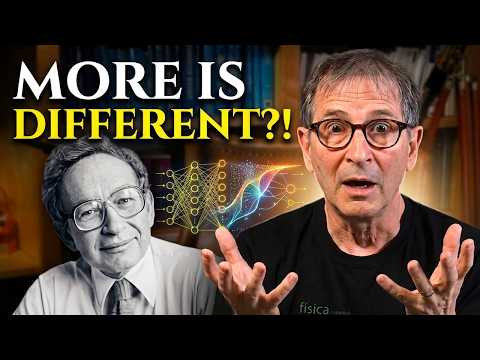
** In the video “AI’s Biggest Secret: Why It Defies Physics,” Dr. Brian Keating interviews physicist Nigel Goldenfeld, who explores the concept that “more is different,” famously articulated by Philip Anderson. They delve into how neural networks, despite having an overwhelming number of parameters, can learn effectively without merely fitting noise, which defies conventional statistical understanding. Goldenfeld explains that this phenomenon can be attributed to a phase transition in the learning process, akin to physical phase transitions in materials, suggesting that AI’s capabilities result from emergent properties that transcend simple data fitting. **
Ask Brian Greene LIVE Q&A | World Science Festival

** In this live Q&A session with renowned physicist Brian Greene, hosted by the World Science Festival, viewers are invited to explore a range of topics from artificial intelligence’s role in mathematical discoveries to the intricacies of quantum mechanics and black holes. Greene discusses the potential of AI in advancing scientific inquiry, particularly in solving complex problems like the Navier-Stokes equation, while also addressing deep questions about the nature of time and perception at black holes. He provides accessible explanations for concepts such as the color charge of quarks and the foundations of quantum mechanics, emphasizing the ongoing dialogue between classical and modern physics. The session underscores the importance of curiosity and the collaborative nature of scientific exploration. **
Why 3,000 Supernovae Are Breaking Our Models of Dark Energy

** In this video, Anton Petrov explores a significant shift in our understanding of dark energy, spurred by the analysis of 3,000 supernovae. Recent findings suggest that dark energy, previously thought to be a constant force driving the universe’s accelerated expansion, may instead vary over time. By revisiting data from various international collaborations, the research indicates that the equation of state parameter (W) is not equal to one, implying a dynamic nature of dark energy. This revelation poses challenges to the standard cosmological model and hints at a potentially evolving fate for the universe, which could alter how scientists perceive cosmic acceleration and the ultimate fate of the cosmos. **
📚 Research Links (provided by the author in the video description):
Beyond GraphRAG: Runtime Graph Repair (w/ Human Cognition)
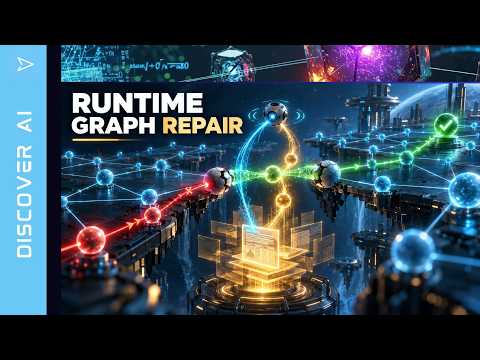
** In the video “Beyond GraphRAG: Runtime Graph Repair (w/ Human Cognition),” the host explores a new methodology inspired by human cognitive processes for enhancing artificial intelligence in navigating complex knowledge spaces. The discussion centers around a study that reveals a staggering 95.2% of AI model evaluations in physics are incorrect when judged by other AIs, emphasizing the necessity for human expert evaluations. The presented “Cognition on Graph” framework aims to integrate graph structures and text corpora, creating a bidirectional synergy that allows for better data retrieval and reasoning. The video concludes that this innovative approach may lead to significant advancements in AI architectures, enabling efficient problem-solving and knowledge exploration. **
📚 Research Links (provided by the author in the video description):
Einstein’s Biggest Blunder Might Have Been Even Bigger!

** In this video, Sabine Hossenfelder discusses a groundbreaking paper suggesting that the universe’s expansion may not be constant, as previously thought. Recent observations indicate that the acceleration of the universe’s expansion is decreasing, potentially leading to a future contraction. The physicist behind the paper proposes that this phenomenon is linked to the uncertainty principle in quantum mechanics, which implies that the universe has its own uncertainty affecting its expansion. While the paper offers an intriguing perspective, it faces challenges in predicting the overall effect and lacks a connection to established theories of quantum gravity. **
📚 Research Links (provided by the author in the video description):
Gaia Confirms Giant Undulating Waves Across the Milky Way

** In this video, Anton Petrov discusses groundbreaking discoveries about the structure of the Milky Way galaxy, focusing on the newly confirmed Radcliffe wave and several similar oscillating structures. Recent data from the Gaia telescope reveals that the galaxy is not a static disk but exhibits dynamic waves, with stars displaced vertically by hundreds of light years. The video explains that these waves result from gravitational interactions, particularly from the dwarf galaxy Antlia 2, and highlights the existence of multiple superclouds that share similar undulating patterns. This research not only rewrites our understanding of the galaxy’s form but also suggests that the solar system undergoes similar oscillations, potentially influencing geological events on Earth. **
📚 Research Links (provided by the author in the video description):
The Milky Way Has a Dark Matter Problem

** In the video “The Milky Way Has a Dark Matter Problem,” Dr. Brian Keating analyzes new data from the Gaia spacecraft, which measured the rotation curve of the Milky Way, revealing an unexpected decline. Traditionally, dark matter and Modified Newtonian Dynamics (MOND) predicted flat rotation curves, but the findings suggest both theories may be flawed. Keating discusses the challenges of measuring our galaxy’s dynamics from within it and explores how the observed decline could imply a lighter or more concentrated dark matter halo or even a disturbance in the galaxy’s equilibrium. He concludes by emphasizing the need for further investigation and invites viewers to consider whether these findings challenge existing paradigms of dark matter and MOND. **
📚 Research Links (provided by the author in the video description):
Mindscape Ask Me Anything, Sean Carroll | September 2026
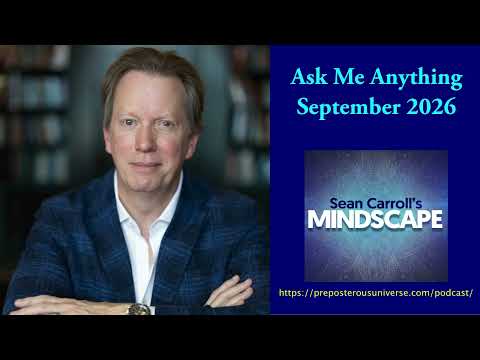
** In the September 2026 Ask Me Anything episode of the Mindscape Podcast, Sean Carroll addresses a range of questions posed by his Patreon supporters, focusing on topics in physics, quantum mechanics, and the implications of theoretical constructs like the Alcubierre warp drive. Carroll begins by correcting previous mistakes about scientific concepts and then delves into discussions on the double slit experiment, entanglement, and the nuances of anthropic reasoning in cosmology. He emphasizes the importance of understanding the underlying principles of quantum mechanics while clarifying misconceptions about interference patterns and the capabilities of warp drives, leaving viewers with an appreciation for the complexities of modern physics. **
Solving the Mystery of How Faint Young Sun Produced Habitable Earth

** In this video, Anton Petrov explores the faint young sun hypothesis and presents recent findings that challenge the traditional understanding of early Earth’s habitability. He discusses how powerful solar flares from the young sun may have created conditions conducive to life by producing nitrous oxide, a potent greenhouse gas, which could have warmed the planet enough to maintain liquid water. Additionally, he examines how the solar system’s movement through the galaxy, specifically interactions with dense interstellar clouds, may have led to significant climate changes, influencing Earth’s habitability over time. These insights reveal the complex relationship between a star and its planets, suggesting that habitability is not static but dynamic. **
📚 Research Links (provided by the author in the video description):
Topological Intelligence: AI Planning w/ Persistent Homology

** In the video “Topological Intelligence: AI Planning w/ Persistent Homology,” the presenter explores a groundbreaking approach to AI planning that integrates advanced mathematical concepts from topology. By utilizing persistent homology, the AI system can analyze complex systems like global monetary policies, identifying known and unknown patterns to enhance strategic planning. This method allows for the abstraction of successful trajectories into a topological space, enabling the AI to navigate intricate decision-making landscapes and uncover optimal pathways to achieve specific goals. The discussion emphasizes the potential real-world implications of these advancements in AI technology. **
📚 Research Links (provided by the author in the video description):