
Weekly Physics Digest – October 11 – October 17, 2026
**This Week’s Scientific Wonders: Exploring the Cosmos and Beyond**Welcome to another week of spectacular science and education content, where we plunge into the mysteries of the universe and unravel the wonders of our existence! Among the highlights is “Human Neurons Grew Inside a Living Mouse Brain With Bizarre Results,” an eye-opening exploration into xenocortication that raises ethical questions and showcases astonishing scientific advances. And let’s not forget “This Star Reversed Its Death in Just 30 Years (Sakurai’s Object),” which proves that even stars aren’t ready to let go without a dramatic plot twist. Get ready for a week filled with exploration, innovation, and perhaps a few cosmic surprises! Learn fast, stay curious!
Why Earth’s Moon Is Almost Too Perfect to Be Just Luck

** In the video “Why Earth’s Moon Is Almost Too Perfect to Be Just Luck,” Hugh Ross and Fazale Rana delve into recent studies that highlight the Moon’s critical role in safeguarding early life on Earth against the intense solar winds from the young Sun. They discuss how the Moon’s unique formation and properties, resulting from a collision with another celestial body, contributed to a strong magnetosphere that protected the atmosphere and water necessary for life. The conversation underscores the improbability of Earth’s perfect conditions for life, suggesting that such circumstances point toward intentional design rather than chance, as they align with biblical creation narratives. **
📚 Research Links (provided by the author in the video description):
Huge Problem With Our Universe Has Simple Answer, Physicists Say

** In this video, physicist Sabine Hossenfelder discusses a significant issue in cosmology known as the Hubble tension, which involves conflicting measurements of the universe’s expansion rate. A new theory suggests that the discrepancy may arise from an overlooked factor: primordial magnetic fields from the early universe. These magnetic fields could have influenced the cosmic microwave background, allowing light to escape earlier than previously thought, thus aligning the Hubble rate inferred from it with measurements from supernovae. While this idea is intriguing, it may not fully resolve the tension, as the required adjustments still fall short of eliminating the discrepancy entirely. **
The Gamble That’s Revolutionizing Astronomy | World Science Festival

** In this engaging discussion, physicist Francis Halzen shares the groundbreaking journey of developing the IceCube Neutrino Observatory, a unique facility built deep beneath the Antarctic ice to detect high-energy neutrinos from cosmic sources. Halzen’s innovative work in neutrino astronomy earned him the 2026 Nobel Prize in Physics, marking a significant advancement in our understanding of the universe. The conversation covers the historical context of neutrinos, the technical challenges of building the detector, and the implications of discovering cosmic neutrinos, which are produced in extreme astrophysical environments like active galaxies. Halzen emphasizes the importance of collaborative effort in science and encourages aspiring scientists to follow their passions. **
UFO Physics Explained: What Happened Near Nimitz? Kevin Knuth
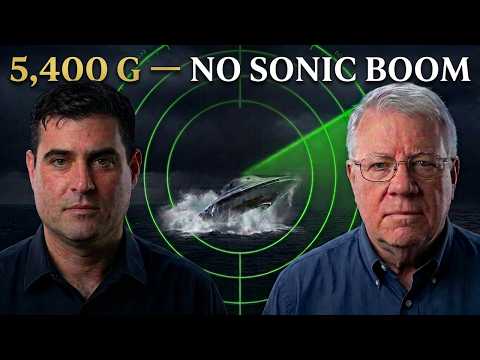
** In the video “UFO Physics Explained: What Happened Near Nimitz?” physicist Kevin Knuth analyzes the extraordinary acceleration and power estimates of UFO encounters, particularly the 2004 Nimitz case and the 1986 Japan Airlines incident. Knuth highlights that the Nimitz UFO reportedly experienced accelerations of up to 5,500 Gs, which would be fatal to human occupants, suggesting that if such crafts exist, they must operate under principles beyond current human technology. He also discusses the immense energy required for such maneuvers, estimating a peak power of 1,100 gigawatts, raising questions about the physics of these phenomena as they seemingly defy known laws of motion and energy conservation. **
Neutrino Flavors Might Explain Why Black Holes Go Missing
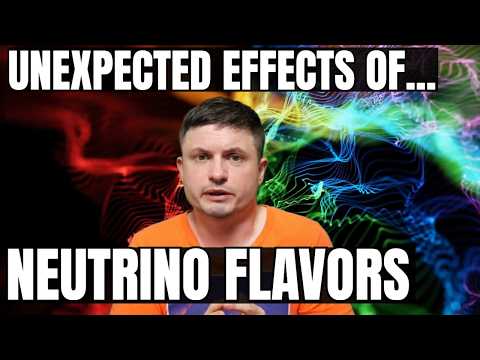
** In the video “Neutrino Flavors Might Explain Why Black Holes Go Missing,” Anton Petrov explores groundbreaking research on neutrinos that reveals their crucial role in stellar evolution and supernova explosions. He discusses the recent Nobel Prize awarded to Francis Halzen for his work on the IceCube Neutrino Observatory, which has advanced our understanding of high-energy neutrinos. A new study shows that neutrinos can change flavors, affecting the energy dynamics in massive stars during core collapse, leading to a higher rate of black hole formation rather than supernova explosions. This research not only addresses the supernova rate problem but also explains the scarcity of certain stellar remnants, highlighting the influential nature of these elusive particles in the universe. **
📚 Research Links (provided by the author in the video description):
Will AI Destroy Mathematics? | World Science Festival
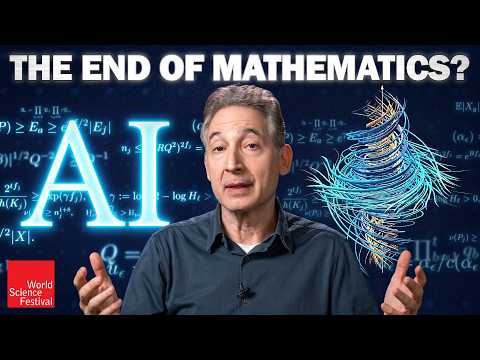
** In this engaging World Science Festival discussion, Brian Greene examines the profound implications of AI’s advancements in solving complex mathematical problems, with OpenAI claiming progress on over 370 unsolved issues. He contemplates the future role of human mathematicians, suggesting that while AI may provide rapid answers, it might lack the deep insights gained from the human problem-solving journey. Greene posits that rather than ending mathematics, AI could transform it, with humans shifting to roles as curators and critics, guiding AI towards meaningful inquiries. Ultimately, he emphasizes that human creativity and discernment will remain essential in shaping mathematical exploration and knowledge. **
A Massive New Crater Just Appeared on the Moon

** In Anton Petrov’s video, he discusses the recent discovery of a massive 222-meter-wide crater on the Moon, named Mach Gachin, formed by a space rock impact that took place in 2024. This crater, larger than the Roman Colosseum, provides vital insights into lunar geology, revealing that impacts reshape the Moon’s surface much faster than previously thought—every 80,000 years instead of 10 million. The video also explores the implications for future lunar exploration, particularly the Artemis program, emphasizing the need for reinforced habitats due to the significant effects of impacts on surrounding areas. The discovery challenges prior assumptions about the Moon’s surface dynamics, confirming it remains an active celestial body. **
📚 Research Links (provided by the author in the video description):
LIVE Disclosure Debate: Are UFOs Alien Tech? Avi Loeb vs Michael Shermer

** In a riveting live debate hosted by Dr. Brian Keating, Harvard astrophysicist Avi Loeb and skeptic Michael Shermer discussed the possibility of UFOs being evidence of alien technology. Loeb argued for the necessity of rigorous scientific inquiry into unidentified aerial phenomena (UAPs), emphasizing the need for tangible evidence rather than speculation. Shermer maintained a skeptical stance, insisting on the importance of verifiable data to support claims of extraterrestrial technology. The discussion also touched on the broader implications of potential alien encounters, the challenges of disclosure, and the significance of funding scientific research into UAPs, culminating in a $1,000 wager on whether non-human technology will be confirmed by 2030. **
This Star Reversed Its Death in Just 30 Years (Sakurai’s Object)

** In this video, Anton Petrov explores the fascinating phenomenon of Sakurai’s Object, a star that has undergone dramatic changes in just 30 years, challenging traditional notions of stellar evolution. Originally thought to be a dying white dwarf, it has exhibited a rapid transformation back into a red giant, complete with jets of gas and a surrounding disk of carbon dust. Recent observations have revealed its significant cooling and expansion, as well as the creation of high-speed jets, which provide valuable insights into the life cycle of stars and the origins of cosmic dust. This unique case not only enhances our understanding of stellar physics but also offers clues about similar processes that may occur in our own sun in the future. **
📚 Research Links (provided by the author in the video description):
Adam Grant: Vibes Are Real, and Neuroscientists Can Measure Them

** In this engaging conversation, organizational psychologist Adam Grant discusses the concept of “vibes” and how human connections can be scientifically measured through synchronized brainwaves and heartbeats. He emphasizes that meaningful relationships thrive not solely on agreement but flourish through healthy disagreements, termed as task conflict, which can spark creativity and innovation. Grant also delves into the importance of parenting dynamics and effective communication strategies within teams, advocating for a balance of individual idea generation followed by collaborative evaluation. His insights from his new book “Vibe” challenge conventional ideas about relationships, underscoring the potential for fostering strong connections in both personal and professional contexts. **
This Star is About to Explode – Sixty Symbols
** In the video “This Star is About to Explode,” Dr. Meghan Gray discusses the impending explosion of T Coronae Borealis, a recurrent nova expected to brighten dramatically within the next year. This binary star system consists of a red giant and a white dwarf, where material from the red giant is gravitationally pulled onto the white dwarf, leading to periodic thermonuclear explosions. Historical records indicate that the star has flared up every 80 years, with the last significant outburst occurring in 1946, making it due for another eruption. Observers worldwide, including amateur astronomers, are keenly monitoring the star in anticipation of this celestial event. **
Chinese SETI Just Detected an Intriguing Signal (Not Aliens)

** In this video, Anton Petrov discusses recent findings from China’s FAST telescope regarding the search for extraterrestrial intelligence (SETI). Researchers analyzed over 140,000 radio signals, identifying two notable candidates, one of which was ruled out as human interference. The second signal showed promise, originating from the K2-155 system, but was ultimately linked to terrestrial radio frequency sources, not aliens. Petrov emphasizes the importance of rigorous scientific methods in interpreting these signals and highlights advancements in SETI research, including machine learning techniques that enhance data analysis. **
📚 Research Links (provided by the author in the video description):
Terence Tao: “You Cannot Trust AI”

** In the video, Fields Medalist Terence Tao discusses the limitations of artificial intelligence (AI) in mathematics, emphasizing that while AI can assist in generating ideas and reminding researchers of forgotten approaches, it cannot be fully trusted. Tao advocates for a collaborative approach where AI complements human mathematicians, particularly in solving a vast array of medium-difficulty problems rather than just high-profile ones. He stresses the need for education to evolve, focusing on critical thinking and verification skills as students navigate an increasingly complex information landscape. Additionally, Tao explores the nature of mathematics as a language and the importance of adapting teaching methods to leverage modern AI tools effectively. **
How We Trapped Light and Built the Internet

** In the video “How We Trapped Light and Built the Internet,” Veritasium explores the historical journey of glass fiber optics and their pivotal role in revolutionizing telecommunications. The story begins with early experiments in the 1880s that laid the groundwork for fiber optics, leading to the challenges of signal loss in glass fibers in the 1960s. Highlighting the contributions of pioneers like Charles Kao, who theorized about reducing loss in glass, the video details the development of practical low-loss fibers that ultimately enabled the mass transmission of data, paving the way for the modern internet. The intricate process of fiber production today is showcased, emphasizing the significance of innovation and collaboration in scientific advancements. **
Dark Matter and General Relativity Explained FROM SCRATCH

** In this comprehensive lecture by Philip Mannheim, presented by Curt Jaimungal, the intricacies of dark matter, dark energy, and quantum gravity are explored from a foundational perspective. Mannheim proposes conformal gravity as an alternative to general relativity, aiming to address longstanding issues such as the missing mass problem and the discrepancies in galactic rotation curves. The lecture breaks down complex concepts like Newton’s laws and Einstein’s equations while emphasizing the need for a new paradigm to reconcile these theories with observations beyond the solar system. With rigorous mathematical explanations and a detailed PDF resource, Mannheim’s presentation invites viewers to reconsider established notions in theoretical physics. **
📚 Research Links (provided by the author in the video description):
A.I. Physics Exam (extra footage) – Sixty Symbols

** In this extra footage from the “A.I. Physics Exam” series by Sixty Symbols, Professor Phil Moriarty delves into the concept of the particle in a box, a foundational principle in quantum mechanics. He analyzes ChatGPT’s responses to physics questions, highlighting both its strengths and weaknesses in understanding wave functions and momentum. Through a lively and interactive discussion, Moriarty treats the AI’s answers as if they were from a student, examining its reasoning process and probing its understanding. Ultimately, he concludes that while AI can provide valuable insights, it is not infallible in the complex realm of quantum mechanics. **
📚 Research Links (provided by the author in the video description):
Astronomical Amounts of Data (extra footage) – Sixty Symbols

** In this extra footage from Sixty Symbols, Professor Meghan Gray shares her enthusiasm for astronomical data and its pivotal role in modern astronomy. She recounts her early experience at the Canadian Astronomical Data Center, highlighting the shift from photographic to digital data sharing that transformed the field. The discussion also touches on the significance of infrastructure and standardization in data communication, comparing it to music notation for its ability to bridge time and understanding across generations. Professor Gray emphasizes the human aspect of science, advocating for interdisciplinary collaboration to effectively utilize data in astronomy. **
Mindscape Ask Me Anything, Sean Carroll | October 2026

** In the October 2026 Ask Me Anything episode of the Mindscape Podcast, host Sean Carroll addresses a variety of complex questions submitted by Patreon supporters, ranging from the implications of AI-generated proofs in mathematics to the state of physics and funding shortages in academia. Carroll discusses the recent claims by OpenAI regarding the Navier-Stokes equations and how advances in AI are transforming mathematical practices, raising questions about understanding versus mere knowledge. He also touches on the perceived shortage of physicists, emphasizing that the issue is more about funding and job availability rather than a lack of qualified individuals. Throughout the episode, Carroll highlights the evolving role of AI in both mathematics and physics, suggesting it enhances human creativity and understanding rather than replacing it. **
Human Neurons Grew Inside a Living Mouse Brain With Bizarre Results

** In this video, Anton Petrov delves into the groundbreaking concept of xenocortication, where human neurons are transplanted into living mice, resulting in significant and surprising developments. Researchers from Stanford University managed to grow human brain cells within genetically modified mice, leading to the formation of a hybrid brain that occupied up to 90% of the mouse’s brain space. These human neurons not only survived and integrated but also developed complex connections, including unique cell types typically found only in larger mammals, raising important implications for neuroscience research and potential therapies. The video also addresses ethical concerns surrounding this innovative research, emphasizing the necessity for strict oversight and transparency. **
📚 Research Links (provided by the author in the video description):
Something Hidden in Our Galaxy Has Been Emitting Radio Waves for 20 Years

** In this video, Anton Petrov explores the mysterious radio signal originating from the Milky Way, known as VT J1906+0829, which has been emitting radio waves for over 20 years. The signal challenges existing astronomical models, as it is entirely invisible in X-rays and does not expand as expected despite gas within it moving at high velocities. Researchers suggest that it may be a young galactic microquasar, a binary system involving a compact object that is rapidly accreting gas, creating a dense wind that obscures X-ray emissions. This discovery highlights the potential for hidden celestial objects and emphasizes the importance of multi-wavelength observations in modern astronomy. **
📚 Research Links (provided by the author in the video description):