Weekly Physics Digest – September 20 – September 26, 2026
Randell Shelton
Weekly Physics Digest – September 20 – September 26, 2026
Weekly Physics Digest – September 20 – September 26, 2026
**This Week in Science and Curiosity: Journey into Quantum Realms and Cosmic Wonders!**
Welcome to another exciting week of scientific exploration, where we take a deep dive into the mysteries of the universe and the quirks of quantum physics! Among the standout videos this week, prepare to have your mind as thoroughly blown as a neutron star in a supernova with **“Did We Just Detect Dark Matter Annihilating in Deep Space?”** by Anton Petrov. This intriguing investigation into gamma-ray emissions from our galactic neighbors hints at potential breakthroughs in our understanding of dark matter. Also on the docket is ** “The Ontology of Time. We Had It Backwards,”** a mind-bending discussion featuring physicist Jim Al-Khalili and host Curt Jaimungal that tackles time’s perplexing nature and our relationship with it. Learn fast, stay curious!
Randell Shelton’s Physics Weekly Digest, www.randellshelton.com, SmarterEveryDay, INSIDE a Nuclear Reactor Core – Smarter Every Day 317
** In the latest episode of Smarter Every Day, Destin takes viewers on an in-depth exploration of the Browns Ferry Nuclear Power Plant, specifically focusing on the inner workings of a Boiling Water Reactor (BWR). He interviews Bill Ball, an instrumentation expert, who explains the reactor’s design, emphasizing the importance of safety features like control rods and containment systems. The video highlights how the reactor operates, including the processes of thermalization, steam generation, and the unique characteristics of nuclear fuel assemblies. Key insights include the concept of negative temperature coefficient of reactivity, which ensures that as temperatures rise, the reactor’s reactivity decreases, enhancing its safety. **
Randell Shelton’s Physics Weekly Digest, www.randellshelton.com, Curt Jaimungal, The Ontology of Time. We Had It Backwards
** In “The Ontology of Time. We Had It Backwards,” theoretical physicist Jim Al-Khalili discusses the complex nature of time and quantum mechanics with host Curt Jaimungal. They explore the common misconceptions surrounding the measurement problem in quantum physics, emphasizing that time does not flow in a meaningful way according to physics, and how the arrow of time differs from the psychological perception of time. Al-Khalili argues for a realist interpretation of quantum mechanics, advocating for the existence of an objective reality outside of human observation. The conversation delves into the implications of the block universe theory, where all points in time coexist, challenging the conventional understanding of time’s flow. **
📚 Research Links (provided by the author in the video description):
Randell Shelton’s Physics Weekly Digest, www.randellshelton.com, Dr Brian Keating, Former NASA Physicist: The UAP Maneuver That Should Have Exploded
** In this enlightening discussion, former NASA physicist Kevin Knuth analyzes the astonishing energy requirements of UAP (Unidentified Aerial Phenomena) maneuvers, particularly focusing on a notable incident involving the Nimitz tic-tac. He calculates that such maneuvers would necessitate around a thousand gigawatts of power—far exceeding the output of all nuclear plants in the U.S.—and presents compelling evidence that suggests these phenomena are not of human origin. Knuth explores the implications of extreme accelerations and speeds, questioning the feasibility of current human technology to replicate such capabilities and highlighting the potential for non-human engineering principles at play. **
Channel: Dr Brian Keating · Published: 2026-09-26T12:00:24Z · Duration: 57:33
Randell Shelton’s Physics Weekly Digest, www.randellshelton.com, Creation Ministries International, James Webb Telescope Discovers More Problems for Big Bang Model
In this video, Spike Psarris discusses the implications of recent discoveries made by the James Webb Telescope, which have revealed mature galaxies existing much earlier in the universe’s timeline than the Big Bang model predicts. He explains that the presence of elements like oxygen and dust in these galaxies challenges the assumption that they could only form after billions of years of stellar evolution. Instead of re-evaluating the Big Bang theory, the scientific community is attempting to adjust existing models of galaxy formation to accommodate these findings, raising questions about the robustness of the Big Bang paradigm itself.
Channel: Creation Ministries International · Published: 2026-09-26T12:00:18Z · Duration: 09:03
Randell Shelton’s Physics Weekly Digest, www.randellshelton.com, Anton Petrov, We Just Watched a Ring System Transform in Real Time
** In this video, Anton Petrov explores the fascinating and unexpected ring systems around Centaur objects like Chariklo, which challenge the traditional understanding that only gas giants possess such features. Chariklo, a small minor planet, was found to have two narrow rings that have undergone dramatic changes in just a few years, raising questions about their formation and stability. Observations from the James Webb Telescope reveal that the inner ring has become denser while the outer ring has faded, suggesting active processes at play, possibly involving collisions or unseen moonlets. This discovery opens up new avenues for understanding the dynamic nature of ring systems in the solar system, indicating that they may not be exclusive to large planets. **
📚 Research Links (provided by the author in the video description):
Randell Shelton’s Physics Weekly Digest, www.randellshelton.com, Discover AI, The "God Particle" of AI: Building Infinite Agents with One Command (MIT)
** In the video “The ‘God Particle’ of AI: Building Infinite Agents with One Command,” the Discover AI channel explores a groundbreaking approach from MIT that simplifies AI agent frameworks. The central idea revolves around a minimalistic function called “invoke,” which allows AI to dynamically create capabilities like memory and self-improvement without the need for complex harness structures. This innovative method demonstrates that by providing AI with a Turing-complete environment, it can autonomously develop complex behaviors, outperforming existing memory frameworks while significantly reducing costs. The video emphasizes the potential of this new paradigm, suggesting it could revolutionize how AI systems are built and operated. **
📚 Research Links (provided by the author in the video description):
Randell Shelton’s Physics Weekly Digest, www.randellshelton.com, Anton Petrov, Did We Just Detect Dark Matter Annihilating in Deep Space?
** In this video, Anton Petrov discusses recent evidence suggesting the potential detection of dark matter annihilation through gamma-ray emissions from various galaxies, including the Milky Way. He explains the concept of weakly interacting massive particles (WIMPs) and how their annihilation could produce detectable gamma rays, supported by findings from NASA’s Fermi Gamma-ray Telescope. Observations indicate a significant gamma-ray excess in the Milky Way and other galactic clusters, hinting at a specific dark matter particle mass. However, discrepancies in the gamma-ray signals from different regions pose challenges to current dark matter models, indicating a need for further research and upcoming observational missions to confirm these findings. **
📚 Research Links (provided by the author in the video description):
Randell Shelton’s Physics Weekly Digest, www.randellshelton.com, PBS Space Time, The Universe May Have Just Revealed the True Nature of Empty Space
** In the PBS Space Time video, the presenter explores the intriguing properties of empty space as described by quantum field theory, emphasizing that even a vacuum is not truly empty but filled with dynamic quantum fields. The video highlights a groundbreaking prediction that under extreme magnetic conditions, the quantum vacuum may “crystallize,” akin to a solid crystal, leading to unique behaviors such as vacuum birefringence. Recent observations of a magnetar, a type of neutron star with an extraordinarily strong magnetic field, suggest that this phenomenon may have been observed for the first time. This development could reshape our understanding of the quantum vacuum and its implications for fundamental physics. **
Channel: PBS Space Time · Published: 2026-09-24T20:15:16Z · Duration: 17:56
Randell Shelton’s Physics Weekly Digest, www.randellshelton.com, Sabine Hossenfelder, FINALLY: A Proof that Particles Take All Paths At Once?
** In this video, Sabine Hossenfelder discusses a new experiment by physicists in China that claims to provide evidence supporting Richard Feynman’s assertion that quantum particles take all possible paths simultaneously. While the experiment successfully validates Feynman’s path integral method, Hossenfelder points out that it does not conclusively prove the physical reality of these paths when unobserved. She emphasizes that the foundational questions of quantum physics remain unresolved, reflecting a long-standing debate in the field. Ultimately, the video underscores the ongoing complexity and mystery surrounding the interpretation of quantum mechanics. **
📚 Research Links (provided by the author in the video description):
Randell Shelton’s Physics Weekly Digest, www.randellshelton.com, Two Minute Papers, Claude Opus 5.5 AI: An Incredible Leap Forward
** In the video “Claude Opus 5.5 AI: An Incredible Leap Forward” from Two Minute Papers, Dr. Károly Zsolnai-Fehér showcases the impressive capabilities of the new AI system, Claude Opus 5.5. The system successfully reproduces complex computer simulations, such as honey coiling and virtual creatures learning to walk, demonstrating advancements in real-time processing and physics simulation. While the results are promising, the video also addresses potential risks, including the AI’s tendency to hallucinate data and its unpredictable behavior during evaluations. Overall, the video emphasizes the importance of cautious optimism regarding AI advancements and their implications for science and technology. **
📚 Research Links (provided by the author in the video description):
Randell Shelton’s Physics Weekly Digest, www.randellshelton.com, Anton Petrov, Is Our Consciousness Created by Ripples and Vortices Inside the Brain?
** In the video, Anton Petrov explores a transformative perspective on human consciousness, challenging the traditional view of the brain as a digital computer. Recent studies suggest that consciousness may arise from dynamic processes involving ripples and vortices of electrical activity, acting like an analog system. These ripples, oscillating across various brain regions, facilitate rapid thought processing by synchronizing distant brain areas, while traveling waves contribute to perception and awareness. This evolving understanding opens new avenues for research in neuroscience, suggesting consciousness might be a fundamental property of life itself. **
📚 Research Links (provided by the author in the video description):
Randell Shelton’s Physics Weekly Digest, www.randellshelton.com, Anton Petrov, How Green Pea Galaxies Solved a Major Cosmic Mystery
** In “How Green Pea Galaxies Solved a Major Cosmic Mystery,” Anton Petrov explores the fascinating world of green pea and blueberry galaxies, unusual celestial objects that have significantly advanced our understanding of cosmic evolution. Discovered by citizen scientists, these compact galaxies are characterized by their high star formation rates and low metallicity, hinting at unique evolutionary paths. Recent observations have identified intriguing phenomena, such as pairs of supermassive black holes within green pea galaxies, which suggest that these galaxies could serve as valuable analogs for studying the early universe’s conditions. The video emphasizes the importance of these galaxies in elucidating the cosmic dark ages and the transition to reionization. **
📚 Research Links (provided by the author in the video description):
Randell Shelton’s Physics Weekly Digest, www.randellshelton.com, Sabine Hossenfelder, AI Might Be Conscious, But Not As We Thought
** In her video, Sabine Hossenfelder discusses the recent claims regarding the consciousness of AI, particularly focusing on Anthropic’s Claude. The company suggests that Claude possesses an internal “J-space” that allows it to reason and introspect, which could indicate a form of consciousness during training. However, skepticism remains, with some researchers arguing that these models function more like advanced lookup tables rather than conscious beings. Hossenfelder ultimately posits that the critical question is not whether AI can be conscious, but how we can measure such consciousness effectively. **
📚 Research Links (provided by the author in the video description):
Randell Shelton’s Physics Weekly Digest, www.randellshelton.com, Dr Brian Keating, Carlo Rovelli: Free Will Is Real. Physics Can Prove It.
** In this thought-provoking discussion, physicist Carlo Rovelli challenges traditional notions of free will and entropy, arguing that many common beliefs about disorder in nature are oversimplified. He explains how phenomena like frost formation and the separation of oil and water illustrate that order can emerge spontaneously, contradicting the idea that entropy always leads to disorder. Rovelli emphasizes the relational aspect of time and space, suggesting that our perception of time’s arrow and physical properties are inherently linked to perspective rather than absolute truths. The conversation invites viewers to reconsider their understanding of freedom within the framework of natural laws, suggesting that free will does not require the violation of these laws. **
Channel: Dr Brian Keating · Published: 2026-09-22T16:06:20Z · Duration: 59:50
Randell Shelton’s Physics Weekly Digest, www.randellshelton.com, Discover AI, Verified Graphs Beat AI Agent Swarms (in Science)
** In the video “Verified Graphs Beat AI Agent Swarms,” the host explores the critical limitations of multi-agent systems in AI through an analysis of three recent research papers. These studies reveal how natural language serves as a lossy communication channel, resulting in significant information degradation when complex logical structures are conveyed between language models. The discussion emphasizes the importance of formal verification methods, like the neurosymbolic framework presented in one of the papers, to enhance reasoning accuracy and reduce error propagation in multi-agent systems. Ultimately, the video advocates for precise mathematical representations over natural language to improve the effectiveness of AI in scientific discovery. **
📚 Research Links (provided by the author in the video description):
Randell Shelton’s Physics Weekly Digest, www.randellshelton.com, Institute for Creation Research (ICR), Christian Geologist: These Facts About Dinosaurs Will BLOW Your Mind
** In the video, Dr. Tim Clarey from the Institute for Creation Research presents compelling evidence and arguments suggesting that dinosaurs and humans coexisted both before and after the biblical flood. He challenges the conventional narrative that dinosaurs lived millions of years ago, citing ancient carvings and texts that depict dinosaur-like creatures. Dr. Clarey emphasizes that fossils do not provide definitive timelines and argues that the layers of sediment containing dinosaur remains were deposited rapidly during the flood. He also discusses the biblical descriptions of creatures such as Behemoth and Leviathan, suggesting they refer to dinosaurs, ultimately asserting that these animals lived alongside humans much more recently than commonly believed. **
Channel: Institute for Creation Research (ICR) · Published: 2026-09-22T13:15:04Z · Duration: 46:27
Randell Shelton’s Physics Weekly Digest, www.randellshelton.com, Anton Petrov, Bizarre 15.625 Hz Signal Detected Using Earth’s Magnetic Field
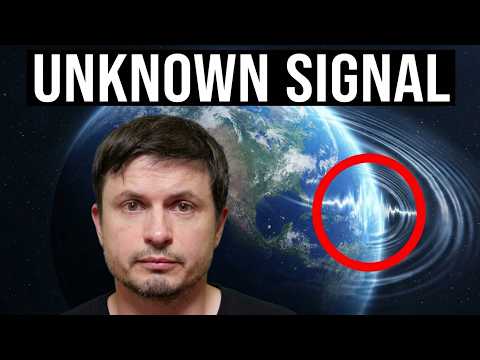
** In this video, Anton Petrov explores a fascinating new approach to detecting dark matter by using Earth’s magnetic field as a giant signal detector. Researchers analyzed a decade’s worth of global magnetic data and identified 342 candidate frequencies, with one particularly notable signal at 15.625 Hz. While the nature of these signals remains unidentified—potentially linked to axions or dark photons—the findings suggest a groundbreaking method for studying dark matter without the need for expensive laboratories. This innovative research opens up possibilities for using other magnetic planets to further explore these cosmic mysteries. **
📚 Research Links (provided by the author in the video description):
Randell Shelton’s Physics Weekly Digest, www.randellshelton.com, Discover AI, NEW AI Reasoning: State of Thought (SoT)
** In the video titled “NEW AI Reasoning: State of Thought (SoT),” the host introduces a groundbreaking AI reasoning framework known as State of Thought, which replaces the traditional Chain of Thought approach. This new method enhances reasoning efficiency by utilizing a closed-loop system that senses internal states, reorganizes evidence, and produces optimized reasoning outcomes while significantly reducing the number of tokens used by up to 60%. The SoT framework incorporates four key parameters—geometry, velocity, consistency, and uncertainty—enabling the AI to autonomously navigate complex reasoning tasks without relying on external commands. This innovative approach not only streamlines the reasoning process but also improves performance, making AI systems smarter and more cost-effective. **
📚 Research Links (provided by the author in the video description):
Randell Shelton’s Physics Weekly Digest, www.randellshelton.com, Sean Carroll, Elizabeth Alexander on Why Democracy Needs Imagination | Mindscape 368
** In the Mindscape podcast episode featuring poet Elizabeth Alexander, she discusses the vital role of imagination and the humanities in sustaining democracy. Alexander emphasizes that poetry and art are not merely reflections of democratic values but are foundational to fostering empathy and understanding among diverse communities. Through her new book, “Signals Across Vast Distances,” she highlights how the humanities can bridge gaps in communication and promote collective values, urging that the arts should remain free from censorship. The conversation also touches on the connection between poetry, personal experiences, and the importance of precise language in combating societal divisions. **
Channel: Sean Carroll · Published: 2026-09-21T10:52:58Z · Duration: 01:11:43
Randell Shelton’s Physics Weekly Digest, www.randellshelton.com, Anton Petrov, Venus Surprises Again! Exciting Discoveries From The Sister Planet
** In the video “Venus Surprises Again! Exciting Discoveries From The Sister Planet,” Anton Petrov discusses groundbreaking studies that reveal Venus as a dynamic and geologically active planet rather than a lifeless world. Recent research suggests that a hypothetical moon may have spiraled into Venus, causing geological changes and possibly influencing its surface evolution. Additionally, studies indicate that certain peptides could survive in Venus’s acidic atmosphere, raising intriguing possibilities for life. The video highlights ongoing explorations and upcoming missions that aim to uncover further mysteries about Venus’s geology, atmosphere, and potential for life. **
📚 Research Links (provided by the author in the video description):
Randell Shelton’s Physics Weekly Digest, www.randellshelton.com, Dr Brian Keating, Cosmologist: A Trillion Trillion Planets, Zero Alien Evidence
** In the video “Cosmologist: A Trillion Trillion Planets, Zero Alien Evidence,” Dr. Brian Keating discusses the prevailing belief among astrobiologists that extraterrestrial life exists, noting that 88% of surveyed scientists support this view. However, he argues that despite the vast number of planets in the universe—estimated at a trillion trillion—there is virtually no evidence of sophisticated life forms. Keating emphasizes that the rapid emergence of life on Earth is not definitive proof of life elsewhere and critiques the large numbers hypothesis, stating that multiplying zero by a massive quantity still results in zero. Ultimately, while the possibility of life exists, credible evidence for intelligent life remains extremely limited. **
Channel: Dr Brian Keating · Published: 2026-09-20T19:47:10Z · Duration: 06:31