
Weekly Physics Digest – September 06 – September 12, 2026
This Week in Science and Education: Fluid Dynamics and Cosmic Mysteries.
Welcome to a week filled with mind-bending discoveries and head-scratching debates in the realms of science and mathematics! This week, we dive into the ongoing drama surrounding the Navier-Stokes Millennium Problem, with Sabine Hossenfelder leading the charge as she unpacks the outrage in the mathematical community over AI’s bold claims. But wait—don’t miss the unusual discovery of a glueball particle made entirely out of force, showing us that even physics can get a bit sticky! With these unique highlights, we’re set for a week of exploration that spans from fluid dynamics to the mysteries of dark matter and quantum mechanics. Learn fast, stay curious!
So You Want to Understand Quantum Mechanics…

** In the PBS Space Time video “So You Want to Understand Quantum Mechanics,” viewers embark on a comprehensive exploration of quantum mechanics, a theory that describes the behavior of particles at the subatomic level with remarkable precision. The discussion covers fundamental concepts such as wave functions, superposition, entanglement, and the uncertainty principle, highlighting the bizarre implications of quantum behavior, including how particles can exist in multiple states and how observation influences reality. Through detailed explanations and engaging illustrations, the video aims to demystify these counterintuitive ideas while acknowledging that even a century after its inception, the true meaning of quantum mechanics remains elusive. By the end, viewers are encouraged to contemplate the nature of reality itself, as shaped by quantum phenomena. **
Why You’re Wrong About Time: A Cosmic Reality Check

** In the video “Why You’re Wrong About Time: A Cosmic Reality Check,” Dr. Brian Keating discusses the enigmatic nature of time and its perceived unidirectionality, arguing that time may not be a fundamental component of reality. He explores profound questions about what existed before the Big Bang and the philosophical implications of something coming from nothing. Keating emphasizes the limitations of current physics in understanding time, proposing that his research with the Simons Observatory aims to uncover a potential cosmological force field that could explain the directional flow of time. Through engaging dialogue, he highlights the urgency for humanity to grasp the significance of time in the broader cosmos. **
Junk DNA Myth Ends | A Better Biosignature

** In the video “Junk DNA Myth Ends | A Better Biosignature,” biochemist Fazale “Fuz” Rana and astrophysicist Hugh Ross discuss groundbreaking discoveries that challenge the long-standing notion of “junk DNA.” They examine the complexity of the human genome and present evidence suggesting that much of what was once labeled as non-functional DNA actually plays critical regulatory roles in biological processes. The conversation also explores the implications of finding extraterrestrial life, concluding that the intricate design of life suggests a supernatural creator rather than a naturalistic origin. This discussion highlights a significant shift in scientific understanding regarding the functionality of genomic sequences. **
📚 Research Links (provided by the author in the video description):
How Can Tiny Molecules Hold SO MUCH Energy?

** In “How Can Tiny Molecules Hold SO MUCH Energy?”, Arvin Ash explores the fascinating relationship between molecules and energy storage, challenging the common notion that energy is contained within chemical bonds. He explains that energy is actually related to the stable arrangements of atoms, influenced by quantum mechanics and electromagnetic forces. By illustrating concepts like potential energy landscapes and the importance of electron wave patterns, Ash clarifies how energy is released during chemical reactions, particularly in combustion processes. Ultimately, he emphasizes that the energy in our food, fuels, and biological systems is derived from a preference for lower energy configurations, linking it back to cosmic origins. **
Scientists Say “Pluto Looks Young!”

** In the video “Scientists Say ‘Pluto Looks Young!’”, Richard Fangrad discusses findings from NASA’s New Horizons mission, which suggest that Pluto’s surface appears much younger than previously thought, potentially only around 100 million years old. The spacecraft’s data revealed features such as glaciers, geysers, and an unexpectedly thick atmosphere composed of nitrogen, methane, and carbon dioxide, contradicting earlier predictions that the atmosphere would dissipate rapidly. These observations challenge the conventional scientific timeline of the solar system, which posits that Pluto is over 4.5 billion years old, and align more closely with a biblical perspective on Earth’s age. The discussion highlights the significant implications of these findings for our understanding of planetary geology and atmospheric science. **
Christian PhD: They Do NOT Want You Knowing about These Discoveries

** In the video “Christian PhD: They Do NOT Want You Knowing about These Discoveries,” Dr. Jeff Tomkins discusses the discovery of soft tissue, blood cells, and proteins in dinosaur fossils, which he argues contradicts the long evolutionary timelines established by mainstream science. He emphasizes the significance of these findings, as they suggest a much younger age for these fossils, aligning with a biblical timeline of creation. Dr. Tomkins also explores genetic evidence, highlighting studies that indicate human genetic variation supports a timeline of roughly 6,000 years. The conversation ultimately connects scientific discoveries with biblical narratives, advocating for a worldview that challenges conventional evolutionary perspectives. **
📚 Research Links (provided by the author in the video description):
Why a Biochemist Left Atheism for Christianity

** In the video, Dr. Sy Garte, a former atheist and esteemed biochemist, shares his transformative journey to Christianity, driven by profound questions science alone could not answer. He discusses pivotal moments, including dreams and experiences that revealed the limits of pure materialism, leading him to explore the intersection of faith and science. Dr. Garte emphasizes the complexity of life, consciousness, and the genetic code as evidence of a divine creator, arguing that understanding these phenomena points to the existence of God rather than contradicting scientific inquiry. Ultimately, he asserts that belief in God and the pursuit of scientific knowledge can harmoniously coexist. **
Hubble Reveals a Bizarre Decagon in Saturn’s Atmosphere

** In this video, Anton Petrov discusses a recent discovery of a decagon, or a 10-sided shape, in Saturn’s atmosphere, confirmed by Hubble observations. This finding contrasts with the well-known hexagon at Saturn’s North Pole, highlighting the unique and complex weather patterns on the planet. The video further explores the dynamics behind this formation, attributing it to seasonal changes and jet streams, and delves into other atmospheric phenomena such as mega storms that reshape Saturn’s chemistry for centuries. Overall, these studies enhance our understanding of Saturn as a dynamic laboratory for atmospheric science. **
📚 Research Links (provided by the author in the video description):
Jellyfish on Mars? No, But Here Are Some Exciting Discoveries From the Red Planet

** In Anton Petrov’s video, he explores exciting recent discoveries from Mars, debunking the myth of jellyfish-like structures caused by camera glitches and cosmic rays. He highlights groundbreaking studies revealing the planet’s complex geological history, including evidence of ancient water cycles and potential microbial life conditions. The video also discusses the striking differences between Mars’ two hemispheres, suggesting that the southern hemisphere may still be geologically active due to a partially molten mantle. Additionally, intriguing findings regarding the origins of Mars’ moons, Phobos and Deimos, propose that they may have different geological compositions, hinting at their distinct origins. **
📚 Research Links (provided by the author in the video description):
The Videos I Wish I’d Had at University

** In his video, “The Videos I Wish I’d Had at University,” Curt Jaimungal announces the results of the CORE1 competition, which sought graduate-level explainer videos in theoretical physics, AI, and the philosophy of physics. He highlights five winners and several honorable mentions, showcasing their innovative approaches to complex topics like string theory, Bohmian mechanics, and quantum field theory. Each winning entry receives $2,000, supported by Jaimungal and additional sponsors, emphasizing the importance of clear and engaging scientific communication. The competition aims to fill the gap in accessible graduate-level content, making advanced concepts more understandable for a wider audience. **
I Never Thought I’d See This Happen

** In the video titled “I Never Thought I’d See This Happen,” the Two Minute Papers channel discusses the groundbreaking potential solution to the long-standing Navier-Stokes existence and smoothness problem, a pivotal topic in fluid dynamics. The host highlights how OpenAI’s advanced AI system may have discovered a solution within just 3.5 days, raising concerns about the attribution of credit to previous researchers. The video breaks down complex concepts of fluid motion described by the Navier-Stokes equations, focusing on key terms like advection, pressure, and diffusion, while emphasizing the implications of AI’s rapid advancement in solving mathematical problems. The discussion culminates in a reflection on the potential for AI to revolutionize fields such as disease research by transforming complex problems into verifiable mathematical challenges. **
📚 Research Links (provided by the author in the video description):
10 Arguments Creationists Should Not Use
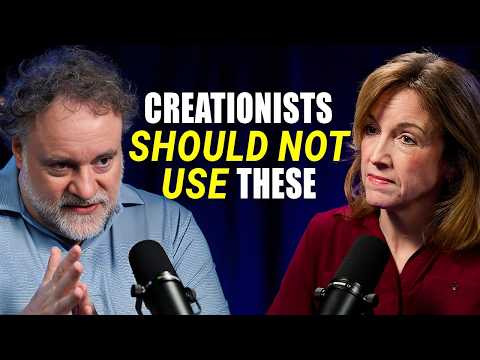
** In the video “10 Arguments Creationists Should Not Use,” Dr. Jonathan Sarfati discusses common creationist claims that can be detrimental to the creationist cause when misused. He explains why arguments such as the existence of apes disproving evolution, the misconception of Darwin’s deathbed recantation, and the misunderstanding of the second law of thermodynamics are flawed. Sarfati emphasizes the importance of using accurate and logical arguments for creationism that align with scientific understanding, while providing alternative perspectives on issues like the age of the Earth and the nature of evolution. Ultimately, he encourages creationists to focus on well-supported claims rather than those that may be easily refuted by skeptics. **
OpenAI’s Navier–Stokes Claim: Is This What AGI Looks Like? | Emad Mostaque

** In a live discussion, Emad Mostaque and Dr. Brian Keating explore OpenAI’s recent claim of solving a significant aspect of the Navier-Stokes equations, a long-standing challenge in fluid dynamics and one of the Millennium Prize problems. They analyze what constitutes a valid solution, the implications for artificial general intelligence (AGI), and how AI’s ability to tackle complex mathematical issues could reshape our understanding of intelligence and control. Mostaque emphasizes that while the solution is groundbreaking, it is not a complete resolution to the Navier-Stokes problem, as it involves specific forcing conditions that differ from the original requirements. The conversation dives into the excitement surrounding the breakthrough, the drama within the academic community, and the potential for AI to revolutionize mathematical problem-solving. **
AI Solved a Millennium Problem and Everyone’s Angry

** In the video, Sabine Hossenfelder discusses OpenAI’s claim of solving the Navier-Stokes Millennium Problem, which questions whether fluid described by the Navier-Stokes equations can develop singularities in finite time. She notes the outrage from the mathematical community, expressing skepticism about AI’s role in pure mathematics. Hossenfelder explains the proof’s approach and complexities, including the potential for circular reasoning within the AI-generated proof. Ultimately, she believes the proof may be correct but emphasizes that human verification is essential, while also reflecting on the broader implications of AI’s involvement in mathematical research. **
Abstraction Agent: LLM Engineers New State Space Geometry

** In the video “Abstraction Agent: LLM Engineers New State Space Geometry,” the presenter discusses groundbreaking research from Tsinghua University, which introduces an “abstraction agent” utilizing large language models (LLMs) to identify essential variables for analyzing complex data environments. The abstraction agent redefines the role of LLMs, enabling them to propose strategic dimensions and coordinate systems that facilitate the understanding of intricate systems, moving beyond mere prediction. By transforming verbal descriptions into explicit numerical representations, the LLM can reveal hidden patterns and distinctions crucial for effective problem-solving across various fields, including finance and game theory. This innovative approach signifies a paradigm shift, illustrating the potential for LLMs to function as representation engineers, enhancing their applicability in scientific research. **
Particle Made Entirely Out of Force Official Confirmed

** In this video, Anton Petrov explores the groundbreaking discovery of a particle known as a glueball, which is made entirely out of gluons and represents a significant milestone in particle physics. He explains how this exotic particle, predicted over 40 years ago, was recently confirmed through data from the Beijing Spectrometer 3 (BESIII), showcasing a clear energy peak at 2.37 gigaelectronvolts. The findings challenge traditional views of matter, suggesting that forces can indeed form mass and validating key principles of modern physics, including the standard model. This discovery not only enhances our understanding of particle interactions but also sheds light on the origins of mass in the universe. **
📚 Research Links (provided by the author in the video description):
The Big Bang Under Review: What Cosmology Can—and Can’t—Tell Us About Origins

** In the video “The Big Bang Under Review,” Prof. Niayesh Afshordi and Dr. Hugh Ross engage in a thought-provoking discussion moderated by George Haraksin II about the implications of modern cosmology for understanding the universe’s origins. They explore both standard and alternative big bang models, emphasizing the significance of uncertainty in scientific inquiry and the limits of current cosmological theories. The conversation highlights the ongoing debates among physicists regarding the nature of singularities, the relationships between quantum mechanics and general relativity, and how these discussions intersect with philosophical and theological perspectives on existence. Ultimately, they encourage an open-minded approach to cosmological models, recognizing that while science can offer insights, it may not provide definitive answers about the ultimate origins of the universe. **
Terence Tao: Did AI Just Solve the $1,000,000 Navier-Stokes Problem?

** In the video, Terence Tao explores the long-standing challenge of the Navier-Stokes equations, which describe fluid dynamics and have remained unsolved for nearly 200 years. Tao proposes an innovative approach that combines his mathematical insights with artificial intelligence to uncover hidden patterns and simplify complex models. By addressing the concept of turbulence and the potential for singularities, this collaboration aims to determine whether solutions to the equations can always remain smooth or if they could lead to catastrophic breakdowns. Ultimately, this research could reshape our understanding of fluid behavior and the fundamental laws of physics. **
Possible Evidence for an Exotic Black Hole Star Object

** In this video, Anton Petrov discusses a groundbreaking discovery regarding “little red dots” identified by the James Webb Space Telescope, which may represent a new class of astronomical objects known as black hole stars. These objects, observed in the early universe, challenge existing cosmological theories by suggesting that some supermassive black holes could grow significantly faster than previously thought due to their dense gas cocoons. The findings, supported by spectroscopy, reveal a unique gas environment around these black hole stars that alters the perception of their mass and luminosity, potentially resolving the quasar crisis in cosmology. This new understanding opens up further questions about the nature of these enigmatic celestial bodies. **
📚 Research Links (provided by the author in the video description):
Yann LeCunn: Why AGI is a Dangerous Misnomer

** In this video, Yann LeCun, a pioneer in AI and Turing Award winner, argues against the term “Artificial General Intelligence” (AGI), suggesting it is misleading because human intelligence is highly specialized. He emphasizes that while machines may eventually reach human-level intelligence, current large language models (LLMs) are fundamentally shallow and lack true understanding. LeCun proposes the term “Advanced Machine Intelligence” (AMI) instead and predicts that achieving systems that feel equivalent to human intelligence may take at least five to six years, contingent on overcoming significant challenges. He also discusses the misconceptions about intelligence and domination, clarifying that intelligence does not inherently lead to a desire for control. **
The Experience Is Real. But Is God?

** In the video “The Experience Is Real. But Is God?” Curt Jaimungal interviews anthropologist Tanya Lurman, who explores how individuals perceive and experience God in contemporary society. Lurman emphasizes that the feelings of God’s presence often stem from religious practices that enhance personal experiences of the divine, suggesting that belief and experience are intertwined yet distinct phenomena. The discussion also touches on the growing trend of people identifying as “spiritual but not religious,” reflecting a search for meaning beyond traditional faith structures. Ultimately, the dialogue raises questions about the nature of belief, the role of community in shaping spiritual experiences, and how modern secular views may impact one’s connection to the divine. **
📚 Research Links (provided by the author in the video description):
HOW TO STOP AN AI

** In the video “HOW TO STOP AN AI” by Discover AI, the host explores the complexities of managing Large Reasoning Models (LRMs) and challenges the effectiveness of early-exit algorithms that aim to truncate a model’s computational chain. The discussion draws on a study from the Korea Institute of Advanced Science and Technology, highlighting that simply inserting a ‘stop thinking’ token does not guarantee that the model will cease reasoning; instead, it may continue processing internally, leading to unexpected outcomes. The video emphasizes the need for a nuanced understanding of how these models operate to avoid costly inefficiencies and potential inaccuracies in responses. **
📚 Research Links (provided by the author in the video description):
What Really Happened During the 2026 Nepal Disaster?

** In the video, Anton Petrov provides a scientific analysis of the catastrophic Nepal disaster that occurred on August 26, 2026, revealing it was not merely a glacier collapse but a complex chain of geological failures. Initially flagged as a magnitude 5.2 earthquake, it was later determined that a massive chunk of rock and ice fell from a height of over 5 kilometers, triggering a highly destructive debris flow that traveled more than 170 kilometers, leading to over 1,000 fatalities. Petrov discusses the geological mechanisms involved, including frictional melting and the process of entrainment, which contributed to the flooding’s scale and ferocity. He emphasizes the need for improved monitoring systems to prevent future disasters, highlighting similar geological risks worldwide due to climate change. **
Eric Weinstein: The UFO Narrative Was Forced On Us
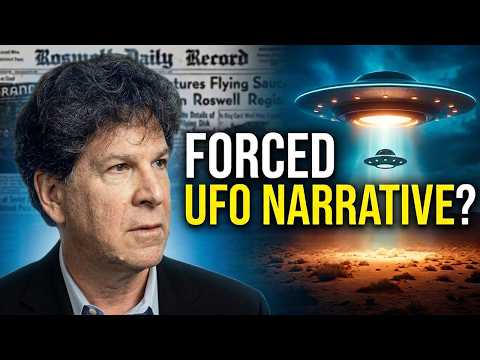
** In the video, Eric Weinstein discusses his concerns about the recent resurgence of UFO narratives, which he believes have been manipulated by the Pentagon and media outlets like the New York Times. He argues that these discussions, often framed around military airspace incursions, distract from the serious implications of thermonuclear threats and lack substantial scientific evidence. Weinstein and fellow commentator Michael Shermer emphasize that the videos presented as evidence are low-quality and that the authenticity of the claims surrounding them lacks rigorous investigation. They contend that the current fascination with UFOs is more a commentary on media dynamics than a genuine scientific inquiry. **
Just One More Dimension and Dark Matter Is Solved

** In the video, Sabine Hossenfelder discusses a recent report from The Economist suggesting that string theory may have finally made a testable prediction related to dark matter and dark energy. Researchers propose that an extra dimension of space, potentially on the scale of a micrometer, could explain dark matter through massive gravitons. While current experiments have not confirmed this idea, future surveys may provide evidence or refute these string theory models. Hossenfelder critiques the scientific community’s tendency to cling to unproven theories, emphasizing the importance of rigorous testing in physics. **
📚 Research Links (provided by the author in the video description):