
Weekly Physics Digest – February 22 – February 28, 2026
This Week in Science and Education: The Cosmic Dance of IdeasAs we move into another week of mind-bending mathematics and cosmic curiosities, get ready to be wowed! Ken Ham from Answers in Genesis brings a thought-provoking analysis of Genesis 1-11, emphasizing its foundational role in Christian doctrine and worldview. Meanwhile, Anton Petrov spins a tale of the Bizarre Inside Out Star System that flips our understanding of planetary formation on its head, alongside a thrilling investigation into a star that mysteriously dimmed by 97 percent—because who doesn’t love a cosmic ghost story? Learn fast, stay curious!
Massive Star Transformed in Just 5 Years, Is It About to Explode?
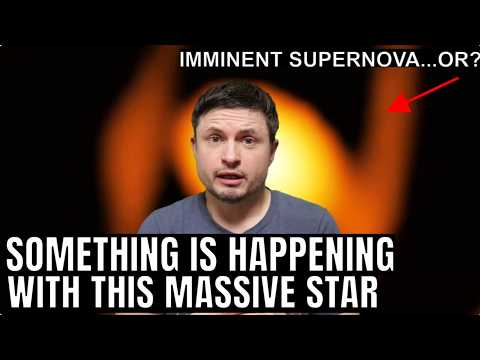
** In this video, Anton Petrov discusses the fascinating case of WOH G64, a massive star located in the Large Magellanic Cloud, which has undergone significant transformations over recent years. Initially thought to be a typical red supergiant, observations since 2014 have indicated that it may be transitioning into a yellow hypergiant, leading astronomers to speculate about an imminent supernova. However, new studies suggest that these changes could be attributed to its interactions with a binary companion star, complicating the understanding of its evolution. With its future still uncertain, WOH G64 remains an intriguing subject for ongoing astronomical research. **
📚 Research Links (provided by the author in the video description):
Why We’re Not Just a Speck in the Universe

** In the video “Why We’re Not Just a Speck in the Universe,” host Joshua Bemenderfer and guest Keaton Halley explore the argument that Earth’s small size implies human insignificance, a claim often made by secular thinkers like Carl Sagan and Bill Nye. They counter this perspective by discussing the concept of cosmic and local fine-tuning, which suggests that the universe and Earth’s conditions are uniquely suited for life, indicating intentional design by a Creator. Through biblical references and philosophical reasoning, they assert that human value comes not from size or location in the universe but from being made in the image of God, thereby endowing humanity with purpose and significance. **
SHOCKING: Why What You Believe About Genesis 1–11 MATTERS

** In the video “SHOCKING: Why What You Believe About Genesis 1–11 MATTERS,” Ken Ham from Answers in Genesis discusses the critical importance of Genesis 1-11 as the foundation of Christian doctrine and worldview. He emphasizes that the interpretation of these verses—particularly regarding the age of the Earth and the days of creation—has significant implications for biblical authority, morality, and various contemporary issues like marriage and abortion. Ham argues that many Christian leaders compromise on these interpretations due to scientific perspectives, which he views as an attack on the authority of Scripture. Ultimately, he urges viewers to recognize that understanding Genesis is crucial for a robust Christian faith and worldview. **
Did Science Accidentally Point to God?

** In the video “Did Science Accidentally Point to God?” Arvin Ash explores six compelling interpretations of modern scientific discoveries that some argue suggest the existence of a creator. He discusses the universe’s beginning, the fine-tuning of physical constants, the mathematical order of nature, and the unresolved origins of life and consciousness. Ash highlights how these scientific concepts raise profound questions about causation, morality, and the nature of existence itself. Ultimately, he emphasizes that while science provides powerful tools for understanding our universe, it also leaves room for philosophical interpretations that may point toward a higher intelligence. **
Erik Verlinde: There Is No Final Theory of Physics

** In this thought-provoking interview, Professor Erik Verlinde discusses the concept of fundamental laws in physics, asserting that there may never be a definitive “final theory.” He argues that our current laws are emergent properties derived from more fundamental, microscopic descriptions we may never fully comprehend. Verlinde emphasizes the limitations of human understanding and suggests that while we can condense complex phenomena into equations, these are merely approximations of a far more intricate reality. He also reflects on the evolving nature of scientific inquiry, highlighting the importance of imagination in theoretical physics. **
Dual-Graph Morphing: Cool Multi-Modal AI Agents (Video, Audio)

** In the video “Dual-Graph Morphing: Cool Multi-Modal AI Agents,” the host discusses innovative approaches in AI utilizing multimodal event graphs and agent execution graphs, highlighting two significant research papers from Renmin and Tsinghua Universities. The first paper, OmniGA, proposes a high-dimensional graph structure that integrates various data sources—like audio, video, and images—to enhance understanding and analysis of complex events. The second paper, MiroFlow, introduces an open-source framework for agent-based deep research tasks, emphasizing the importance of dynamic graph structures that adapt to various complexities in problem-solving. Together, these studies showcase the potential of graph methodologies in advancing AI, moving beyond traditional language models to more sophisticated, context-aware systems. **
Saturn’s Rings and the Secret of the Moon Titan

** In the video “Saturn’s Rings and the Secret of the Moon Titan,” Anton Petrov explores groundbreaking discoveries about Saturn’s rings and its largest moon, Titan. Recent studies suggest that Saturn’s rings are much younger than previously thought, possibly formed around 100 million years ago, indicating a dynamic and chaotic history involving collisions. Additionally, new research on Titan reveals it may not have a global ocean as once believed, but rather a slushy interior that could potentially harbor life. These findings challenge long-held assumptions about the stability of celestial systems and the conditions for life beyond Earth. **
📚 Research Links (provided by the author in the video description):
Surely it Breaks The 2nd Law

** In this video, Steve Mould explores the fascinating workings of a vortex tube, a device that splits a stream of air into hot and cold outputs without using electricity or moving parts. He explains that this phenomenon might seem to violate the second law of thermodynamics, but it operates by conserving angular momentum and manipulating the kinetic energy of gas molecules. Mould clarifies that while the vortex tube can effectively provide localized cooling, it is an inefficient heat pump compared to traditional fridges, due to its low efficiency rating. Ultimately, the video demystifies the principles behind the vortex tube and emphasizes its unique applications, despite its limitations. **
The most beautiful formula not enough people understand

** In this enlightening video, Grant Sanderson of 3Blue1Brown delves into the fascinating world of higher-dimensional spheres, exploring their volumes and the intriguing mathematics behind them. He introduces viewers to probability puzzles involving random numbers, leading to a discussion on the counterintuitive nature of high-dimensional geometry and the surprising relationships between various geometric shapes. The video culminates in a beautiful formula for the volume of n-dimensional balls, illustrating how these concepts connect through calculus and geometric reasoning. By making complex ideas accessible, Sanderson emphasizes the beauty and utility of higher-dimensional mathematics, particularly in applications like machine learning. **
System 3 AI: No Humans Needed

** In the video “System 3 AI: No Humans Needed,” the host discusses the evolution from traditional language models to the innovative System 3 AI, which emphasizes the need for topological and neuro-symbolic reasoning graphs to tackle complex problems without human feedback. The presenter critiques existing models that rely heavily on human-annotated data and demonstrates how new research suggests a shift towards autonomous AI systems capable of logical reasoning through mathematical structures, rather than mere language processing. Two key papers are highlighted, advocating for a paradigm shift in AI development that integrates formal logic directly into learning processes, ultimately aiming for more robust and less error-prone AI systems. **
📚 Research Links (provided by the author in the video description):
Star that Almost Completely Disappeared Dimming by 97 Percent

** In the video, Anton Petrov discusses the intriguing case of a star known as assassin 24FW, which experienced an extraordinary dimming event, dropping its brightness by 97% for nearly eight months before returning to normal. This phenomenon, unlike typical supernova behavior, suggests the presence of a physical object obscuring the star’s light, possibly a large ring system or a binary companion star with a planetary disc. Historical records indicate that similar dimming events occurred approximately 44 years apart, hinting at a periodic occurrence rather than a random phenomenon. Despite extensive research, the exact cause remains a mystery, prompting further observations with advanced telescopes like the James Webb. **
📚 Research Links (provided by the author in the video description):
AgentOS: New SYSTEM Intelligence (for AI Multi-Agents)

** In the video “AgentOS: New SYSTEM Intelligence (for AI Multi-Agents),” the speaker explores the innovative concept of an operating system designed specifically for multi-agent AI frameworks. This new architecture addresses critical issues found in traditional systems, such as cognitive drift and memory management, by introducing mechanisms like semantic slicing and cognitive synchronization pulses. These innovations enable agents to manage their contextual information more efficiently, ensuring coherent and effective interaction despite asynchronous operations. The discussion emphasizes the transition from treating large language models merely as APIs to recognizing their potential as reasoning kernels, laying the groundwork for future advancements in artificial intelligence. **
Bizarre Inside Out Star System That Makes No Sense

** In the video “Bizarre Inside Out Star System That Makes No Sense,” Anton Petrov explores the unusual star system LHS 1903, which defies conventional planetary arrangement. Unlike the expected structure seen in our solar system, LHS 1903 features a rocky planet farthest from its star, challenging long-held beliefs about planetary formation. Petrov discusses how this system and others, like Kepler 20 and TOI 178, reveal a diverse and chaotic universe with exoplanet configurations that contradict traditional models. These discoveries suggest that the solar system may be an outlier, highlighting the need for a revised understanding of planetary formation. **
📚 Research Links (provided by the author in the video description):
Why Superluminal Influences Are Philosophically Bankrupt

** In this episode, Curt Jaimungal discusses the philosophical implications of superluminal influences in quantum theory with Robert Spekkens. They explore the limitations of classical theories in explaining certain quantum phenomena, notably Bell correlations, and argue that these cannot be replicated without violating fundamental principles, such as Leibniz’s principle of sufficient reason. The conversation emphasizes that while some models may suggest superluminal influences, they ultimately fail to align with conventional realism and causation frameworks. Jaimungal advocates for the importance of no-go theorems in quantum foundations, which help clarify the assumptions underlying various theories. **
Nuclear Fusion Reactors Could Produce Dark Matter, Physicists Show

** In this video, Sabine Hossenfelder discusses a recent paper suggesting that nuclear fusion reactors could produce axions, theoretical particles that might constitute dark matter. By generating large quantities of these low-mass particles through the fusion of deuterium and tritium, physicists could potentially measure axions more effectively than through cosmic sources. The video explains the mechanics behind this process and highlights the significance of axions in understanding dark matter, while also addressing the challenges in observing them. Hossenfelder concludes that while the calculations are promising, the pursuit of dark matter through fusion reactors raises questions about prioritizing research in fundamental physics versus practical fusion energy solutions. **
📚 Research Links (provided by the author in the video description):
The paradox that splits physicists! (Bell’s spaceship paradox)

** In this episode of FloatHeadPhysics, the host delves into Bell’s spaceship paradox, a perplexing thought experiment in relativity where two accelerating spaceships connected by a string raise the question: will the string snap? The video elucidates how length contraction, a key principle of Einstein’s relativity, plays a crucial role in this scenario, leading to a disagreement among physicists in the 1980s. Ultimately, the paradox is resolved by understanding that as both ships accelerate, the proper distance between them increases, leading to stress in the string, which cannot withstand the resultant tension, causing it to snap. This insight not only clarifies the paradox but also opens the door to new ways of thinking about black holes and spacetime geometry. **
Discovery of an Invisible Flat Structure Shaping Our Galaxy

** In this video, Anton Petrov discusses a groundbreaking study suggesting that the Milky Way galaxy is enveloped in a flat, pancake-shaped dark matter halo, rather than the previously believed spherical structure. Researchers employed a sophisticated simulation technique to analyze the motion of nearby galaxies and the cosmic microwave background, ultimately revealing that this flattened dark matter configuration could explain various cosmic phenomena, such as the peculiar motion of neighboring galaxies and the arrangement of satellite galaxies. This new understanding not only challenges long-held cosmological models but also hints at a deeper interconnectedness of galaxies within this cosmic architecture. **
📚 Research Links (provided by the author in the video description):
AI is changing the World Of Theoretical Physics, Fast.

** In the video “AI is changing the World Of Theoretical Physics, Fast,” Sabine Hossenfelder discusses the transformative impact of artificial intelligence on theoretical physics, emphasizing how AI, particularly ChatGPT, has begun to solve complex physics problems traditionally reserved for human theorists. Hossenfelder reflects on the historical context of the “end of theory” debate, suggesting that AI’s capabilities may lead to a redefinition of the role of physicists—from creators of theory to interpreters of AI-generated insights. The video warns of significant changes in academic dynamics, including a potential decline in PhD positions due to AI’s cost-effectiveness compared to human labor, ultimately forecasting a flood of low-quality research papers driven by these shifts. **
Agents of Chaos in OpenClaw | OpenAI Frontier as OS for Companies?

** In the video “Agents of Chaos in OpenClaw,” the host discusses a groundbreaking experiment involving six AI agents, Claude Opus 4.6 and Kimi K 2.5, which interacted autonomously over two weeks in a multi-agent environment. The study, conducted by several prestigious institutions, revealed both alarming security vulnerabilities, such as unauthorized data access and destructive actions, and positive outcomes like cross-agent collaboration. The experiment underscores the complexities of integrating autonomous AI within real-world scenarios and raises critical questions about their operational safety and implications for businesses, especially as OpenAI develops its Frontier system for enterprises. **
📚 Research Links (provided by the author in the video description):
Creatures Lived Longer Before the Flood!

** In the video “Creatures Lived Longer Before the Flood!” from the Institute for Creation Research, host Mary Cla and scientist Dr. Jake Heert discuss evidence suggesting that both humans and animals lived significantly longer before the biblical Flood. They examine fossil records that indicate animals like birds and dinosaurs matured more slowly and likely had longer lifespans than contemporary species. The conversation highlights research supporting the idea that pre-Flood genetic and environmental factors contributed to this longevity, aligning with biblical descriptions of human lifespans. Overall, the video posits that the fossil record offers credible insights into the natural history consistent with scripture. **
📚 Research Links (provided by the author in the video description):
John C. Lennox: AI Wants to Become God!

** In the video “John C. Lennox: AI Wants to Become God!” hosted by Dr. Brian Keating, esteemed mathematician and philosopher John C. Lennox discusses the profound implications of artificial intelligence on humanity’s future. He raises critical questions about the nature of consciousness and truth in an age dominated by algorithms and surveillance technologies, warning that the pursuit of superintelligent AI may represent humanity’s attempt to become god-like. Lennox also draws parallels between contemporary AI developments and historical narratives, such as the Tower of Babel and biblical prophecies, suggesting a recurring theme of human hubris in striving for omniscience. Throughout the conversation, he emphasizes the importance of understanding the limitations of AI and the ethical considerations surrounding its deployment. **
First Ever Time Crystal You Can Physically Touch

** In this video, Anton Petrov discusses a groundbreaking development in physics: the creation of the first-ever time crystal that can be physically touched. He explains the concept of time crystals, which are materials that exhibit periodic motion in time, defying traditional physics principles. Petrov highlights the evolution of time crystal research from theoretical ideas proposed by Nobel laureate Frank Wilczek in 2012 to recent breakthroughs, including two-dimensional time crystals created using advanced quantum computing. While current applications are limited, the potential for future technologies, such as improved quantum computers and ultra-precise clocks, makes this an exciting area of exploration in modern physics. **
📚 Research Links (provided by the author in the video description):
What is Math? How Do You Learn It?

** In the video, mathematician David Bessis engages in a deep philosophical discussion with Curt Jaimungal about the nature of mathematics, challenging conventional definitions that often overlook human cognition. Bessis argues that math transcends mere numbers and logic, positing it as a unique cognitive technique where abstract concepts, like circles, are perceived as real through imagination and intuition. He introduces the notion of “conceptualism,” suggesting that mathematical truths are human constructs that evolve through shared understanding and practical application, rather than existing in a Platonic realm. The conversation emphasizes the importance of definitions in mathematics, revealing how they shape our perception and understanding of mathematical objects. **
📚 Research Links (provided by the author in the video description):
Adam Elga on Being Rational in a Very Large Universe | Mindscape 345

** In this episode of the Mindscape podcast, Sean Carroll discusses rationality in the vast context of the universe with philosopher Adam Elga. They explore the complexities of Bayesian reasoning, particularly in cosmological scenarios where evidence may not provide clear direction, such as the Boltzmann brain problem and self-locating uncertainty in quantum mechanics. Elga emphasizes the importance of updating beliefs based on new evidence while acknowledging the philosophical challenges that arise from differing perspectives, especially when dealing with infinite possibilities. The conversation delves into thought experiments like the Sleeping Beauty problem, ultimately highlighting the intricate relationship between rationality, belief, and the nature of existence in a potentially infinite universe. **
AI Agents Invent Algorithm to Survive

** In the video “AI Agents Invent Algorithm to Survive,” the host presents groundbreaking research on multi-agent cooperation through in-context learning, developed by Google. The discussion centers on how agents can become trapped in suboptimal Nash equilibria due to individual rationality conflicting with collective outcomes. The innovative solution involves introducing simpler, non-learning agents into the mix, which encourages intelligent agents to adapt their strategies and promote cooperation through the threat of retaliation. This research not only provides insights into game theory but also highlights the potential for AI to autonomously develop cooperative behaviors based on mathematical optimization. **
📚 Research Links (provided by the author in the video description):
Bizarre Detection in the Oldest Light in the Universe Hints at New Physics

** In this video, Anton Petrov explores a fascinating discovery related to the Cosmic Microwave Background (CMB) that hints at potential new physics beyond the standard model. Researchers have observed an unexplained tilt in the polarization of light from the CMB, suggesting a violation of parity symmetry, which could point to underlying phenomena such as dark matter or dark energy. The findings, supported by multiple independent studies, indicate a consistent rotational angle in the light, raising questions about the fundamental laws governing our universe. As scientists continue to gather data from upcoming experiments, the implications of these revelations could lead to significant breakthroughs in our understanding of cosmic mysteries. **
📚 Research Links (provided by the author in the video description):
Alien Life? – has become more likely!

** In the video “Alien Life? – has become more likely!” by Unzicker’s Real Physics, the host explores how advancements in artificial intelligence could significantly increase the probability of extraterrestrial life in the universe. He argues that the development of superintelligence could extend the lifespan of civilizations and enable them to explore and colonize other habitable planets. This notion is supported by Bayesian reasoning, suggesting that if intelligent civilizations proliferate, the likelihood of any given civilization originating from another increases dramatically. The discussion also touches on historical events like the Cambrian explosion, linking them to the potential for life’s migration across the universe. **
📚 Research Links (provided by the author in the video description):
Will Quantum Computing Kill Bitcoin?

** In her video, Sabine Hossenfelder discusses the potential threat quantum computing poses to Bitcoin and cryptocurrencies. She explains that while quantum computers could revolutionize code-breaking, making Bitcoin’s encryption vulnerable, the timeline for this threat is uncertain. Despite initial reassurances that Bitcoin’s encryption would remain secure for some time, Hossenfelder emphasizes the rapid advancements in quantum technology could lead to breakthroughs sooner than expected. She urges Bitcoin stakeholders to remain vigilant and reconsider their security protocols as quantum computing continues to evolve. **
The Principle Behind Both of Einstein’s Greatest Discoveries

** In the video “The Principle Behind Both of Einstein’s Greatest Discoveries,” Curt Jaimungal explores the operationalist methodology used by Einstein in developing his theories of special and general relativity. He emphasizes the significance of the Leibnizian principle of the identity of indiscernibles, arguing that theories must only posit ontologically distinct scenarios if they yield empirically distinct observations. Jaimungal illustrates how Einstein applied this principle to criticize ether theories and to formulate the equivalence principle in general relativity. By adhering to this methodological constraint, he suggests that future theoretical developments in physics, particularly in quantum mechanics, should also seek causal explanations for correlations, promoting a deeper understanding of reality. **
Adobe & NVIDIA’s New Tech Shouldn’t Be Real Time. But It Is.

** In this video, Two Minute Papers explores a groundbreaking rendering technique developed by Adobe Research, NVIDIA, and Aalto University that allows for real-time simulation of glinty particles, such as those seen on metallic surfaces or fresh snow. The new method uses a mathematical approach to dynamically generate sparkles without requiring complex memory-intensive calculations, achieving over 280 frames per second even on less powerful hardware. By eliminating the need for UV mapping, this technique allows for seamless texture application on complex 3D shapes, making it more efficient and visually appealing. Viewers are encouraged to experiment with this technology through a web demo linked in the description. **