Weekly Physics Digest – July 26 – August 01, 2026
This Week in Science and Education: Spinning Disc Discoveries and Cosmic Rethinks!Welcome, curious minds! This week, we’ve got a delightful mix of videos that will spin your neurons faster than a Singularity Disc, which, spoiler alert, is the subject of Steve Mould’s fascinating exploration of the physics of spinning objects. But that’s not all – Anton Petrov is on fire with not one, but several mind-bending topics! From confirming the age of the universe once and for all (sorry, Hubble tension enthusiasts) to uncovering Betelgeuse’s companion star and the record-breaking speed of a star near our own black hole, this week is packed with more mind-blowing discoveries than you can shake a scientific calculator at. Learn fast, stay curious!
This Star Traveling at 8% the Speed of Light Breaks All Records

** In Anton Petrov’s video, he explores the remarkable discovery of the star S301, which orbits the supermassive black hole Sagittarius A* at an astonishing speed of 8% the speed of light. This star is unique due to its highly eccentric orbit and its proximity to the black hole, allowing scientists to measure the black hole’s spin through its gravitational effects. The observations made using the Very Large Telescope over several years provide insights into the dynamics of the galactic center and help validate Einstein’s theory of general relativity. This discovery not only sheds light on the nature of black holes but also raises questions about the origins of stars in such extreme environments. **
📚 Research Links (provided by the author in the video description):
Christian Geologist: I Studied Rocks for 13 Years – What I Found Will Shock You

** In this video, geologist Dr. Tim Clarey, who has spent 13 years researching rock layers globally, presents findings that challenge conventional views on the Earth’s age. He argues that evidence from geology aligns more closely with a young Earth perspective, as supported by biblical timelines. Through detailed examination of rock layers, sedimentary structures, and fossil distributions, Clarey suggests that the geological record points to a global flood rather than slow, gradual processes. The discussion emphasizes the importance of understanding the evidence that supports a young Earth view, which is often overlooked in traditional education. **
James Webb Telescope Discovers Impossible Galaxies

** In the video, Spike, a former US military space program engineer, discusses the unexpected findings of the James Webb Space Telescope (JWST), which has revealed fully mature galaxies existing much earlier than the Big Bang model predicts. Instead of observing proto-galaxies in formation, JWST has identified galaxies that show evidence of multiple generations of star formation, contradicting established cosmological theories. This discovery aligns with the expectations of creationist perspectives, suggesting a young universe contrary to secular scientific models. The discussion highlights the implications of these findings on the understanding of cosmic history and the authority of scripture in explaining the origins of the universe. **
Russia Is Drilling 8 km Down to Prove Oil Never Runs Out

In this video, Sabine Hossenfelder discusses Russia’s ambitious drilling project that aims to reach 8 kilometers underground, driven by the belief of Vladimir Putin’s former advisor, Vladimir Litvinenko, that oil can replenish itself through abiogenic processes. This theory, which contradicts the widely accepted understanding that oil originates from fossilized biological material, suggests that hydrocarbons can form from inorganic materials deep within the Earth. Hossenfelder examines the implications of this hypothesis for Russia’s energy future and its potential to reshape geopolitical power dynamics, while also emphasizing the skepticism surrounding the existence and viability of such abiogenic oil reserves.
It’s Real! The First Image of Betelgeuse’s Buddy

** In this video, Anton Petrov discusses the groundbreaking discovery of Betelgeuse’s companion star, which has finally provided answers to long-standing mysteries surrounding the red supergiant. Recent observations using the Very Large Telescope have revealed this companion, dubbed Siobhán Harney, to be larger than previously thought, with a mass between 2.6 and 3.1 solar masses. This new revelation not only explains Betelgeuse’s peculiar brightness fluctuations but also suggests that the companion star may influence Betelgeuse’s rapid rotation and could eventually be engulfed by it. The findings underscore the importance of ongoing observations and the potential for further discoveries within our understanding of stellar dynamics. **
📚 Research Links (provided by the author in the video description):
Everywhere Is Warming Faster Than the Rest of the World

In her video “Everywhere Is Warming Faster Than the Rest of the World,” Sabine Hossenfelder examines the phenomenon of various regions claiming to warm faster than the global average. She explains that while these headlines are based on real scientific studies, they can be misleading, as they often conflate “faster than the rest” with “faster than average.” This confusion arises because, in many cases, land areas are indeed warming more quickly than the oceans, which cover 70% of the Earth. Ultimately, the South Pole is identified as the fastest warming region, with Europe leading among populated areas.
Annie Jacobsen: There are only 17 Premier Biosafety Labs in all of the USA

** In this video, Pulitzer Prize finalist Annie Jacobsen discusses the implications of gain-of-function research, which involves genetically engineering pathogens to enhance their virulence and transmissibility. She argues that while proponents claim such modifications are necessary for pandemic preparedness, critics liken gain-of-function to biological weapons engineering, which is illegal. Jacobsen emphasizes the increasing number of Biosafety Level 4 (BSL-4) labs in the U.S., rising from two before 9/11 to 17 today, highlighting the potential risks of lab accidents. The conversation underscores the urgent need to consider the dangers of biological research and the reality of lab incidents that could lead to global catastrophes. **
AI Could End Money…But There’s a Catch

** In the video “AI Could End Money…But There’s a Catch,” Arvin Ash explores the potential for artificial intelligence to create a post-scarcity society where money becomes less relevant. He discusses how advancements in AI could lead to abundant goods and services, but also warns of the risks of inequality if a small elite controls these resources. Ash emphasizes that while AI can reduce scarcity in areas like information and education, it cannot eliminate the physical constraints of the real world, such as energy and labor needs. Ultimately, he argues that the future of money hinges not on its disappearance but on how society decides to distribute the wealth generated by AI. **
Record Breaking Cotton Candy Planets Hint at How These Planets Are Made

** In this video, Anton Petrov explores the fascinating category of exoplanets known as “cotton candy planets” or “super puffs,” which have incredibly low densities, often less than 0.1 g/cm³. These planets defy traditional models of planetary formation, as they appear to lack the massive solid cores typically required to attract gas and develop into gas giants. Recent discoveries, particularly from the TOI-791 system, have identified two of the least dense planets ever observed, prompting a reevaluation of how such planets may maintain their extensive gaseous envelopes over time. The video highlights the unique characteristics and mysteries surrounding these planets, emphasizing their implications for our understanding of planetary formation and the diversity of planetary systems. **
The Euler Disc Is The Wrong Shape

** In “The Euler Disc Is The Wrong Shape,” Steve Mould explores the physics behind spinning discs and introduces the newly designed Singularity Disc, which spins longer than traditional models. Through experimentation, he discovers that contour friction, rather than air resistance, significantly affects spin duration. His team tested various shapes and materials, concluding that a cone shape with a specific edge roundness optimizes performance. Ultimately, the video highlights the importance of understanding energy dissipation in spinning objects and offers insights into the engineering behind the Singularity Disc. **
LoRA Fails on Higher Reasoning Tasks – WHY?

** In the video “LoRA Fails on Higher Reasoning Tasks – WHY?” from Discover AI, the host delves into the limitations of Low-Rank Adaptation (LoRA) when dealing with complex, multi-step reasoning tasks. Through a series of experiments involving travel booking, Zoom support, and insurance claims, it is revealed that while LoRA can complete many tasks, it fails to internalize the procedural knowledge required for higher complexity tasks. The findings suggest that LoRA’s reliance on a limited parameter update space leads to significant performance drops in multi-step processes, highlighting the necessity for full fine-tuning in more intricate applications. Ultimately, the video emphasizes the ongoing challenges in AI development, pointing out the need for more robust methodologies to handle complex reasoning effectively. **
📚 Research Links (provided by the author in the video description):
Massive Structure in the Milky Way Turned Out to Be Something Else

** In this video, Anton Petrov reveals a significant correction in the understanding of a massive structure in the Milky Way, known as the Galactic Center Loop (GCL), which had been misidentified for over 40 years. Recent studies show that instead of being a feature originating from the galactic center, the GCL is a smaller, closed loop located much closer to Earth, approximately 6,500 light-years away. This structure is likely a large hydrogen gas cloud formed by the emissions of massive stars, illustrating the complex dynamics of the galaxy and how previous assumptions can lead to long-standing misconceptions. By uncovering this error, astronomers can reframe their studies of stellar formation and supernova activity within our galaxy. **
📚 Research Links (provided by the author in the video description):
Streams of Stars – Sixty Symbols
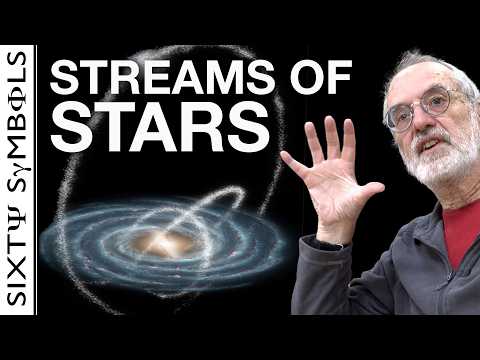
** In this episode of Sixty Symbols, Mike Merrifield discusses the groundbreaking research of the 2026 Kavli Prize winners—Vasily Belokurov, Amina Helmi, and Rodrigo Ibata—who revealed how the Milky Way was formed through hierarchical accretion by uncovering fossil evidence of past galaxy mergers. The discovery of the Sagittarius Dwarf Elliptical Galaxy highlighted current interactions with the Milky Way, illustrating how smaller galaxies are being torn apart and contributing to our galaxy’s structure. Their work utilized advanced simulations and observations to reverse engineer the Milky Way’s mass distribution and provided insights into its dynamic history, including the origins of its thick disk and the presence of star streams. This research has fundamentally changed our understanding of galaxy formation and evolution. **
📚 Research Links (provided by the author in the video description):
First Confirmed Exomoon Breaks All Astronomy Rules

** In the video “First Confirmed Exomoon Breaks All Astronomy Rules,” Anton Petrov discusses the groundbreaking discovery of a potential exomoon, which challenges traditional definitions of celestial bodies. Located 73 light-years away, this massive object orbits a brown dwarf and is comparable in size to Jupiter, prompting researchers to refer to it as an “exoplanet satellite” rather than a typical moon. The video delves into the complexities of detecting exomoons and the significance of this finding for understanding planetary formation and the potential for life on similar bodies. It emphasizes the need for updated definitions in astronomy as new discoveries continue to defy established norms. **
Annie Jacobsen: How One Lab Leak Ends the World in 6 Days

** In this engaging discussion, Annie Jacobsen explores the alarming potential of biological warfare, particularly how a single lab leak could lead to widespread chaos in just six days. She contrasts the lethality of biological agents, such as pneumonic plague, with COVID-19, emphasizing the challenges in preventing and mitigating biological attacks. Jacobsen’s insights are grounded in interviews with top defense and public health officials, highlighting the urgent need for preparedness and the inherent dangers of unchecked scientific experimentation. The conversation underscores the terrifying reality that biological threats may be more imminent and unpredictable than nuclear threats. **
📚 Research Links (provided by the author in the video description):
Can 3 “Soft Tokens” Replace 1,000 Reasoning Tokens in AI?

** In the video “Can 3 ‘Soft Tokens’ Replace 1,000 Reasoning Tokens in AI?”, the presenter introduces a novel concept called “Shift,” which utilizes three continuous, non-human-readable soft tokens to enhance AI reasoning and retrieval processes. By transforming the mathematical representation of reasoning into a retrieval-optimized space, the method allows AI to maintain a rich, complex understanding without collapsing into simplistic hard tokens. This approach preserves the differentiability necessary for training while enabling the AI to navigate intricate reasoning tasks with a smaller, more efficient set of tokens. The video highlights the significance of bridging different mathematical spaces to improve AI’s ability to process long reasoning chains effectively. **
📚 Research Links (provided by the author in the video description):
3 Physicists on God: Aliens, String Theory, and the Limits of Science

** In this engaging conversation hosted by Dr. Brian Keating, Professors Adam Frank and Niayesh Afshordi explore the intersections of physics, cosmology, astrobiology, and faith, discussing topics like the implications of discovering alien life and the philosophical dimensions of scientific inquiry. The trio emphasizes the importance of science communication and the need for scientists to balance their research with public engagement, arguing that the scientific method’s humility allows for the evolution of ideas in response to new data. They also debate the role of belief in science, particularly in relation to string theory and how sociological factors can influence scientific discourse. Through their dialogue, they underscore the necessity of critical thinking and openness to new evidence in a rapidly evolving scientific landscape. **
📚 Research Links (provided by the author in the video description):
New Method Finally Confirms the Age of the Universe

** In this video, Anton Petrov discusses a groundbreaking study that provides a new method for determining the age of the universe, which is now estimated to be approximately 13.8 billion years. Conducted by researchers from the University of Portsmouth, the study uses “galactic archaeology” to analyze the oldest stars in the Milky Way, offering an independent verification of previous age estimates that had led to the so-called Hubble tension. By focusing on subgiant stars with specific chemical compositions, scientists were able to refine their calculations and align their findings with earlier observations from cosmic microwave background studies. This research not only bolsters the lambda-CDM cosmological model but also raises questions about the nature of the Hubble tension, suggesting it may stem from localized phenomena rather than new physics. **
📚 Research Links (provided by the author in the video description):
Luis Bettencourt on the Universal Properties of Self-Organizing Cities

** In this episode of the Mindscape podcast, Sean Carroll interviews Luis Bettencourt, a researcher in complex systems, to explore the universal properties of self-organizing cities. Bettencourt explains how cities, much like biological organisms, exhibit scaling laws where their social and economic outputs, such as innovation and crime rates, increase disproportionately with population size. He emphasizes that larger cities facilitate more interactions and opportunities, resulting in a greater division of labor and specialization, which ultimately enhances productivity. This scaling phenomenon is observed globally and historically, illustrating the profound interconnections between urban environments and human behavior. **
Quantum Mechanics Explained FROM SCRATCH

** In this comprehensive lecture, philosopher Tim Maudlin delves into the complexities of quantum mechanics, particularly focusing on Einstein’s concerns regarding “spooky action at a distance” and the implications of Bell’s theorem. He aims to clarify the often misunderstood Einstein-Podolsky-Rosen (EPR) paradox and how it challenges the completeness of quantum mechanics as described by the wave function. By tracing the historical development of quantum theory from Einstein’s photoelectric effect to the Copenhagen interpretation, Maudlin emphasizes the shift from determinism to probabilistic models in physics. This engaging discussion serves as an enlightening resource for anyone looking to grasp the foundational principles of quantum mechanics without prior knowledge. **
📚 Research Links (provided by the author in the video description):
Scaling AI Memory by 800%

** In the video “Scaling AI Memory by 800%,” the host explores a groundbreaking paper that addresses the issue of representation collapse in large language models (LLMs) through a novel method called Topologically Regularized Side-Path (TRSP). The paper highlights the challenges faced by existing transformer architectures, particularly how they struggle to maintain contextual information over long sequences. By employing mathematical graph theory and introducing a side path to enhance connectivity, the authors propose a solution that significantly improves the model’s accuracy from 23.8% to 83.2% on longer token sequences. This innovative approach showcases the potential of mathematical frameworks to enhance AI performance and memory retention. **
📚 Research Links (provided by the author in the video description):
Major Study in Cosmology Proven to Be Wrong in Just Two Weeks

** In the video, Anton Petrov discusses a significant correction in cosmology that invalidated a recent study claiming to challenge the cosmological principle, which posits that the universe is homogeneous on a large scale. The original study suggested the existence of large, string-like structures in the universe, potentially eliminating the need for dark energy. However, a follow-up analysis revealed that the researchers had made a critical error in measuring cosmic distances, confusing luminosity distance with comoving distance, leading to inflated results. This incident highlights the importance of transparency in scientific research and the collaborative nature of the scientific method, reaffirming that while our understanding is continually evolving, the cosmological principle remains intact. **
📚 Research Links (provided by the author in the video description):