Weekly Physics Digest – May 31 – June 06, 2026
Weekly Science Digest: Navigating the Cosmic Seas of Knowledge! Hold onto your telescopes and buckle your brain-belts, because this week we’re not just zooming through space—we’re tackling GPS jamming over Europe, exploring the mysterious lives of fog, and even pondering the fate of spacetime itself! Notably, Sabine Hossenfelder’s exploration of a colossal gas ring challenges our cosmological models, making us question if the universe has some serious explaining to do. And if you’ve ever wondered what happens when you mix high-tech hydrogen with steel, Steve Mould might just have a riveting answer. Whether you’re a fan of celestial mysteries or the nitty-gritty of material science, there’s something for everyone in this week’s lineup tackling the theme of cosmic and earthly mysteries. Learn fast, stay curious!
So Many New Stellar Streams Discovered Around Milky Way, Here’s What They Show Us

** In this video, Anton Petrov discusses the recent discovery of over 87 new stellar streams surrounding the Milky Way, revealing the galaxy’s history of consuming smaller celestial bodies. These streams, formed by the tidal forces exerted on star clusters and dwarf galaxies, serve as vital records of galactic evolution and provide insights into dark matter’s nature. Utilizing advancements from the Gaia telescope, astronomers can now map these faint structures more effectively, which has significant implications for understanding the Milky Way’s formation and the mysterious forces at play in the universe. As new observatories come online, the potential to uncover thousands more streams could enhance our knowledge of cosmic phenomena. **
📚 Research Links (provided by the author in the video description):
The Universe Doesn’t Know Which Way Time Flows, so…

** In “The Universe Doesn’t Know Which Way Time Flows,” Arvin Ash delves into the perplexing nature of time, suggesting that it may be an illusion shaped by our perception rather than an absolute reality. He explores concepts like the block universe theory, where past, present, and future coexist, and discusses how entropy dictates the directionality of time’s flow. The video also examines the possibilities of time travel through relativity and wormholes, emphasizing the complex interplay between time, consciousness, and the laws of physics. Ultimately, it leaves viewers pondering the fundamental mysteries of time and our existence within it. **
Physics: We need to Start Over (From 1930!)

** In the video “Physics: We need to Start Over (From 1930!)” by Alexander Unzicker, the argument is presented that theoretical physics is currently in turmoil and requires a return to foundational principles established around 1930. Unzicker critiques the complexity and proliferation of new particles and forces that have emerged since then, suggesting that this shift has led to a lack of understanding in fundamental physics. He emphasizes the importance of revisiting simpler concepts, such as the unification of gravity and electromagnetism, which dominated early 20th-century physics. Additionally, he expresses hope that artificial intelligence may aid in addressing these deep theoretical questions, which have largely remained unresolved for a century. **
Terence Tao Explains The Math Behind AI

** In this insightful conversation, renowned mathematician Terence Tao discusses the mathematics underlying artificial intelligence (AI), emphasizing its simplicity rooted in matrix multiplication and basic calculus. Despite AI’s ability to process vast amounts of data, Tao highlights a significant limitation: these systems lack genuine creativity and cannot generate truly novel ideas or discoveries. He explains that while AI can reproduce known results, it struggles with tasks requiring original insights, as demonstrated in attempts to analyze complex phenomena like the orbit of Mercury. Tao ultimately points to the need for a deeper mathematical understanding of AI’s performance to harness its potential effectively. **
Evidence That Fog Is Alive and Not just Some Weather Phenomenon

** In this intriguing video, Anton Petrov discusses groundbreaking research revealing that fog is not merely a weather phenomenon but a thriving ecosystem populated by bacteria. The study indicates that certain types of fog, particularly radiation fog, serve as microhabitats where bacteria thrive, potentially cleaning the air by breaking down pollutants like formaldehyde. This discovery shifts our understanding of fog’s ecological role, suggesting it is a vital component of the biosphere, and raises questions about microbial life in extraterrestrial environments, such as Venus. Ultimately, the video emphasizes the importance of recognizing fog as a dynamic aquatic habitat, full of life and biological activity. **
📚 Research Links (provided by the author in the video description):
America is coming for Europe’s most important machine

** In the video, Sabine Hossenfelder discusses the global shift in microchip manufacturing technology as various companies attempt to challenge the monopoly of ASML, the Dutch firm that produces advanced lithography machines essential for chip production. She explains the complex technology behind ASML’s extreme ultraviolet lithography, which enables the creation of smaller and more powerful chips. Notably, the American company Substrate is attempting to develop a new method using free electron lasers to produce even smaller structures. While ASML currently dominates the market, the emergence of competitors from the U.S., Japan, and China suggests that its monopoly may face significant challenges in the future. **
The Central Molecular Zone – Sixty Symbols

** In the video “The Central Molecular Zone,” Professor Mike Merrifield discusses a fascinating study from the Alma Central Molecular Zone Exploration Survey (ACES). Using the ALMA array of radio telescopes, researchers gather extensive spatial and spectral data about the center of the Milky Way, identifying various molecules like isocyanic acid and analyzing their movements. The discussion highlights the complex nature of molecular formation in space, particularly how molecules are created on dust grains and later released during energetic events. This video emphasizes the beauty and richness of the data collected, inviting further exploration and analysis from the scientific community. **
📚 Research Links (provided by the author in the video description):
Something is jamming GPS over Europe. Here’s what we found

** In this Veritasium video, Professor Todd Humphreys and his student Zach Clements investigate mysterious GPS jamming incidents across Europe, which seem to originate from a high-altitude satellite. An analysis of data revealed a significant drop in GPS signal strength over multiple days, leading to the hypothesis of interference possibly linked to Russian military satellites. After extensive research, they identified Cosmos 2546 as a potential source, suggesting that the jamming might be part of a testing protocol rather than a malicious act. This highlights the fragility of global navigation systems and the urgent need for alternative technologies to mitigate such vulnerabilities. **
Evidence of Minor Earth Core Reversal and Other Strange Discoveries Inside Earth

** In this video, Anton Petrov explores recent discoveries about the Earth’s core, revealing its dynamic nature and surprising complexities. He discusses notable findings, such as a significant reversal in the flow of the molten outer core beneath the Pacific Ocean, which challenges long-standing beliefs about the core’s stability. Additionally, research indicates that the core may not be solely composed of iron and nickel, but also contains carbon and silicon, suggesting a stratified structure akin to an onion. These insights highlight the interconnectedness of the Earth’s inner layers and their influence on geological phenomena, emphasizing that much remains to be understood about the core’s behavior and its impact on life on Earth. **
📚 Research Links (provided by the author in the video description):
We’ve Been Looking for Aliens for 70 Years. We’ve Been Doing It Wrong All Along

** In the PBS Space Time video, the host discusses the evolution of the Search for Extraterrestrial Intelligence (SETI) over the past 70 years, emphasizing that our methods may be outdated. Drawing on insights from Ben Zuckerman’s recent research, the video suggests that advanced civilizations likely employ more sophisticated communication technologies, such as highly collimated laser beams, rather than traditional radio waves. The discussion also highlights the importance of targeting nearby Earth-like planets and adapting to modern astronomical capabilities that can analyze vast data sets for potential technosignatures. Ultimately, the video argues for a shift in strategy towards anomaly detection, as current observational techniques may already have captured the signals we are seeking. **
Roman Yampolskiy: How to Escape the Simulation

** In the video featuring Roman Yampolskiy, the discussion revolves around the concept of escaping a simulated reality and the implications of nested simulations. Yampolskiy explores how gaining information and understanding the nature of simulators is crucial, suggesting that even an “escape” may merely lead to another simulation layer. The conversation also touches on the principle of indifference in probability, the potential for consciousness to exist outside of simulations, and the intriguing notion of using psychedelics to access different states of awareness. Ultimately, Yampolskiy emphasizes the scientific pursuit of knowledge as a primary motivation behind exploring these philosophical ideas. **
Study Suggests Spacetime Can Crystallize Possibly Solving Several Mysteries

** In the video, Anton Petrov discusses a groundbreaking study proposing that spacetime can crystallize, potentially addressing longstanding mysteries in cosmology, such as the nature of singularities in black holes and the conditions before the Big Bang. The researchers employed a novel technique called large D expansion to simplify complex equations, revealing that spacetime might exhibit crystalline properties at the threshold of black hole formation. This discovery not only advances mathematical understanding but also suggests that primordial black holes could have emerged from an early universe filled with these crystalline structures, providing insights into dark matter and galaxy formation. The implications of this research could bridge the gap between quantum physics and general relativity, though further empirical evidence is needed to confirm these theories. **
📚 Research Links (provided by the author in the video description):
This Giant Ring In Space Poses A Massive Problem For Cosmology

** In the video, physicist Sabine Hossenfelder discusses the recent discovery of a colossal ring of gas measuring 3 billion light-years in diameter, located approximately 7 billion light-years away in the northern sky. This structure, comprising hundreds of galaxy clusters, presents a significant challenge to current cosmological models, which suggest that such massive formations should not exist. The ring’s existence raises questions about the distribution of matter in the universe and highlights a potential gap in our understanding of cosmic evolution. Hossenfelder emphasizes the need for further independent studies to validate these findings and explore the implications for cosmology. **
📚 Research Links (provided by the author in the video description):
Neanderthal Brains Shaped Like Ours? | More Moon Formation Designs | Fazale “Fuz” Rana and Hugh Ross
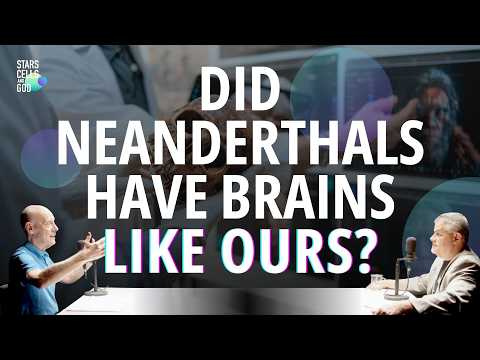
** In this episode of “Stars, Cells, and God,” biochemist Fazale “Fuz” Rana and astrophysicist Hugh Ross explore recent findings regarding Neanderthal brain capacities and the formation of the moon, linking these scientific topics to theological implications. A new study suggests that Neanderthal brain volumes overlap with those of modern humans, challenging the notion of cognitive inferiority and complicating traditional biblical models of human origins. Meanwhile, Hugh Ross discusses the Theia collision theory, emphasizing its role in Earth’s unique geological features and supporting the argument for divine design in creation. Together, these discussions highlight the intersection of science and faith, illustrating how new discoveries can inform and reinforce beliefs about humanity’s unique status in creation. **
📚 Research Links (provided by the author in the video description):
Something Never Before Seen Passed Between Us and Another Galaxy

** In this video, Anton Petrov discusses a groundbreaking astronomical discovery involving a brief increase in brightness from a star in the Large Magellanic Cloud, termed “Phoebe.” This event, attributed to a gravitational microlensing effect, suggests the presence of a very small object, potentially a primordial black hole, which may offer insights into the nature of dark matter. With a mass only three times that of the moon, Phoebe’s detection is significant as it might represent a new class of objects contributing to the universe’s unseen mass. Future telescopes are expected to enhance our understanding by detecting more similar events, potentially leading to a better grasp of dark matter’s composition. **
📚 Research Links (provided by the author in the video description):
Princeton Scientist: AGI Is the Wrong Question

** In this insightful clip, Princeton cognitive scientist Tom Griffiths argues that the pursuit of Artificial General Intelligence (AGI) may be misguided, as AI systems and the human mind are designed to solve fundamentally different problems. He likens AI to trying to decode an alien radio signal, highlighting that while AI excels at processing vast amounts of data, it lacks the innate inductive biases that allow humans to learn quickly and effectively from limited information. Griffiths suggests that the focus should shift from achieving AGI to understanding the unique computational capabilities of both human and AI systems, emphasizing the distinct evolutionary and contextual factors that shape human intelligence. **
Biblical Creationists: Young-Earth Creationism Will FADE Away Without This
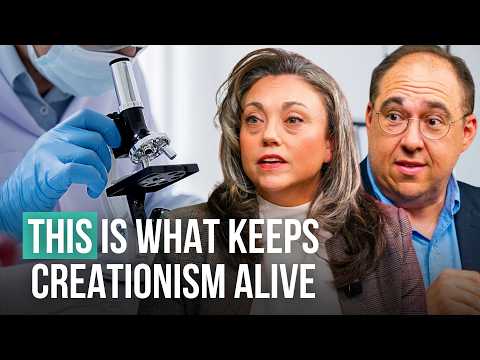
** In this episode of the Creation Podcast, Mary Clair Kelly interviews James Gadberry and Regina Krieg from the Institute for Creation Research (ICR) about their personal faith journeys and the vital role of donor relations in supporting the ministry’s mission. Both guests share how their backgrounds inspired their passion for creation science and the importance of building relationships with donors to educate and influence future generations. They emphasize the necessity of donor support for continuing ICR’s research and outreach efforts, highlighting the impact of contributions, no matter the size, on the kingdom of God and the organization’s ability to provide answers grounded in biblical truth. **
Radioactive Spacedust In Antarctic Ice Means We’re Inside a Massive Space Cloud

** In this video, Anton Petrov discusses the discovery of Iron-60 isotopes found in Antarctic ice, which provides insights into the solar system’s movement through a massive space cloud. Researchers have traced the presence of Iron-60 to ancient supernovae, suggesting that the solar system is currently traveling through interstellar dust from these explosions. Recent studies reveal that Iron-60 levels were significantly lower 40,000 years ago, indicating that the solar system has only recently entered a denser local interstellar cloud. These findings not only enhance our understanding of cosmic history but also suggest potential changes in the solar environment as the sun continues to move through different regions of space. **
📚 Research Links (provided by the author in the video description):
What Happens After A 1,000,000x AI Compute Leap? | Jeff Dean

** In a fascinating interview with Jeff Dean, the chief scientist of Google, the video delves into the future of AI compute power and its implications for machine learning. Dean discusses the ongoing concerns about training data limitations, asserting that there is still plenty of untapped video data and innovative methods for data augmentation. He highlights the shift in data center workloads from training to inference, emphasizing the need for specialized hardware to handle this change. Dean also speculates on the potential advancements in AI capabilities, predicting that future compute leaps could enable revolutionary applications in fields like engineering and healthcare, showcasing the continued rapid evolution of AI technologies. **
We May Never Know the Universe’s Shape.

** In the video “We May Never Know the Universe’s Shape,” Curt Jaimungal engages with physicist J.B. Manchak to discuss the profound implications of a theorem asserting that no matter how much local data about space-time we gather, we can never definitively determine its global structure. Manchak explains that even with complete observational data from every point in space and time, one could create alternative models of the universe that align with the same data but differ fundamentally in structure. This challenges the commonly held belief that local observations could reliably extrapolate to a global understanding of the universe, emphasizing the limitations of empirical data in revealing the true nature of cosmic reality. **
Mindscape Ask Me Anything, Sean Carroll | June 2026

** In the June 2026 Ask Me Anything episode of the Mindscape podcast, Sean Carroll engages with questions from Patreon supporters, delving into a range of topics including artificial intelligence, the nature of consciousness, and cosmological theories. He discusses his ongoing research on a new paper proposing a cyclic universe, which challenges traditional concepts of entropy and the arrow of time. Carroll also examines the philosophical implications of boredom in consciousness, the fluid definitions of “matter” in physics, and critiques the UFO gravitational propulsion theories. Throughout the discussion, he emphasizes the importance of rigorous thinking in both science and philosophy. **
📚 Research Links (provided by the author in the video description):
Steel is Absorbent

** In “Steel is Absorbent,” Steve Mould explores the phenomenon of High Temperature Hydrogen Attack (HTAH) in steel, particularly its implications in the fertilizer industry. Using ultrasonic non-destructive testing (NDT), he reveals how hydrogen atoms can permeate steel, forming methane bubbles that compromise structural integrity and can lead to catastrophic failures, such as explosions. Mould explains the science behind this process, including the role of carbon in steel, and discusses historical incidents that highlight the risks. He concludes that advancements in steel alloys and inspection methods are essential to prevent such failures, emphasizing the need for ongoing vigilance in material science. **
How Dangerous Is This Super El Niño Really?

** In the video “How Dangerous Is This Super El Niño Really?” Sabine Hossenfelder discusses the impending super El Niño phenomenon, predicted to significantly raise global temperatures and exacerbate weather extremes such as heatwaves, droughts, and wildfires. This year’s El Niño is expected to be particularly strong, with forecasts indicating a 100% chance of its occurrence and the potential for severe global impacts, especially in Africa and parts of Asia. Hossenfelder emphasizes the historical context of previous super El Niño events, highlighting their devastating effects, while also noting that today’s socio-political factors could further complicate the situation. Ultimately, the video informs viewers that while the world won’t end, many regions are likely to face challenging climatic conditions in the coming months. **
Godlike AI Is Here! Peter Diamandis Debates Physicist
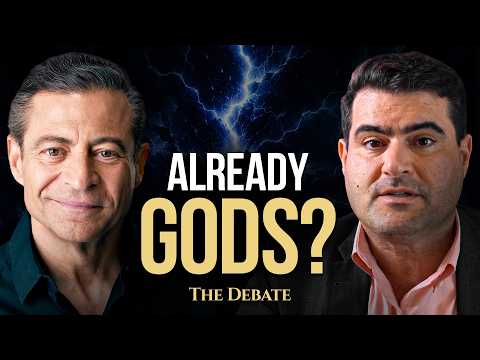
** In the video “Godlike AI Is Here! Peter Diamandis Debates Physicist,” Peter Diamandis discusses the transformative potential of artificial intelligence (AI) and its implications on humanity and work. He argues that AI will not just enhance productivity but can offer a new form of wisdom through vast scenario simulations, reshaping our understanding of human capabilities. The conversation delves into the challenges and opportunities presented by AI, contrasting Diamandis’s optimistic view of a technological utopia with the physicist’s more cautious perspective on AI’s limitations and the essence of wisdom. They explore themes of purpose, creativity, and the future of human existence as we integrate advanced technologies into our lives. **