
Weekly Physics Digest – July 19 – July 25, 2026
This Week in Science and Education: Heartbeats, AI, and the Mysteries of Mars. Welcome to this week’s digest of engaging science and educational content! If you’ve ever found yourself pondering why mammals seem to have a one-size-fits-all approach to heartbeats—specifically, that magic billion number—you’ll love Veritasium’s insightful exploration of this curious phenomenon. But don’t stop there! Dive into the intriguing realms of quantum mechanics with Sabine Hossenfelder’s enlightening take on the double slit experiment, where reality may not be what it appears (cue the dramatic music!). From the wonders of our solar system to the mind-bending implications of AI, this week’s selection is packed with revelations that will make you question everything—including if a mysterious dark spot on Mars is a sign of life or just a fancy shadow. Learn fast, stay curious!
The 50-Year Search for the Theory of Everything
** “The 50-Year Search for the Theory of Everything” delves into the evolution and ongoing debate surrounding string theory, a potential unifying framework for all fundamental forces in the universe. It explores the beauty and elegance of string theory, which posits that all particles are manifestations of tiny, vibrating strings, and contrasts this with the empirical challenges it faces in validation. Throughout its history, string theory has undergone numerous transformations in response to experimental findings, leading to the development of superstring theory and the introduction of extra dimensions. Despite its aesthetic appeal, the theory continues to grapple with significant issues such as the lack of empirical evidence and the implications of proposed dimensions, leaving the ultimate truth of a unified theory of everything still tantalizingly out of reach. **
Light and Matter: Linear and Circular Motion? (Fundamental Speculations)

** In this video, Alexander Unzicker explores the intriguing relationship between light and matter, proposing a speculative framework that distinguishes their phenomenology through concepts of linear and circular motion. He references fundamental constants like the speed of light (C) and Planck’s constant (H), suggesting that gravity could be explained through the Machian idea of Zitterbewegung, where the influence of distant particles creates gravitational effects. Unzicker encourages a deeper reflection on these foundational questions in physics, proposing that future advancements, possibly aided by AI, may help unravel these mysteries. He emphasizes the need for a non-traditional perspective on physics to reignite interest in fundamental concepts. **
Why does every mammal get 1 billion heartbeats in their life?

** In the Veritasium video “Why does every mammal get 1 billion heartbeats in their life?”, the host explores the intriguing relationship between body size, metabolic rates, and lifespan across mammals. It reveals that nearly all mammals, regardless of size or lifespan, accumulate approximately one billion heartbeats in their lifetime due to the inverse relationship between heart rate and lifespan. This phenomenon is analyzed through established scaling laws, particularly Kleiber’s Law, which suggests that metabolic rates scale to mass raised to the three-quarters power. The video further connects these biological principles to urban scaling, highlighting how cities exhibit similar patterns of efficiency and growth, thereby suggesting that larger systems—whether biological or societal—tend to be more efficient. **
The Terrifying Reason We Still Haven’t Found Aliens

** In “The Terrifying Reason We Still Haven’t Found Aliens,” Dr. Brian Keating explores the mystery of why, despite the vast number of planets in the universe, we have yet to find evidence of extraterrestrial civilizations. He delves into the Fermi Paradox, questioning why we haven’t detected signals from intelligent life given the billions of stars and potentially habitable planets. Keating discusses practical limitations, such as the immense distances involved and the slow speed of light, and presents theories including the possibility of a “Great Filter” that could prevent civilizations from reaching a stage where they can be found. The video concludes by suggesting that while we may not currently detect aliens, it does not mean they do not exist or have existed in the past. **
Exploring the Deep Mysteries of Physics | World Science Festival

** In this thought-provoking discussion, Brian Greene and Sean Carroll delve into the profound questions at the intersection of physics and philosophy, exploring whether the laws of physics are real or merely human constructs. They tackle complex topics such as the nature of mathematics, the reasons behind the universe’s existence, and the implications of free will. Both physicists share their perspectives on how patterns in the universe might be interpreted, debating the essence of reality and the significance of human understanding in explaining these phenomena. Ultimately, they agree that while science continues to evolve, some questions may remain unanswered, suggesting a humility in our quest for knowledge. **
Centaurus A Galaxy Just Became Much More Mysterious

** In the video, Anton Petrov explores the intriguing Centaurus A galaxy, highlighting its unusual structure resulting from a significant merger of two spiral galaxies approximately 2 billion years ago. Recent observations from the James Webb and Chandra telescopes reveal Centaurus A’s active supermassive black hole, which influences star formation and creates striking jets of particles. These discoveries suggest that the galaxy is not only a dynamic cosmic object but also a key to understanding galactic evolution, offering insights into the potential future of our own Milky Way galaxy. The video emphasizes the unique characteristics of Centaurus A, making it an essential subject for astronomical research and galactic archaeology. **
📚 Research Links (provided by the author in the video description):
Star Flyby Disturbed Our Comets 2.5M Years Ago and We’re Still Feeling It

** In this video, Anton Petrov discusses a recent study revealing that a stellar flyby, believed to have occurred 2.5 million years ago, may still be influencing our solar system by disturbing the Oort Cloud and increasing the number of comets entering the inner solar system. The research, led by Nathan Kaib and Shawn Raymond, highlights the passage of a sun-like star, AGG 7977, which may have scattered comets in various directions, significantly impacting cometary activity today. Petrov explains that while these flybys can increase the risk of comet collisions, they have historically not led to major extinction events. Furthermore, he speculates on the potential for future civilizations to utilize such stellar encounters for interstellar travel. **
📚 Research Links (provided by the author in the video description):
Christian PhD: The Grand Canyon KEEPS Disproving Evolution
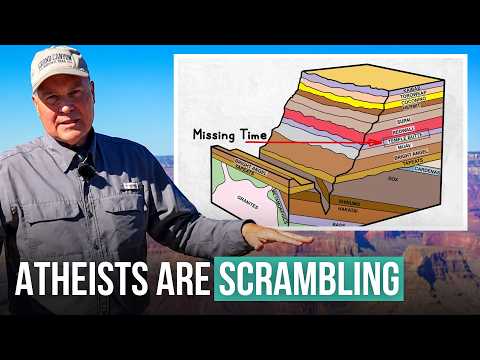
** In the video “Christian PhD: The Grand Canyon KEEPS Disproving Evolution,” Dr. Tim Clarey from the Institute for Creation Research explores the geological layers of the Grand Canyon, arguing that they provide evidence for a global flood rather than millions of years of evolutionary history. He discusses various rock layers, including the Kaibab Limestone and Tapeats Sandstone, highlighting the absence of expected time gaps between them. The presentation emphasizes that the layers appear to have been deposited rapidly and uniformly, suggesting a catastrophic event like a flood rather than slow geological processes. Dr. Clarey concludes that these observations challenge conventional geological timelines and support a creationist perspective. **
First Ever Confirmation of Atmosphere Around a Habitable Zone Planet

** In this video, Anton Petrov discusses the groundbreaking discovery of an atmosphere around the exoplanet LHS 1140b, located in the habitable zone of its star system. This marks the first confirmed atmosphere for a super-Earth, a planet larger than Earth, and suggests that it may be transitioning from a mini Neptune to a rocky planet. While the presence of helium was detected, indicating a thicker atmosphere, the study does not confirm a habitable environment, as it lacks essential gases like oxygen or water vapor. Future observations, particularly with the James Webb Space Telescope, are needed to further explore the planet’s atmospheric composition and its potential for habitability. **
📚 Research Links (provided by the author in the video description):
Mayim Bialik: “Where Does Consciousness Go When You Die?”

** In this thought-provoking video, Mayim Bialik, a neuroscientist, discusses the intriguing phenomenon of consciousness in relation to near-death experiences. She highlights cases where individuals declared clinically dead for extended periods report astonishingly similar experiences that suggest consciousness may exist independently of the physical body. Bialik challenges traditional beliefs about consciousness and asserts that science has yet to clearly define or locate it, raising questions about the essence of human experience and the nature of existence itself. The conversation also touches on the intersection of science and spirituality, advocating for a scientific inquiry into concepts often viewed as purely faith-based. **
Stop LLM LOOPS From Burning Millions of Tokens – w/ PUMA?

** In the video titled “Stop LLM LOOPS From Burning Millions of Tokens – w/ PUMA?” from Discover AI, the presenter discusses the challenge of Large Language Models (LLMs) entering “cognitive stagnation,” where they generate repetitive tokens without meaningful progress during extended reasoning tasks. The video highlights a new approach from researchers at the University of Science and Technology of China, which introduces a “phase momentum alignment” hypothesis to diagnose and address this issue. By monitoring the synchronization between cognitive momentum and uncertainty resolution, the method aims to distinguish valid reasoning from pathological behavior, ultimately reducing token wastage and improving model efficiency. The presenter also critiques the mathematical terms used in the research, emphasizing the need for clarity in understanding the proposed models and metrics. **
📚 Research Links (provided by the author in the video description):
Decades Long Dark Matter Anomaly Finally Resolved by Two Experiments

** In this video, Anton Petrov explores the resolution of a long-standing anomaly regarding dark matter, focusing on the DAMA experiment’s claims and the recent findings from two new experiments, ANAIS-112 and COSINE-100. Despite the DAMA experiment reporting significant signals potentially indicative of dark matter, the new experiments found no evidence supporting these claims, leading to a consensus that the original signals were likely due to statistical anomalies or background noise. This development shifts the scientific community’s focus away from weakly interacting massive particles (WIMPs) towards alternative explanations like axions or primordial black holes. Ultimately, while the mystery of dark matter continues, the resolution of the DAMA anomaly marks a significant step in correcting misconceptions in cosmology. **
📚 Research Links (provided by the author in the video description):
We Built Something We Can’t Control | A Warning from Top AI Safety Expert

** In this thought-provoking discussion, Nate Soares, president of the Machine Intelligence Research Institute, warns that the pursuit of superintelligent AI could lead humanity to disaster if not properly managed. He emphasizes that the title of his book, “If Anyone Builds It, Everyone Dies,” highlights the conditional nature of this warning, suggesting that we have the power to change our trajectory. Soares articulates the critical challenges of AI alignment and the unpredictability of AI behavior, arguing that while we are not at the point of superintelligence yet, the rapid advancements in AI technology call for immediate attention and preventive measures from global leaders. The conversation raises essential questions about control, regulation, and the moral implications of creating entities that could surpass human intelligence. **
Anthropic’s New J-Space: Debunked?

** In the video “Anthropic’s New J-Space: Debunked?” from the Discover AI channel, the presenter critically analyzes Anthropic’s recent paper on J-Space, which attempts to correlate a neuroscience theory known as the global workspace theory with their language model Claude. The presenter argues that J-Space is not a new discovery but rather a mathematical construct within the residual stream of transformers, describing it as a union of sparse nonnegative cones rather than a distinct subspace. He emphasizes that despite claims of consciousness and cognitive parallels with humans, the model merely reflects computational routing and lacks true self-awareness. The discussion highlights the implications of this research in the context of AI development and marketing. **
📚 Research Links (provided by the author in the video description):
The Quantum Interpretation That Divides Physicists

** In this episode of Curt Jaimungal’s podcast, philosophy of science experts David Wallace and Emily Adlam engage in a deep discussion about the Many Worlds Interpretation (MWI) of quantum mechanics and the philosophical implications surrounding parallel universes. Wallace, a staunch defender of MWI, argues for its validity while Adlam raises concerns about the epistemological challenges it poses, particularly regarding the nature of probabilities within the interpretation. They explore the wave function’s role, the concept of realism in science, and the importance of intersubjectivity in scientific communication, ultimately presenting a rich dialogue on the intersections of physics and philosophy. **
📚 Research Links (provided by the author in the video description):
You probably misunderstand the double slit experiment

** In this video, Sabine Hossenfelder clarifies common misconceptions surrounding the double slit experiment, a cornerstone of quantum mechanics. She explains that while observing which slit a particle travels through doesn’t eliminate its wave properties, it does alter the interference pattern, leading to confusion about particle behavior. The video also addresses the implications of “spooky action at a distance,” as well as misunderstandings related to consciousness and momentum conservation in quantum mechanics. Hossenfelder emphasizes that the real mystery lies in the instantaneous nature of wave function updates, which challenges our understanding of physics. **
From LOOPS to GRAPHS: AI Agents Learn Graph-Based Error Corrections

** In the video titled “From LOOPS to GRAPHS: AI Agents Learn Graph-Based Error Corrections,” the presenter discusses a new research paper that introduces a memory graph optimization method to enhance AI agents’ performance. By transitioning from text-based error corrections to graph structures, the proposed Experience Memory Graph (EMG) allows agents to analyze their failures against expert trajectories represented as directed graphs. This mathematical approach not only minimizes reliance on large language models (LLMs) but also enables the reuse of successful strategies, resulting in a more efficient training process and improved accuracy. Although the method shows promise, the speaker notes potential limitations regarding the uniqueness of solutions during test scenarios. **
📚 Research Links (provided by the author in the video description):
Something Dark Is Spreading on Mars and Time Here Actually Runs Faster

** In this video, Anton Petrov delves into recent discoveries on Mars, highlighting unusual geological formations and organic molecules that suggest a complex environmental history. He discusses anomalies such as a mysterious dark area expanding on the Martian surface and the identification of diverse organic compounds by NASA’s rovers, hinting at the potential for past life. Additionally, he explains how Martian time runs slightly faster due to gravitational differences, which has implications for future space missions. Overall, these findings underscore Mars as a vital site for understanding the evolution of the solar system and the possibility of extraterrestrial life. **
📚 Research Links (provided by the author in the video description):
Physicist Exposes the Real Reason for UFO Disclosure Now

** In the video, physicist Dr. Brian Keating critiques the recent government UFO disclosures, expressing disappointment in the lack of substantial evidence provided. He discusses the concept of “SCIOPS,” suggesting that insiders often rely on vague assertions instead of concrete data, and compares modern UFO claims to historical events like the execution of Giordano Bruno for his radical ideas. Keating argues that the timing of these disclosures often coincides with major scandals, hinting at potential distractions from more pressing issues, and he emphasizes the need for transparent scientific discourse rather than sensational claims. **