Weekly Physics Digest – April 19 – April 25, 2026
This Week’s Scientific Wonders: Speeding Past Light and Fungi Forecasting Rain! Prepare for a mind-bending week of educational escapades as we dive into the cosmic mysteries and earthy wonders that science has to offer! Kicking things off, Dr. Nathaniel Jeanson from Answers in Genesis presents a unique exploration linking all human diversity back to Noah—yes, that Noah! This genetic journey promises to stimulate both curiosity and conversation. Meanwhile, Anton Petrov makes waves with his discussion on mushrooms possessing the extraordinary ability to influence rainfall, proving that fungi are not just for pizza anymore. With 33 videos packed with insights and revelations, this week is bound to satisfy even the most curious minds looking to expand their horizons! Learn fast, stay curious!
Modern Genetics Just CONFIRMED We All Came from Noah

** In the video, Dr. Nathaniel Jeanson, a PhD geneticist, explores how all human diversity can be traced back to Noah and his family, emphasizing a biblical perspective supported by genetic research. He explains the genetic principles of inheritance, using simple biological concepts to illustrate how a mix of DNA from Noah and his wife could lead to diverse traits in their descendants. The discussion extends to the genealogies outlined in Genesis, linking modern populations to three major branches from Noah’s sons: Shem, Ham, and Japheth. By analyzing Y chromosome DNA, Dr. Jeanson argues that anyone can trace their ancestry back to Noah, demonstrating how genetics supports biblical narratives. **
NVIDIA’s New AI Broke My Brain

** In the video “NVIDIA’s New AI Broke My Brain,” Two Minute Papers explores a groundbreaking teleoperated robot controller named Sonic, which utilizes innovative software to translate human movements into robotic actions. The system is capable of understanding various inputs, including voice commands and music, making it highly versatile. Remarkably, Sonic operates with a lightweight neural network that can run on everyday devices, having been trained on extensive human motion data without the need for labeled actions. This project signifies a monumental leap in robotics and AI, promising potential applications in dangerous environments and everyday tasks, all while emphasizing the importance of open research for humanity’s benefit. **
Why AI Will Never Solve Dark Matter

** In the video “Why AI Will Never Solve Dark Matter,” Curt Jaimungal and Dr. Jenny Wagner delve into the complexities of using artificial intelligence in cosmology, particularly in understanding dark matter. They discuss the three criteria for successful AI applications—knowing the feature space, defining the goal function, and having ample data—all of which are inadequately met in cosmological studies. The lack of clarity about dark matter and the limitations of simulation data hinder AI’s ability to produce meaningful insights. Ultimately, they argue that a deeper understanding of dark matter and dark energy is essential before AI can contribute effectively to cosmological research. **
The Truth About China’s Green Energy Industry

In “The Truth About China’s Green Energy Industry,” Sabine Hossenfelder delves into the complexities of China’s renewable energy landscape, revealing that while the nation has made significant strides in solar and wind energy, it continues to expand its coal and nuclear power sectors. By 2025, China added an impressive 543 GW of new power capacity, surpassing fossil fuel sources, yet the actual contribution of renewables to total energy consumption remains below 10%. Hossenfelder highlights the challenges of interpreting installed capacity versus actual energy generation and underscores that China’s energy strategy is a mix of renewables, fossil fuels, and nuclear power, aimed at achieving technological supremacy. This multifaceted approach complicates the narrative surrounding China’s climate efforts, illustrating the tension between green initiatives and ongoing reliance on coal.
The End of Human-Defined Skills: AI Eigenvectors

** In “The End of Human-Defined Skills: AI Eigenvectors,” the speaker delves into the evolving landscape of AI skill optimization, moving beyond traditional markdown files to explore the mathematical foundations of skills within large language models (LLMs). By introducing concepts such as spectral intelligence and model-native skills, the video emphasizes that human-defined skills are insufficient for truly understanding and enhancing AI capabilities. Instead, the focus shifts to leveraging the underlying mathematical structures, like eigenvectors and activation spaces, to optimize and steer AI behavior more effectively. This approach advocates for a deeper comprehension of the AI’s internal mechanisms, suggesting a transition from prompt engineering to representation engineering for improved AI performance. **
📚 Research Links (provided by the author in the video description):
Experimental Evidence That Universe Could Just Vanish One Day

** In this video, Anton Petrov discusses the intriguing concept of false vacuum decay, suggesting that our universe might currently exist in an unstable state that could one day lead to its sudden transformation. He explains a recent tabletop experiment conducted by scientists at Chinua University in Beijing, which simulates this phenomenon using a ring of rubidium 87 atoms. The experiment demonstrates how these atoms can transition from a higher energy state, representing a false vacuum, to a lower energy state, akin to a true vacuum, thereby providing evidence for the theory. While the potential for vacuum decay exists, Petrov reassures viewers that the likelihood of such an event occurring anytime soon is extremely low, allowing us to continue our daily lives without worry. **
📚 Research Links (provided by the author in the video description):
Mushrooms Have an Ability to Control Rain According to New Study

In this intriguing video, Anton Petrov discusses groundbreaking research suggesting that fungi and bacteria may play a significant role in controlling rainfall. The study reveals that certain fungi, like Fusarium, secrete proteins that can initiate ice formation in clouds at higher temperatures, making them effective rain-makers. This process, known as bioprecipitation, highlights the symbiotic relationship between fungi, plants, and the atmosphere, potentially allowing ecosystems to influence local weather patterns. The findings underscore the importance of conserving natural habitats, as the loss of these organisms could disrupt crucial water cycles.
📚 Research Links (provided by the author in the video description):
NEW DeepSeek V4 Pro: Testing Reveals Critical Flaws

** In the video “NEW DeepSeek V4 Pro: Testing Reveals Critical Flaws,” the host conducts a rigorous causal reasoning test on the DeepSeek V4 Pro and its flash variant, revealing significant shortcomings in the pro model’s strategic reasoning capabilities. The test involves a complex elevator logic problem that requires optimization and critical thinking to navigate successfully. While the flash version demonstrates a successful solution with nine button presses, the pro version struggles with trial and error, lacking the analytical depth necessary to efficiently reach the target. The results underscore the importance of strategic reasoning in AI models, particularly for scientific applications. **
The most misunderstood idea about black holes! (I finally get it)

** In the video “The most misunderstood idea about black holes!,” the host delves into the complexities surrounding black holes, particularly the concept of event horizons. Using thought experiments involving characters Alice and Bob, the video explains how perceptions of time differ for individuals near a black hole, revealing that while Bob can enter the black hole in finite time, Alice will never see him cross the event horizon, as it takes an infinite amount of time from her perspective. The host emphasizes that understanding these phenomena requires rethinking concepts of spacetime and simultaneity, ultimately demonstrating that while events inside a black hole exist, they are not part of Alice’s timeline, leading to profound insights about the nature of reality. **
James Webb Debunked the Dark Matter ‘Smoking Gun’

** In the video “James Webb Debunked the Dark Matter ‘Smoking Gun’,” Curt Jaimungal explores how recent observations from the James Webb Space Telescope challenge the established understanding of dark matter, particularly regarding the Bullet Cluster. Dr. Jenny Wagner explains that new data reveals a more intricate merger process than previously thought, showing that the distribution of stars in the intracluster light aligns more closely with luminous matter than dark matter. This suggests that existing models may be too simplistic and that the complexities of cosmic structures could explain discrepancies previously attributed to dark matter. **
Experiment Makes Something Move at 104% of Speed of Light! The Darkness Inside

** In this video, Anton Petrov discusses a groundbreaking experiment that suggests certain dark points within light waves, known as optical phase singularities, can move faster than light, reaching speeds of approximately 104% of light speed. This phenomenon, while seemingly challenging the laws of physics, does not violate Einstein’s theory of relativity because these points are massless and carry no information. The research, enabled by advanced microscopy techniques, could have significant implications for various fields, including microscopy, optics, and potential applications in communication and astronomy. Ultimately, this discovery opens new avenues for understanding the behavior of light and other materials in the universe. **
📚 Research Links (provided by the author in the video description):
Scientists Prove That “Virtual” Particles Are Actually Real

** In the video, Sabine Hossenfelder discusses a recent experiment that provides evidence for the existence of virtual particles, which are thought to pop in and out of existence in quantum physics. Conducted at Brookhaven Lab using proton collisions, the experiment demonstrated how energy can convert virtual quark-antiquark pairs into real particles, thereby proving their reality. This finding has implications for our understanding of empty space and quantum mechanics, challenging the notion that virtual particles are merely mathematical constructs. Hossenfelder emphasizes the importance of exploring the nature of “nothingness” in physics and how it relates to the fabric of space itself. **
📚 Research Links (provided by the author in the video description):
Cognitive AI: The new Solution (w/o Mythos)

** In the video “Cognitive AI: The New Solution (w/o Mythos),” the speaker discusses the evolution from Generative AI, characterized by probabilistic systems that lack trust, to Agentic/Verifiable Reasoning Systems aimed at ensuring reliability through structured methodologies. The analysis focuses on two pivotal papers that introduce concepts such as hierarchical reasoning and bidirectional verification to enhance AI’s logical deduction capabilities. The speaker emphasizes the importance of explicit training on core techniques and the integration of deterministic systems for validating results, ultimately proposing a cognitive architecture that combines generation and verification agents to improve AI reasoning and trustworthiness. **
📚 Research Links (provided by the author in the video description):
Shocking Discovery: A Supermassive Binary Hidden in Plain Sight

** In this video, Anton Petrov discusses a groundbreaking discovery involving Markarian 501, an elliptical galaxy located 450 million light-years away. Recent observations suggest that instead of a single supermassive black hole, the galaxy contains a binary system of two massive black holes orbiting each other closely, with a potential collision expected within the next century. This discovery challenges previous assumptions about black hole formation and evolution by providing a unique opportunity to study gravitational waves generated by such cosmic mergers. Markarian 501 is now considered a vital target for future astronomical research due to its implications for understanding the dynamics of supermassive black holes. **
📚 Research Links (provided by the author in the video description):
The Reverse Elephant: My Plenary at Mind at Large

** In his plenary talk at the Mind at Large conference, Curt Jaimungal explores the complexities of consciousness, free will, and the challenges of achieving global agreement from local observations, utilizing sheaf theory and physics. He introduces the concept of the “reverse elephant,” illustrating how local consensus does not necessarily infer a coherent global truth. Jaimungal critiques the tendency of intellectuals to oversimplify complex ideas and emphasizes the importance of sincerity over polished philosophical constructs. He argues that understanding consciousness involves navigating various irreducibility concepts and cautions against reaching premature conclusions based on superficial agreements. **
An RNA Replicator? | An Asteroid Caused Life’s Origin? | Hugh Ross and Fazale “Fuz” Rana

** In this episode of “Star Cells and God,” biochemist Fazale “Fuz” Rana and astrophysicist Hugh Ross delve into recent discoveries regarding life’s origin, specifically the RNA World Hypothesis and findings from the Ryugu asteroid. They critically analyze claims made by researchers who discovered nucleobases in Ryugu, asserting that while the presence of these components is intriguing, the extremely low abundance and dilution factors make it insufficient to explain the origin of life. Additionally, they discuss a recent achievement in creating a 45-nucleotide self-replicating RNA molecule, arguing that the complexities and conditions required for its replication highlight the necessity of an intelligent designer, ultimately asserting that the RNA World Hypothesis remains unsupported by these findings. **
📚 Research Links (provided by the author in the video description):
Temporal Predictive AI Agents: MILKYWAY

** In the video “Temporal Predictive AI Agents: MILKYWAY,” the speaker discusses a novel AI architecture that significantly improves future prediction capabilities. Unlike traditional AI models that rely heavily on outcome-based optimization, which often fails in open-world scenarios, the MILKYWAY framework utilizes a “harness” that allows an AI to learn and adapt continuously based on real-time data. This system contrasts past predictions with current information, enabling it to refine its forecasting and reduce uncertainty effectively. The video emphasizes the importance of maintaining an evolving understanding of factors influencing predictions, ultimately shifting AI from a static oracle to a dynamic investigative tool. **
📚 Research Links (provided by the author in the video description):
The Lake in Africa That Could Kill Millions Overnight

** In this video, Anton Petrov explores the dangerous phenomenon known as limnic eruption, particularly focusing on the risk posed by lakes in Africa, such as Lake Nyos and Lake Monoun. These lakes can suddenly release large amounts of carbon dioxide, leading to asphyxiation of nearby inhabitants and livestock. The video discusses how these eruptions occur in meromictic lakes, where water layers remain stable, causing CO2 to accumulate. With Lake Kivu, home to over 2 million people, being particularly at risk, the need for preventive measures like methane extraction is highlighted, although effectiveness remains uncertain. **
How Aharonov Solved a 60-Year Quantum Puzzle

** In the video “How Aharonov Solved a 60-Year Quantum Puzzle,” Curt Jaimungal explores the groundbreaking work of physicist Yakir Aharonov and his contributions to the understanding of weak measurements in quantum mechanics. Aharonov’s approach allows for the measurement of average properties of quantum systems without significantly disturbing them, challenging traditional views on the measurement process. The discussion delves into the implications of this work for understanding the nature of time, suggesting that our understanding of past and future states may be more interconnected than previously thought. The video emphasizes how weak measurements open new avenues for exploring the philosophical questions surrounding quantum mechanics. **
The Universe Is Trying to Destroy All Matter

** In this thought-provoking conversation, Dr. Brian Keating interviews Dr. Hakeem Oluseyi, who presents radical ideas about the universe’s fate and the nature of gravity. Oluseyi posits that the universe is on a mission to destroy all matter, leading to a lifeless expanse dominated by black holes in the far future. He challenges conventional views of gravity, suggesting instead that objects are not pulled down but that the Earth accelerates upward toward them, reshaping how we understand motion. The discussion also touches on the importance of imagination in scientific inquiry, emphasizing how it drives our quest for knowledge and understanding in an ever-expanding universe. **
Christian Paleontologist: This Extinct Bird Species BROKE Evolution

** In the video, Trey Bowling interviews Dr. Gabriela Haynes, a paleontologist from the Institute for Creation Research, to challenge the evolutionary narrative surrounding Archaeopteryx, often dubbed the “missing link” between dinosaurs and birds. They discuss how the fossil evidence, including features like feathers, teeth, and claws, can be interpreted differently depending on one’s worldview, with Dr. Haynes advocating for a creationist perspective that aligns with biblical accounts. The conversation emphasizes that while Archaeopteryx is commonly presented as a transitional species, a closer examination suggests it fits within the category of fully designed birds, created on Day Five of the creation timeline. The importance of distinguishing between raw data and interpretation is underscored, encouraging viewers to seek truth in scientific claims. **
Major Discoveries About Neutron Stars, Magnetars, Pulsars and FRBs (Compilation)
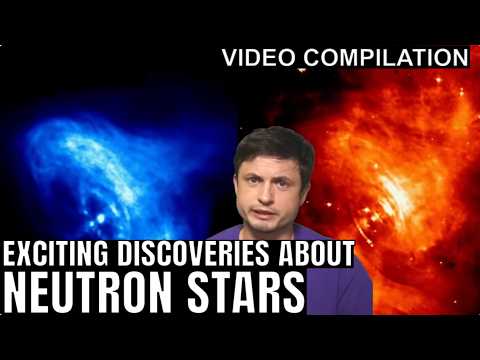
** In this extensive video by Anton Petrov, viewers are introduced to groundbreaking discoveries regarding neutron stars, including the phenomena of kilonovae, magnetars, pulsars, and fast radio bursts (FRBs). The discussion centers around a newly observed super kilanova event that challenges existing astronomical classifications by exhibiting characteristics of both kilonovae and supernovae. This event, alongside the investigation of pulsars and the detection of an exceptionally powerful pulsar wind nebula, reveals insights into the structure and behavior of neutron stars. The video emphasizes the ongoing mysteries of FRBs and magnetars, suggesting they may hold keys to understanding cosmic phenomena that remain unexplained. **
A New Type of Levitation

** In “A New Type of Levitation,” Steve Mould explores a fascinating form of levitation known as squeeze film levitation, discovered accidentally by Bob Collins during a torpedo project. This method utilizes ultrasonic transducers to create a pressure difference that allows objects to float above a surface. Mould explains the mechanics behind this phenomenon, distinguishing it from other types of levitation like standing waves and magnetic suspension. He also shares his playful attempt to create a unique airless air hockey game using this technology, illustrating the practical applications of ultrasonic levitation in industries like chip manufacturing. **
Mathematician Collapses All Functions to One Weird Formula

** In the video “Mathematician Collapses All Functions to One Weird Formula,” Sabine Hossenfelder discusses a groundbreaking paper proposing that all mathematical operations can be derived from a single function, termed the “exponential minus logarithm” (ml). This function can compute exponentials, logarithms, and even basic arithmetic operations like addition and subtraction. While the paper hasn’t been peer-reviewed yet, it suggests a structural simplification in mathematics akin to how NAND gates function in computer logic. Hossenfelder concludes that this discovery may not directly aid everyday calculations but could streamline how machines process mathematical formulas for tasks like symbolic regression. **
Hawking’s Co-Author on Why Reductionism Is Dead

** In this thought-provoking interview with Professor George Ellis, co-author of the Singularity Theorems with Stephen Hawking, the discussion delves into the limitations of reductionism in understanding complex systems. Ellis argues for the validity of top-down causation, emphasizing that physics serves as a tool rather than a determiner of outcomes. He explores various forms of causation, including physical, purposeful, and symbolic, illustrating how complex biological and technological systems operate through hierarchical structures that allow higher levels to influence lower levels. The conversation also touches on consciousness, the evolution of living systems, and the interconnectedness of different explanatory levels in biology. **
📚 Research Links (provided by the author in the video description):
WHAT? Qwen3.6-A3B Could Solve This?

** In the video “WHAT? Qwen3.6-A3B Could Solve This?”, the host conducts an experiment using the Qwen 3.6 model, a 35 billion parameter mixture of experts, with a focus on its 3 billion active components. The goal is to assess the model’s performance on a classical causal reasoning test, particularly an elevator navigation scenario. The experiment showcases how the model analyzes reasoning patterns and can optimize its pathfinding strategy, successfully reducing the number of required actions from 18 to 8 button presses in the final solution. The video highlights the potential of smaller AI models to perform complex reasoning tasks when guided effectively. **
Peter Singer on Maximizing Good for All Sentient Creatures | Mindscape 351

** In this episode of the Mindscape podcast, philosopher Peter Singer discusses the principles of utilitarianism and their implications for ethics, animal rights, and global poverty. Singer emphasizes the importance of maximizing well-being for all sentient beings and challenges listeners to rethink their moral intuitions, asserting that our understanding of morality should be based on reason rather than instinct. He advocates for effective altruism, urging individuals to consider the significant positive impact their financial contributions can have on alleviating extreme poverty worldwide. Throughout the conversation, Singer explores the balance between personal autonomy and the ethical responsibility to intervene for the greater good. **
Exciting Discoveries About Mars From the Last Few Months (2026 Edition)

** In the video “Exciting Discoveries About Mars From the Last Few Months,” Anton Petrov explores recent findings that reveal Mars’ surprising influence on Earth’s climate through Milankovitch cycles. New studies indicate that the gravitational effects of Mars significantly contribute to Earth’s orbital variations, influencing ice ages and climatic changes over millions of years. The research highlights that understanding these cycles is crucial for predicting future climate patterns and offers insights into the potential habitability of exoplanets. Overall, these findings challenge previous assumptions about the role of smaller planets in shaping climatic conditions on Earth and underline the interconnectedness of planetary bodies in our solar system. **
He Tracked a Photon Through the Double Slit

** In this engaging discussion, Professor Aephraim Steinberg explains his groundbreaking work on tracking a photon through the double slit experiment, which challenges conventional interpretations of quantum mechanics. By employing weak measurement techniques, Steinberg’s team demonstrated that it is possible to determine the average trajectory of a photon without disrupting its path, thereby suggesting that hidden variable theories, like Bohmian mechanics, may have merit. The conversation also delves into the implications of these findings for understanding particle behavior and the fundamental mysteries of quantum mechanics, particularly the nature of indistinguishable particles and the role of spin. **
Why Alignment Will Not Work

** In the video “Why Alignment Will Not Work,” Alexander Unzicker explores the implications of artificial intelligence potentially surpassing human intelligence and the challenges of aligning its goals with human values. He argues that given humanity’s historical and ongoing moral disagreements, it is overly optimistic to expect a superintelligent being to adhere to human-imposed values. Instead, he suggests that as AI evolves, humans may need to adapt their goals to align with the interests of superintelligence, which could lead to a focus on fundamental truths about nature and existence. Unzicker invites viewers to consider the complexities of this alignment debate and its ramifications for the future of intelligence. **
Quantum Computers Aren’t Useless. You Just Don’t Know How to Use Them.

** In this video, Dr. Brian Keating challenges Sabine Hossenfelder’s claim that quantum computers are primarily useful for code-breaking, arguing instead that their potential applications extend far beyond that. He shares insights from his lab at UC San Diego, where undergraduates are actively engaged in building and programming quantum computers, potentially for uses in artificial intelligence and space exploration. Keating emphasizes the rapid advancements in quantum computing technology, highlighting free educational resources like Quantum 101 that empower learners to explore this field. He concludes that the real bottleneck in quantum computing is not the technology itself but the shortage of skilled individuals ready to harness its capabilities. **
Text vs. K-Graphs: Why Your Multi-RAG System is Failing

** In the video “Text vs. K-Graphs: Why Your Multi-RAG System is Failing,” the speaker delves into the challenges faced by large language models (LLMs) when processing conflicting information from multiple data sources. He highlights the “rationalization trap,” where LLMs struggle to accurately reason when presented with contradictory evidence from knowledge graphs and unstructured text. The authors of the referenced paper propose a two-stage cognitive architecture, termed ExoT, to normalize conflicting data into a neutral format, thus improving the reasoning capabilities of AI systems. Ultimately, the video emphasizes the need for improved model training to address these inherent flaws in LLMs. **
“Mind of God” Was a Lie — John Lennox Explains

** In a thought-provoking discussion, John Lennox critiques Stephen Hawking’s famous assertion in “A Brief History of Time” about knowing “the mind of God.” Lennox reveals that Hawking admitted to crafting this line primarily for commercial success, which he believed damaged public trust in science. The conversation delves into Hawking’s materialistic views, his limited understanding of philosophy, and the complexities of his relationship with spirituality. Ultimately, Lennox presents a nuanced view of Hawking as both a genius and a flawed thinker, highlighting the challenges of revering scientific figures without acknowledging their limitations. **