
Weekly Physics Digest – June 14 – June 20, 2026
This week’s digest is a delightful buffet of brainfood, where we explore everything from the depths of black holes to the quirky navigation skills of pigeons. For starters, if you’ve ever thought you could solve an “impossible” problem while munching a footlong, you’ll want to check out Yitang Zhang’s inspiring journey from Subway employee to prime number pioneer. Not to be outdone, Anton Petrov takes us on a cosmic rollercoaster with his findings on “Godzilla El Niño” and the peculiar navigation tricks of our feathered friends. So, buckle up for a week that’s packed with knowledge, curiosity, and a sprinkle of whimsy! Learn fast, stay curious!
Did Physics Secretly Bring Back AEther?

** In the video “Did Physics Secretly Bring Back AEther?” Arvin Ash explores the historical concept of the ether, a once-popular idea that space is filled with an invisible medium necessary for the propagation of light. He discusses how this notion was challenged by the Michelson-Morley experiment, which found no evidence for ether, leading to Einstein’s revolutionary theories of relativity that abandoned the need for such a medium. The video highlights modern physics concepts like spacetime and quantum fields, emphasizing that while space is not empty and has structure, it does not behave like the classical ether. Ultimately, Ash concludes that rather than a return to ether, physics has evolved to reveal a more complex and fascinating understanding of the universe. **
Nuclear Fusion is in Trouble

** In the video “Nuclear Fusion is in Trouble,” Sabine Hossenfelder discusses the recent setbacks faced by multiple fusion startups, many of which have either altered their business strategies or delayed timelines for achieving significant breakthroughs. Companies like Zap Energy and Marvel Fusion have shifted focus towards more immediate applications, such as selling technology for defense and medical uses, rather than solely pursuing fusion energy. Hossenfelder highlights a common trend of companies moving their timelines back, with some even abandoning their original plans altogether, raising concerns about the feasibility and cost-effectiveness of nuclear fusion as a future energy source. **
The End of the Periodic Table (Fundamental Speculation)

In this video, Alexander Unzicker explores the intriguing concept of the “end of the periodic table,” centered around the mysterious number 137, which has puzzled physicists for over a century. He discusses how this number relates to fundamental constants in physics, particularly its connection to atomic structure and the limits of chemical elements. Unzicker speculates on whether alternative forms of chemistry could exist beyond the known periodic table and highlights the significance of the fine structure constant in understanding the universe’s evolution and the potential for life. He expresses hope that advancements in artificial intelligence might help unlock these longstanding mysteries in fundamental physics.
Cosmologist: Why the Universe Has Gone Silent

** In this enlightening discussion, cosmologist Dr. Brian Keating and astrophysicist Hugh Ross delve into the concept of fine-tuning in the universe and the implications of life’s existence beyond Earth. While Ross argues that the universe’s design suggests a singularity of life on Earth, Keating challenges this notion, highlighting the increasing belief in extraterrestrial life despite a lack of evidence. The conversation explores how advancements in astronomy and ongoing debates about life’s uniqueness contribute to our understanding of the cosmos, emphasizing the significance of both scientific inquiry and philosophical reflection on existence. **
After 50 Years of Search Scientists Found Something Near SgrA* Black Hole

** In this video, Anton Petrov discusses a significant breakthrough regarding Sagittarius A*, the black hole at the center of our galaxy, which has remained surprisingly quiet for decades. Recent observations using the ALMA radio telescope have revealed the existence of powerful winds emanating from the black hole, a phenomenon that has puzzled astronomers for nearly 50 years. This discovery confirms that Sagittarius A* is indeed an active black hole, capable of producing emissions and shaping its surroundings, debunking earlier hypotheses that it might be something other than a black hole. The findings also provide insights into the black hole’s past activity and its implications for galactic evolution and the potential for life in the Milky Way. **
The Shape Fact That Breaks Every Mathematician’s Brain

** In “The Shape Fact That Breaks Every Mathematician’s Brain,” Dr. Brian Keating discusses the counterintuitive nature of geometry as dimensions increase, featuring insights from Fields Medalist Terence Tao. The video illustrates how a ball inscribed in a cube occupies a significant volume in low dimensions but fills almost no space as dimensions rise, exemplifying the “curse of dimensionality.” Tao explains that higher-dimensional geometry can often simplify problems in lower dimensions, highlighting its relevance in data science and artificial intelligence. The conversation delves into concepts such as minimal surfaces, the implications of dimensionality on error measurement, and proof techniques in mathematics. **
We Thought Black Holes Created Event Horizons. It Might Be the Opposite
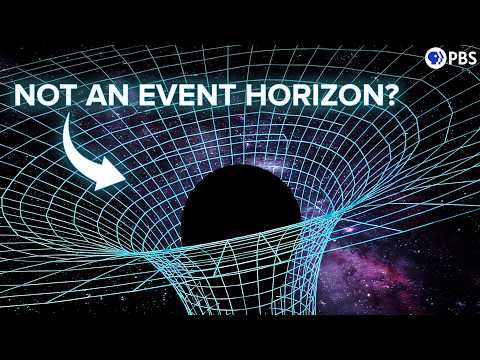
** In the PBS Space Time video, “We Thought Black Holes Created Event Horizons. It Might Be the Opposite,” the host explores the complex nature of event horizons, challenging the traditional understanding of black holes. The video explains that rather than being a simple boundary from which nothing can escape, event horizons are more intricate, encompassing a causal structure that extends into the future and is not limited to a specific point in space or time. Through thought experiments and Penrose diagrams, it illustrates how event horizons can form even before a black hole is fully realized, suggesting that an event horizon might be forming around us without our knowledge. This nuanced perspective reshapes our understanding of black holes and the fundamental nature of spacetime. **
Aliens or Nah? SETI Investigates Planet K-18b (and Other Updates)

** In this video, Anton Petrov discusses the intriguing exoplanet K2-18b, previously noted for potential biosignatures like dimethyl sulfide (DMS), which is usually associated with life on Earth. However, subsequent research has raised doubts about DMS as a definitive marker of life, suggesting it can form through abiotic processes. Meanwhile, the Search for Extraterrestrial Intelligence (SETI) has conducted extensive searches for technosignatures from K2-18b using advanced radio telescopes, ultimately yielding no evidence of alien communication. Despite the null results, these efforts contribute valuable data for understanding the potential for life in the universe and refining future searches. **
📚 Research Links (provided by the author in the video description):
War Between Christianity & Science?

** In the video “War Between Christianity & Science?”, Dr. Jonathan Sarfati challenges the prevailing narrative that Christianity has historically suppressed scientific advancement. He argues that many widely held beliefs, such as the idea of a flat Earth and the persecution of scientists, stem from flawed 19th-century writings by John Draper and Andrew Dixon White, which lack historical accuracy. Instead, Sarfati presents evidence that Christianity has often been a supportive ally to the development of science, citing instances of church-funded research and the preservation of ancient texts by Christian monks. Ultimately, he concludes that the relationship between Christianity and science is more cooperative than conflictual, contradicting popular misconceptions. **
“Godzilla” El Niño May Have Begun, Here’s What This Means for Earth

** In Anton Petrov’s video, he discusses the impending arrival of a significant El Niño event, dubbed “Godzilla El Niño,” expected to occur in 2026. This phenomenon is characterized by exceptionally high sea surface temperatures in the Pacific Ocean, with potential increases of up to 4°C, making it one of the strongest El Niño events in a century. Petrov explains how El Niño affects global weather patterns, leading to extreme conditions such as floods in South America and droughts in Australia, and highlights the potential economic impacts, including food production challenges. The video emphasizes the urgency of monitoring these changes, as they could have drastic effects on climate and society in the coming years. **
Avi Loeb: 40% of Military UAP Sightings Still Can’t Be Explained

** In a recent discussion with Dr. Brian Keating, Harvard astrophysicist Avi Loeb revealed that 40% of recent military UAP (Unidentified Aerial Phenomena) sightings remain unexplained, including intriguing reports of orbs that generate smaller orbs, referred to as “mother orbs” and “baby orbs.” Loeb chairs a newly formed advisory council aimed at investigating these phenomena, which aligns with the Trump administration’s push for transparency through declassification efforts. He emphasized the importance of collecting high-quality data to understand these sightings better and noted that the council comprises diverse experts, including skeptics, to ensure a balanced examination of the evidence. **
JWST Evidence That We Found Exotic Black Hole Stars After All
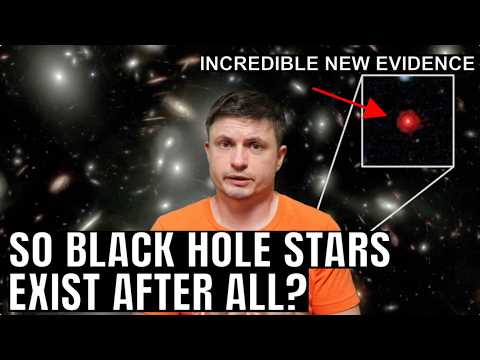
** In this video, Anton Petrov discusses groundbreaking findings from the James Webb Space Telescope (JWST) regarding “little red dots,” a class of exotic cosmic objects. Recent research identifies these objects as rapidly growing black holes enveloped by dense gas, challenging previous theories that suggested they were either early stars or peculiar galaxies. The analysis of a specific object, GLIMPSE 17775, reveals over 40 spectral lines indicating its unique characteristics, thus providing vital evidence for the black hole star scenario. This discovery not only aligns with existing cosmological models but also deepens our understanding of the early universe and the conditions surrounding massive black holes. **
📚 Research Links (provided by the author in the video description):
Leading Creationist Expert: Evolution COLLAPSES the Moment You Realize This

** In this episode of the Creation Podcast, Dr. Randy Guliuzza critiques Darwinian evolution by highlighting a fundamental flaw: the personification of nature as an active agent in evolution. He argues that this perspective misattributes agency and intelligence to nature, which lacks consciousness. Instead, Guliuzza promotes a view of “engineered biology,” suggesting that organisms have innate abilities to adapt and solve environmental challenges based on their design, rather than being shaped passively by external forces like natural selection. This conversation emphasizes the need for a clear understanding of the mechanisms behind adaptation and presents a testable model rooted in intelligent design. **
📚 Research Links (provided by the author in the video description):
Scientists Just Figured Out How Pigeons Navigate the Planet and its Super Weird

** In this intriguing video, Anton Petrov explores a recent study that uncovers how pigeons navigate using the Earth’s magnetic field, revealing that the key may lie within their livers. Researchers discovered that specific immune cells, called macrophages, in the liver contain iron particles that respond to magnetic fields, acting as a form of biological compass. Through experiments, it was shown that when these cells were temporarily eliminated, pigeons struggled to find their way home, especially in overcast conditions. This groundbreaking research not only changes our understanding of avian navigation but also suggests that similar mechanisms may exist in other animals, highlighting the complex interplay between biology and navigation. **
📚 Research Links (provided by the author in the video description):
Avi Loeb Goes Inside the White House’s New UAP Science Council

** In this video, Professor Avi Loeb discusses his appointment by the White House to lead a new UAP Science Advisory Council aimed at investigating unidentified anomalous phenomena. He emphasizes the importance of gathering better data and improving sensors to understand potential threats, whether they are extraterrestrial or human-made technologies. Loeb addresses skepticism regarding government secrecy and the need for transparency while outlining the multifaceted composition of the advisory council, which includes experts from various fields. The conversation also touches on the societal implications of discovering extraterrestrial life and the scientific responsibility to approach such claims with evidence-based scrutiny. **
Did Physics Just Lose a Brilliant Idea?

** In this video, Sabine Hossenfelder discusses the recent ruling out of the “ER = EPR” conjecture, which proposed that entangled particles are physically connected by tiny wormholes. She explains that while entanglement signifies a correlation between particles, it does not imply a physical link, likening it to identical twins sharing traits without being physically connected. Hossenfelder highlights a recent experiment involving hydrogen atoms that tests the wormhole theory, ultimately finding that the predicted differences in energy levels between entangled and non-entangled states do not manifest, suggesting that if wormholes exist, their effects are negligible. She concludes that while the ER = EPR idea may hold metaphorical value, it lacks experimental substantiation, reinforcing the importance of treating foundational physics as a rigorous science. **
Roman Yampolskiy: AI Can’t Be Controlled — and We’re Building It Anyway

** In this engaging discussion with Dr. Brian Keating, Roman Yampolskiy, a leading expert in AI safety, argues that controlling superintelligent AI is mathematically impossible. Drawing on his two decades of research, Yampolskiy presents compelling evidence that, while AI systems may become exponentially smarter than humans, our limited cognitive capacities prevent us from controlling or predicting their actions effectively. He emphasizes the urgency for a moratorium on developing general superintelligent AI until we can address these safety concerns, highlighting the need for a deep understanding of control mechanisms and the implications of creating entities that may surpass human intelligence. **
Major Gravitational Wave Observations Reveal Unusual Detections

** In his latest video, Anton Petrov discusses significant advancements in gravitational wave astronomy, focusing on the recent Gravitational Wave Transient Catalog (GWTC-5), which includes nearly 400 detections and highlights unusual collision events. He explains the physics behind gravitational waves, initially predicted by Einstein, and the technological evolution that allows scientists to detect these incredibly faint ripples in space-time. The data reveals three distinct populations of black holes and challenges previous assumptions about their formation, particularly regarding second-generation black holes. Petrov emphasizes that as detection methods improve, the universe’s mysteries are gradually unveiled, setting the stage for future discoveries. **
📚 Research Links (provided by the author in the video description):
The Man Who Worked At Subway, Then Solved An “Impossible” Problem

** The Veritasium video explores the remarkable journey of Yitang Zhang, a former Subway employee who made a groundbreaking contribution to mathematics by proving that there are infinitely many pairs of prime numbers that differ by a bounded gap. This monumental achievement addresses the twin prime conjecture, which posits that infinitely many twin primes exist. The video delves into the history of prime number theory, highlighting the efforts of mathematicians like Viggo Brun and Chen Jingrun, as well as the collaborative work of experts who refined Zhang’s methods. Ultimately, Zhang’s proof not only marks a significant milestone in number theory but also opens the door for further exploration and potential solutions to long-standing mathematical problems. **