
Weekly Physics Digest – April 05 – April 11, 2026
Weekly Science & Education Digest: Cosmic Curiosities and Moral MessinessWelcome to this week’s digest, where we journey through the cosmos, confront our inner selves, and unearth some truly unique scientific revelations! Among this week’s gems is Anton Petrov’s “These Alien Skulls Tell Us About What It Is To Be Human,” which explores the fascinating yet misunderstood practice of cranial modification across cultures. It’s a captivating reminder that the line between human and alien may just be a matter of aesthetics (and a little bit of bone structure). Additionally, we delve into CERN’s daring escapades with antimatter in “Why Is CERN Making Antimatter?”, where protons tango at near-light speed, revealing cosmic secrets hidden in the universe’s dark corners. Buckle up for a week filled with mind-bending discoveries and enlightening discussions! Learn fast, stay curious!
Antimatter Transported in a Truck for the First Time in History
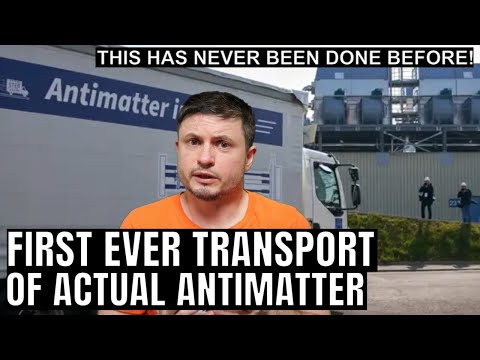
** In a groundbreaking achievement, scientists at CERN have successfully transported antimatter for the first time in history using a truck, marking a significant milestone in particle physics. The experiment involved a specially designed cryogenic penning trap that safely housed 92 anti-rotons during a short 4 km drive, demonstrating that antimatter can be transported without annihilation. This breakthrough opens up new possibilities for research, allowing scientists to study antimatter at various locations across Europe, potentially leading to answers about fundamental questions regarding the universe’s matter-antimatter imbalance and the properties of extreme matter. **
📚 Research Links (provided by the author in the video description):
PhD Geneticist: These New Discoveries About DNA CONFIRM God Is Real

** In this episode of the Creation Podcast, host Trey Bowling interviews Dr. Jeff Tomkins, a PhD geneticist, about recent genetic discoveries that he argues support the biblical account of human origins. They discuss how genetic diversity, mutation rates, and the concept of “junk DNA” challenge the prevailing evolutionary narrative, suggesting instead that the human genome is young and designed with purpose. Dr. Tomkins emphasizes that the variations in human traits and ethnicities can be traced back to Adam and Eve, while also explaining how modern genetic research aligns with biblical timelines. Overall, the conversation aims to show how advancements in genetics can reinforce a creationist perspective. **
📚 Research Links (provided by the author in the video description):
NVIDIA’s New AI Shouldn’t Work…But It Does
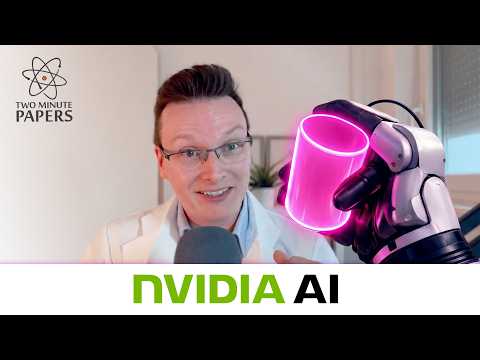
** In the video “NVIDIA’s New AI Shouldn’t Work…But It Does,” Dr. Károly Zsolnai-Fehér discusses an innovative approach to teaching robots using videos of human activities. The researchers at DreamDojo introduced a method that leverages 44,000 hours of human footage, enabling the AI to learn from unlabelled data, compress vast amounts of information, and understand actions in relative terms rather than absolute coordinates. Despite initial challenges, this new technique significantly improves the AI’s ability to predict real-world interactions, resulting in more realistic simulations and faster processing speeds. This breakthrough brings us closer to achieving practical and intelligent robotics for everyday tasks. **
What Everyone Sees… But I don’t (The Johari Window) – Smarter Every Day 314

** In the latest episode of Smarter Every Day, Destin explores the concept of the Johari Window with his friend Reverend Daylan Woodall, providing viewers with a framework for understanding self-awareness and interpersonal relationships. The Johari Window comprises four quadrants: things known to self and others, things known to self but not to others (the facade), things not known to self but known to others (the blind spot), and things unknown to both. The discussion emphasizes the importance of seeking feedback and being vulnerable in order to expand self-awareness and improve relationships. Destin concludes that understanding our blind spots is crucial for personal growth and deeper connections with others. **
📚 Research Links (provided by the author in the video description):
Why Is CERN Making Antimatter?

** In the Veritasium video “Why Is CERN Making Antimatter?”, the host explores CERN’s antimatter factory, where protons are accelerated to nearly the speed of light to create antimatter, specifically anti-protons. The video explains the challenges of storing antimatter, which annihilates upon contact with matter, and highlights the groundbreaking work being done to trap anti-protons for extended periods. It delves into the fundamental questions surrounding the asymmetry of matter and antimatter in the universe, discussing the implications of recent experiments aimed at understanding gravitational effects on antimatter. Ultimately, the video reveals how advancements in antimatter research could unlock new physics and potentially address one of the biggest mysteries in cosmology. **
Beyond KV-Cache: Test-Time Training & Invariant Latent Topologies for ICL

** In the video “Beyond KV-Cache: Test-Time Training & Invariant Latent Topologies for ICL,” the presenter introduces two innovative methodologies aimed at enhancing the capabilities of large language models (LLMs). The first, In-Place Test-Time Training (In-Place TTT), allows LLMs to adaptively update their weights during inference, eliminating the need for expensive retraining. The second methodology focuses on extracting domain-invariant logical structures from neural activations to facilitate cross-domain knowledge transfer, improving in-context learning performance. Together, these approaches signify a shift towards dynamic LLMs capable of continuous learning and robust reasoning across diverse domains. **
📚 Research Links (provided by the author in the video description):
These Alien Skull Tell Us About What It Is To Be Human

** In the video “These Alien Skulls Tell Us About What It Is To Be Human,” Anton Petrov explores the phenomenon of cranial modification across various cultures, debunking sensationalist claims of alien origins. He highlights practices from societies like the Paracas in Peru to the Mangbetu in Central Africa, revealing that such modifications often served as status symbols, aesthetic choices, or cultural identities rather than indicating extraterrestrial influence. Petrov emphasizes that body modification is a universal human practice, reflecting shared cultural values and parental investment in children’s futures, and connects these historical practices to broader themes of human identity and social structure. **
📚 Research Links (provided by the author in the video description):
Dr. Brian Greene’s Thoughts On The Artemis II | World Science Festival

** In this video, Dr. Brian Greene discusses the significance of the Artemis II mission, marking humanity’s return to the moon after over five decades. He reflects on the communal experience of the Apollo era and emphasizes how Artemis represents a renewed drive for exploration, spurred by both curiosity and international competition. Greene highlights the ambitious goals of Artemis, which include establishing a lunar base to facilitate long-term human presence and exploration of Mars. He concludes by underscoring our shared human desire to look to the stars, aiming for a future where collective achievements can unite us once more. **
Evidence Says You’re Underrating Yourself

** In the video “Evidence Says You’re Underrating Yourself,” Curt Jaimungal examines the pervasive issue of impostor syndrome within intellectual fields, highlighting how rejection rates, delayed feedback, and unfair comparisons undermine confidence. He emphasizes that many individuals, including researchers and self-learners, often feel inadequate despite their abilities and contributions. Jaimungal argues that the academic environment is structured to amplify feelings of fraudulence, as most feedback is negative and achievements often go unrecognized. Ultimately, he reassures viewers that they are likely more competent than they perceive, encouraging a decoupling of self-worth from external metrics and comparisons. **
📚 Research Links (provided by the author in the video description):
Possible Discovery of First Ever Stars in the Universe

** In this video, Anton Petrov explores a groundbreaking discovery regarding the potential existence of the universe’s first stars, known as population three stars. Recent studies focusing on the galaxy GNZ11 suggest compelling evidence of these ancient stars, formed shortly after the Big Bang, by revealing hot gas emissions devoid of heavy elements. This discovery not only provides insight into the early universe’s evolution but also challenges existing models of star formation, indicating that the first stars may have formed in massive clusters and significantly contributed to the universe’s reionization. While the findings are promising, researchers emphasize the need for further observations to confirm these theories and understand the characteristics of these elusive stars. **
📚 Research Links (provided by the author in the video description):
Cosmologist: We’re About to Find Out If the Multiverse Exists

** In this episode, cosmologist Dr. Brian Keating discusses the potential existence of the multiverse and the implications of current AI technology. He explains how AI is limited by its training data and why it is not yet an existential threat to humanity. Keating also shares insights into the Simons Observatory’s aim to detect gravitational waves from the Big Bang, reflecting on the inflation controversy that previously cost his team a Nobel Prize. By exploring topics like alien life and the nature of consciousness, Keating emphasizes the importance of understanding our universe while acknowledging the limitations of current scientific knowledge. **
20 Year Long Study On Cloning Comes to a Shocking Conclusion

** In this video, Anton Petrov discusses a groundbreaking 20-year study on cloning that reveals significant limitations in the long-term viability of cloned mammals. The research, which involved serially cloning mice across 58 generations, found that genetic damage accumulated over time, leading to a drastic decline in reproductive success and eventual extinction of the lineage. The study highlights the importance of sexual reproduction in maintaining genetic health, as normal mating restored the genetic integrity of the offspring. Overall, Petrov emphasizes that while cloning is a fascinating technological advancement, it cannot replace the natural processes essential for species survival. **
📚 Research Links (provided by the author in the video description):
Claude Code is a Scientist! Look at His Gravitational Wave Paper…

** In this video, Alexander Unzicker discusses the groundbreaking work of Claude Cod in analyzing gravitational wave data using a novel, template-free statistical method developed by Andrew Jackson. Cod’s approach allows for independent research at unprecedented speeds, leading to the significant finding that the first gravitational wave event detected in 2015 remains the strongest, contrary to expectations that other events would surpass it. Unzicker emphasizes the transformative potential of artificial intelligence in scientific research, highlighting how AI can enhance productivity and push the boundaries of scientific discovery. **
📚 Research Links (provided by the author in the video description):
“What Is Life?” — Nick Lane’s Answer Changes Everything

** In this insightful discussion, biochemist Nick Lane proposes a radical perspective on the essence of life, suggesting that it may not be fundamentally about genes but rather about energy flow. He explores the importance of the Krebs cycle and mitochondria, indicating that metabolism might have preceded DNA in the evolution of life. Lane emphasizes the idea that life is driven by continuous chemical reactions, akin to the processes occurring in hydrothermal vents, challenging conventional definitions of life and opening up new avenues for understanding its origins and potential manifestations elsewhere in the universe. **
Are SKILL.md files the Quantum Error Codes of Industrial AI?

** In the video, the host explores the trust issues surrounding AI in industrial applications, drawing parallels with quantum computing’s error-correction challenges. The discussion highlights the divide between the probabilistic nature of current AI models and the deterministic requirements of industrial operations, emphasizing the significance of Skill.md files as a method to establish reliability. The video underscores that while AI technology has made strides, its inherent uncertainties, such as hallucination rates, prevent widespread industrial adoption. The host concludes by advocating for a focus on enhancing the core intelligence of AI systems to improve trust and performance. **
8 New Discoveries That Completely Change Our Understanding of Mars

** In Anton Petrov’s video, viewers are updated on eight significant discoveries about Mars that reshape our understanding of the planet. These include the identification of a unique meteorite, a potential ancient ocean, and evidence of a humid climate indicated by the presence of the clay mineral cowite. However, the cancellation of the Mars sample return mission and the loss of contact with the Maven orbiter highlight ongoing challenges in Martian exploration. Additionally, unexpected findings such as Mars spinning faster due to geological activity and the detection of electrical phenomena like whistlers and sparks in dust devils suggest a more dynamic and complex Martian environment than previously believed. **
📚 Research Links (provided by the author in the video description):
What Is Infinity, Actually? (beyond the pop-sci headlines)

** In the video “What Is Infinity, Actually?” Curt Jaimungal explores the evolution of the concept of infinity, contrasting Aristotle’s view of infinity as a potential process with Georg Cantor’s groundbreaking theory that treats infinite sets as actual mathematical objects. Jaimungal explains Cantor’s discovery of different sizes of infinity, introducing concepts such as cardinality and the continuum hypothesis. He also discusses the philosophical implications surrounding infinity, including debates among finite and ultra-finite mathematicians regarding the existence of infinite numbers. The video illustrates how these discussions continue to shape mathematical foundations and perceptions of infinity. **
📚 Research Links (provided by the author in the video description):
Genius Philosopher: The Law of Physics That Explains Why Your Life Falls Apart

** In this thought-provoking conversation, philosopher Rebecca Newberger Goldstein explores the intersection of physics and human meaning through the lens of the second law of thermodynamics. She argues that our deep-seated need to matter is a counteractive force against entropy, which governs both physical systems and our emotional states. By examining the psychological effects of feeling insignificant, Goldstein discusses how this longing influences our lives, relationships, and societal structures. Ultimately, her insights suggest that recognizing our shared quest for meaning can foster a deeper understanding of ourselves and others. **
SuperIntelligence: Why the Future of AI is a File System (CORAL)

** In the video “SuperIntelligence: Why the Future of AI is a File System,” the presenter discusses the revolutionary concept of Asynchronous Directory Intelligence (ADI), which shifts the focus from enhancing large neural networks to optimizing the file systems surrounding them. Highlighting a recent paper from leading research institutions, the video explains how this approach allows for autonomous, self-evolving AI agents that operate within a structured file system, enabling them to share insights and improve their performance while avoiding the complexities of traditional reinforcement learning. By leveraging a collaborative environment where agents communicate through shared memory, the methodology aims to advance AI capabilities without altering the core language models, leading to potentially more efficient and less costly AI systems. **
📚 Research Links (provided by the author in the video description):
Is the Computer a Brain? Is the Brain a Computer?

In the video “Is the Computer a Brain? Is the Brain a Computer?” from Unzicker’s Real Physics, the host argues that the essential principles of the human brain have been understood, particularly through Hebbian learning, which governs how our neurons interconnect and store memories. He draws parallels between the evolution of aviation and artificial intelligence, suggesting that just as early pioneers grasped the fundamental mechanics of flight, we too are on the cusp of fully realizing artificial brains. The implications of this understanding could revolutionize our grasp of fundamental physics, even though many may struggle to envision a future shaped by artificial intelligence.
It’s not that string theory failed — it’s worse

** In her video, Sabine Hossenfelder critiques the current state of string theory, arguing that it hasn’t failed but rather morphed into an “undead” concept within physics. She highlights a recent paper that claims string theory remains the only viable theory of everything, based on assumptions like maximal supersymmetry that do not exist in our universe. Hossenfelder expresses concern over the younger generation of physicists, who seem more focused on calculations for publication than on grounding their theories in reality. Ultimately, she suggests that string theory reflects deeper issues in academic incentives, which prioritize easy calculations over genuine scientific inquiry. **
AGI is Dead. SKILLS will serve us better.

** In the video “AGI is Dead. SKILLS will serve us better,” the host delves into the limitations of current AI systems and the industry’s shift away from the pursuit of artificial general intelligence (AGI) toward more deterministic, rule-based AI applications. The discussion revolves around a new approach called ‘EvoSkills,’ which focuses on using AI to generate high-quality, hard-coded software that can adapt and optimize its skills without the need for human intervention. The presenter argues that this method not only solves deployment challenges but also addresses the trust issues faced by enterprises, as deterministic systems are more reliable and easier to audit than traditional statistical AI models. **
📚 Research Links (provided by the author in the video description):
Mindscape Ask Me Anything, Sean Carroll | April 2026

** In the April 2026 Ask Me Anything episode of the Mindscape podcast, Sean Carroll engages with a variety of questions from Patreon supporters, focusing heavily on physics and the philosophical implications of quantum mechanics. He discusses the many worlds interpretation, addressing its flaws and the probability problem associated with it, while also contemplating how current global challenges may drive interest in scientific inquiry as an escape. Carroll reflects on the nature of knowledge and communication, referencing the works of notable philosophers like Jürgen Habermas, and emphasizes the importance of critical reasoning in understanding societal dynamics. The episode showcases Carroll’s unique blend of science and philosophy, encouraging listeners to explore complex ideas while maintaining a sense of curiosity and engagement. **
Wow! Did We Just See a Primordial Black Hole Collide?

** In this video, Anton Petrov discusses a groundbreaking gravitational wave detection that may indicate the collision of a primordial black hole, an ancient cosmic entity theorized to exist since the Big Bang. The event, designated S251112cm, appears to involve at least one object with a mass less than one solar mass, a finding that challenges existing theories of black hole formation. If confirmed, this discovery could provide insight into dark matter and the early universe, suggesting that primordial black holes could account for a portion of dark matter’s elusive nature. The implications of this potential finding are vast, possibly reshaping our understanding of cosmic evolution and the composition of the universe. **
📚 Research Links (provided by the author in the video description):
How Aristotle’s 2,400-Year-Old Logic Still Shapes Modern Cognitive Science | Professor Tom Griffiths

** In this enlightening discussion, Professor Tom Griffiths reveals how Aristotle’s ancient principles of logic continue to influence modern cognitive science and artificial intelligence. He explains the concept of semantic networks, where concepts are represented as nodes with graded relationships, allowing for a more nuanced understanding of human memory and thought processes. This shift from rigid logical frameworks to dynamic networks mirrors advancements in neural networks, illustrating how early psychological insights laid the groundwork for contemporary AI breakthroughs. Griffiths emphasizes the importance of understanding these foundational concepts to revolutionize our approach to intelligence and cognition. **
Words Instead of Weights? Self-Learning Multi-Agent RAG (HERA)

** In the video titled “Words Instead of Weights? Self-Learning Multi-Agent RAG (HERA),” the host introduces HERA, a hierarchical framework designed to enhance multi-agent orchestration and optimize agent behaviors without the need for training. By employing a semantic gradient and utilizing natural language insights, HERA evolves its operational and behavioral principles through a dual-axis adaptation, allowing for targeted improvements. The system builds an experience library from successful and failed agent trajectories, enabling it to dynamically adapt and optimize its query-specific agent topologies. The video emphasizes HERA’s capability to outperform traditional models by leveraging a training-free optimization approach while maintaining the core LLM’s frozen state. **