
Weekly Physics Digest – March 29 – April 04, 2026
This Week in Science: Anomalous Discoveries and Quantum Quandaries! Welcome to another week of mind-bending scientific discoveries and educational joy! Get ready to dive into the mysterious world of Unidentified Anomalous Phenomena (UAPs), as Sabine Hossenfelder uncovers evidence that suggests some scientists are *literally* afraid to speak out about these celestial enigmas. And for those who love a delightful twist, check out Anton Petrov’s quirky exploration of self-aware cleaner wrasse fish; yes, you read that right—fish that can recognize themselves in mirrors! This week, we’re connecting the dots between the cosmos and consciousness, with a sprinkle of quantum mechanics to keep your neurons firing. Learn fast, stay curious!
Daniel Harlow on What Quantum Gravity Teaches Us About Quantum Mechanics | Mindscape 349

** In this episode of the Mindscape podcast, Sean Carroll engages with physicist Daniel Harlow to explore the intricate relationship between quantum gravity and quantum mechanics. They discuss the longstanding challenge of reconciling Einstein’s general relativity with quantum theory, highlighting the lack of breakthroughs in fundamental physics since the late 20th century. Harlow presents innovative ideas involving quantum information theory and emergent spacetime, questioning how traditional concepts of observers fit into cosmology. The conversation culminates in a deep dive into the black hole information paradox, suggesting that the universe may possess zero degrees of freedom, challenging existing notions of cosmological structure. **
85% of Dark Matter May Be a Model Artifact
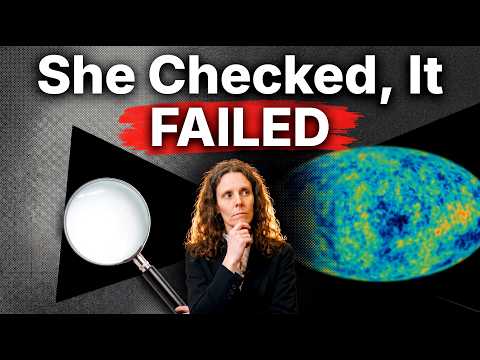
** In this episode, Dr. Jenny Wagner presents a provocative claim that up to 85% of dark matter may be an artifact of our models rather than an actual component of the universe. She argues for a separation between observational data and model assumptions, suggesting that current estimations of dark matter may be significantly overestimated. By focusing on local information derived from gravitational lensing, Wagner emphasizes that many widely accepted models in cosmology rely heavily on assumptions that may not accurately reflect reality. This conversation challenges the scientific community to reconsider the framework through which we interpret cosmic structures and the nature of dark matter itself. **
Crazy: Riemann Hypothesis Linked to Black Holes, Physicists Find

** In her video, Sabine Hossenfelder explores the intriguing connection between the Riemann Hypothesis, a longstanding open problem in mathematics related to prime number distribution, and black hole physics. Recent research indicates that the behavior of gravity near singularities may exhibit chaotic dynamics that resemble the quantum properties tied to the Riemann zeta function. While the implications of this link are still being evaluated, Hossenfelder highlights a trend in physics towards unifying quantum mechanics and gravity by focusing on energy rather than spatial dimensions. This evolving narrative raises questions about the future relevance of abstract mathematics in advancing our understanding of fundamental physics. **
📚 Research Links (provided by the author in the video description):
AI Designed Its Own Memory w/ AutoResearchClaw: OmniMEM

** The video discusses the development of OmniMEM, an innovative AI multimodal memory system created by AutoResearchClaw, a collaborative project involving multiple universities and Cisco. It outlines the architecture and self-learning capabilities of the system, which enables it to autonomously generate research papers and improve its memory structure through iterative experimentation. Key breakthroughs include selective ingestion to reduce redundancy, a unified representation for multimodal data, and a progressive retrieval mechanism that enhances information retrieval efficiency. The video emphasizes the potential applications of OmniMEM for lifelong AI agents and raises questions about the future of AI research and development. **
📚 Research Links (provided by the author in the video description):
Detection of a Planetary Collision Similar to One That Created Earth’s Moon
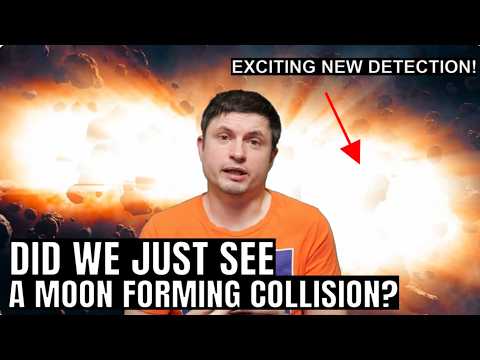
** In this video, Anton Petrov discusses a groundbreaking discovery involving a planetary collision observed in the star system Gaia GIC1, located 11,500 light-years away. Researchers utilized data from the Gaia Space Telescope to analyze unusual light fluctuations from the star, revealing evidence of a massive collision between two planetary bodies. This event mirrors Earth’s early history, where a similar collision is thought to have formed the Moon, providing astronomers a unique opportunity to study the processes behind planetary formation and the potential for habitable systems. The findings underscore the importance of monitoring such cosmic events to understand how Earth-like conditions may arise in other star systems. **
📚 Research Links (provided by the author in the video description):
The Dark Energy Mystery: What We Learned at the Royal Observatory Edinburgh

** In this video, Dr. Brian Keating and cosmologist Marcos Pellejero explore the Royal Observatory Edinburgh, delving into the enigma of dark energy and its implications for the universe’s acceleration. They discuss the historical significance of the observatory, the pioneering work of human “computers,” and the cutting-edge DESI experiment, which aims to map galaxies and investigate whether dark energy remains constant. The conversation reveals tensions between cosmological and particle physics theories, suggesting that dark energy may not be a fixed quantity, prompting a reevaluation of our current cosmological models. **
The Universe Is Accelerating…and No One Knows Why

** In “The Universe Is Accelerating…and No One Knows Why,” Arvin Ash delves into the mystery of dark energy, which constitutes nearly 70% of the universe yet remains largely unexplained. The video outlines how dark energy was discovered through observations of the universe’s accelerating expansion, challenging previous assumptions that gravity would slow it down. Ash explores various hypotheses, including the cosmological constant, repulsive gravity, and evolving theories like quintessence, which suggest that dark energy may be linked to supermassive black holes. Despite ongoing research, dark energy’s true nature and its implications for the universe’s future remain one of the greatest enigmas in modern physics. **
NEW GEMMA 4 beats GPT-5.4: The A4B Model
** In this video, the presenter tests two of Google’s newly released GEMMA 4 models—specifically the 31 billion dense model and the 26 billion mixture of experts model—focusing on their capabilities in scientific reasoning, logic, and causal reasoning. The surprising results reveal that the smaller 4 billion parameter model outperformed the larger 31 billion model in tasks requiring deep reasoning and strategic planning, achieving impressive results with fewer button presses. The video emphasizes the importance of validating AI models against defined constraints, showcasing the GEMMA 4’s performance as a significant advancement in open-source AI capabilities. **
Turing’s Test and Wittgenstein’s Triumph

** In “Turing’s Test and Wittgenstein’s Triumph,” Alexander Unzicker argues that computers have indeed passed the Turing test, as they often outperform humans in conversation by demonstrating superior knowledge and responsiveness. He discusses the philosophical implications of language and meaning through the lens of Ludwig Wittgenstein, emphasizing that the success of modern large language models stems from their context-based understanding of language. Unzicker posits that there are no fundamental limits to computer intelligence, predicting a future where computers achieve superhuman capabilities, particularly in tackling complex questions in fundamental physics. **
Scientists Identify 45 Exciting Planets to Look for Life

** In the video “Scientists Identify 45 Exciting Planets to Look for Life,” Anton Petrov discusses a groundbreaking study that identifies 45 Earth-like exoplanets within our galaxy that may harbor life. Researchers from Cornell’s Carl Sagan Institute analyzed over 6,000 confirmed exoplanets, focusing on those in the habitable zone and similar in radiation levels to Earth. Notable candidates include Proxima B and Trappist-1e, both of which present intriguing possibilities for life despite challenges in studying them. The video emphasizes the importance of expanding our search criteria for life beyond Earth-like conditions, highlighting the potential for diverse forms of life adapted to various environments. **
Something Disturbing Happens When You Solve Einstein’s Equations This Way

** In this PBS Space Time video, the host explores Kurt Gödel’s groundbreaking solution to Einstein’s equations, which reveals the potential for time travel without requiring exotic physics. Gödel’s “universe” introduces closed timelike curves, challenging the idea that general relativity guarantees a consistent causal structure. By demonstrating that spacetime can loop back on itself, Gödel’s work highlights a significant limitation within general relativity and prompts further exploration into the fundamentals of time and causality. This discovery not only reshapes our understanding of the universe but also underscores the importance of Gödel’s contributions to modern physics. **
His Students Couldn’t Handle What He Proved

** In this thought-provoking episode featuring Professor Renato Renner, the discussion delves into the emotional and philosophical implications of different interpretations of quantum mechanics, particularly the Many-Worlds interpretation. Renner shares personal experiences that shaped his views, noting how the complexities of quantum theory can impact students on a psychological level. He addresses the challenges of reconciling knowledge between multiple agents and critiques existing interpretations, expressing concern that none satisfactorily address this issue. His journey reflects a struggle with the emotional weight of fundamental questions about reality and knowledge, illustrating the intimate connection between scientific inquiry and personal belief. **
Meta Harness: Every AI Needs a Harness AI (Claude Code, MIT, Stanford)

** In the video “Meta Harness: Every AI Needs a Harness AI,” the presenter explores a groundbreaking framework called Meta-Harness, designed to enhance AI performance by allowing a lead AI agent to autonomously read, debug, and rewrite its own operational code. The focus shifts from merely improving the core language model (LLM) to optimizing the surrounding processes that feed it information, effectively creating a more intelligent outer layer. The Meta-Harness system aims to enhance learning by refining how AI systems interact with their execution logs, leading to better data preparation and reasoning capabilities. Key insights include the importance of harness engineering and how it can significantly influence AI development, suggesting that the future of AI optimization lies in mathematical approaches to harness configuration. **
📚 Research Links (provided by the author in the video description):
First Scientific Confirmation of Consciousness in a Tiny Fish

** In this video, Anton Petrov discusses the groundbreaking discovery of self-awareness and intelligence in the cleaner wrasse fish (Labroides dimidiatus), challenging long-held beliefs about fish cognition. Recent studies from Osaka Metropolitan University revealed that these tiny fish can pass the mirror test, recognizing themselves almost immediately after being marked, a feat not previously observed in any other fish species. Additionally, the cleaner wrasses exhibit complex social behaviors, including maintaining reputations among larger fish and even third-party punishment, suggesting a level of cognitive sophistication previously thought to be exclusive to mammals. This emerging understanding of fish intelligence has significant implications for our understanding of consciousness and animal welfare. **
📚 Research Links (provided by the author in the video description):
Object That Wobbled Space Time Just Solved Two Mysteries in Astronomy

** In this video, Anton Petrov discusses the groundbreaking discovery related to magnetars, a type of neutron star with extraordinarily strong magnetic fields, and how it has potentially solved the mystery of super luminous supernovae. Recent observations of a supernova event known as SN204 AFA revealed unusual brightness patterns that align with the behavior of magnetars, supporting a hypothesis from 2010. This connection confirms that as a magnetar spins, it may influence the surrounding material, creating observable variations in brightness. The findings also pave the way for new tests of general relativity and could lead to further insights into other cosmic phenomena, such as fast radio bursts. **
📚 Research Links (provided by the author in the video description):
Your Brain Didn’t Evolve – Psychiatrist Explains Why

** In the video “Your Brain Didn’t Evolve – Psychiatrist Explains Why,” Dr. Dianne Grocott presents her argument that the human brain, with its intricate and purposeful design, could not have arisen by chance through evolutionary processes. She discusses the complexity of the brain’s functions, such as its ability to process information and maintain homeostasis, and asserts that these features indicate a deliberate designer rather than random evolution. Dr. Grocott also explores how the brain’s feedback loops and chemical balances exemplify design, challenging the notion of evolution as a viable explanation for the brain’s development. Ultimately, she emphasizes the implications of believing in a designer for understanding human purpose and morality. **
Two Physicists, Both Certain, Opposite Answers

** In this thought-provoking discussion, physicists Renato Renner and Curt Jaimungal explore the complexities of certainty and knowledge in physics, particularly within the framework of quantum theory. They examine the concept of “contradictory knowledge,” illustrating how two physicists can arrive at opposing conclusions about the same quantum experiment without inconsistency, as long as they both apply the theory correctly. The conversation emphasizes the importance of establishing minimal consistency conditions in physics, particularly when contrasting predictions arise in quantum mechanics. Through engaging analogies, such as the coin flip, they clarify the distinction between incomplete knowledge and actual contradictions in theoretical predictions. **
Google’s New AI Just Broke My Brain

** In “Google’s New AI Just Broke My Brain,” Two Minute Papers explores Google’s groundbreaking TurboQuant method, which promises to significantly reduce the memory requirements for AI systems while simultaneously speeding up processing. The technique cleverly combines established methods like quantization and the Johnson-Lindenstrauss Transform to compress short-term memory in AI, resulting in up to 40% less memory usage and improved speed. Although the initial media hype suggested dramatic reductions in RAM requirements, practical applications show more modest yet impressive benefits, particularly for handling extensive data inputs. The video also addresses ongoing debates within the research community regarding the novelty and implications of TurboQuant. **
📚 Research Links (provided by the author in the video description):
Cave Art and God’s Image | Fazale “Fuz” Rana and David Block

** In this engaging episode of “Star Cells and God,” biochemist Fazale “Fuz” Rana and astronomer David Block explore the fascinating intersection of cave art, human identity, and divine image. They discuss how the sophisticated artistry of early humans, particularly the Bushmen of Southern Africa, reflects not just their survival instincts but also their complex understanding of themselves and the cosmos. By analyzing the techniques and locations of cave art, they argue that these expressions signify a deep quest for meaning and connection to the transcendent, supporting the notion of human exceptionalism rooted in being made in God’s image. Ultimately, they invite viewers to reconsider the significance of cave art as a testament to humanity’s spiritual and artistic legacy. **
My First Only Fans Video and Some Other Science

In this entertaining video, Anton Petrov humorously discusses his foray into creating content for OnlyFans, cleverly using the term to refer to a high-powered fan he engineered for air filtration. As part of an April Fool’s prank, he examines various bizarre scientific studies that challenge conventional understanding, from cats manipulating gravity to quantum entanglement in sheep. By presenting these outlandish concepts alongside a real study on gut health tracking through fart detection, Petrov emphasizes the strange humor within the scientific community and invites viewers to discern reality from fiction. Ultimately, he highlights the importance of creativity in science and encourages audience engagement through support on platforms like Patreon.
📚 Research Links (provided by the author in the video description):
The ‘Odd’ Solar System: Why Our Planetary Alignment is Rare

** In the video “The ‘Odd’ Solar System: Why Our Planetary Alignment is Rare,” the host discusses recent findings in planetary formation that reveal our solar system is uniquely structured compared to many exoplanets discovered. Contrary to previous assumptions that our solar system was typical, new observations indicate a more chaotic and dynamic process of planet formation, suggesting that many planetary systems do not resemble ours. The conversation also highlights how these scientific discoveries resonate with the biblical description of early Earth in Genesis, emphasizing a remarkable alignment between ancient texts and modern science. Ultimately, the video explores the intricate gravitational interactions that make our solar system conducive to life, pointing to the distinctiveness of Earth’s environment. **
More Evidence for UAPs! Scientists Afraid to Speak Out

** In the video “More Evidence for UAPs! Scientists Afraid to Speak Out,” Sabine Hossenfelder discusses the growing evidence for Unidentified Anomalous Phenomena (UAPs), previously known as UFOs. She highlights recent findings from astrophysicists who analyzed old telescope images, revealing transient objects that appear and disappear, suggesting they are close to Earth and reflect light—characteristics not typical of natural objects. Despite these intriguing discoveries, Hossenfelder points out that many scientists hesitate to pursue UAP research due to fears of damaging their reputations and a lack of funding, perpetuating a stigma that stifles scientific inquiry into these phenomena. **
She Solved a 30-Year Physics Mystery by Accident
** In the video, Dr. Jenny Wagner discusses her unexpected breakthrough in solving a longstanding physics problem related to gravitational lensing. By examining a friend’s thesis in quantum chemistry, she discovered that the mathematical principles governing electron arrangements mirrored those of gravitational phenomena. This insight allowed her to address 30 years of degeneracy issues in lensing models by translating complex mathematical theorems directly into physical interpretations. Her unique approach emphasizes the importance of rigorous mathematical frameworks in understanding physical realities, which she believes many astrophysicists overlook. **
Math Formula for Optimal AI Communication Bandwidth?

** In the video “Math Formula for Optimal AI Communication Bandwidth?” from Discover AI, the presenter explores the complexities of multi-agent systems using large language models (LLMs) and introduces a new mathematical theory regarding communication bandwidth. The discussion centers on how limiting the bandwidth can lead to a phenomenon called “mimetic drift,” where agents may converge on a consensus not through reasoning but rather by chance, resulting in a loss of nuanced understanding. The presenter emphasizes that effective communication protocols are crucial to avoid misleading agreements among AI agents and provides practical suggestions for enhancing multi-agent communication, such as avoiding binary voting and encouraging agents to transmit broader hypotheses. **
📚 Research Links (provided by the author in the video description):
Science Journalist: They Called Him Crazy Then The Death Rate Went to Zero

** In this engaging conversation, science journalist Matt Kaplan discusses his book, “I Told You So!: Scientists Who Were Ridiculed, Exiled, and Imprisoned for Being Right,” highlighting the often-overlooked struggles of scientists who challenge established paradigms. He reflects on the tragic story of Ignaz Semmelweis, who discovered the importance of handwashing in preventing maternal deaths but faced severe backlash from his peers. Kaplan also addresses how the pandemic revealed the complexities and shortcomings of scientific communication, emphasizing the need for transparency and better public understanding of the scientific process. The discussion culminates in calls for reforming how science is funded and communicated to encourage innovative breakthroughs. **
Black Hole Collision Shocked Scientists When it Produced Light

** In the video “Black Hole Collision Shocked Scientists When it Produced Light,” Anton Petrov discusses a groundbreaking black hole merger event that occurred on November 25, 2024, which unexpectedly emitted X-ray and gamma radiation. This phenomenon challenges the fundamental understanding of black holes, which are typically defined by their inability to emit light. Following the gravitational wave detection from the merger of two black holes 4.2 billion light-years away, astronomers suggest that the collision likely took place within the accretion disk of a supermassive black hole, allowing for the extraordinary emissions. This event marks a significant milestone in gravitational wave astronomy, as it could be the first time light has been observed from a black hole merger. **
📚 Research Links (provided by the author in the video description):
Quantum Mechanics Contradicts Itself (and He Proved It)

** In the video “Quantum Mechanics Contradicts Itself (and He Proved It),” Curt Jaimungal interviews Professor Ronaldo Rener, who discusses the inherent contradictions within quantum theory when applied to observers. Rener argues that three assumptions—quantum theory’s universality, the nature of measurements, and consistency in reasoning—must hold true, yet they lead to paradoxes when observers analyze quantum phenomena. The conversation delves into how these contradictions challenge our understanding of physics, especially in contexts like the black hole information paradox, and underscores the need for a more profound examination of how quantum mechanics applies to both the universe and the physicists who study it. **
📚 Research Links (provided by the author in the video description):
Are the Van Allen Belts Deadly? Debunking the Biggest Moon Landing Hoax!

** In this episode, Dr. Brian Keating discusses the Van Allen radiation belts in the context of moon landing conspiracy theories, particularly those propagated by public figures like Kim Kardashian and Candace Owens. He debunks the notion that these radiation belts are deadly and concludes that astronauts can safely traverse them during space missions. Keating emphasizes that the claims made against NASA’s moon landing, including the supposed dangers of the Van Allen belts and the behavior of astronauts during press conferences, lack scientific validity and are rooted in misunderstandings of physics and space travel. He argues for the importance of recognizing NASA’s achievements and the scientific research that supports safe human space exploration. **
RAG Without Text: The S-Path-RAG Breakthrough

** In the video “RAG Without Text: The S-Path-RAG Breakthrough,” the presenter discusses a novel approach to multi-hop knowledge graph question answering called the S-Path-RAG system. This innovative method shifts from traditional text-based retrieval to a structure-aware graph topology, allowing models to maintain logical connections and improve reasoning capabilities. By leveraging a combination of graph neural networks and latent vector representations, the system enhances the efficiency of information retrieval and reduces the cognitive load on large language models (LLMs). The discussion highlights how this approach addresses limitations of existing RAG systems, particularly in preserving relational structures during knowledge representation. **
📚 Research Links (provided by the author in the video description):