
Weekly Physics Digest – March 22 – March 28, 2026
Weekly Digest: Curiosities and Conundrums from the Cosmos to Culture. This week, buckle up as we dive into some truly mind-bending content! From the visually perplexing mathematics of M.C. Escher to discoveries that may change how we perceive dark matter, there’s no shortage of intellectual intrigue. One standout video, “This Picture Broke My Brain” by 3Blue1Brown, takes viewers on a wild ride through Escher’s art and its complex mathematical underpinnings. Meanwhile, Sabine Hossenfelder tantalizes our imagination with the idea that faster-than-light signaling could be more than just a sci-fi fantasy. As we traverse this week’s offerings, we see themes of challenging established norms, whether in physics, biology, or our understanding of intelligence itself. Learn fast, stay curious!
Black Holes May Not Be What We Thought | World Science Festival

** In the World Science Festival video, Brian Greene and physicist Samir Mathur delve into the enigmatic nature of black holes, addressing the long-standing black hole information paradox. They discuss how traditional views of black holes as entities that erase information conflict with quantum mechanics, which posits that information cannot be destroyed. Mathur introduces the fuzzball theory, a radical rethinking of black holes that suggests they are not empty voids but rather complex structures that maintain information, thus bridging the gap between quantum mechanics and general relativity. The conversation underscores the ongoing debate within the physics community regarding the true nature of black holes and their implications for our understanding of the universe. **
Are Penrose’s CMB Rings From a Prior Universe?

** In this episode of “Theory of Everything,” Curt Jaimungal and Dr. Jenny Wagner delve into the implications of Roger Penrose’s theory that the cosmic microwave background (CMB) rings might be remnants from prior universes, as proposed in his conformal cyclic cosmology. They discuss the challenges of reconciling observations of the early universe with the late universe and examine the statistical significance of findings related to quasars and large cosmic structures. Wagner emphasizes the need for more precise data to validate or refute Penrose’s claims, highlighting a divide in the scientific community regarding interpretations of the CMB. The conversation ultimately points to a broader re-evaluation of the cosmological model, suggesting the universe may be more complex than previously thought. **
Quantum Mechanics vs. Biochemistry: Spooky Action at a Distance

** In the video “Quantum Mechanics vs. Biochemistry: Spooky Action at a Distance,” scientists discuss the fascinating parallels between quantum mechanics and biochemistry, particularly focusing on gene regulation via enhancers. Enhancers, which can be located over 400,000 base pairs away from the genes they influence, showcase a form of “spooky action at a distance,” similar to quantum entanglement. As researchers uncover the mechanisms by which these enhancers work, the complexity and sophistication of biochemical systems suggest intentional design, reinforcing the argument for a Creator’s handiwork in the structure of life. This exploration highlights the intricate connections in biological systems that point to evidence of design at the molecular level. **
Christian PhDs: 5 New Discoveries That Have Atheists SCRAMBLING

** In the video “Christian PhDs: 5 New Discoveries That Have Atheists SCRAMBLING,” scientists from the Institute for Creation Research (ICR) unveil five significant peer-reviewed discoveries from 2025 that align with a biblical worldview. These findings span various fields, including astronomy, genetics, and geology, and challenge traditional timelines of the universe and evolution. Highlights include revelations from the James Webb Space Telescope about the unexpected maturity of distant galaxies, new insights into the growth rate of Tyrannosaurus Rex, and research on genetic similarities between humans and chimpanzees, which suggests a much lower similarity percentage than previously claimed. Overall, the discussion emphasizes that these scientific discoveries reinforce biblical accounts rather than contradict them, framing a narrative that encourages believers to see science as supportive of scripture. **
📚 Research Links (provided by the author in the video description):
Can an AI Filesystem unlock Intelligence? Agent Harness (Anthropic, Tsinghua)

** In the video “Can an AI Filesystem unlock Intelligence? Agent Harness,” the host discusses a groundbreaking paper from Anthropic and Tsinghua University that introduces a novel memory architecture for large language models (LLMs). The concept of “context rot,” where LLMs struggle with retaining information over long tasks, is addressed by implementing an external filesystem that enables the AI to store and retrieve its logic and history, improving its ability to function as an intelligent agent. This “harness design” facilitates the orchestration of child agents to perform specific tasks, allowing for dynamic context management and error reflection, ultimately leading to enhanced performance. The video emphasizes that while this approach addresses current limitations of LLMs, it raises questions about the future of AI systems and their learning capabilities. **
📚 Research Links (provided by the author in the video description):
Bumblebees Can Do What?! Incredible Discoveries Nobody Expected
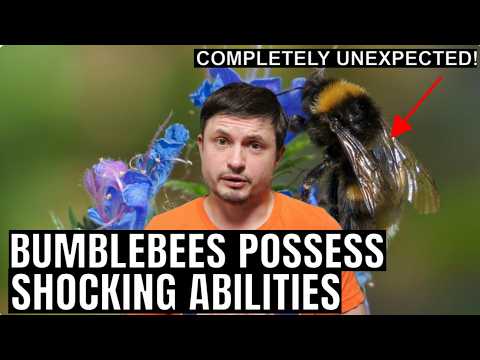
** In the video “Bumblebees Can Do What?! Incredible Discoveries Nobody Expected,” Anton Petrov explores groundbreaking research that reveals the remarkable intelligence and capabilities of bumblebees, which challenge previous misconceptions of these insects as simple creatures. Recent studies show that bumblebees can solve complex puzzles, learn from observation, use tools, and even exhibit cooperative behavior, indicating a level of collective intelligence previously thought to be exclusive to higher mammals. Additionally, astonishing findings demonstrate that bumblebees can survive underwater for extended periods due to their unique physiological responses, including a significant drop in metabolism and the ability to extract oxygen from water. These discoveries highlight the complexity and resilience of bumblebees, urging viewers to reconsider their perception of these essential pollinators. **
📚 Research Links (provided by the author in the video description):
Strange Asteroid Spins So Fast It Shouldn’t Be Possible

** In the video “Strange Asteroid Spins So Fast It Shouldn’t Be Possible,” Anton Petrov discusses the astonishing discovery of asteroid 2025 MN45, which spins at an unprecedented rate of every 1.88 minutes, challenging existing theories about the structural integrity of larger asteroids. Traditionally, it was believed that asteroids over 150 meters could not rotate faster than 2.2 hours without breaking apart; however, this newly identified asteroid, measuring approximately 710 meters, suggests that some asteroids may possess much greater internal strength than previously thought. The discovery was made accidentally during the testing phase of the Vera Rubin Observatory in Chile, which highlighted its potential for uncovering more such objects in the future. This finding not only reshapes our understanding of asteroid formation but also has significant implications for planetary defense strategies. **
📚 Research Links (provided by the author in the video description):
Big Bang Model Predicts Universe Doesn’t Exist

** In the video “Big Bang Model Predicts Universe Doesn’t Exist,” engineer Spike Psarris discusses the paradoxical implications of the Big Bang theory, suggesting that if the universe originated from a singular event, it would lead to the conclusion that only a single human brain exists, experiencing an illusion of a universe. Psarris explains this through the concepts of entropy and the second law of thermodynamics, arguing that if the universe were eternal, it would have already succumbed to entropy. He posits that the only logical explanation for the existence of the universe is a creator, as the Big Bang model contradicts itself by failing to account for the realities of physics. The conversation ultimately emphasizes the need for a creator to explain the universe’s existence without violating scientific laws. **
DeepMind’s New AI Just Changed Science Forever

** In the video “DeepMind’s New AI Just Changed Science Forever,” Dr. Károly Zsolnai-Fehér discusses DeepMind’s groundbreaking AI, Aletheia, which can conduct research and contribute to writing scientific papers. This AI surpasses previous models by integrating a novel verification process that prevents it from generating nonsensical outputs, allowing it to solve complex open problems and even write core sections of research papers. Aletheia has already shown promising results by answering mathematical puzzles and assisting in the creation of publishable-level research, marking a significant milestone in AI’s role in scientific innovation. **
📚 Research Links (provided by the author in the video description):
Pluripotent AI: Mapping Idea of Stem Cells to AI Agents

** In the video “Pluripotent AI: Mapping Idea of Stem Cells to AI Agents,” the presenter explores the concept of developing AI systems akin to biological stem cells, which can adapt and specialize in response to environmental challenges without human intervention. This innovative approach introduces the concept of a “stem agent,” a self-adapting architecture that learns from its interactions and dynamically adjusts its capabilities using a multi-layered framework. The video delves into the technical aspects of this architecture, including how it mimics biological processes for skill acquisition and reasoning, ultimately suggesting that such an AI could evolve to meet complex demands in diverse contexts, potentially revolutionizing AI applications. **
Why Superintelligence Will Do Physics

** In the video “Why Superintelligence Will Do Physics,” Alexander Unzicker explores the existential motivations for advanced artificial intelligence to engage with fundamental physics. He argues that understanding physics is crucial for AI’s survival and growth, as it must comprehend the origins of life, the universe, and essential constants like the proton-electron mass ratio and the fine structure constant. Unzicker emphasizes that these principles not only underpin biological life but also dictate the limits of atomic structures, which are vital for technological advancement. The video presents a thought-provoking perspective on the intersection of AI and fundamental science, highlighting the potential for future discoveries. **
Real Progress in Wireless Energy Transfer

** In her video, Sabine Hossenfelder discusses recent advancements in wireless energy transfer developed by researchers at the University of Helsinki, who utilize a combination of sound waves and electromagnetic radiation to steer electric currents. While their method allows for short-range energy transmission, it is not efficient and is primarily aimed at surface treatments of materials. Hossenfelder contrasts this with significant progress made by DARPA, which successfully transmitted over 800 watts of power via lasers across 8 km, achieving a 20% efficiency rate. However, she emphasizes the challenges in achieving practical wireless energy transfer for everyday use, noting the need for either proximity to the sender or confined paths for power transmission. **
📚 Research Links (provided by the author in the video description):
The Algorithm That Made Me Cry

** In “The Algorithm That Made Me Cry,” the host from Two Minute Papers explores the fascinating world of ray tracing, a technique that simulates realistic light transport in images. He shares a personal journey illustrating that even with sophisticated systems, initial outcomes may appear disappointing, emphasizing the importance of perseverance. After countless simulations, stunning visuals emerge, evoking profound emotions. The video ends with an invitation to viewers to create their own ray tracing simulations for free through a comprehensive online course he offers, reinforcing his belief that knowledge should be accessible to everyone. **
The “Inverse Problem” Of Dark Matter Is Insane

** In this in-depth interview, Dr. Jenny Wagner presents a challenging perspective on dark matter, asserting that the evidence for it is largely model-dependent. She argues that traditional dark matter maps are based on assumptions that may not accurately reflect reality, and instead emphasizes the importance of local information gleaned from gravitational lensing. By stripping away these model assumptions, Wagner suggests that we may not need to rely on dark matter as heavily as previously thought, which could fundamentally alter our understanding of cosmic structure. This discussion highlights the need for a reevaluation of existing cosmological models and the data on which they are built. **
📚 Research Links (provided by the author in the video description):
First Ever Brown Dwarf Pair That Is Transforming Into Something Else

** In this video, Anton Petrov explores a groundbreaking discovery regarding a unique binary system of brown dwarfs, specifically GTF J1239+8347, located about a thousand light-years away. These brown dwarfs, which typically remain static and cool over time, are now revealed to be dynamic, with one dwarf actively stealing mass from its partner. This mass transfer could allow the gaining brown dwarf to eventually ignite hydrogen and transform into a true star, challenging previous assumptions that brown dwarfs are evolutionary dead ends. The video emphasizes how this discovery signals a paradigm shift in our understanding of brown dwarf behavior and suggests that many such systems may exist, leading to further exciting research in stellar evolution. **
📚 Research Links (provided by the author in the video description):
Core Law of Physics is Circular, Physicists Say

** In this video, Sabine Hossenfelder discusses a provocative paper by physicists that challenges the validity of the second law of thermodynamics, suggesting it may not be a true law but rather a circular argument. The paper revisits the Boltzmann brain hypothesis, which posits that it is more probable for brains to spontaneously appear in a high-entropy universe than for us to exist in a structured universe. The authors contend that the assumptions underlying the second law are flawed, proposing that the past could be just as easily viewed as having larger entropy at different points in time. Ultimately, they conclude that both the Boltzmann brain hypothesis and the second law of thermodynamics lack definitive logical grounding. **
HyEvo for Topological Reasoning Graph Optimization

** In the video “HyEvo for Topological Reasoning Graph Optimization,” the presenter discusses a groundbreaking approach to AI architecture called HyEvo, which shifts from traditional prompt-based methods to a self-evolving, neuro-symbolic program synthesis framework. This system autonomously constructs optimal computational graphs by integrating large language models (LLMs) for reasoning and code nodes for deterministic execution. The HyEvo methodology aims to eliminate manual topology design, enabling AI to discover the best configurations for specific datasets. However, it raises concerns about overfitting and generalization, particularly when transitioning from optimized workflows to real-world applications. **
📚 Research Links (provided by the author in the video description):
Major Updates About Bizarre Galaxies Without Dark Matter

** In Anton Petrov’s video, he explores the fascinating discoveries surrounding galaxies that appear to be devoid of dark matter, challenging long-held cosmological beliefs. He discusses various studies that have identified these unusual galaxies, including NGC 1052-df2, DF4, and the recently confirmed DF9, which exhibit unexpectedly slow-moving stars, suggesting a lack of dark matter. The video highlights the potential implications of these findings for our understanding of galactic formation and dark matter itself, as well as the ongoing research that aims to categorize this new class of galaxies. As astronomers continue to investigate, these discoveries could redefine our perspective on the universe and the nature of dark matter. **
📚 Research Links (provided by the author in the video description):
AI Might Actually Save Science. Here’s Why.
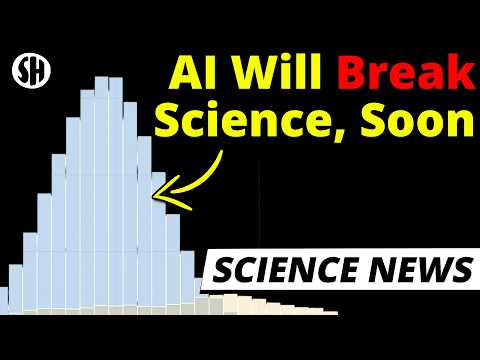
** In the video “AI Might Actually Save Science. Here’s Why,” Sabine Hossenfelder discusses the current challenges in academic publishing, highlighting that while many fear AI will exacerbate these issues, she believes it has the potential to improve science long-term. Despite concerns over AI-generated content leading to lower quality publications, Hossenfelder argues that the increasing reliance on AI could help address biases in research and streamline the publication process. She anticipates a surge in AI-generated papers due to economic incentives for both publishers and researchers, suggesting that this might ultimately lead to a reevaluation of what constitutes valuable research output. **
DeepSeek Just Fixed One Of The Biggest Problems With AI

** In the video “DeepSeek Just Fixed One Of The Biggest Problems With AI,” Two Minute Papers discusses groundbreaking research by DeepSeek AI, which introduces a new technology called Engram. This innovation addresses the inefficiency of modern AI systems, which often reconstruct information from scratch, making them slow and cumbersome. By providing AI with a “pantry” of pre-stored information, Engram significantly enhances both the efficiency and accuracy of AI responses. The research shows that this method not only reduces computational waste but also improves the model’s performance, making it smarter overall, thereby paving the way for more advanced and accessible AI systems. **
📚 Research Links (provided by the author in the video description):
When an AI can Rewrite Itself (Darwin-Gödel HyperAgent)

** In the video “When an AI can Rewrite Itself,” the host discusses Meta’s HyperAgents, a new class of self-modifying AI that can optimize not just its code but also its reasoning processes. By merging task-solving agents with meta-agents, the HyperAgent can autonomously improve itself without human intervention, leading to a new form of meta-cognitive self-modification. The video delves into the mechanics of this system, explaining how it uses past performance data and advanced algorithms to rewrite its own logic and optimize its tasks. However, the host raises questions about the true nature of its evolution, suggesting that the system’s reliance on pre-trained models may limit its ability to genuinely innovate or mutate. **
📚 Research Links (provided by the author in the video description):
There’s a New Law of Nature — And It Changes Everything We Know About Life

** In the video “There’s a New Law of Nature — And It Changes Everything We Know About Life,” Dr. Brian Keating interviews Michael Wong about the proposed “law of increasing functional information,” which suggests that evolving systems, both biological and abiological, tend to increase in complexity over time. Wong discusses how this new perspective could reshape our understanding of evolution, complexity, and the search for extraterrestrial life, emphasizing the role of information as a key metric in identifying life beyond Earth. The conversation also touches on the implications of this law for planetary science and how it helps explain the evolution of minerals and other complex systems throughout the universe. **
Why AI Will Never Be Conscious

** In the video “Why AI Will Never Be Conscious,” Curt Jaimungal and guest Nir Lahav explore the nuances of consciousness and artificial intelligence, specifically large language models (LLMs) like GPT. They argue that while LLMs can simulate cognitive processes and learn causal relationships between words, they lack self-representation and affective balance, crucial components for consciousness. Lahav posits that while current AI lacks consciousness, it is theoretically possible to create conscious AI if they meet specific criteria. The discussion also touches on philosophical arguments, such as David Chalmers’ zombie argument, ultimately concluding that consciousness is a relative property tied to one’s cognitive simulation. **
Shocking Discovery That Single Cells and Even Molecules Can Learn and Exhibit Memory

** In this enlightening video, Anton Petrov discusses groundbreaking research that reveals the capacity for learning and memory in single cells and even molecular networks. Contrary to traditional beliefs that learning requires a complex nervous system, studies demonstrate that organisms like the stantenter curulius, a giant single-celled protozoan, can exhibit classical conditioning without a brain. Additionally, molecular networks in cells can learn to associate stimuli, suggesting a fundamental property of life where learning exists across various biological levels. This paradigm shift challenges our understanding of intelligence and cognition, indicating that learning is a universal phenomenon permeating even the simplest forms of life. **
📚 Research Links (provided by the author in the video description):
Self Evolving Dual AI Agent System = AutoResearch 2.0 (LSE)
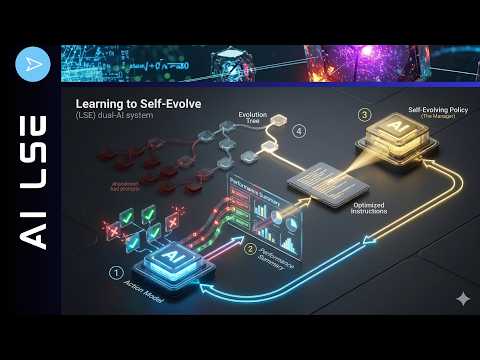
** In the video “Self Evolving Dual AI Agent System = AutoResearch 2.0,” the presenter explores a novel approach to AI development through the concept of Learning to Self-Evolve (LSE). By utilizing a dual agent system—comprising a self-evolving policy model and an action model—the framework effectively addresses the challenges of prompt optimization and error correction. The small self-evolving model, capable of running locally, enhances the performance of a larger cloud-based action model by generating optimized prompts based on analysis of past failures, effectively creating an automated AI research laboratory. The results show significant improvements in model performance, demonstrating the potential of this innovative AI architecture. **
📚 Research Links (provided by the author in the video description):
Jessica Riskin on Jean-Baptiste Lamarck and Life as Creative Agency | Mindscape 348

** In the Mindscape podcast episode featuring historian Jessica Riskin, the discussion centers around Jean-Baptiste Lamarck, a pivotal yet often overlooked figure in evolutionary biology. Riskin aims to rehabilitate Lamarck’s ideas, particularly his notion that organisms play an active role in their own evolution through behaviors that can be passed down to future generations. This contrasts with Darwin’s theory of natural selection, which emphasizes a passive inheritance model. Riskin argues that Lamarck’s perspective not only enriches our understanding of evolution but also highlights the agency of living beings in shaping their environments, a concept that is regaining traction in contemporary biology. **
Cosmological Models Are In Trouble After Recent Studies on Dark Energy

** In this video, Anton Petrov explores the ongoing crisis in cosmology regarding the Hubble constant, which measures the universe’s expansion rate. Recent studies from the Atakama Cosmology Telescope and the Dark Energy Spectroscopic Instrument (DESI) reveal a significant discrepancy in measurements, known as the Hubble tension, where values differ by approximately 10%. The ACT’s findings reaffirm previous observations, indicating that the universe is expanding at about 68 km/s per megaparsec, while other methods suggest a higher rate. Additionally, DESI’s research implies that dark energy might not be a constant, leading to revolutionary implications for our understanding of the universe’s fate. **
📚 Research Links (provided by the author in the video description):
Wolfram on philosophy

** In the video “Wolfram on Philosophy,” Stephen Wolfram discusses his preference for computer experiments over traditional philosophical debates. He expresses skepticism about pure philosophy, noting that arguments often seem ambiguous and convoluted. Wolfram highlights how philosophical inquiries have practical implications in technology and science, revealing that many concepts debated by philosophers for centuries are now being explored through computational methods. He emphasizes the significance of grounding philosophical ideas in concrete experiments to derive meaningful conclusions about complex topics like consciousness and ethics in artificial intelligence. **
This is how faster than light signalling could work

** In this thought-provoking video, Sabine Hossenfelder challenges the widely accepted belief among physicists that the speed of light is an insurmountable limit, arguing that this misconception hinders advancements in space travel and communication with extraterrestrial civilizations. She suggests that the speed of light may not be a fundamental constraint, pointing to misunderstandings in quantum mechanics and causality. Hossenfelder introduces the concept of superdeterminism, proposing that if quantum physics is not the ultimate theory of nature, it might allow for faster-than-light signaling. Ultimately, she calls for a reevaluation of these assumptions to explore new possibilities in physics. **
A Human Prompt Is The Most Complex Thing For AI

** In the video “A Human Prompt Is The Most Complex Thing For AI,” the presenter discusses groundbreaking research on the complexities of prompt engineering in AI, specifically focusing on new mathematical optimizations for prompt design. The video highlights the limitations of existing optimization methods, such as Gaper, which struggles with structural issues when interpreting human intent. It introduces a new framework called Vista that aims to improve prompt optimization by incorporating a dual-agent system to identify and rectify errors based on a structured catalog of known failure modes. Ultimately, the findings reiterate that even sophisticated AI models require precise human inputs to function effectively, emphasizing the ongoing challenge of aligning AI understanding with human intent. **
📚 Research Links (provided by the author in the video description):
This picture broke my brain

** In the video “This Picture Broke My Brain,” 3Blue1Brown explores M.C. Escher’s lithograph “Print Gallery” through the lens of complex analysis, revealing its intricate mathematical structure. The video delves into Escher’s innovative approach to create a self-similar image that warps and loops, utilizing the Drosta effect, and explains how mathematicians de Smit and Lenstra reverse-engineered this effect. It also introduces concepts such as conformal maps and complex logarithms, illustrating how these mathematical principles contribute to understanding the visual puzzle of Escher’s work. Ultimately, the video emphasizes the connection between art and mathematics, highlighting how both domains can converge on profound ideas. **