
Weekly Physics Digest – March 08 – March 14, 2026
Weekly Digest: Cosmic Wonders, Quantum Queries, and the Resilience of Research. This week, we’re diving deep into uncharted territories of knowledge—no life jackets required! One standout video, “How ‘Conan the Bacterium’ Proved Panspermia is Possible,” takes us on a cosmic journey exploring whether life on Earth could have hitchhiked its way here on asteroids. Talk about a long-distance relationship! Meanwhile, the video “The Physics Bug That Stumped Everyone Is Finally Gone!” unveils how new simulations are revolutionizing fluid dynamics in computer graphics—goodbye, cartoonish splashes! With 24 captivating videos lined up, from deep-space communications to discussions about the nature of consciousness, there’s no shortage of brain food for our scientifically curious audience. Learn fast, stay curious!
General Relativity Is NOT Deterministic (Here’s the Proof)

** In the video “General Relativity Is NOT Deterministic,” Curt Jaimungal explores the complexities of Einstein’s theory of general relativity, demonstrating that it is not inherently deterministic. He clarifies the distinction between local and global determinism, explaining how certain space-times, particularly those with Cauchy horizons and closed time-like curves, disrupt predictability. Jaimungal argues that while local determinism can hold true within small regions, global determinism frequently fails due to the nature of these space-times, leading to scenarios where the future is not uniquely determined. Ultimately, he suggests that our understanding of determinism in the context of general relativity must be redefined, focusing on specific solutions rather than the theory as a whole. **
📚 Research Links (provided by the author in the video description):
PhD Geology Expert: This Fossil Makes It Absolutely CLEAR the Earth Is Young
** In this episode of the Creation Podcast, Dr. Tim Clarey discusses the recent discovery of a remarkably preserved rhinoceros fossil found in the Canadian Arctic, which challenges the evolutionary timeline. The fossil, dated to be around 23 million years old, raises questions about how this species could survive in such a cold climate and how it traveled from Europe or Asia to North America. Dr. Clarey presents three key impossibilities regarding the fossil’s existence: its unexpected location and preservation, the presence of temperate plant fossils alongside it, and the survival of original proteins in the specimen. He concludes that these findings align more closely with a recent global flood event, supporting a young Earth perspective. **
Chimp & Human DNA is 15% Different—Geneticist Explains

** In the video “Chimp & Human DNA is 15% Different—Geneticist Explains,” Dr. Robert Carter challenges the long-held belief that human and chimpanzee DNA differ by only 1%, suggesting that recent genomic research indicates a difference of up to 15%. He presents four critical questions regarding genetic similarity and mutations that evolution must account for, arguing that the evolutionary model struggles to explain these discrepancies within the proposed timeframes. Dr. Carter emphasizes the complexity of biological systems and asserts that the significant differences between humans and chimpanzees support a creationist perspective, suggesting that humans did not evolve from a common ancestor with chimpanzees. **
Computer are smarter than us – let’s be honest

** In the video “Computers are smarter than us – let’s be honest,” Alexander Unzicker explores the evolving capabilities of artificial intelligence (AI) and its implications for our understanding of intelligence itself. He traces the history of AI, from simple calculators to advanced systems like Mathematica and AlphaGo, demonstrating that machines have surpassed human performance in various tasks, including mathematical proofs. Unzicker argues that the continued redefinition of what constitutes “true intelligence” is a cognitive illusion, suggesting that rather than resisting the idea, we should embrace AI’s potential to enhance our understanding of fundamental physics and the laws of nature. **
Major Updates About The City Killer Asteroid 2024 YR4 (2032 Collision or Nah?)

** In this video, Anton Petrov discusses the asteroid 2024 YR4, initially discovered in December 2024, which posed a potential collision threat to Earth in December 2032. Although it was later determined that the asteroid would not impact Earth, it had a 4% chance of hitting the Moon, which could have resulted in significant debris affecting satellites. The asteroid’s unique characteristics, including its unusual shape and rapid rotation, were analyzed by international teams using advanced telescopes, marking a historic test of planetary defense protocols. Ultimately, the observations confirmed a safe flyby of 21,000 km from the Moon, demonstrating the effectiveness of current monitoring systems. **
📚 Research Links (provided by the author in the video description):
Incredible Discoveries About Uranus and Its Moons Ariel and Miranda

** In this video, Anton Petrov explores recent discoveries about Uranus and its moons Ariel and Miranda, utilizing data from the James Webb Space Telescope. Notably, he discusses how past observations from Voyager 2 may have been skewed by a solar storm, suggesting that Uranus’s magnetic field is calmer than previously thought. The video also reveals evidence that both Ariel and Miranda may harbor subsurface oceans, similar to moons like Europa and Enceladus, raising the potential for extraterrestrial life. Overall, these findings challenge the perception of Uranus as a dull planet, highlighting its dynamic atmosphere and complex internal structures. **
📚 Research Links (provided by the author in the video description):
Published Math Is Full of Bugs — Here’s Why It Doesn’t Collapse

** In the video “Published Math Is Full of Bugs — Here’s Why It Doesn’t Collapse,” Curt Jaimungal discusses the inherent flaws within mathematical proofs and the resilience of the mathematical field despite these errors. He explains that mathematics is not merely a formal system; rather, it relies on human intuition and understanding, allowing mathematicians to correct errors rather than letting them propagate destructively. Using examples like Andrew Wiles’ proof of Fermat’s Last Theorem, Jaimungal demonstrates that these “bugs” are often fixable and suggest that the survival of certain theorems indicates that they align with a deeper intuition rather than absolute formalism. Ultimately, he portrays mathematics as a dynamic interplay of rigorous logic and human cognition, emphasizing the meaningfulness behind mathematical endeavors. **
This Spacetime Quasicrystal Could Solve Physicists’ Biggest Problem
** In this video, Sabine Hossenfelder explores a groundbreaking idea proposed by researchers at the Perimeter Institute, suggesting that the fundamental nature of space and time could be understood through the concept of quasicrystals. Unlike traditional crystals with repeating patterns, quasicrystals exhibit a non-repeating structure, which may help reconcile the discrepancies between general relativity and quantum physics. The video discusses the challenges of modeling space and time as discrete entities and highlights how extending the idea of quasicrystals to include both dimensions could lead to a more coherent theory that aligns closely with Einstein’s predictions while accommodating quantum mechanics. Although the proposal is still in its early stages and far from a complete theory of quantum gravity, it represents a creative approach to one of physics’ most profound questions. **
📚 Research Links (provided by the author in the video description):
DNA Expresses Design | Be Fruitful and Multiply | Fazale “Fuz” Rana and Jeff Zweerink

** In the video “DNA Expresses Design,” biochemist Fazale “Fuz” Rana and astrophysicist Jeff Zweerink explore the intricate relationship between DNA structure and the notion of intelligent design. They delve into the role of enhancers—DNA sequences that regulate gene expression from significant distances—and how recent research reveals their sophisticated mechanisms. This discussion emphasizes the complexity and precision of biochemical systems, arguing that such features point to a Creator’s handiwork. The conversation also connects these scientific insights to theological implications, particularly regarding humanity’s role and responsibilities as conveyed in scripture. **
📚 Research Links (provided by the author in the video description):
This Physics Breakthrough Looks Impossible

** In the video “This Physics Breakthrough Looks Impossible,” Two Minute Papers explores a revolutionary approach to physics simulations that unites two contrasting methods: the Finite Element Method (the slow, structured cop) and the Material Point Method (the fast, chaotic cop). The researchers developed a communication system allowing these two methods to work together efficiently without directly interacting, resulting in realistic simulations of complex interactions, such as fluids and solids. This breakthrough means that video games and animations can now depict intricate scenes with accurate physical behaviors, showcasing the potential for more dynamic and immersive experiences. **
How ‘Conan the Bacterium’ Proved Panspermia is Possible
** In the video, Anton Petrov explores the panspermia hypothesis, which suggests that life on Earth might have originated from microorganisms transported through space on asteroids. He discusses recent experiments conducted by Johns Hopkins University using the resilient bacterium Deinococcus radiodurans, also known as “Conan the Bacterium,” to test if such organisms can survive the extreme conditions of space and asteroid impacts. The findings indicate that a significant percentage of these bacteria can withstand the violent forces involved, supporting the idea that life could indeed travel between planets. This raises fascinating implications for astrobiology, suggesting that life may be more widespread in the universe than previously thought. **
📚 Research Links (provided by the author in the video description):
How to talk with deep space probes – Sixty Symbols

** In this video, Professor Meghan Gray explains how NASA communicates with deep space probes using the Deep Space Network (DSN), a worldwide network of large radio antennas. The DSN allows for two-way communication with spacecraft, even those billions of kilometers away, such as the Voyager probes and the James Webb Space Telescope. The video highlights the technical challenges of deep space communication, including the effects of distance on signal strength, and details the sophisticated engineering behind the antennas that ensure effective data transmission. Additionally, Gray discusses the ongoing capabilities of these missions, including the importance of receiving faint signals from spacecraft that have been operational for decades. **
Vibe Graphing: 10x More Affordable than Vibe Coding (MAS-Factory)
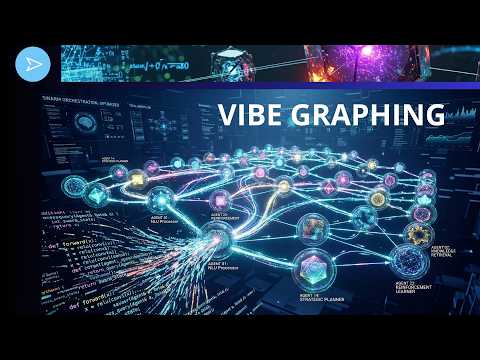
** In the video “Vibe Graphing: 10x More Affordable than Vibe Coding,” the host introduces Vibe Graphing, a new approach to orchestrating multi-agent systems (MAS) that significantly reduces implementation costs and complexity. By utilizing an intent-driven computation graph, Vibe Graphing allows users to define workflows in natural language, transforming them into executable graphs with minimal coding required. The video explains how this method enhances scalability, reduces debugging time, and ultimately shifts the focus from traditional software engineering to AI-driven design. Experiments demonstrate that Vibe Graphing not only maintains competitive performance but also outperforms traditional coding approaches in terms of efficiency and cost. **
Consciousness Is Not Absolute. It’s Relative

** In the video “Consciousness Is Not Absolute. It’s Relative,” Curt Jaimungal and Nir Lahav explore the nature of consciousness through a relativistic lens, arguing that consciousness is not an absolute phenomenon but rather depends on the observer’s cognitive frame of reference. They draw parallels between consciousness and concepts in physics, such as velocity, emphasizing that different observers can hold contradictory views about consciousness without diminishing its validity. By rejecting the notion of privileging one perspective, they propose a framework in which both first-person experiences and third-person neural observations are equally valid, challenging traditional views on consciousness and materialism. **
95% of Professor’s Research is Pointless (ft. NYU Professor Aswath Damodaran)

** In this thought-provoking discussion, NYU Professor Aswath Damodaran joins Brian Keating to critique the current state of academia, arguing that 95% of research is irrelevant and does not contribute to societal progress. They explore the disconnect between university education and the job market, questioning why Nobel Prize-winning economists often do not translate their expertise into wealth. The conversation further delves into the impact of AI on education and markets, highlighting the urgent need for universities to adapt to avoid disruption. Ultimately, Damodaran emphasizes the importance of focusing on teaching and genuine learning rather than merely publishing research papers. **
Physicists Create World’s Largest Schrödinger’s Cat (7000 Atoms Big)
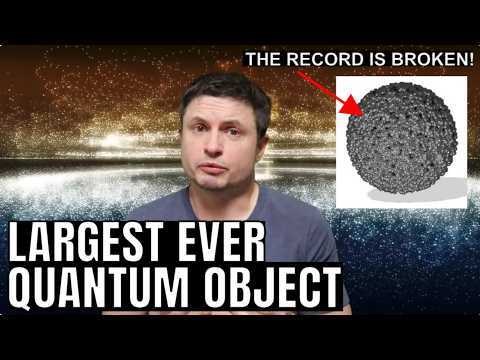
** In the video, Anton Petrov discusses a groundbreaking experiment that successfully created the largest quantum object to date—a sodium nanocluster composed of 7,000 atoms, marking a significant advancement in quantum mechanics. This experiment demonstrates how macroscopic objects can exist in a superposition state, effectively behaving like waves and occupying multiple locations simultaneously. Researchers utilized sophisticated techniques involving lasers to manipulate the particles and confirm their quantum behavior through interference patterns. This achievement not only challenges the boundaries between classical and quantum worlds but also opens up new possibilities for understanding quantum effects on larger scales, including potential implications for consciousness and astrophysics. **
📚 Research Links (provided by the author in the video description):
Stop Hardcoding AI Agents w/ Skill.md – Discover KARL

** In the video “Stop Hardcoding AI Agents w/ Skill.md – Discover KARL,” the host explores the concept of skills in AI agents, specifically focusing on Anthropic’s skill markdown files used for financial services. Skills are described as structured capabilities that allow agents to perform specialized tasks by following detailed instructions, rather than relying solely on learned behavior. The video emphasizes the limitations of hardcoded skills, which require precise human instructions, and contrasts them with the new knowledge agent model called KARL, which utilizes reinforcement learning to enable more intelligent and adaptive search strategies in AI. The discussion highlights the future of AI development, advocating for a shift from static instruction sets to dynamic learning systems. **
When a Fields Medalist Said “I Didn’t Understand a Word” | David Bessis

** In this insightful conversation with David Bessis, the discussion revolves around a pivotal moment when renowned mathematician Jean-Pierre Serre admitted he didn’t understand a word of Bessis’s seminar. This experience prompted Bessis to reflect on the importance of admitting ignorance in academic discourse. He shares how this vulnerability can foster deeper connections and understanding between mathematicians, encouraging open dialogue and peer learning. Bessis emphasizes the value of creating an environment where questioning and simplification are welcomed, ultimately leading to enhanced mathematical comprehension. **
Erica Cartmill on How Human and Animal Minds Think and Play | Mindscape 346

** In the Mindscape podcast episode featuring Erica Cartmill, the conversation delves into the complexities of intelligence across species, particularly comparing human and animal cognition. Cartmill, an anthropologist and cognitive scientist, discusses how different species, including chimpanzees and orangutans, exhibit unique cognitive abilities, often excelling in areas where humans might struggle, such as numerical tasks. The discussion also explores the significance of play and teasing in animal behavior, suggesting that these interactions may reflect a sense of humor and social understanding among animals. Ultimately, the episode emphasizes that intelligence is not a linear progression but a diverse array of capabilities that differ among species. **
The Physics Bug That Stumped Everyone Is Finally Gone!

** In “The Physics Bug That Stumped Everyone Is Finally Gone!” from the Two Minute Papers channel, the host discusses a groundbreaking technique that resolves the longstanding issue of simulating realistic water dynamics in computer graphics. By utilizing the Lattice Boltzmann Method, this new approach allows for a detailed representation of fluid interactions without relying on artificial intelligence, resulting in stunningly accurate simulations of phenomena like turbulence and splashes. The video emphasizes the importance of “two-way coupling” between fluids and objects, leading to more lifelike animations while also offering life advice through the lens of physics. Ultimately, the technique not only enhances visual fidelity but also significantly improves computational efficiency. **
📚 Research Links (provided by the author in the video description):
Record Breaking Massive Black Holes Challenge Modern Models

** In the video “Record Breaking Massive Black Holes Challenge Modern Models,” Anton Petrov discusses groundbreaking discoveries from the James Webb Space Telescope (JWST) that reveal ancient supermassive black holes existing much earlier in the universe than previously thought. These black holes, some as massive as 100 million solar masses, challenge the established model of black hole-galaxy co-evolution, suggesting instead that black holes may have formed and grown rapidly, dominating their early cosmic environment. The findings of objects like QSO1 and GHz2 indicate that these massive black holes could represent a new class of celestial phenomena, prompting a re-evaluation of our understanding of cosmic evolution and the relationship between black holes and galaxies. **
📚 Research Links (provided by the author in the video description):
Breakthrough In Data Storage Could Store Your Photos for 10000 Years

** In a groundbreaking development, Microsoft researchers have demonstrated a method of storing data in glass that could last for over 10,000 years. This innovative technique, known as Project Silica, involves laser-etching data within the glass, allowing for high durability and potential data density surpassing that of traditional hard drives. Although the read/write speeds are currently slower than conventional methods, the technology shows promise for future applications, likely as a cloud storage solution rather than a consumer product. Additionally, advancements in heat-assisted magnetic recording and magnetic resistive random access memory (MRAM) indicate a rapid evolution in data storage technology, paving the way for smaller, faster, and more efficient devices. **
Your Brain Runs a Simulation. And That’s Where “You” Live

** In this thought-provoking video, Curt Jaimungal discusses the concept that our brains operate as simulators, constructing a mental model of reality to help us understand and predict our environment. He explores how the brain creates representations of external stimuli, labeling them with an “affective valence” that determines whether these inputs are perceived as good or bad for our survival. Jaimungal emphasizes that this simulation framework allows humans to navigate complex scenarios, deriving meaning from experiences that evolve over time. Ultimately, he proposes that while the simulation mimics reality, consciousness emerges from a more nuanced interplay of these cognitive variables. **
Next AI Leap: 3D Memory

** In the video “Next AI Leap: 3D Memory,” the presenter discusses a groundbreaking AI technology called ZipMap, which enables linear-time stateful 3D reconstruction. This new methodology allows AI systems to create accurate 3D geometric models from multiple images without the computational bottlenecks of traditional quadratic techniques. By embedding a simple multi-layer perceptron (MLP) within the transformer architecture, the system can efficiently store and process visual data, enhancing memory capacity while reducing complexity. The implications for real-world applications, such as self-driving cars, are significant, as this technology promises improved environmental modeling and navigation capabilities. **
📚 Research Links (provided by the author in the video description):