
Weekly Physics Digest – March 01 – March 07, 2026
This Week in Science and Education: The Quantum Leap and Beyond. Get ready to have your mind blown this week! We’re diving deep into realms where particles flicker in and out of existence, and galaxies remain tantalizingly invisible. One standout video, “Actual Evidence of Virtual Particle Turning Into Real Matter”, features Anton Petrov, who presents groundbreaking evidence that virtual particles can transform into real matter. This revelation flips the script on how we understand the vacuum of space. And if that’s not enough, Sabine Hossenfelder brings us the eyebrow-raising theory that the Milky Way might be more of a dense core of dark matter than a black hole. Spoiler alert: it’s not just your imagination—reality is a lot weirder than it appears! Learn fast, stay curious!
This Physicist Has A “Relativistic Theory of Consciousness”

** In this in-depth discussion, physicist Nir Lahav presents his “Relativistic Theory of Consciousness,” arguing that consciousness is not merely a byproduct of brain activity but a distinct physical process influenced by relativity. Lahav critiques the traditional view that considers consciousness as separate from matter, suggesting instead that the brain’s neural patterns correlate with conscious experiences but do not fully account for them. He introduces the concept of cognitive frames of reference to explain how different observers perceive consciousness, emphasizing that both first-person and third-person perspectives are valid, yet distinct. This theory seeks to bridge the explanatory gap surrounding consciousness by employing principles from physics to better understand the relationship between neural activity and subjective experience. **
📚 Research Links (provided by the author in the video description):
Will AI Replace Scientists?

** In the video “Will AI Replace Scientists?”, Dr. Brian Keating discusses the transformative impact of artificial intelligence on scientific research, particularly in physics and cosmology. He emphasizes that while AI can process vast amounts of data and enhance experimental methods, it lacks the human creativity and intuition essential for groundbreaking scientific discoveries. Keating argues that AI serves as a powerful tool for scientists, augmenting their capabilities rather than replacing them, and he expresses skepticism about the hype surrounding AI’s potential to generate new theories in fundamental science. Ultimately, he believes that the intersection of AI and science may lead to incremental advancements rather than revolutionary breakthroughs. **
How DeepMind’s New AI Predicts What It Cannot See

** In the video “How DeepMind’s New AI Predicts What It Cannot See,” Two Minute Papers explores a groundbreaking technique called D4RT developed by Google DeepMind, which enables 4D scene reconstruction from 2D videos. Unlike previous methods requiring multiple specialized models, D4RT uses a single transformer to handle depth, motion, and camera angles simultaneously, achieving speeds up to 300 times faster than its predecessors. This innovative approach allows the AI to predict the locations of objects even when they are occluded, significantly enhancing its reconstruction capabilities. The video simplifies complex concepts and highlights the potential applications of this technology in various fields. **
How different observers think differently with Stephen Wolfram

** In this thought-provoking video, Stephen Wolfram explores how different observers perceive reality based on their scale and cognitive capacity. He suggests that if our brains were larger or smaller, our understanding of space, time, and heat would fundamentally change. Wolfram delves into the implications of computational equivalence, arguing that all computation is equal but varies in its manifestation depending on the observer’s context. He emphasizes the importance of scale in shaping our perceptions of the universe and how this can alter our interpretation of seemingly random molecular behavior in biology. **
How Many Consciousnesses Are Inside You Right Now?

** In the video “How Many Consciousnesses Are Inside You Right Now?” Curt Jaimungal explores the intricate nature of consciousness, proposing that multiple consciousnesses could exist within an individual based on the cognitive simulations their brain creates. He outlines essential conditions for consciousness, emphasizing the need for a cognitive system that constructs simulations and incorporates affective valence, which influences decision-making. Drawing on split-brain research, Jaimungal suggests the possibility of dual consciousness in split-brain patients, proposing that each hemisphere might operate its own simulation. Ultimately, he posits that while multiple simulations may exist, they likely integrate into a cohesive singular consciousness for stable functioning. **
What is the Wave Function?

** In this video, Alexander Unzicker explores the concept of the wave function in quantum mechanics, emphasizing its significance in describing the probability of particle locations. He contrasts the complex-valued wave function used for material particles with the vector field representation of photons, raising questions about the underlying reasons for these differences. Unzicker highlights the historical perspective introduced by physicist Paul Ehrenfest, who initially pondered the nature of the wave function. He suggests that quaternions could offer a unifying mathematical framework, potentially revealing deeper truths about quantum mechanics and its relationship to reality. **
Does Noah’s Flood Explain Gold Formation?
** In the video “Does Noah’s Flood Explain Gold Formation?” geologist Dr. Tas Walker discusses the intriguing discovery at the Brucejack mine in Canada, where high concentrations of gold were found. Traditionally, gold formation was attributed to dissolved minerals in hot underground fluids, but new research indicates that gold exists as tiny nanoparticles suspended in fluids. This process, known as flocculation, occurs rapidly under changing chemical conditions, such as the introduction of seawater, which could be linked to the rapid geological events following Noah’s flood. The video underscores the concept that significant geological processes can happen quickly, challenging long-held assumptions about gold formation. **
Is This How Life Started? New Evidence Changes Everything

** In this video, Anton Petrov delves into groundbreaking research that sheds light on the origins of life on Earth, emphasizing two recent studies that provide new insights into the era before the last universal common ancestor (LUCA). The findings suggest that life likely began with simple RNA molecules, specifically a tiny RNA polymerase named QT45, which can replicate itself, offering support for the RNA world hypothesis. Additionally, researchers identified universal paralogues, genes common across life, hinting at essential biological functions like protein synthesis and membrane transport that were crucial to early cellular life. These discoveries bridge a significant gap in understanding how life evolved from simple molecules to complex organisms. **
📚 Research Links (provided by the author in the video description):
The Simulation Hypothesis Gets Scientific Backing
** In her latest video, Sabine Hossenfelder explores the evolving scientific discourse surrounding the simulation hypothesis, which posits that our reality may be a computer simulation created by an advanced civilization. Traditionally dismissed by physicists as too vague, the hypothesis is gaining traction, particularly with recent contributions from computer scientist David Walpert, who examines how universes might simulate one another within a multiverse framework. Hossenfelder discusses the implications of computational complexity and the limits of our universe’s laws, suggesting that a shift in perspective might be necessary to understand the nature of reality and the potential for simulations. Despite skepticism and arguments against the feasibility of such simulations, she concludes that the simulation hypothesis is once again a relevant topic in scientific discussions. **
📚 Research Links (provided by the author in the video description):
You Think you Can… But you Can’t – Smarter Every Day 313

** In the video “You Think You Can… But You Can’t” from Smarter Every Day, Destin explores the intricate physics of disc golf, particularly focusing on why discs curve during flight. He engages with professional players at the Disc Golf World Championships in Finland, learns about disc technology from MVP Disc Sports, and collaborates with Dr. Johnny Pototts, an expert in disc aerodynamics. Viewers gain insights into the mechanics of throwing, including concepts like hiser and anheiser throws, as well as the impact of spin, launch angle, and disc stability on flight paths. The video combines expert interviews and practical demonstrations, making complex physics concepts accessible to all. **
GPT-5.4: Don’t Code. Think!

** In the video “GPT-5.4: Don’t Code. Think!” from Discover AI, the presenter explores the reasoning capabilities of GPT-5.4 High, specifically testing its performance without utilizing code or numerical solvers. The findings reveal that while GPT-5.4 High successfully reached a solution with eight button presses to navigate a hypothetical elevator, it fell short of the more optimal seven presses achieved by other models. The presenter concludes that GPT-5.4 High displayed some reasoning ability in a linguistic context, though it still lacks the efficiency of mathematical algorithms, indicating a nuanced development in AI reasoning capabilities. **
What Is Math? Nobody Agrees — And That’s a Huge Problem

** In the video “What Is Math? Nobody Agrees — And That’s a Huge Problem,” Curt Jaimungal explores the elusive definition of mathematics, highlighting the lack of consensus among scholars. He discusses two primary perspectives: mathematics as a study of abstract objects versus as a logical framework for proofs. Jaimungal argues that the true essence of mathematics lies in its practical application and cognitive process, rather than its metaphysical origins. He emphasizes the importance of human intuition and meaning-making in mathematics, suggesting that understanding math involves both formal logic and imaginative thinking. **
Dark Matter Explained – And Why It Might NOT Exist!

** In “Dark Matter Explained – And Why It Might NOT Exist!” Arvin Ash delves into the enigmatic concept of dark matter, which is theorized to make up a significant portion of the universe’s mass despite being invisible and undetectable by conventional means. The video presents compelling evidence from historical observations by astronomers like Fritz Zwicky and Vera Rubin, demonstrating the gravitational effects that suggest the presence of dark matter around galaxies and large-scale structures. However, Ash also explores alternative theories, such as Modified Newtonian Dynamics (MOND), which challenge the necessity of dark matter by proposing modifications to existing gravitational theories. Ultimately, the video highlights the ongoing debate in physics regarding the existence of dark matter and its implications for our understanding of the universe. **
Previously Unknown Branch of Life Dominated Earth 400 Million Years Ago

** In this video, Anton Petrov explores the fascinating organism known as prototaxites, which dominated Earth approximately 400 million years ago during the early Devonian period. Initially misidentified as tree trunks or fungi, recent groundbreaking research has revealed prototaxites to be a unique and complex life form that may represent an entirely new kingdom of life, distinct from plants, fungi, or animals. Utilizing advanced imaging techniques, scientists discovered that these towering structures possessed intricate internal anatomy and a chemical composition suggesting a role similar to vascular plants. Ultimately, the extinction of prototaxites is believed to be due to competition from actual trees, reshaping our understanding of early terrestrial ecosystems. **
📚 Research Links (provided by the author in the video description):
Most of Reality Is Invisible. We May Finally Be About to Reveal It.

** In the video “Most of Reality Is Invisible. We May Finally Be About to Reveal It,” PBS Space Time explores the potential of the Large Hadron Collider (LHC) to uncover a “dark sector” of particles that are invisible to the standard model of physics. While the LHC famously discovered the Higgs boson, researchers believe this particle could also bridge the gap to understanding dark matter through hypothetical dark particles that interact minimally with known forces. As the LHC prepares for its High Luminosity upgrade in 2030, the focus will shift to detecting dark sector phenomena by improving data collection and analysis techniques, potentially reshaping our understanding of the universe’s composition. **
Xiaomi EV’s Next Self-Driving AI Explained

** In the video “Xiaomi EV’s Next Self-Driving AI Explained,” the host delves into the innovative research behind Xiaomi’s autonomous driving technology, focusing on the integration of a new Vision-Language-Action (VLA) AI model. This model utilizes a mathematical framework known as Latent Spatio-Temporal Space to enhance the vehicle’s decision-making capabilities by representing data as high-dimensional vectors. By moving away from traditional linguistic approaches, the AI can process complex spatial and physical dynamics more efficiently, allowing for improved safety and responsiveness in real-time driving scenarios. The collaboration with academic institutions underscores the research’s cutting-edge nature and potential impact on the future of autonomous vehicles. **
📚 Research Links (provided by the author in the video description):
The Spine Did NOT Evolve! Physical Therapist Explains

** In the video “The Spine Did NOT Evolve! Physical Therapist Explains,” Jonathan Clerke, a physical therapist, argues that the human spine exhibits evidence of intelligent design rather than evolutionary development. He elaborates on the intricate connectivity of the spine’s anatomy, including its ligaments, muscles, and nerves, suggesting that this complexity points to a purposeful design by an intelligent creator. Clerke also discusses the various types of mutations and their implications, emphasizing that many lead to dysfunction rather than beneficial adaptations, which supports his assertion against evolution. Ultimately, he concludes that the complex systems in the human body, particularly the spine, require an intelligent source for their design. **
Actual Evidence of Virtual Particle Turning Into Real Matter!

** In this video, Anton Petrov explores groundbreaking evidence suggesting that virtual particles can transform into real matter, a concept that challenges traditional views of a vacuum as empty space. He explains how the quantum foam, a dynamic field of virtual particles, can spontaneously create particle-antiparticle pairs. Recent research from the Brookhaven National Laboratory has provided direct observations of these particles during high-energy proton collisions, revealing their entangled relationships and confirming their transient existence. This discovery not only enhances our understanding of mass generation in the universe but also emphasizes the active nature of what we perceive as “nothing.” **
📚 Research Links (provided by the author in the video description):
When the Hebrew Bible Meets Modern Physics | Hugh Ross with Rabbis Elie Feder and Aaron Zimmer

** In this enlightening discussion, astrophysicist Hugh Ross and Rabbis Elie Feder and Aaron Zimmer explore the intersection of the Hebrew Bible and modern physics, particularly through the lens of fine-tuning in the universe. They analyze scripture passages such as Isaiah 40:25-26 and Psalm 8, highlighting how these texts illustrate the ordered nature of the cosmos and assert the existence of an intelligent Creator. The conversation delves into scientific principles like entropy and the delicate balance required for life, emphasizing that the universe’s complexity and beauty reflect God’s attributes. Ultimately, the dialogue underscores the significance of humanity within this grand cosmic framework, revealing a profound relationship between divine intelligence and human existence. **
Natural Selection Operates on Electrons

** In the video “Natural Selection Operates on Electrons,” Curt Jaimungal converses with physicist Vitaly Vanchurin about the concept of natural selection not only applying to biological organisms but also to subatomic particles like electrons. Vanchurin explains that configurations of particles can be seen as undergoing a form of natural selection, where those that minimize loss functions survive over time. They draw parallels between self-driving cars and electrons, suggesting that both optimize their behavior based on information from their surroundings to ensure stability in their respective systems. The discussion further delves into the relationship between learning, intelligence, and the potential consciousness of the universe, emphasizing the importance of questioning established theories and understanding the dynamics of learning systems. **
The Future is No Longer a Prediction. It is an AI-Generated Graph

** In the video “The Future is No Longer a Prediction. It is an AI-Generated Graph,” the presenter analyzes five recent research papers that explore the intersection of AI, language, and reasoning. The discussion highlights how current AI frameworks attempt to impose rigid mathematical structures onto the fluidity of human language, revealing a tension between the beauty of natural expression and the constraints of computational logic. Through insights drawn from the studies, the presenter warns against oversimplifying human complexity into discrete categories, which may hinder the potential for associative reasoning and creativity in AI. Ultimately, the video suggests a need for a balanced approach that respects the nuances of human language while still utilizing structured computational methods. **
📚 Research Links (provided by the author in the video description):
Strange Discoveries About Runaway Stars That Don’t Really Make Sense

** In the video “Strange Discoveries About Runaway Stars That Don’t Really Make Sense,” Anton Petrov explores the fascinating phenomenon of runaway and hypervelocity stars that travel across the Milky Way at extraordinary speeds. He discusses their origins, primarily focusing on two mechanisms: the Hills mechanism, involving gravitational slingshots near black holes, and supernova events that can eject companion stars at high velocities. Recent discoveries challenge previous assumptions, such as a hypervelocity star with an orbiting planet, indicating that these stellar outliers may form through different processes than previously believed. Petrov emphasizes the potential of runaway stars to help map dark matter and uncover hidden structures in the galaxy. **
📚 Research Links (provided by the author in the video description):
Surprise! Milky Way Might Not Have a Black Hole After All

** In this video, Sabine Hossenfelder discusses a bold new hypothesis suggesting that the supermassive black hole at the center of the Milky Way, known as Sagittarius A*, may not actually be a black hole at all. Instead, a group of astrophysicists proposes that it could be a dense core of dark matter, potentially challenging longstanding assumptions based on Einstein’s theory of general relativity. The researchers highlight that their dark matter model could explain observations of the gravitational pull near Sagittarius A* and address existing puzzles about the formation and growth of black holes. However, the findings are preliminary and based on selective data, suggesting further investigation is necessary to substantiate their claims. **
Nick Lane: The Engine That Built Life

** In the enlightening discussion, Nick Lane argues that life is fundamentally driven by energy rather than mere biochemical information. He explores the significance of the Krebs cycle as a metabolic “transformer” that predates genetic material, influencing aging, cancer, and even the potential for extraterrestrial life. Lane connects the mechanics of cellular metabolism to modern AI concepts, emphasizing how the underlying principles of energy flow resonate through both biology and technology. The conversation delves into the complexities of defining life, the role of mitochondria, and the fascinating implications of thermodynamics in the origin of life. **
This Comet Stopped Spinning…Then Started Going Backwards

** In this video, Anton Petrov discusses the extraordinary observation of comet 41P (Tuttle-Jacobin-Cresac), which exhibited a complete reversal in its rotation, a phenomenon never seen before. Initially observed in 2017, the comet’s rotation slowed significantly and then reversed, likely due to uneven outgassing effects acting like tiny rocket engines. This discovery sheds light on a long-standing mystery regarding the scarcity of small comets in the inner solar system, suggesting that many may spin apart due to dynamic forces before ever becoming visible. The video emphasizes the significance of this finding, as it could lead to further observations of comet behavior during its next approach to the sun in 2027. **
📚 Research Links (provided by the author in the video description):
Nobel Scientists Reveal Ultimate Focus Strategy | Cal Newport + Brian Keating

** In this episode of the Deep Questions podcast, Cal Newport interviews Dr. Brian Keating, a renowned physicist, about strategies for achieving deep focus akin to Nobel Prize winners. They discuss Keating’s book, “How to Focus Like a Nobel Prize Winner,” which is based on interviews with Nobel laureates, revealing that their success often hinges on selective focus rather than sheer intensity. The conversation highlights the importance of problem selection, the psychological nuances of academic ambition, and how to cultivate a life of deep work. Keating also shares personal anecdotes from his journey in academia, underscoring the unique paths taken by scientists. **
Neil deGrasse Tyson Doesn’t Understand What “Belief” Means

** In the video, Curt Jaimungal critiques prominent figures like Neil deGrasse Tyson, Deepak Chopra, and Thomas Campbell for their claims of not holding beliefs. He argues that belief is essential for understanding both physics and consciousness, asserting that asserting one’s lack of belief is paradoxical and demonstrates a misunderstanding of the term. Jaimungal utilizes analytic philosophy to clarify that belief is a fundamental cognitive state that does not equate to dogmatism or faith. Ultimately, he posits that scientists, despite their reluctance to use the term, inherently possess beliefs and that acknowledging this is crucial for rational discourse. **
📚 Research Links (provided by the author in the video description):
From GRPO to SAMPO: Solving Training Collapse in Agentic RL

** In the video “From GRPO to SAMPO: Solving Training Collapse in Agentic RL,” the presenter discusses a new post-training algorithm for AI models that enhances reinforcement learning (RL) through optimized policy optimization (PO) for single agents. The video highlights the instability issues faced during training, particularly in multi-turn interactions between agents and their environments, which can lead to training collapse. The authors propose a unified framework that focuses on optimizing key dimensions such as loss aggregation, sampling clipping, advantage design, and trajectory filtering. By analyzing various policy optimization methodologies, they introduce the SAMPO algorithm, which significantly improves training stability and performance for agentic systems. **
This Galaxy is 99% Invisible: Hubble’s Darkest Discovery Yet

** In the video “This Galaxy is 99% Invisible: Hubble’s Darkest Discovery Yet,” Anton Petrov discusses the remarkable discovery of candidate dark galaxy CDG2, confirmed through observations from multiple telescopes, including Hubble. Unlike typical galaxies, CDG2 is predominantly made of dark matter with little to no visible stars, which challenges existing theories of galaxy formation. The discovery sheds light on the complex role of dark matter in the universe, suggesting that such dark galaxies may serve as crucial scaffolds for future galaxy formation. Petrov emphasizes that this finding validates the lambda CDM model and opens the door for further exploration of dark matter structures. **
📚 Research Links (provided by the author in the video description):
How to build Multi Agents for FINANCE: Outperforming Anthropic
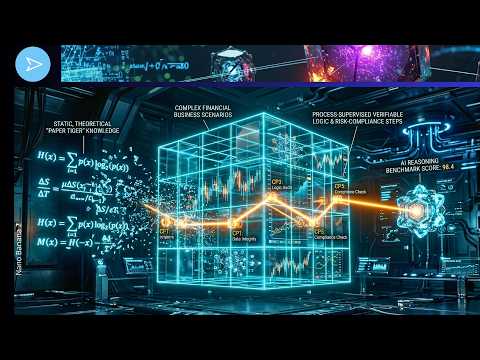
** In the video “How to build Multi Agents for FINANCE: Outperforming Anthropic,” the host explores the development of multi-agent systems specifically tailored for the financial sector, analyzing Anthropic’s Claude CoWork plugin and presenting a new open-source financial intelligence model called Yuan 4.0. The discussion highlights the importance of cost versus performance in AI agents, revealing that while larger proprietary models offer high performance, smaller, well-trained open-source alternatives can outperform them in specific financial tasks. By examining the training methodologies and evaluation metrics, the video underscores the significance of real-world scenario assessments in enhancing the capabilities of AI systems within finance. **
📚 Research Links (provided by the author in the video description):