Weekly Physics Digest – October 25 – October 31, 2026
**This Week in Science & Education: A Journey Through Dimensions, Robots, and Cosmic Mysteries!**
Grab your goggles and prepare for a science-packed week that dives deep into the quirky realms of physics, the universe’s secrets, and even a hint of quantum wonder! This week, we’ve got a standout video that’s bound to spark your curiosity: “Why This 1,800km Cloud on Mars Shouldn’t Exist.” Anton Petrov explores a colossal cloud formation that challenges our understanding of Martian weather. It’s like discovering that the Earth is covered in butter instead of clouds; unexpected and a little sticky! With 18 tantalizing videos to choose from, covering everything from AI’s role in mathematics to the unique properties of the latest dwarf planet discovery, buckle up for an educational rollercoaster ride. Learn fast, stay curious!
Rubin Observatory Finds the 6th Dwarf Planet in the Solar System

** In a groundbreaking discovery, researchers using data from the Vera Rubin Observatory have identified a new dwarf planet, provisionally named 2026 ED138, located beyond Neptune. This object, which is estimated to be between 600 and 1,500 km in diameter, shares a similar orbit with Pluto and takes approximately 283 years to complete one revolution around the Sun. Its discovery sheds light on the complexities of the Kuiper Belt, as scientists previously overlooked it due to its highly inclined orbit and the crowded backdrop of the Milky Way. This exciting find marks the sixth officially recognized dwarf planet in our solar system, highlighting the ongoing exploration and understanding of distant celestial bodies. **
📚 Research Links (provided by the author in the video description):
Why You Exist Comes Down to 2 Strange Quantum Rules

** In the video “Why You Exist Comes Down to 2 Strange Quantum Rules,” Arvin Ash explains how the uncertainty principle and the Pauli exclusion principle are fundamental to the existence of life as we know it. He illustrates that if quantum uncertainty were eliminated, particles could have precise positions and momentum, leading to a universe where stable atoms, and consequently chemistry, would not exist. This lack of stability would make life impossible, as it relies on the principles that govern atomic structures and interactions. Ultimately, Ash concludes that rather than viewing uncertainty as a flaw, it is essential for the complex and ordered universe that allows life to thrive. **
This Material Sorts Itself

** In “This Material Sorts Itself,” Steve Mould explores the fascinating phenomenon of granular segregation through experiments with a rotating drum filled with glass beads of varying sizes. He demonstrates how mixing can lead to unexpected unmixing, as larger beads migrate to the bottom while smaller ones rise to the top, forming striking patterns. This behavior is linked to concepts such as the Brazil nut effect and can also be observed in natural phenomena like landslides. Mould explains the underlying physics of how granular materials interact, emphasizing the role of continuous avalanches and friction in shaping these unique distributions. **
Are There Problems Beyond the Reach of AI | World Science Festival

** In the World Science Festival video, Scott Aaronson discusses the profound impact of artificial intelligence (AI) on the field of mathematics, highlighting how AI has begun to solve complex problems previously deemed insurmountable by human mathematicians. He emphasizes that while AI’s capabilities raise concerns about the future role of humans in math and research, it also opens new avenues for exploration and understanding. Aaronson suggests that instead of viewing AI as a competitor, we might see it as a powerful tool that enables humans to act more like archaeologists, discovering and interpreting mathematical truths rather than solely generating them. The conversation also touches on the ethical implications of AI development and the necessity for ongoing human oversight to ensure alignment with our values. **
Christian Geologist: Bryce Canyon is Strong Evidence for the Global Flood

** In this video, Dr. Tim Clarey from the Institute for Creation Research presents evidence from Bryce Canyon that he argues supports the idea of a young Earth and a global flood, as described in the biblical Genesis. He explains that the geological formations, particularly the Claron formation’s unusual limestone deposits, suggest rapid deposition rather than long-term lake formation. Dr. Clarey highlights three key lines of evidence: the prevalence of limestone, the extensive thickness of the sediment layers, and the rapid erosion seen in the landscape, all of which he claims align with a flood event rather than millions of years of geological processes. He concludes that the features observed in Bryce Canyon and other national parks in the region collectively point to a singular, cataclysmic flood event. **
If the Multiverse Is Real, How Do You Know You’re You?

** In his talk at the 2017 consciousness conference, Dr. Brian Keating explores the intriguing relationship between consciousness and the universe, positing that humans are a highly evolved form of the most common element in the cosmos: dust. He discusses historical scientific blunders by notable figures like Galileo and William Herschel, emphasizing how misconceptions about the universe often stem from observational limitations. Keating connects these themes to contemporary cosmology, touching on the concepts of inflation and the multiverse, and raises thought-provoking questions about free will and identity in a universe where an infinite number of variations of ourselves could exist. Ultimately, he suggests that understanding consciousness may require humility and a recognition of our shared cosmic origins. **
AI and the Hard Problem of Consciousness | World Science Festival

** In this thought-provoking video, Brian Greene explores the enigmatic relationship between artificial intelligence (AI) and consciousness, questioning whether machines can truly possess awareness. He delves into the “hard problem of consciousness,” emphasizing that while current AI systems lack consciousness, the complexity of brain processes—composed of billions of neurons and trillions of particles—raises profound questions about how awareness arises from physical matter. Greene suggests that consciousness might be an emergent property of certain information-processing systems, akin to how wetness emerges from a collection of water molecules, leaving open the possibility that consciousness could arise in non-biological systems as well. Ultimately, he encourages a humble approach to the question of consciousness, acknowledging the limitations of our understanding. **
A Second-Generation Planet Was Just Found Around a Dead Star

** In this video, Anton Petrov discusses the groundbreaking discovery of the first second-generation planet found orbiting a white dwarf, cataloged as HS 0201 + 0832. This planet, formed from the remnants of an ancient star’s material, challenges previous assumptions about planetary formation, suggesting that new planets can arise even after a star has died. The detection of unusual chemical elements, particularly high levels of niobium, indicates that this planet’s composition is unlike that of traditional first-generation planets. The findings highlight a potential cycle of birth, destruction, and rebirth in planetary systems, raising intriguing questions about the future of our own solar system. **
📚 Research Links (provided by the author in the video description):
Why This 1,800km Cloud on Mars Shouldn’t Exist

** In the video “Why This 1,800km Cloud on Mars Shouldn’t Exist,” Anton Petrov explores the remarkable phenomenon of the Arsia Mons elongated cloud, a massive weather event on Mars that forms each morning and stretches nearly 1,800 kilometers. Traditionally, atmospheric models struggled to explain the existence of such a cloud, but new research suggests that unique conditions around the volcano enable a rare form of cloud formation known as homogeneous nucleation, which was previously thought impossible in planetary atmospheres. This discovery not only challenges established atmospheric science but also has implications for understanding cloud formation on Earth and other celestial bodies. The video also touches on other unusual Martian clouds, including carbon dioxide clouds that shimmer with iridescent colors. **
📚 Research Links (provided by the author in the video description):
Large Hadron Collider Sees Extra Dimension, Physicists Claim

** In a recent video, physicists from France claim to have discovered evidence of extra dimensions in data from the Large Hadron Collider (LHC), specifically through the detection of heavy particles that could suggest additional spatial dimensions. They analyzed data from the CMS detector, observing events with jets that indicate the presence of heavy gluons, which could support the Randall-Sundrum scenario of extra dimensions. However, the analysis faces challenges, including the absence of further corroborating data from recent LHC runs and inconsistencies with existing particle physics theories. While the findings are intriguing, the presenter expresses skepticism about the extra dimension hypothesis, citing the need for scientifically necessary frameworks to support such claims. **
📚 Research Links (provided by the author in the video description):
Did Our Sun Swallow a Planet 5.6 Times Earth’s Mass?

** In the latest episode of “Stars, Cells, and God,” Hugh Ross and Fazale Rana discuss a compelling study suggesting that the young Sun may have engulfed a super-Earth, a planet over five times the mass of Earth. This theory could explain several unusual characteristics of the Sun and our solar system, which appear fine-tuned for life. The presenters highlight the importance of this discovery in understanding the Sun’s unique properties, such as its lower lithium content and the anomalous density of rocky planets in our solar system. They conclude that while the engulfment hypothesis offers a new perspective, it requires further investigation and modeling to fully understand the intricacies of our solar system’s formation. **
📚 Research Links (provided by the author in the video description):
Professor Moriarty and the Physics of Holodecks – Sixty Symbols
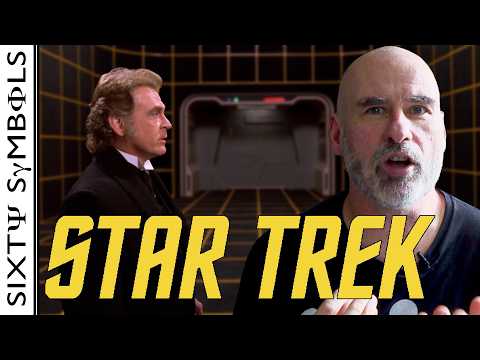
** In “Professor Moriarty and the Physics of Holodecks,” physicist Phil Moriarty explores the intriguing science behind the holodecks featured in Star Trek. He discusses the concept of photonic characters and the challenges of creating solid-looking holograms. Through demonstrations involving parabolic mirrors and modern voxel technology, Moriarty illustrates how light can create three-dimensional images, while also addressing the complexities of making these projections interactive. He emphasizes the need for interaction with matter to achieve the kind of realism depicted in Star Trek, ultimately posing questions about the feasibility of such technology in our universe. **
📚 Research Links (provided by the author in the video description):
Jim Al-Khalili: Physicists Are Being Sloppy About Time

** In this engaging discussion, physicist Jim Al-Khalili challenges conventional understandings of time, arguing that modern physicists are being “sloppy” in their treatment of time as a mere dimension of space. He presents the idea that all moments in time—past, present, and future—are equally real, a notion rooted in Einstein’s theory of relativity. Al-Khalili emphasizes the central mystery of time travel, noting that physics has yet to provide an explanation for why we experience time as flowing in one direction. He also explores the implications of gravity on time, suggesting that without gravity, time may not exist at all, and introduces new ideas about the relationship between quantum entanglement and the nature of time. **
Plastic Isn’t The Problem You’ve Been Made To Believe

** In her video, Sabine Hossenfelder challenges the long-held belief that plastics take hundreds or thousands of years to degrade, presenting recent research that shows plastics break down much faster than previously thought. While microplastics are a significant environmental concern, they decompose more rapidly under certain conditions, contradicting claims made by environmental organizations. Hossenfelder emphasizes that while plastic is indeed a problem, the misconception about its longevity overshadows the real issues, such as its impact on wildlife and potential toxic residues. She advocates for proactive measures in environmental protection, highlighting her involvement with Planet Wild, an organization focused on ecosystem restoration. **
The Most Significant Moment In Math History Just Happened

** In this compelling discussion, Curt Jaimungal interviews Scott Aronson, a leading computer scientist, about the transformative impact of AI on mathematics and theoretical computer science. They explore recent breakthroughs, including a significant proof regarding the unique games conjecture that has reshaped the landscape for mathematicians, prompting concerns over the future roles of human researchers. Aronson emphasizes the necessity for the mathematical community to adapt to this new reality, where AI can solve problems previously thought to require human intuition and understanding, leading to a potential shift in how mathematics is practiced and understood. The conversation resonates with a sense of urgency, as the flood of AI advancements in mathematics is seen as both revolutionary and disruptive. **
📚 Research Links (provided by the author in the video description):
Erik Winfree on DNA Robots and Computers | Mindscape 272

** In this episode of the Mindscape podcast, Sean Carroll interviews Eric Winfree, a pioneer in DNA computing and molecular robotics. Winfree explains how DNA can serve as a medium for computation, functioning as a programmable substance that can self-assemble and perform tasks at a molecular level. He discusses the potential of DNA to create tiny robots that can interact with their environment, and how this approach could lead to a deeper understanding of biological systems and the origins of life. Winfree emphasizes the importance of exploring new computational paradigms that move beyond traditional silicon-based systems, highlighting the unique capabilities of DNA in processing information and driving chemical reactions. **
Unknown Cosmic Phenomenon Confirmed in 20-Year-Old Data

** In the video “Unknown Cosmic Phenomenon Confirmed in 20-Year-Old Data,” Anton Petrov discusses a groundbreaking discovery involving 84 previously overlooked cosmic objects found in archival data from the Chandra space telescope. These hyper-soft X-ray sources, emitting low-energy X-rays below 0.3 kilo electron volts, were missed due to assumptions about their signals being noise. The findings suggest that these objects could be a mix of accreting white dwarfs, black holes, and neutron stars, potentially shedding light on cosmic mysteries such as the missing progenitors of type 1A supernovae and the sources of ionized helium gas in galaxies. **
📚 Research Links (provided by the author in the video description):
Putting De Broglie to the Test

** In “Putting De Broglie to the Test,” Alexander Unzicker shares insights from the life and work of Louis Victor de Broglie, a pioneering physicist known for introducing the wave nature of matter. Unzicker discusses de Broglie’s hypothesis regarding the “internal clock” of electrons and how it might be experimentally tested by researchers, particularly focusing on an experiment led by Harmon Bethelin that aims to measure the interference of electron beams with crystal lattices. This video emphasizes the significance of revisiting foundational ideas in physics and the potential for simple experiments to uncover profound insights, contrasting them with the more complex and costly endeavors seen in large facilities like CERN. **
📚 Research Links (provided by the author in the video description):