Weekly Physics Digest – August 30 – September 05, 2026
Weekly Digest: Cosmic Curiosities, AI Intrigue, and the Mysteries of Matter! Buckle up, science enthusiasts, because this week we’re diving headfirst into the cosmic sea of knowledge! Ever wondered how AI is shaking up physics? Or perhaps you’re curious about the newly confirmed “mega-Earths” and what they reveal about our universe? In a world where dark matter is finally getting a little more visibility (pun intended), Anton Petrov takes us on a thrilling journey through the latest astronomical discoveries that could change everything we thought we knew about planetary formation. Combine that with Sabine Hossenfelder’s analysis of the AI revolution in physics, and you have a week packed with enlightening content that will leave your neurons buzzing faster than a quasar! Learn fast, stay curious!
Gravity Does NOT Form Stars – Here’s Why

** In the video “Gravity Does NOT Form Stars – Here’s Why,” Dr. Mark Harwood challenges the conventional scientific understanding of star formation, which relies heavily on gravity and the assumption of long timescales. He points out the existence of blue stars, which are short-lived and burn brightly, suggesting that if the universe were as old as claimed, they would have already burned out. Dr. Harwood critiques the interpretations of astronomical data, arguing that observations of dust clouds do not necessarily indicate that stars form from them, but rather could be the result of stars already existing. He concludes that the mechanisms proposed for star formation are largely based on assumptions rather than direct observations, implying a need for reconsideration of current astrophysical theories. **
How Does Your Brain Know Where You Are? | World Science Festival

** In this enlightening discussion at the World Science Festival, Nobel laureate Edvard Moser explains how the brain constructs an internal map of space using grid cells, which fire in a unique hexagonal pattern. Moser traces the evolution of our understanding from place cells, which indicate specific locations, to the discovery of grid cells that allow for navigation even in the absence of sensory input. This internal coordinate system is not only crucial for survival but also raises profound questions about the nature of space and perception. Moser emphasizes that these mechanisms are fundamental and likely shared across various species, hinting at the evolutionary importance of spatial awareness. **
Christian Geologist: My Colleagues Do NOT Want You Seeing This

** In this video, a Christian geologist explores the ancient rock layers of the Grand Canyon, particularly the Precambrian sedimentary rocks of the Grand Canyon Supergroup. He discusses how these layers, primarily composed of limestones and sandstones, exhibit signs of water deposition, suggesting a significant historical flood event. The geologist presents his hypothesis that the Cardenas Basalt marks the onset of this flood, differentiating between features like mud cracks and dewatering structures. He emphasizes that much remains to be understood about these rocks and their connection to a biblical flood narrative. **
Physicist: Black Holes Are Where God Divides by Zero (Lecture 1 of 6)

** In the first lecture of his series on black holes, Dr. Brian Keating explores the enigmatic nature of these cosmic phenomena, famously described as places “where God divides by zero,” reflecting the breakdown of physics as we understand it. He discusses the intriguing concepts of time and space within black holes, the historical predictions of their existence dating back 250 years, and the profound implications of their properties, such as spaghettification and the event horizon. Dr. Keating emphasizes how black holes captivate human imagination, intertwining science with philosophy while promising an exciting journey through the universe’s most mysterious entities. **
Was Dark Matter Particle Just Found by World’s Biggest Detector?

** In this video, Anton Petrov discusses a potential groundbreaking discovery from the LUX-ZEPLIN dark matter detector, which detected a mysterious energy flash unlike any previous observations. This flash, occurring 1.5 km underground in South Dakota, may indicate an interaction with dark matter particles, specifically WIMPs (Weakly Interacting Massive Particles). While the event’s statistical significance currently stands at 2.6 sigma—far from the required 5 sigma for definitive proof—the researchers have 700 additional days of data to analyze. The excitement surrounding this finding raises the possibility of confirming dark matter’s existence and solving a major astrophysical mystery. **
📚 Research Links (provided by the author in the video description):
This New Result Changes What We Know About The Butterfly Effect

** In this video, Sabine Hossenfelder explores a new study that reveals the butterfly effect, originally popularized by Edward Lorenz, is even more complex than previously understood. Researchers found that incorporating quantum physics establishes a theoretical limit on weather prediction accuracy at 129 days, beyond which forecasting becomes impossible. Unlike Lorenz’s original argument, which focused on the spread of small disturbances, this study highlights that uncertainty from quantum states of sunlight ultimately disrupts predictions. Despite these findings, climate models remain effective for long-term averages, indicating that while precise weather predictions are limited, broader climate trends can still be analyzed. **
📚 Research Links (provided by the author in the video description):
The Most Observed Patch of Space – Sixty Symbols

** In the video “The Most Observed Patch of Space,” Professor Meghan Gray explores the significance of telescope data in astronomy, emphasizing that astronomers are the original data scientists. She presents a map showcasing the most observed area in the universe, highlighting the distribution of observations from various telescopes, including Hubble and JWST. The discussion also covers the importance of the Mikulski Archive for Space Telescopes, which stores a wealth of astronomical data that can be accessed by researchers and the public. Notably, Professor Gray explains that the most frequently observed regions are often selected for statistical analysis, rather than due to any particular interest, demonstrating how scientists utilize data to understand the universe. **
Agentic Skills + Knowledge Graphs = AI’s Scientific Operating System

** In the video, “Agentic Skills + Knowledge Graphs = AI’s Scientific Operating System,” the presenter explores the integration of agentic skills and knowledge graphs within AI frameworks. The discussion highlights the evolution of agentic skills from simple procedural definitions to complex, adaptive structures that enhance AI’s decision-making processes. The video also delves into how AI can compile and organize scientific knowledge using graph representations, ensuring the authenticity and traceability of data sources. Ultimately, it emphasizes the significance of governance mechanisms that validate AI actions and maintain security throughout the knowledge compilation process. **
Why Nancy Grace Roman Telescope Is About to Change Everything
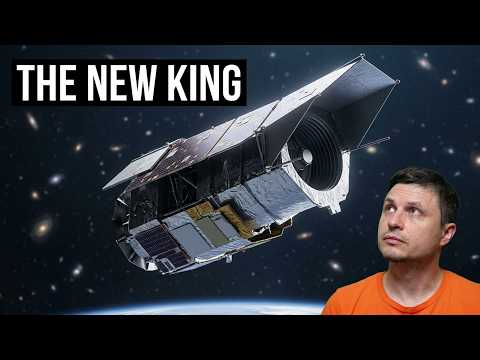
** In the video, Anton Petrov discusses the newly launched Nancy Grace Roman Space Telescope, a groundbreaking observatory set to redefine our understanding of astronomy. Unlike the James Webb Telescope, which focuses on distant objects, Roman boasts a massive 300-megapixel camera that can survey large areas of the night sky 1,000 times faster than Hubble. With its unique capabilities, including the ability to study dark matter and directly image exoplanets, Roman is expected to revolutionize the field by discovering thousands of new celestial objects. Furthermore, its data will be publicly available, fostering rapid scientific advancements and discoveries. **
Zitterbewegung – the Origin of Gravity ?(Fundamental Speculations)

** In the video “Zitterbewegung – the Origin of Gravity?” from Unzicker’s Real Physics, the host explores the intriguing relationship between Zitterbewegung (a concept related to quantum mechanics) and gravity. He discusses the idea, inspired by Hans Reissner and further elaborated in a 1976 paper by Cook, that gravitational acceleration may stem from the collective influence of all accelerations in the universe. The host posits that this perspective could eliminate the need for mass units in gravitational equations, suggesting a more elegant framework for understanding gravity through a model involving circular light waves. Ultimately, he emphasizes the importance of asking bold questions and simplifying fundamental physics to advance our understanding of the universe. **
Massive Structures Inside Earth’s Core and Their Effects on Magnetosphere

** In this video, Anton Petrov explores recent discoveries about Earth’s core and their implications for our planet’s magnetosphere. He discusses how unexpected movements in the outer core, observed through satellite data, reveal dynamic cycles that challenge previous assumptions about its stability. Additionally, innovative research suggests that the inner core may contain hydrogen-rich materials that could explain the origin of Earth’s water and contribute to the geodynamo that generates our magnetic field. Finally, the presence of large low shear velocity provinces (LLSVPs) beneath the surface is shown to influence magnetic field behavior, leading to a more complex understanding of Earth’s internal structures and their effects on surface phenomena. **
📚 Research Links (provided by the author in the video description):
Debunking ‘Bad Design’ Myths – Physical Therapist Explains

** In this video, physical therapist Jonathan Clerke debunks the myth that the human spine is poorly designed by highlighting its extraordinary strength, adaptability, and resilience. Drawing from his 30 years of clinical experience, he explains how the spine can endure significant stress, even exceeding the weight of a small car, and adapt to various conditions such as obesity and powerlifting. Clerke emphasizes that many factors contribute to back pain, including lifestyle choices and genetic predispositions, rather than flaws in spinal design. He concludes that the complex structure and functionality of the spine suggest intelligent design rather than random evolutionary processes. **
Dark Matter Finally Detected?
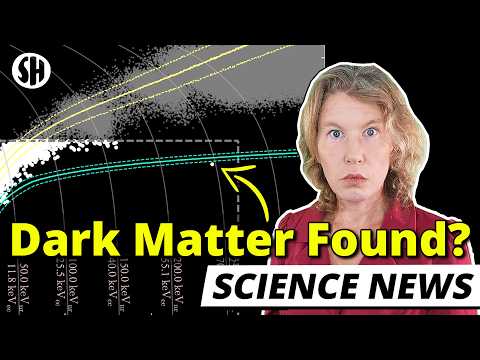
** In the video “Dark Matter Finally Detected?” Sabine Hossenfelder discusses a potential breakthrough in the search for dark matter, stemming from a recent detection by the LUX-ZEPLIN experiment. The data point, while still needing further validation, suggests the possible existence of a dark matter particle with a mass over three times that of the Higgs boson. Hossenfelder emphasizes the need for caution, as the statistical significance of the finding is moderate, and there are alternative explanations rooted in standard physics. She argues for the necessity of more data and larger detectors, while also critiquing the ongoing cycle of experiments that have yet to yield conclusive results. **
A Christian/Biblical Perspective on AI

** In the video “A Christian/Biblical Perspective on AI,” biochemist Fazale “Fuz” Rana and Ryan Pauly discuss the theological and philosophical implications of artificial intelligence from a Christian worldview. They argue that technology, including AI, is not neutral and inherently shapes our physical, intellectual, and spiritual experiences. The conversation emphasizes the need for Christians to engage thoughtfully and critically with AI, understanding both its potential benefits and the ethical dilemmas it introduces. They advocate for a theology of technology that recognizes humanity’s unique role in creation, the consequences of the Fall, and the redemptive purpose of technology in promoting human flourishing. **
New Type of Planets Confirmed and It’s Super Weird: Mega-Earths

** In this video, Anton Petrov discusses the recent confirmation of a new class of exoplanets known as “mega-Earths,” with a focus on the planet Giza 523b, located approximately 87 light-years away. This planet is significantly larger and denser than Earth, measuring 2.5 times in radius but boasting a mass 23.5 times greater, defying traditional models of planetary formation. The video explores various hypotheses regarding its formation, including significant collisions and unusual gravitational interactions, which challenge existing theories about how planets accumulate gas and maintain their structure. As astronomers continue to investigate these extreme worlds, Giza 523b and similar planets may shed light on the complex processes that govern planetary evolution. **
📚 Research Links (provided by the author in the video description):
Roman Yampolskiy vs Emad Mostaque: The Debate That Never Happened

** In the video “Roman Yampolskiy vs Emad Mostaque: The Debate That Never Happened,” Dr. Brian Keating facilitates a profound discussion between AI safety expert Roman Yampolskiy and Stable Diffusion co-founder Emad Mostaque. The dialogue, originally intended as a debate, reveals that both participants largely agree on the inevitability of advanced AI technologies but diverge significantly on how to handle the risks associated with them. They explore concepts such as the Turing test, artificial general intelligence (AGI), and the potential dangers of superintelligence, ultimately highlighting the urgent need for responsible AI development and regulatory approaches. The conversation uncovers unsettling truths about the balance between innovation and safety in the rapidly evolving landscape of artificial intelligence. **
AI Is Taking Over Physics and Nobody Talks About It
** In her video “AI Is Taking Over Physics and Nobody Talks About It,” Sabine Hossenfelder discusses the rapid advances of artificial intelligence (AI) in mathematics and its impending impact on physics. Highlighting recent breakthroughs, she notes that AI models like Claude and ChatGPT have successfully solved long-standing mathematical problems, prompting a crisis among mathematicians who fear for the future of their field. In contrast, physicists are integrating AI as a tool to enhance research productivity, with many recent publications demonstrating AI’s role in both theoretical calculations and experimental modeling. The video underscores the stark difference in reactions between mathematicians and physicists regarding AI’s transformative effects. **
The “Perpetual Motion” Pump That Actually Works

** In “The ‘Perpetual Motion’ Pump That Actually Works,” Steve Mould explores the functionality of ram pumps, devices that utilize water hammer to pump water to higher elevations without electricity. He builds a transparent model to demonstrate the principles behind these pumps, explaining the role of kinetic energy and pressure in the system. Mould clarifies that while ram pumps may seem like free energy machines, they actually convert kinetic energy from flowing water into gravitational potential energy by expelling a larger volume of slower-moving water. The video concludes with a discussion on the origins of the energy powering these mechanisms, ultimately linking it back to solar energy. **
Major Evidence for Massive Black Holes Travling Between Galaxies

** In this video, Anton Petrov discusses the intriguing phenomenon of wandering supermassive black holes that traverse intergalactic space. He highlights recent discoveries, including the confirmed runaway black hole RBH1, which was found tearing through the cosmos at 1,000 km/s, as well as the first-ever detection of three supermassive black holes in the distant galaxy J0148-4214. Notably, the video explains how these rogue black holes can feed on interstellar gas as they move, potentially forming new stars in their wake, challenging conventional views about black holes solely destroying matter. Through advanced telescopes and machine learning technologies, researchers are uncovering these cosmic giants, raising questions about their prevalence and the mechanisms behind their existence. **
📚 Research Links (provided by the author in the video description):
Quantum Nonlocality Explained FROM SCRATCH

** In “Quantum Nonlocality Explained FROM SCRATCH,” Curt Jaimungal interviews philosopher Tim Maudlin, who elucidates Bell’s theorem and the concept of non-locality in quantum mechanics without requiring a prior understanding of the subject. Maudlin argues that traditional interpretations of quantum mechanics are misleading, particularly the notion that observation is essential to the quantum process. He revisits the EPR paper’s arguments, demonstrating that if locality holds true, quantum mechanics must be incomplete, revealing deeper elements of reality not captured by the wave function. The lecture culminates in exploring how quantum entanglement contradicts classical intuitions, highlighting the intricate relationship between distant particles. **
📚 Research Links (provided by the author in the video description):
Jim Al-Khalili on Time, Quantum, Biology, and Cosmology | Mindscape 366

In this episode of the Mindscape podcast, Jim Al-Khalili discusses his new book “On Time,” exploring the complexities of time, quantum mechanics, and their implications in biology and cosmology. He delves into the philosophical and physical aspects of time, asserting that time is a fundamental aspect of the universe with a specific directionality—a contrast to the traditional view of time being emergent. Al-Khalili also addresses the relationship between quantum mechanics and biological processes, positing that life may utilize quantum principles, such as coherence and entanglement, to its advantage. Throughout the conversation, he emphasizes the need for interdisciplinary dialogue between physicists and philosophers to deepen our understanding of these profound topics.
We Have Never Seen the Sun Like This Before
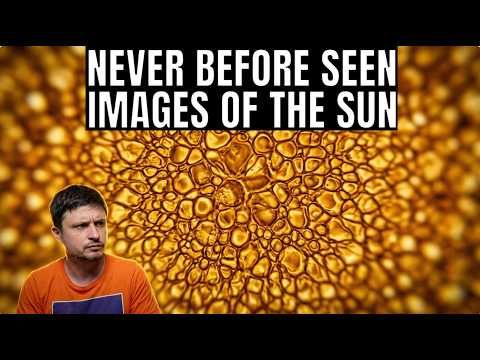
** In “We Have Never Seen the Sun Like This Before,” Anton Petrov explores groundbreaking discoveries and high-resolution images of the Sun’s surface, revealing intricate phenomena previously unseen. Utilizing advanced solar telescopes, scientists have captured stunning details such as swirling plasma vortices resembling Kelvin-Helmholtz instabilities, solar curtains formed by magnetic fields, and tiny eruptions called pickle flares. These observations not only enhance our understanding of solar dynamics but also hold implications for predicting solar weather, which is crucial for protecting technology on Earth. The video emphasizes the Sun’s complexity and the continuous need for exploration and research in solar physics. **
📚 Research Links (provided by the author in the video description):